I would think with a budget of 60-70k one could find a good 180, might take a while but very doable. When we finally decided on a 170 the one we ended up buying was a little over our budget, but everything lined up with the times, "bank value" and down payment. This happened approximately one year after we had acquired the necessary approval and down payment. It's a matter of patience and taking the time to find what you want within the realm of your situation.
Sent from my iPhone using Tapatalk
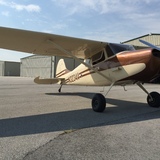
170B with O300 worth considering for 5300' MSL ops?
Wed Jun 08, 2016 2:01 pm
Wed Jun 08, 2016 3:05 pm
Re: 170B with O300 worth considering for 5300' MSL ops?
Years ago (mid 70s to mid 80s), I instructed out of Laramie (elev. >7200') in 172s. The FBO had one with the 145 hp Continental, a couple with 150 hp Lycomings, and I brought back the newest one with a 160 hp Lycoming from the factory at Wichita. They also had a 195 hp Continental powered XP, but I didn't instruct in that, and a trio of 182s. Quite honestly, there was not a huge difference in performance among the 172s, but a huge difference moving up to 182s. 5 or 15 hp isn't all that noticeable, but 70 or 80 or 85 sure is!
The biggest issues are weight and proper leaning. I weighed around 180 lbs. then, and I can't recall any of my male students being smaller than me, with a couple of them larger. I can recall many times when I'd have a student who would want to bring along a friend, or a wife (not always the same thing, right? ), so we'd have 3 up. I wouldn't say the 172s struggled, but their performance with a load wasn't anything to brag about--that's when the real lesson was patience. With only 2, though, they were all fine--they'd take us anywhere we wanted to go.
I'm sure, if you fly out of Boulder, that you're familiar with proper leaning on the ground, but it's even more crucial at higher DAs. And what many forget, leaning in the climb is also pretty important.
If your dream is Colorado back country, then it's a matter of being judicious. That's true with any airplane, but the lower its power, the more you have to be judicious. I tend to load up my 180 hp C/S equipped P172D, and I get in and out of the high elevation, high DA strips OK, at maybe 200 fpm climb rate. If I loaded it less, I'd be able to increase the climb rate significantly. Same rule for a lesser powered 172 or 170--load less, climb better. Go early in the day or late in the evening (not in the dark--NEVER in the dark in the mountains!), but after it's cooled down. Go when the winds aren't very strong (I won't go if the winds over the passes are 25 knots or greater, prefer less, although I've been over La Veta eastbound with 40 knot winds).
A STOL kit, even the best, won't make the airplane climb much better. It'll get off the ground sooner, and control at low airspeeds will be better, but the climb rate depends more on the available thrust, from both the engine and the prop pitch. Cessna's older wing designs (before the cuff added in the early 70s) wasn't the greatest at low speeds, but it's just as good as the later wings at Vx and Vy speeds.
One last thought: airplanes are expensive, period. Even the best can hit you with a sudden, very expensive, repair. No matter what airplane you buy, don't pay what you can barely afford. Pay 2/3 of what you can afford, or less. My own experience is the best example I can give you. I paid a premium price for my airplane, because of its low time airframe, great condition, and low time engine conversion--it had only 960 hours on it when I left Tulsa to bring it home. But 15 hours later, it threw a rod through the top of the case, and I landed in a field--so much for a low time, allegedly bullet-proof engine. $23,000 later, I had a custom-built engine, but you can see what that did to my overall purchase price. If I couldn't have swung that very major repair, the airplane would have to sit. I have no doubt that's why many derelicts sit on airports, because the cost of repair exceeds the owner's ability to pay.
Good luck with your decision!
Cary
The biggest issues are weight and proper leaning. I weighed around 180 lbs. then, and I can't recall any of my male students being smaller than me, with a couple of them larger. I can recall many times when I'd have a student who would want to bring along a friend, or a wife (not always the same thing, right?
), so we'd have 3 up. I wouldn't say the 172s struggled, but their performance with a load wasn't anything to brag about--that's when the real lesson was patience. With only 2, though, they were all fine--they'd take us anywhere we wanted to go.I'm sure, if you fly out of Boulder, that you're familiar with proper leaning on the ground, but it's even more crucial at higher DAs. And what many forget, leaning in the climb is also pretty important.
If your dream is Colorado back country, then it's a matter of being judicious. That's true with any airplane, but the lower its power, the more you have to be judicious. I tend to load up my 180 hp C/S equipped P172D, and I get in and out of the high elevation, high DA strips OK, at maybe 200 fpm climb rate. If I loaded it less, I'd be able to increase the climb rate significantly. Same rule for a lesser powered 172 or 170--load less, climb better. Go early in the day or late in the evening (not in the dark--NEVER in the dark in the mountains!), but after it's cooled down. Go when the winds aren't very strong (I won't go if the winds over the passes are 25 knots or greater, prefer less, although I've been over La Veta eastbound with 40 knot winds).
A STOL kit, even the best, won't make the airplane climb much better. It'll get off the ground sooner, and control at low airspeeds will be better, but the climb rate depends more on the available thrust, from both the engine and the prop pitch. Cessna's older wing designs (before the cuff added in the early 70s) wasn't the greatest at low speeds, but it's just as good as the later wings at Vx and Vy speeds.
One last thought: airplanes are expensive, period. Even the best can hit you with a sudden, very expensive, repair. No matter what airplane you buy, don't pay what you can barely afford. Pay 2/3 of what you can afford, or less. My own experience is the best example I can give you. I paid a premium price for my airplane, because of its low time airframe, great condition, and low time engine conversion--it had only 960 hours on it when I left Tulsa to bring it home. But 15 hours later, it threw a rod through the top of the case, and I landed in a field--so much for a low time, allegedly bullet-proof engine. $23,000 later, I had a custom-built engine, but you can see what that did to my overall purchase price. If I couldn't have swung that very major repair, the airplane would have to sit. I have no doubt that's why many derelicts sit on airports, because the cost of repair exceeds the owner's ability to pay.
Good luck with your decision!
Cary
"I have slipped the surly bonds of earth..., put out my hand and touched the face of God." J.G. Magee
Thu Jun 09, 2016 8:04 am
Re: 170B with O300 worth considering for 5300' MSL ops?
My 170 was mostly raised in Alaska, but a BLM guy moved it from Glennallen, AK to Gunnison, CO. He only put about 120 hours on it in 10 years, based out of Gunnison, and I suspect it was because of the DA issues. When I rescued it from him, I picked it up in June of that year, and had a battery issue that delayed my take off until about 11am. It took me just about the whole damn runway (9400 feet of velvet asphalt...) to get airborne, and then it took three laps around the Gunnison valley for me to get enough climb to get over the ridge and on my way to fly it back home. Yeah, I was heavy, but...
So, I've flown a bunch of the Rockies and other high DA stuff. An O-300 powered 170 is fine with a lot of planning, but it's not fine to just go jump in anytime of day and blast out for a flight past the tunnels or Nederland. I still have mine...it's as light as you can get and I make it work. I would like a 180, but I can manhandle my 170 around on any terrain or in any slop, and most 180's are just too heavy to push around in the sand, mud, snow when you are solo, and that makes a difference for me. Someday I'll fall ass-backwards into a pile of cash and put Dave Stoot's IO-375 STC'd motor on it...
Bottom line, it's a good learner, and you WILL learn if you get one and fly it respecting the mountains...eventually they always win if you don't. You just put some extra planning into your flying adventures and be willing to not bring that extra 100 pounds of comfort-camping gear.
Karl
So, I've flown a bunch of the Rockies and other high DA stuff. An O-300 powered 170 is fine with a lot of planning, but it's not fine to just go jump in anytime of day and blast out for a flight past the tunnels or Nederland. I still have mine...it's as light as you can get and I make it work. I would like a 180, but I can manhandle my 170 around on any terrain or in any slop, and most 180's are just too heavy to push around in the sand, mud, snow when you are solo, and that makes a difference for me. Someday I'll fall ass-backwards into a pile of cash and put Dave Stoot's IO-375 STC'd motor on it...
Bottom line, it's a good learner, and you WILL learn if you get one and fly it respecting the mountains...eventually they always win if you don't. You just put some extra planning into your flying adventures and be willing to not bring that extra 100 pounds of comfort-camping gear.
Karl

Thu Jun 09, 2016 3:51 pm
Re: 170B with O300 worth considering for 5300' MSL ops?
WARNING! Off topic, off topic.
It all depends doesn't it. I mean, what's your tolerance for fear and loathing? I do like Cessnas. I had a 220HP Franklin powered 172 back in the '90s that was a lot of fun. I think power can get you out of places that you shouldn't have ought to have gone in the first place maybe. If you fly say 80-100 hours a year how much extra gas cost are you talking about on a per week basis. Somebody said buy about 2/3rds what you can afford because the damn things are almost as bad as horses in the unexpected expenses department. Good advice. They are not however as expensive as teenage daughters. Just so you know.
How many square feet of wing on a 170? A Pacer has 147 feet of wing I think, with less weight and more horsepower. Or a Maule. A good airplane at a fair price.....why be locked in to the 170B or 180? Sorry, maybe that conversation is over already but if you're putting it in a hangar what difference does it make wether it has aluminum skin or not. Just asking.
It all depends doesn't it. I mean, what's your tolerance for fear and loathing? I do like Cessnas. I had a 220HP Franklin powered 172 back in the '90s that was a lot of fun. I think power can get you out of places that you shouldn't have ought to have gone in the first place maybe. If you fly say 80-100 hours a year how much extra gas cost are you talking about on a per week basis. Somebody said buy about 2/3rds what you can afford because the damn things are almost as bad as horses in the unexpected expenses department. Good advice. They are not however as expensive as teenage daughters. Just so you know.
How many square feet of wing on a 170? A Pacer has 147 feet of wing I think, with less weight and more horsepower. Or a Maule. A good airplane at a fair price.....why be locked in to the 170B or 180? Sorry, maybe that conversation is over already but if you're putting it in a hangar what difference does it make wether it has aluminum skin or not. Just asking.

Sat Jun 11, 2016 8:42 am
Re: 170B with O300 worth considering for 5300' MSL ops?
If you like it, want it, and it's within your budget, then buy it!
Then: enjoy it, but fly it within it's limitations. When it's limitations are greater than your own, both in skills and budget, then sell it and buy the next one. Life is too short to own only one airplane. It's not a marriage.
I've been an owner or partner in six. Still involved in three. Need to increase my turnover rate and try more things I guess!
Don't wait until you can afford your dream airplane. Buy something and get out there. In the meantime you're missing out!
I post this not as the only consideration, and don't recommend an impulse buy, but as a reminder to keep putting one foot in front of the other. The most important thing is to fly, not what you fly.
Then: enjoy it, but fly it within it's limitations. When it's limitations are greater than your own, both in skills and budget, then sell it and buy the next one. Life is too short to own only one airplane. It's not a marriage.
I've been an owner or partner in six. Still involved in three. Need to increase my turnover rate and try more things I guess!
Don't wait until you can afford your dream airplane. Buy something and get out there. In the meantime you're missing out!
I post this not as the only consideration, and don't recommend an impulse buy, but as a reminder to keep putting one foot in front of the other. The most important thing is to fly, not what you fly.
Sat Jun 11, 2016 10:34 am
Re: 170B with O300 worth considering for 5300' MSL ops?
I have flown both a 160 hp 172 and a o-300 170b. The 170 hands down will land shorter and take off faster. And is a whole lot more fun to fly. I never flew off anything higher then about 2000 ft but I would take 3 people and full fuel on a 100 degree day off 1300 foot strip. Keep it light is key
Sent from my SAMSUNG-SM-G870A using Tapatalk
Sent from my SAMSUNG-SM-G870A using Tapatalk
- cstolaircraft offline
- Posts: 523
- Joined: Wed Sep 29, 2010 12:50 pm
- Location: Blackwell, Mo
Mission Pilot in training. C-170B N8098A.
But they that wait upon the Lord shall renew their strength; they shall mount up on wings as eagles... Isaiah 40:31
But they that wait upon the Lord shall renew their strength; they shall mount up on wings as eagles... Isaiah 40:31
Sat Jun 11, 2016 1:19 pm
Re: 170B with O300 worth considering for 5300' MSL ops?
Much of this thread has been either theory or anecdotal. If you can find a 300/powered 170B in the Denver/Boulder/Longmont/Loveland/Fort Collins area, not to buy, but to fly, then talk the owner into letting you find out how usable it is for your purposes. Most pilots just love to take friends (and new friends) for rides. Then you can see for yourself, if you can live with the limitations of a 170B at Boulder, and higher. There are limitations, obviously, but for some folks, that's part of the enjoyment; for others, that's a no-no. You're going to buy something, so you need to be satisfied.
Cary
Cary
"I have slipped the surly bonds of earth..., put out my hand and touched the face of God." J.G. Magee
Sat Jun 11, 2016 5:45 pm
Re: 170B with O300 worth considering for 5300' MSL ops?
I have an 0-300 170B and live at sea level. I have flown at gross at 6700 DA and it was on the edge of my comfort zone. Climb prop might help, I have not tried that yet. I think I would look at other things for a home field that high. My 2c.
- daedaluscan offline


- Posts: 1269
- Joined: Sat Jan 12, 2013 1:06 pm
- Location: Texada BC
Sat Jun 11, 2016 9:20 pm
Re: 170B with O300 worth considering for 5300' MSL ops?
An 0-300 powered 170 or 172 is probably one of the better choices for learning to fly in the mountains. Flying low powered airplanes will make you pay attention to stuff that you would never notice flying around in a half empty 180 or 182. Just be careful doing it, go light and go early.
Sun Jun 12, 2016 2:03 pm
Re: 170B with O300 worth considering for 5300' MSL ops?
An O-300 powered C170/172 is an excellent high DA trainer for learning to read microclimates, terrain, winds, how to utilize low ground effect to get off the ground and accelerate, and tons of other in the bag tricks to get off the ground and in the air climbing.
I've watched RobW dance with his C170 since he stuck the seaplane prop on it, and it makes a huge difference for the better (That, and he's a damn good young pilot and knows his airplane intimately). It's also a $2-4K investment, and the STC doesn't cover the C172.
Bottom line is, if you're specifically looking for an airplane to make you work hard and really learn some high DA/low HP basics you'll be happy. But, if you want something to explore and go out and have fun in the mountains, you're gonna be sitting there on the ground watching your buddies launch off without you a good percentage of the time.
And it's not getting in somewhere that's the problem. An old C172 is an excellent short field lander. Really short if you want to. It's getting back off the ground that's the killer. I know with mine up here in northern Nevada, I can spend a whole lot of time a few inches off the dirt in low ground effect trying to build up enough speed to climb. That shit gets old in a hurry.
Gump
I've watched RobW dance with his C170 since he stuck the seaplane prop on it, and it makes a huge difference for the better (That, and he's a damn good young pilot and knows his airplane intimately). It's also a $2-4K investment, and the STC doesn't cover the C172.
Bottom line is, if you're specifically looking for an airplane to make you work hard and really learn some high DA/low HP basics you'll be happy. But, if you want something to explore and go out and have fun in the mountains, you're gonna be sitting there on the ground watching your buddies launch off without you a good percentage of the time.
And it's not getting in somewhere that's the problem. An old C172 is an excellent short field lander. Really short if you want to. It's getting back off the ground that's the killer. I know with mine up here in northern Nevada, I can spend a whole lot of time a few inches off the dirt in low ground effect trying to build up enough speed to climb. That shit gets old in a hurry.
Gump
Sun Jun 12, 2016 2:44 pm
Re: 170B with O300 worth considering for 5300' MSL ops?
GumpAir wrote:I've watched RobW dance with his C170 since he stuck the seaplane prop on it, and it makes a huge difference for the better (That, and he's a damn good young pilot and knows his airplane intimately). It's also a $2-4K investment, and the STC doesn't cover the C172.
Gump
Have you ever talked to Don Morgan (our FAA mech rep) about a one time STC on the 80/42? He's surprisingly easy to work with and I think he might go for the "safety improvement" logic of a super climb prop on your TW 172. No guarantees but when presented with the ideas he may be amenable. Unlike every other mechanical FAA rep on the planet he goes through all kinds of weird stuff on the race planes.
Sun Jun 12, 2016 2:55 pm
Re: 170B with O300 worth considering for 5300' MSL ops?
No I haven't, but good to know.
For what I do with this airplane in Nevada, it suits my needs fine for now and it's not worth sinking any more $$$ into.
And the Feds and simple STC's and I don't get along too well. Sticking the GarAero tailwheel on this poor airplane was a two year exercise in stupidity and bullshit. It was a full year after I told my IA to tell the Portland and then Seattle FSDO to f**k themselves and forget it, when out of the blue the paperwork showed up in the mail "approving" the bigger tire. The quote of the day from them being, "If this was Alaska we could do this easily, but we don't know how to get that tire approved for your airplane down here."
Who knows what they'd do with a longer prop.
Gump
For what I do with this airplane in Nevada, it suits my needs fine for now and it's not worth sinking any more $$$ into.
And the Feds and simple STC's and I don't get along too well. Sticking the GarAero tailwheel on this poor airplane was a two year exercise in stupidity and bullshit. It was a full year after I told my IA to tell the Portland and then Seattle FSDO to f**k themselves and forget it, when out of the blue the paperwork showed up in the mail "approving" the bigger tire. The quote of the day from them being, "If this was Alaska we could do this easily, but we don't know how to get that tire approved for your airplane down here."
Who knows what they'd do with a longer prop.
Gump
Mon Jun 13, 2016 8:50 am
Re: 170B with O300 worth considering for 5300' MSL ops?
Smith wrote: An 0-300 powered 170 or 172 is probably one of the better choices for learning to fly in the mountains. Flying low powered airplanes will make you pay attention to stuff .....
This reminds me of comments that I've heard stating that a C150 Aerobat is a good airplane to LEARN aerobatics in, but not a good airplane to DO aerobatics in. I'd suggest buying something you will be satisfied with for the long term.
Cessna Skywagon -- accept no substitute!
Mon Jun 13, 2016 12:17 pm
Re: 170B with O300 worth considering for 5300' MSL ops?
GumpAir wrote:
Sticking the GarAero tailwheel on this poor airplane was a two year exercise...
...tell the Portland and then Seattle FSDO to f**k themselves and forget it,
... we don't know how to get that tire approved for your airplane down here."
Gump, if you ever need to go through anything like this again, the solution is fairly simple. You need a well-chosen DER, long before any IA is involved. The average FSDO is no longer technically capable of dealing with this kind of stuff, so they get frightened and choke on it for a long time. The DER (the right DER) has the authorization and reputation within the FSDO and/or ACO to put the FAA staff at ease. The small amount of money that you pay the DER is very very well worth it. If you have any projects like this on an airframe, I can recommend a good DER highly from my own successful experience. I have no doubt that other mechanics or shop staff participating on this forum also can recommend a capable DER.
As an example, when I had to suspend my own 172 tailwheel conversion project, I wanted to put the airplane back together as a nosewheel, but leave all the structure and reinforcements for the conventional gear installed, so I can go back and resume the conversion project when finances allow. One IA visiting my hangar told me that I would have to remove all non-approved parts, and repair all the fastener holes, bulkhead modifications, and related structure "as if it was crash damage", and then he could sign it off as a major repair. (I told him the same thing you told Seattle FSDO).
My DER told me to send him dimensioned sketches and photographs of what I had modified, then come up with a proposed repair/modification to put it back together leaving those parts in, with dimensioned sketches supporting my proposed "repair", and then he told me to "make a common sense case" in writing for exactly why I could claim the presence of these additional parts did not represent a safety risk or weakening of the original aircraft structure.
He took a few days to look this over, consider whether my case made sense on a structural engineering level, and ran whatever calculations he deemed appropriate to verify my non-engineer guesses. Because I made a good enough case, and because I did the repair in accordance with the principles and intent of AC 43-13 (and all manner of conservative common sense), he issued an FAA 8130 DER approval letter. The letter gave me the legal authority to modify and repair the aircraft using the method that I had proposed.
With this FAA-DER approval, the repair was completed as proposed.
THEN, in order to return the aircraft to service, an A&P - IA mechanic had to inspect the workmanship and "fit & finish", to determine that this repair had actually been executed physically in accordance with the DER's approval in principle, and the IA was then authorized to return the aircraft to service as part of an annual inspection.
Total time between submitting the "modification/repair" proposal to DER and receiving DER approval letter, less than one week. DER cost $200-300 if I recall. If I had asked the DER to design, troubleshoot, and sketch out the repair this cost would of course have been far higher.

.
Mon Jun 13, 2016 1:18 pm
Re: 170B with O300 worth considering for 5300' MSL ops?
Yeah, I could have.
But when changing the store-bought Scott 3200 yoke and tailwheel tire to the store-bought GarAero yoke and tailwheel tire, that sits on thousands of other conventional gear airplanes, I really wasn't in a mood to have "my engineering staff" talk to their engineering staff. Or spend hundreds of dollars above and beyond the actual cost of the GarAero kit for absolutely nothing.
Gump
But when changing the store-bought Scott 3200 yoke and tailwheel tire to the store-bought GarAero yoke and tailwheel tire, that sits on thousands of other conventional gear airplanes, I really wasn't in a mood to have "my engineering staff" talk to their engineering staff. Or spend hundreds of dollars above and beyond the actual cost of the GarAero kit for absolutely nothing.
Gump
DISPLAY OPTIONS
Who is online
Users browsing this forum: No registered users and 2 guests
Latest Features
-
Live to Tell
A Minnesota pilot is surprised to learn that the sudden asymmetric drag of an out-of-rig ski can…Read More -
Creators
Working in some of the Yukon's most beautiful and remote environments, photographer Simon Blakesley captures aircraft in…Read More -
Aircraft Ownership and Maintenance
Upgrading to big tires can make a huge difference in backcountry performance, but with those gains come…Read More -
Tales from Yesteryear
In this tale from bush flying yesteryear, Don Cogger signs up to help Atlee Dodge Jr recovery…Read More


Latest Knowledge Base
-
Destinations
A regional guide with ideas for winter camping destinations in California, Nevada, New Mexico, and Arizona.Read More -
Aircraft
Finding an affordable aircraft that can handle the backcountry for $80K or less? A challenge for sure, but with the…Read More -
Aircraft
01.29.2018 - Zane - Updated tire diameter graphic to add 8.50x10 Guide to tires for use in the backcountry and off-airport landing…Read More -
Pilots
12.22.2013 - Initial article format Operating aircraft on skis and negotiating a snow-covered landscape is an entirely unique skillset and environment.…Read More


