Well the first thing I used the plane for was to fly to eastern Washington to visit my uncle. I left last Friday afternoon at 4pm from Tacoma and made about as close to a straight line as I've made, departing east just under the 1800' floor of a piece of Class Bravo airspace and then up through Stampede Pass and afterwards on a course that skirted south of Wenatchee.
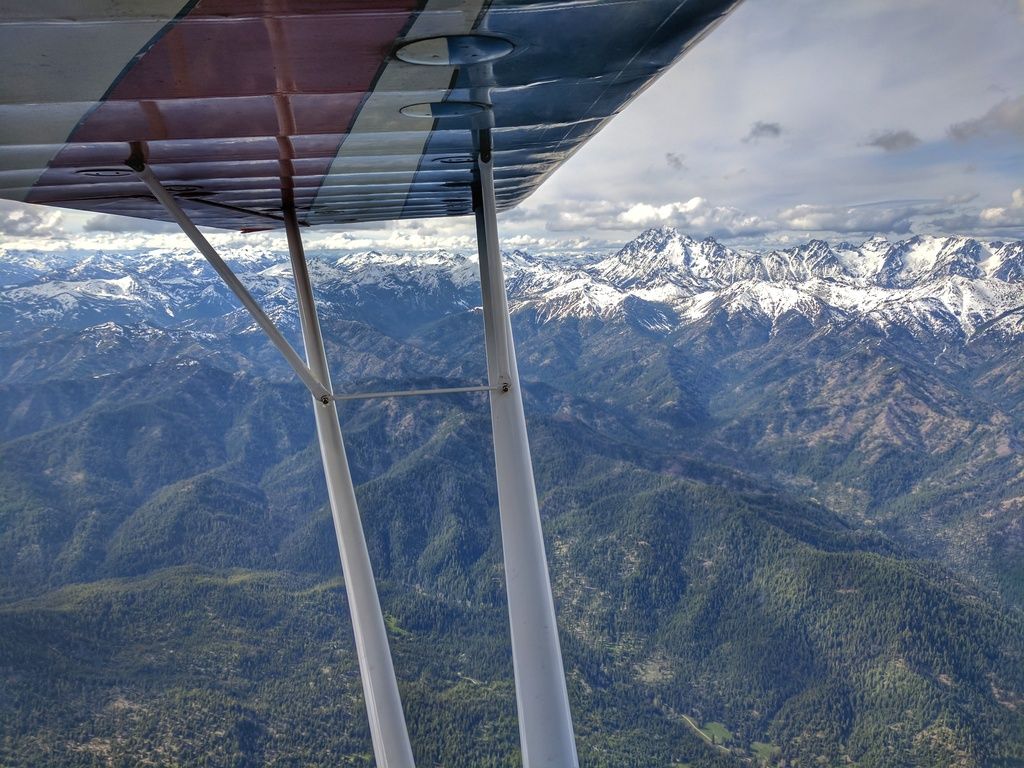
Mt Stuart if I'm not my map reading skills aren't suffering too badly. It wasn't a bad ride at all if you're used to flying but I wouldn't have suggested it for a first passenger experience.
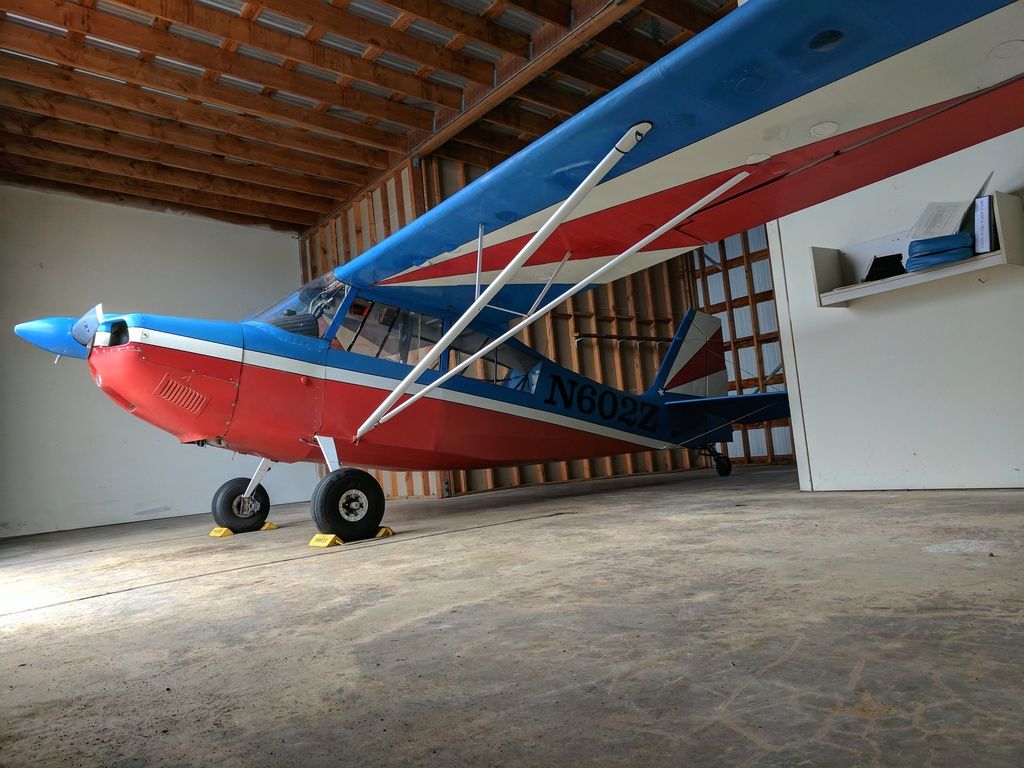
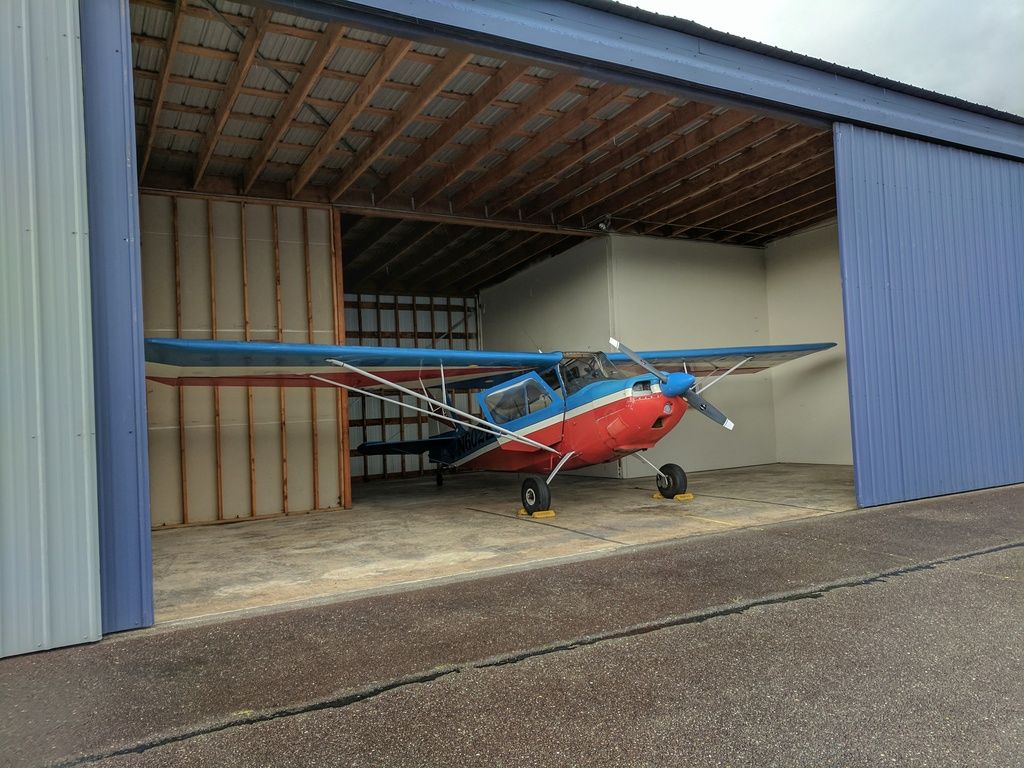
Near Quincy I dropped down to around 1500' AGL, pulled the power way back and followed the meandering aqueduct towards Ephrata where I made a rather stiff landing and parked the plane. My uncle was waiting for me, having followed my trail from my DeLorme InReach. We pushed the plane into the big hangar where his plane is stored, and then did a minor adjustment on the external power receptacle door. He had started to remove a small fairing in order to access the back of the quarter turn on the receptacle door but had one fastener that seemed like it had spun.
All of the other fasteners on the shroud went into nut plates. When I backed the screw out all the way I heard a nut roll somewhere inside the wing/fuselage joint. Not the sound I wanted to hear. We agreed that I would take a look from the front cockpit and see how bad the access was. Well after a few moments of looking I saw the hole easily - it was just straight down under the floor boards as far as I could reach if I my feet were just sticking above the canopy rail. So down I went. I retrieved the old nut and replaced it with a fresh one and held it with a wrench while he spun the screw from under the wing. Turns out that access to the back of the quarter turn was also in my face, so we remedied that as well.
The next day we pulled it out for the first time this year and went flying.
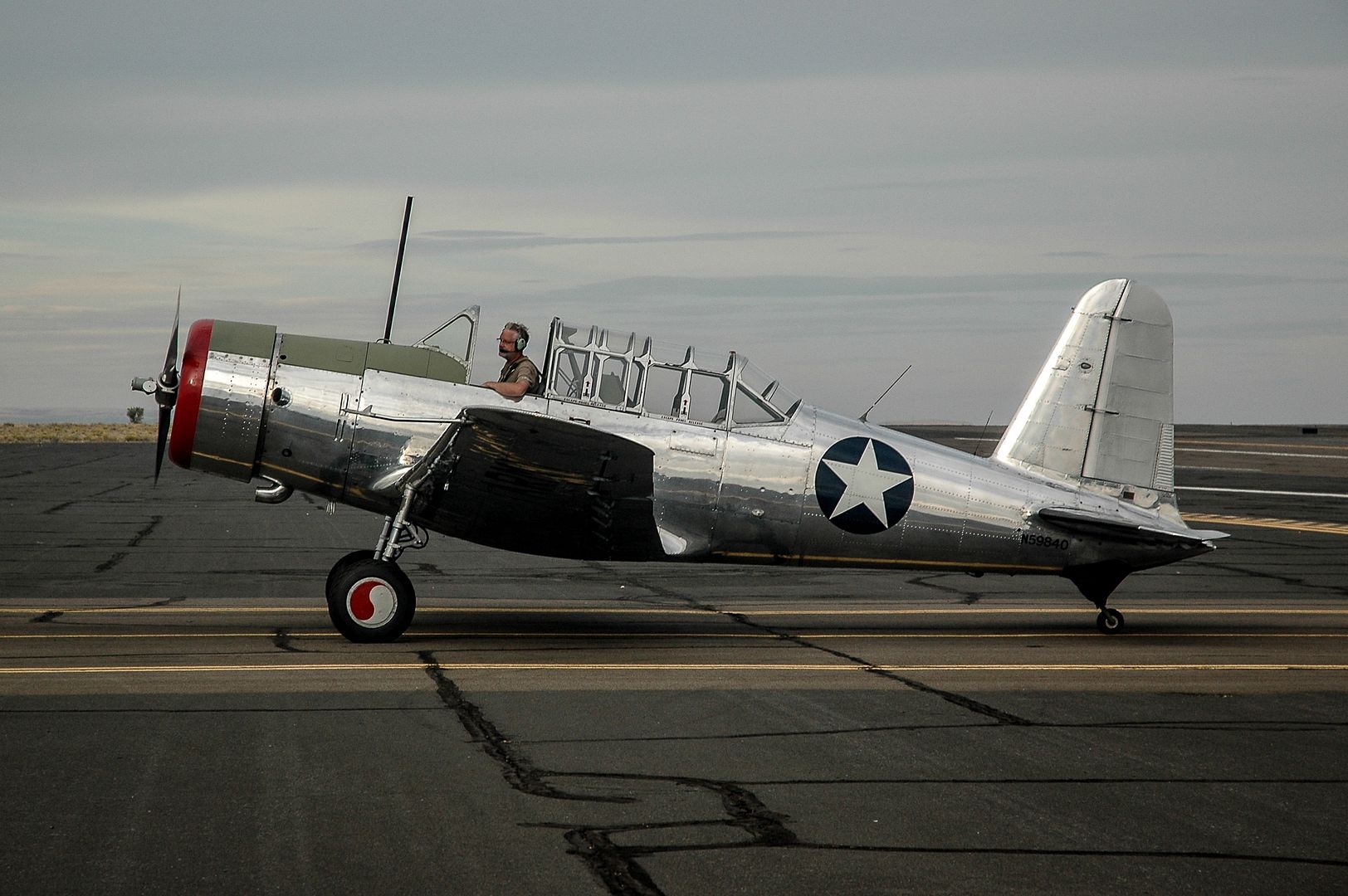
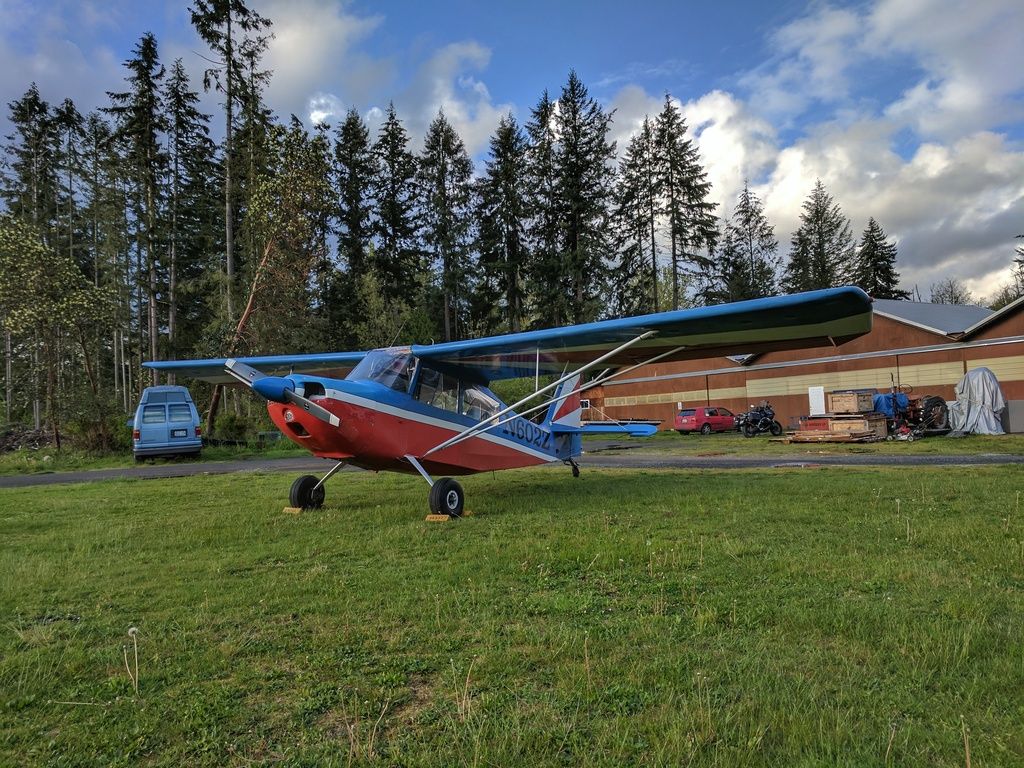
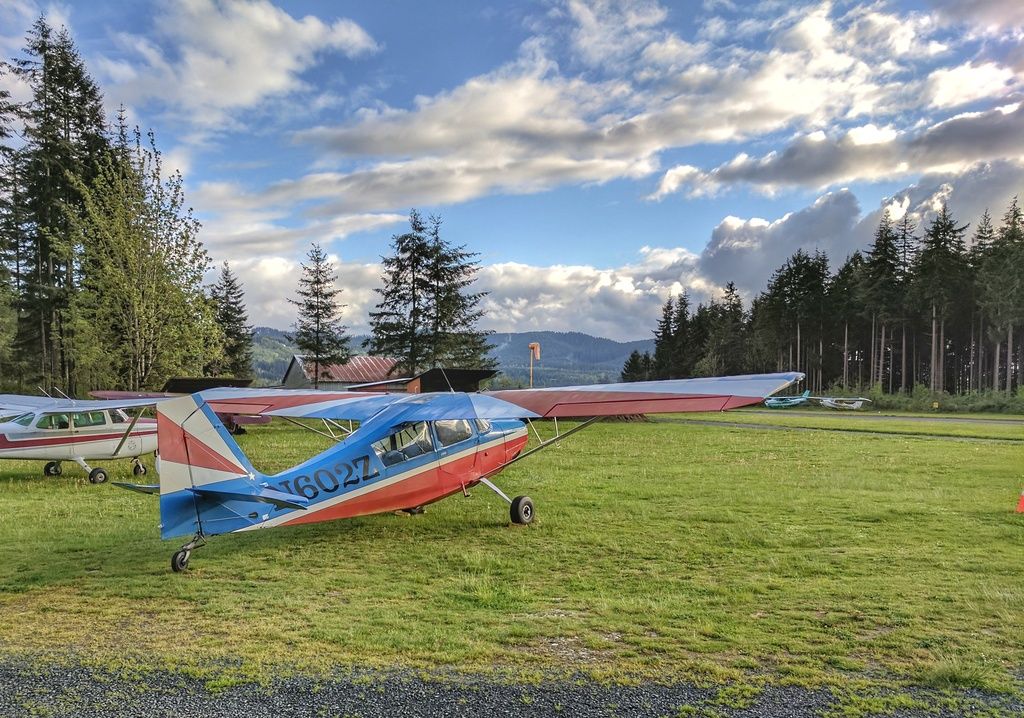
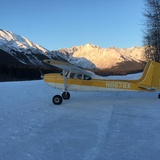
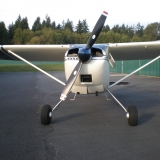
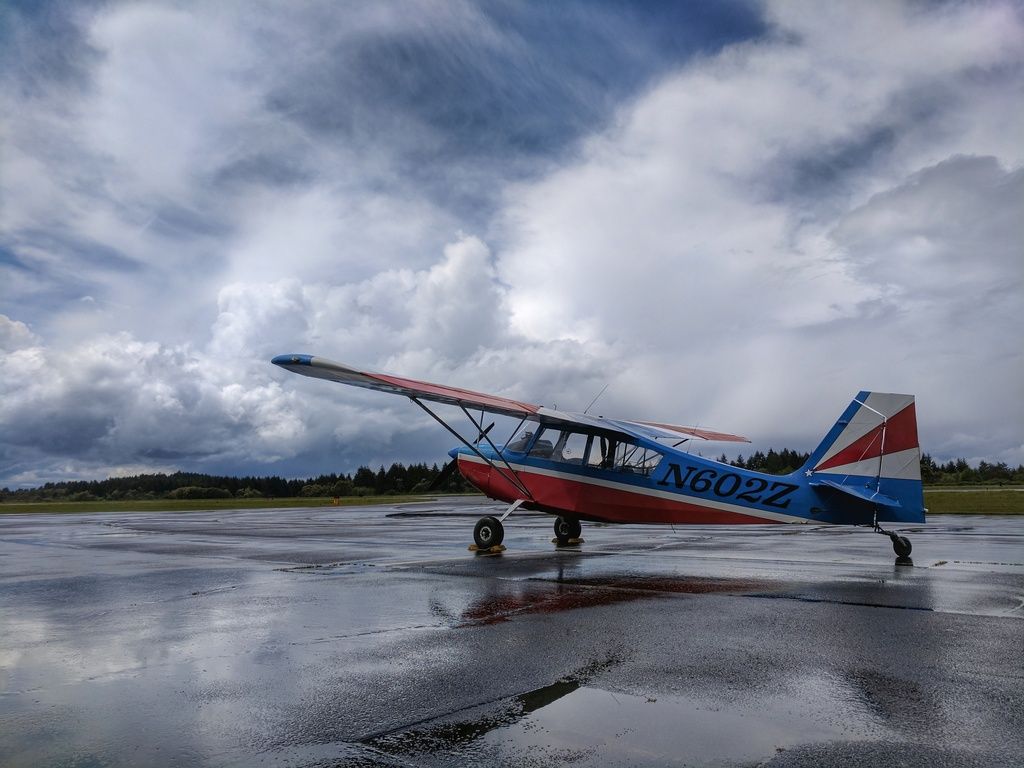
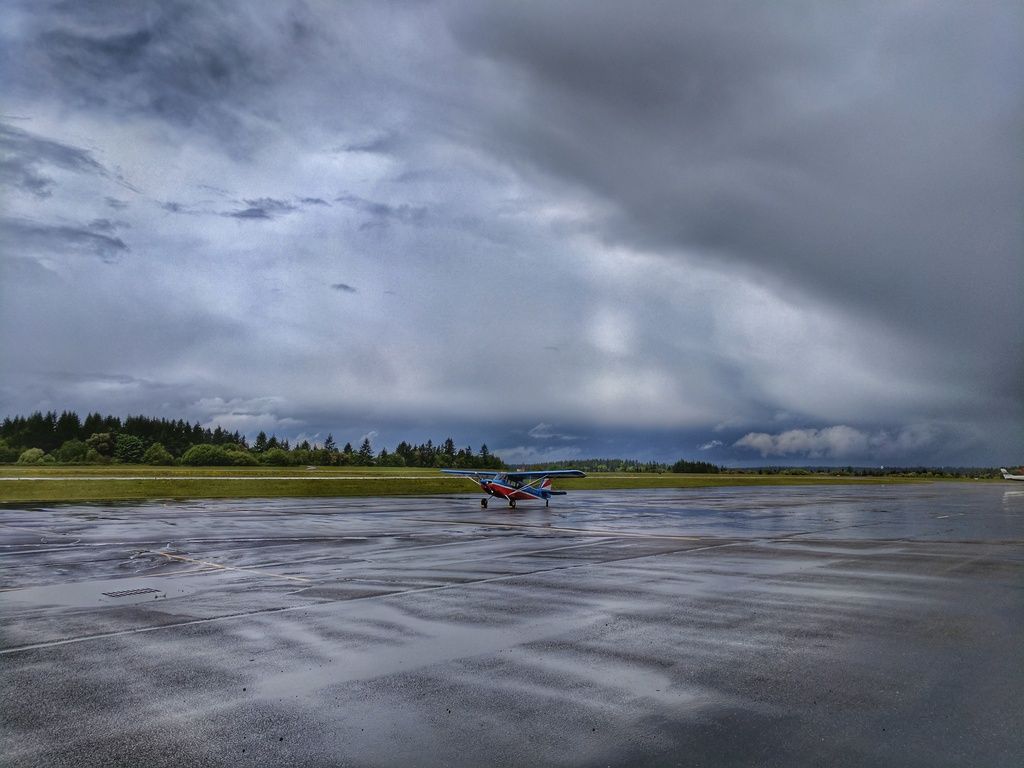
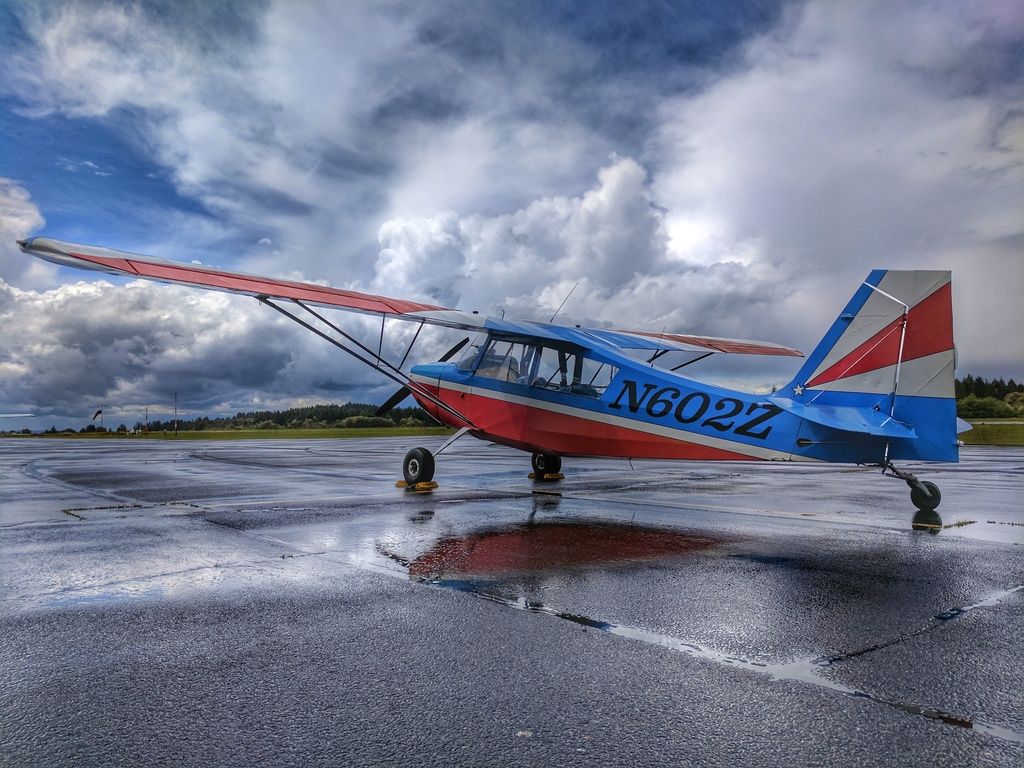
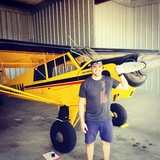
The picture above is from last year. I think I only took one picture of it this past weekend and it's not reachable from this keyboard.
In this case we put in about 1.7 hours doing a short cross country to Odessa to look at a Higher Power hangar door. Dood. Nice equipment. My uncle had the door code to his friend's hangar so he stayed in the back of the plane while I jumped out and hit the keypad. Inside was an AT802 (I think). What a beast. I laughed at the amount of bugs on the leading edges of the wings on the AT802.
I'm still getting used to flying the BT and Odessa might be the smallest runway I've dropped into. It's not that it's hard to fly, but it is heavier than most things I've flown which means when the sink rate starts getting uncomfortable you need to fix it quick. But the R-985 doesn't thrive on having the throttle tugged back and forth. Once I was established on final I was able to release some of the crease in the seat cushion and enjoy the, well, three point chirp and a low bounce. Dammit.
We took the long way home and did some sight seeing of the scab lands and little lakes. We examined some of his friend's homes from low level, prop forward of course. Got some waves. Pretty sure they were waves. Came up to pattern altitude 5 miles out and landed uneventfully. My logbook notes no fatalities.
Spent 20 minutes with a pressure washer getting the bugs off the leading edge of the wings. Another 10 or so dedicated to bird crap (top) and oil (belly) and then we used a tug to push it back for next time.
A quick lunch and I climbed back in the Citabria. Blasted off and put some effort into climbing above a scattered layer in hopes of a smooth ride. Climbing is something the 150hp Citabria does well. The problem with the smooth air on top was that it was a fairly significant headwind too. It was my intention to throttle back and do some cruising but this time it appeared I wasted my time climbing. So I dorked around for a while with power settings.
A user on this forum reached out to me recently who has quite a bit of time in my airplane and he was a gold mine of information. One of the power settings he said he liked was using 2200 rpm for about 90mph, and leaned appropriately (I'm fortunate that this plane has 4 channel EGT and CHT readings, plus digital oil temp and pressure).
Using the techniques mentioned in Positive Flying I started with the 2200 rpm setting I was showing 90-95 (statute) mph indicated. Correcting for TAS I would say it was just touching 95. From there I was able to reliably produce a 500 ft/min descent with 2000 rpm (indicating 95-100) and a 500 ft/min climb with 2400 rpm at 80mph indicated (spinner bump on the cowl just touching horizon)
with zero trim corrections. With three power settings to use for damn near every phase of cruise flight using zero trim changes makes for a pretty low workload. Of course there is still full power available when climb performance is critical, and of course "rental power" for when you just absolutely have to get there with less gas in the tanks. Using the same 2400 rpm setting for climb, but this time using a trim change I was seeing 115 indicated. Firewalled it will run right through 120 and into the yellow arc. The air wasn't smooth enough for yellow arc speeds and I'm actually paying for this gas and engine wear myself, so I don't mind pulling back the loud handle quite as much as I used to.
I kept wringing those numbers out and testing them until I ended up at 6500' just west of Thorp where I looked for the place where the powerlines go through Stampede Pass. I made a nice long descent to sneak under the class B rug again and called up my home airport. I was instructed to enter a 2 mile right base for 35. Pretty sure nothing fell off the plane on landing.
I went out the next morning and did five laps of the pattern in .7 hours. My patterns were nice and tight, my altitude control was good and I finally made five decent landings in a row. Smile on my face the whole time.