Backcountry Pilot • Aircraft Tiedowns in Extreme Winds: Hints+Tips+Build Mods

Aircraft Tiedowns in Extreme Winds: Hints+Tips+Build Mods

Have you modified your aircraft? STC? STOL Kit? Major rebuild from just a data plate?
10 postsPage 1 of 1

Aircraft Tiedowns in Extreme Winds: Hints+Tips+Build Mods

Aircraft Tiedowns During Extreme Winds – Hints & Tips + Aircraft Build Mods

Image

For folks building bush plane style Experimentals, adding a few extra mods to help better secure a plane for occasional REALLY NASTY high winds should not be difficult. Nobody want to see their plane flipped or damaged in high winds. Here is a cool video of a plane at a European location literally lifting off from its tiedown due to high winds and poor lashing techniques.

Image
Video Link: http://www.liveleak.com/view?i=9f4_1321461076

Closer to home, I am writing this during Valentine’s Day Weekend 2015. The US east coast saw some amazing winds, which kind of prompted me to write this posting. Weather.com reported (Feb 15, 2015) :

Winter Storm Neptune's Wind Threat: Power Outages, Dangerous Wind Chills Impacting the Northeast, Mid-Atlantic

Image

I know there was a short thread on this topic a few years ago on the supercubs.org website. I even recognized a few BCPers there who posted.
Link: http://www.supercub.org/forum/showthread.php?41907-Tie-down-tail-in-or-out&s=2fbc8840d231d5de3d96f4375cc0d181

There was also an extensive article on the PilotFriend website:
Link: http://www.pilotfriend.com/training/flight_training/fxd_wing/tie_down.htm

Brief Excerpt:


Tie down your aircraft
Stake-driven tiedowns such as depicted above will almost invariably pull out when the ground becomes soaked from torrential rains which accompany hurricanes and some thunderstorms. Tiedown ropes capable of resisting a pull of approximately 3,000 pounds should he used. Manila ropes should be inspected periodically for mildew and rot. Nylon or dacron tiedown ropes are preferred over manila ropes. The objection to manila rope is that it shrinks when wet, is subject to mildew and rot, and has considerably less tensile strength than either nylon or dacron. Securing aircraft. Tie only at the tiedown rings provided for that purpose. Never tie to a strut itself. The practice of tying to lift struts has in itself caused frequent damage. Ropes slip to a point when even slight pressure may bend the struts.

Anyway, it is 2015, and for bush planes we now have Oratex, carbon fiber everything, new plane designs, newer landing gear configurations like Just Aircraft's SuperSTOL that brings back Storch/Pogo Stick concepts, and lots lots more. I thought it might be interesting to revisit the tiedown issue. I am particularly interested to learn what mods are being integrated during the build process. So .... if you care to share...

Got any cool airframe mods, anchor rope loops, etc. that you have rigged on your plane?
Got any personal tie down tips or experiences of what you do or have experienced in high winds ?

Reaching for your wallet is an old time-proven technique but that's not what I am looking for. 8)
Denali offline
User avatar
Posts: 809
Joined: Sun Sep 16, 2012 1:30 am
Location: East Coast USA

Re: Aircraft Tiedowns in Extreme Winds: Hints+Tips+Build Mod

When possible, like with prevailing winds in the desert SW, tying the tail down as close as possible to the tie down point and into the wind is most helpful. For wing tie downs, cables along the ramp are best. Work the chain down the cable until exactly under your wing tie down point and pulley up on the cable until the bungee or oleo or spring main gear is completely depressed. If only rope and a fixed point to tie to is available, tie a small loop in the rope so you can create a pulley between the loop and the wing tie down.

Thanks for the video Denali, I had the same thing happen to a Champ. I made an emergency landing in a Gallup subdivision under construction and rushed in to call my wife before she left for Coronado Airport in Albuquerque to pick me up. Navajo kid came in wide eyed, while I was on the phone, and said, "it just jumped up in the air." Immediately, I knew just what had happened.
contactflying offline
Posts: 4972
Joined: Wed Apr 03, 2013 7:36 pm
Location: Aurora, Missouri 2H2
Download my free "https://tinyurl.com/Safe-Maneuvering" e-book.

Re: Aircraft Tiedowns in Extreme Winds: Hints+Tips+Build Mod

All of the following is theoretical. People who have succeeded in protecting their airplanes in high winds out in the elements may have better ideas. But the concepts I'm suggesting are simple physics and common sense.

On a taildragger, the ground attitude of the airplane is also a high lift AoA for the wing. So a "headwind" gust will try to lift the airplane off the ground much more... the wing is making a lot more lift and drag than it would be in a level attitude.

Figuring out a way to allow the tail to lift off the ground to lower the AoA in such a gust would greatly reduce the amount of force trying to pull the airplane out of the tiedown or off the ground. Doing this without allowing the airplane to swing the tail into another airplane would require some kind of bridle or harness made out of tiedown straps. Perhaps tying lines from the tailwheel to the ground anchors or the wing tiedown (under the wing/wtrut junction) would accomplish this... no swinging around in circles but allowing the tail to come up.

The bigger question is, other than hitting another airplane, just what is wrong with allowing an airplane to swing its nose into the wind and have the tail come up? With the nose into the wind, and in a level attitude, most of our airplanes can fly through a 120MPH wind (cruise airspeed) with no problems and no damage. The damage comes when we try not to allow the airplane to be aligned with the airflow. We may be trying to solve the wrong side of the problem.

If it were structurally possible, consider the case of one tiedown ring bolted to the underside of the fuselage between the main gear, and one strap going straight down to a ground anchor. No wheel chocks, no wing tiedowns, no tail tiedown. The airplane can rotate 360 degrees, and the tail can come up at will. Propeller positioned as far away from the ground as possible (horizontal for a 2 blade prop).

In this situation, the airplane should be able to withstand a 100+ MPH wind, because it will automatically swing its inose nto the wind, and automatically pitch the tail up into a low drag (low airframe stress) deck angle. If you made control locks that put the elevator into a slight "nose-down" deflection, the airplane would have far less tendency to want to lift off the ground.

Again, this is all theory and is not based on field experience. Not many airplanes have a structural tiedown between the main gears. People still park airplanes right next to each other in high winds (duh!).
EZFlap offline
User avatar
Posts: 2226
Joined: Thu Aug 13, 2009 9:21 am
.

Re: Aircraft Tiedowns in Extreme Winds: Hints+Tips+Build Mod

GumpAir offline
User avatar
Posts: 4557
Joined: Wed Feb 14, 2007 9:14 am
Location: Lost somewhere in Nevada
Aircraft: Old Clunker

Re: Aircraft Tiedowns in Extreme Winds: Hints+Tips+Build Mod

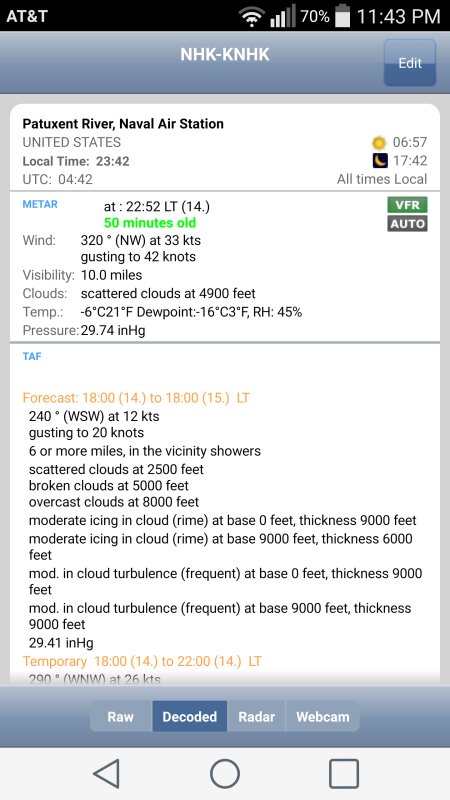
From last night:

Image

This morning was much of the same with gusts to 44kts at one point when I randomly checked.

Pretty crazy.
CamTom12 offline
User avatar
Posts: 3705
Joined: Sun Jul 08, 2012 1:08 pm
Location: Huntsville
FindMeSpot URL: https://share.delorme.com/camtom12
Aircraft: Ruppe Racer
Experimental Pacer
home hand jam "wizard"

Re: Aircraft Tiedowns in Extreme Winds: Hints+Tips+Build Mod

@ Gump

Wow. I missed that thread you just referenced on my initial search. I am still not sure if it is tie down ( 2 words ) , or tiedown ( 1 word ). Maybe that's what tripped me?

Maybe this thread can serve to focus on build mods.

Thanks
Denali offline
User avatar
Posts: 809
Joined: Sun Sep 16, 2012 1:30 am
Location: East Coast USA

Re: Aircraft Tiedowns in Extreme Winds: Hints+Tips+Build Mod

The video says the plane was "secured with ropes".
I don't buy that, you can see it's just sitting there waiting to go....
Battson offline
Knowledge Base Author
User avatar
Posts: 1810
Joined: Wed May 09, 2012 11:19 pm
Location: New Zealand
Aircraft: Bearhawk 4-place
IO-540 260hp

Re: Aircraft Tiedowns in Extreme Winds: Hints+Tips+Build Mod

Could have been loose ropes. Like no ropes at all.
contactflying offline
Posts: 4972
Joined: Wed Apr 03, 2013 7:36 pm
Location: Aurora, Missouri 2H2
Download my free "https://tinyurl.com/Safe-Maneuvering" e-book.

Re: Aircraft Tiedowns in Extreme Winds: Hints+Tips+Build Mod

EZFlap wrote:The bigger question is, other than hitting another airplane, just what is wrong with allowing an airplane to swing its nose into the wind and have the tail come up? With the nose into the wind, and in a level attitude, most of our airplanes can fly through a 120MPH wind (cruise airspeed) with no problems and no damage. The damage comes when we try not to allow the airplane to be aligned with the airflow. We may be trying to solve the wrong side of the problem.

If it were structurally possible, consider the case of one tiedown ring bolted to the underside of the fuselage between the main gear, and one strap going straight down to a ground anchor. No wheel chocks, no wing tiedowns, no tail tiedown. The airplane can rotate 360 degrees, and the tail can come up at will. Propeller positioned as far away from the ground as possible (horizontal for a 2 blade prop).

In this situation, the airplane should be able to withstand a 100+ MPH wind, because it will automatically swing its inose nto the wind, and automatically pitch the tail up into a low drag (low airframe stress) deck angle. If you made control locks that put the elevator into a slight "nose-down" deflection, the airplane would have far less tendency to want to lift off the ground.

Again, this is all theory and is not based on field experience. Not many airplanes have a structural tiedown between the main gears. People still park airplanes right next to each other in high winds (duh!).


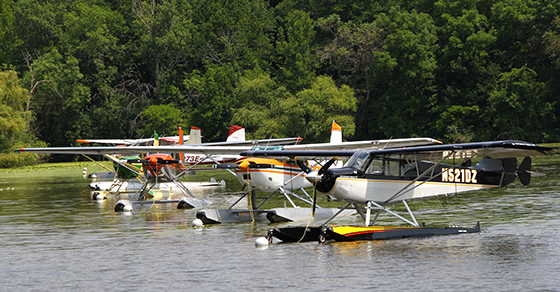
You essiently explained how a floatplane is moored to a buoy, like they do at the seapne base at Oshkosh. The rope pulling down on the nose also reduces the AoA. The only downside is the chance of the wind shifting faster than the aircraft can weathervane.

Image
FarmerFranck offline
User avatar
Posts: 29
Joined: Sat May 14, 2011 7:23 am
Location: North Bay, ON
Aircraft: Bushcaddy R80

Re: Aircraft Tiedowns in Extreme Winds: Hints+Tips+Build Mod

FarmerFranck wrote:
EZFlap wrote:The bigger question is, other than hitting another airplane, just what is wrong with allowing an airplane to swing its nose into the wind and have the tail come up? With the nose into the wind, and in a level attitude, most of our airplanes can fly through a 120MPH wind (cruise airspeed) with no problems and no damage. The damage comes when we try not to allow the airplane to be aligned with the airflow. We may be trying to solve the wrong side of the problem.

If it were structurally possible, consider the case of one tiedown ring bolted to the underside of the fuselage between the main gear, and one strap going straight down to a ground anchor. No wheel chocks, no wing tiedowns, no tail tiedown. The airplane can rotate 360 degrees, and the tail can come up at will. Propeller positioned as far away from the ground as possible (horizontal for a 2 blade prop).

In this situation, the airplane should be able to withstand a 100+ MPH wind, because it will automatically swing its inose nto the wind, and automatically pitch the tail up into a low drag (low airframe stress) deck angle. If you made control locks that put the elevator into a slight "nose-down" deflection, the airplane would have far less tendency to want to lift off the ground.

Again, this is all theory and is not based on field experience. Not many airplanes have a structural tiedown between the main gears. People still park airplanes right next to each other in high winds (duh!).


You essiently explained how a floatplane is moored to a buoy, like they do at the seapne base at Oshkosh. The rope pulling down on the nose also reduces the AoA. The only downside is the chance of the wind shifting faster than the aircraft can weathervane.

Image

Or the buoys being too close together, allowing the floatplanes to swing into each other. Same issue with boats on buoys or at anchor in bays, if someone uses too much rode on his ground tackle.

Cary
Cary offline
User avatar
Posts: 3801
Joined: Sun Jan 10, 2010 6:49 pm
Location: Fort Collins, CO
"I have slipped the surly bonds of earth..., put out my hand and touched the face of God." J.G. Magee

DISPLAY OPTIONS

10 postsPage 1 of 1

Who is online

Users browsing this forum: No registered users and 3 guests

Latest Features

Latest Knowledge Base