I upgraded to HID lights the first year I owned the airplane, so I'm not in the market to change them--not sure it would be a huge difference, anyway, since the HIDs don't take much more juice than LEDs.
Cary
Angle of Attack (AOA) Indicator
Wed Oct 16, 2013 11:21 am
"I have slipped the surly bonds of earth..., put out my hand and touched the face of God." J.G. Magee
Thu Oct 17, 2013 10:18 am
Re: Angle of Attack (AOA) Indicator
I purchased an Alpha Systems AOA indicator yesterday. It is the small mechanical gauge and I plan to panel mount it at the very top of my panel so that it is in easy view.
Thu Oct 17, 2013 11:50 am
Re: Angle of Attack (AOA) Indicator
I have an AOA that was an option for my Dynon D-100 in my C-47. I must admit that, although it works great, I just don't use it. It is too far out of my field of vision, that I just don't look at it. Maybe if it was on top of the shield? But, that would mean installing a different type of AOA. Not a priority right now.
Thu Oct 17, 2013 1:34 pm
Re: Angle of Attack (AOA) Indicator
PatínLoco wrote:I have an AOA that was an option for my Dynon D-100 in my C-47. I must admit that, although it works great, I just don't use it. It is too far out of my field of vision, that I just don't look at it. Maybe if it was on top of the shield? But, that would mean installing a different type of AOA. Not a priority right now.
The idea is that you don't need to look at it. The Dynon unit provides audio output too.

Thu Oct 17, 2013 1:48 pm
Re: Angle of Attack (AOA) Indicator
Well, I guess I need to read the instructions then!! Thanks!
Tue Jul 30, 2019 3:17 pm
Re: Angle of Attack (AOA) Indicator
I have an Alpha AOA in my 310 and really like it.
When I get a backcountry plane, I will be adding one to it.
D.
When I get a backcountry plane, I will be adding one to it.
D.
Sun Dec 29, 2019 5:33 pm
Re: Angle of Attack (AOA) Indicator
I’m considering an AOA indicator. Stand alone, not integrated with Aspen, or G3X or Dynon. Seems like Alpha might be the favourite, but I’d like opinions, or possibly comparisons.
I read the Garmin owners manual, and there’s no mention of calibration. I’d have to read the install manual, which I haven’t found. I’ve heard the Bendix mentioned with favourable reviews. I think they’re in the same league. Reading the Alpha install manual, it seems like there are provisions to tie into flap indicator switches, and maybe calibrate the stall point at each flap setting???? That’s a question, I’m unclear. Other reviews suggest that flap settings don’t affect the calibration very much. But I have doubts. I guess you’d learn how to read it for separate flap settings if the settings weren’t accounted for.
My tendency is to carry numbers to too many decimal points. I can fly precisely, but maybe I wouldn’t notice enough definition between flap settings while reading the AOA display. (I think I would) or perhaps I’d quickly learn what the display Is revealing based on the flap setting??????
Of course, my 185 doesn’t have a flap indicator, and I’ve never heard of an indicator system that could be added to an AOA system.
I know this topic ranks up with ROP vs. LOP, but I’m sincere in asking for some objective discussion. TIA.
I read the Garmin owners manual, and there’s no mention of calibration. I’d have to read the install manual, which I haven’t found. I’ve heard the Bendix mentioned with favourable reviews. I think they’re in the same league. Reading the Alpha install manual, it seems like there are provisions to tie into flap indicator switches, and maybe calibrate the stall point at each flap setting???? That’s a question, I’m unclear. Other reviews suggest that flap settings don’t affect the calibration very much. But I have doubts. I guess you’d learn how to read it for separate flap settings if the settings weren’t accounted for.
My tendency is to carry numbers to too many decimal points. I can fly precisely, but maybe I wouldn’t notice enough definition between flap settings while reading the AOA display. (I think I would) or perhaps I’d quickly learn what the display Is revealing based on the flap setting??????
Of course, my 185 doesn’t have a flap indicator, and I’ve never heard of an indicator system that could be added to an AOA system.
I know this topic ranks up with ROP vs. LOP, but I’m sincere in asking for some objective discussion. TIA.

Mon Dec 30, 2019 6:39 am
Re: Angle of Attack (AOA) Indicator
I e had the Bendix King for four years...its great...you calibrate it once as I recall without flaps.....it’s on the glare shield ....on final it’s all I use for airspeed
- Airdave100 offline

- Posts: 124
- Joined: Sun Jun 08, 2014 6:10 pm
- Location: Fredericksburg
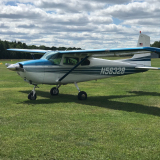
- Aircraft: 1956 Cessna 182....N5632B
Mon Dec 30, 2019 7:33 am
Re: Angle of Attack (AOA) Indicator
You guys need to go back and read Gunny’s post earlier in this thread. Then, do a bit of reading on how a TRUE AOA system functions. Then, consider how these things, designed for general aviation aircraft function.......a very different process.
First, the sensors are all wing mounted. The problem? The wing alters the air flow around that wing. There is nothing “clean” about the air moving around a wing at speed. AkTahoe also summed it up well in his post.....these airplanes are operating close to the stall, relatively speaking, much of the time.
Look at the sensors on all these devices: Funny, they are all very reminiscent of an airspeed sensor. In fact, the one on my airplane looks remarkably like the pitot mast from a Piper Warrior.....
So, essentially, what you’re doing is installing a different airspeed display. Not certificated, by the way. But, if you figure you can fly your airplane better by staring at a different airspeed instrument, or having an airspeed display up on top of your panel as opposed to buried down in the instrument display, that sounds fine to me.
But, please don’t suggest that these things are TRUE Angle Of Attack systems, or compare them to the systems on military aircraft.
MTV
First, the sensors are all wing mounted. The problem? The wing alters the air flow around that wing. There is nothing “clean” about the air moving around a wing at speed. AkTahoe also summed it up well in his post.....these airplanes are operating close to the stall, relatively speaking, much of the time.
Look at the sensors on all these devices: Funny, they are all very reminiscent of an airspeed sensor. In fact, the one on my airplane looks remarkably like the pitot mast from a Piper Warrior.....
So, essentially, what you’re doing is installing a different airspeed display. Not certificated, by the way. But, if you figure you can fly your airplane better by staring at a different airspeed instrument, or having an airspeed display up on top of your panel as opposed to buried down in the instrument display, that sounds fine to me.
But, please don’t suggest that these things are TRUE Angle Of Attack systems, or compare them to the systems on military aircraft.
MTV

Mon Dec 30, 2019 8:31 am
Re: Angle of Attack (AOA) Indicator
Following motoadve's videos over several years, I think the greatest contribution of his AOA indicator is that it has encouraged comfort with airspeed deceleration on short final.
I have taught maintenance of the apparent brisk walk rate of closure to decelerate on short final for many years but, except when actually flying with pilots, it is a harder sell. I am for anything that will slow pilots down on short final. It has been demonstrated for those many years that airplanes will not land at 1.3 Vso.
I have taught maintenance of the apparent brisk walk rate of closure to decelerate on short final for many years but, except when actually flying with pilots, it is a harder sell. I am for anything that will slow pilots down on short final. It has been demonstrated for those many years that airplanes will not land at 1.3 Vso.
- contactflying offline
- Posts: 4972
- Joined: Wed Apr 03, 2013 7:36 pm
- Location: Aurora, Missouri 2H2
Download my free "https://tinyurl.com/Safe-Maneuvering" e-book.
Mon Dec 30, 2019 10:12 am
Re: Angle of Attack (AOA) Indicator
I think the additional information they provide would be very interesting. Not something to use exclusively or trust implicitly, but another bit of data to add to the equation. Once a pilot learns to interpolate the information, I think it would end up being a valuable tool.


Mon Dec 30, 2019 11:23 am
Re: Angle of Attack (AOA) Indicator
Hammer wrote:I think the additional information they provide would be very interesting. Not something to use exclusively or trust implicitly, but another bit of data to add to the equation. Once a pilot learns to interpolate the information, I think it would end up being a valuable tool.
So, give it a try......I have. Didn't do anything for me, your mileage may vary.
MTV
Mon Dec 30, 2019 1:14 pm
Re: Angle of Attack (AOA) Indicator
For those interested in AOA measurement (including vane and pressure differential type) might want to Google NACA 4351 for a paper titled "SUMM4RY OF METHODS OF MEASURING ANGLE OF ATTACK ON AIRCRAFT".
Paul K.
Paul K.
Tue Dec 31, 2019 8:47 am
Re: Angle of Attack (AOA) Indicator
Paul,
This is a good read but a bit dated. Aerovonics (now uavionics) has a probe less capability that enthuses me. It is based on Sperry Patent #3,948,09, see for additional implementation details.
https://uavionix.com/products/av-30/
Will probably purchase in 2020 and report back...
Happy New Year
Tom
This is a good read but a bit dated. Aerovonics (now uavionics) has a probe less capability that enthuses me. It is based on Sperry Patent #3,948,09, see for additional implementation details.
https://uavionix.com/products/av-30/
Will probably purchase in 2020 and report back...
Happy New Year
Tom
Tue Dec 31, 2019 12:00 pm
Re: Angle of Attack (AOA) Indicator
Hi Tom,
Thanks for the info on the AV-30. I had seen this instrument before but did not know that it did not use some conventional style probe.
For those interested the full patent number is 3,948,096. I'm not nit-picking, for some reason the patent search engine I was using came up empty without the full number.
I look forward to your flight report on the AV-30.
Happy New Year,
Paul K.
Thanks for the info on the AV-30. I had seen this instrument before but did not know that it did not use some conventional style probe.
For those interested the full patent number is 3,948,096. I'm not nit-picking, for some reason the patent search engine I was using came up empty without the full number.
I look forward to your flight report on the AV-30.
Happy New Year,
Paul K.
Tue Dec 31, 2019 12:21 pm
Re: Angle of Attack (AOA) Indicator
This was in a C180 pirep from an old issue of Plane & Pilot.
My takeaway is that it was a gadget, fun at first, but not much use after the novelty wore off.
YMMV.

My takeaway is that it was a gadget, fun at first, but not much use after the novelty wore off.
YMMV.
Cessna Skywagon -- accept no substitute!
Tue Dec 31, 2019 2:13 pm
Re: Angle of Attack (AOA) Indicator
FYI
I found the following comment from a Mission pilots group at the end of
"The Desanctification of AoA"
By Paul Bertorelli -May 29, 2019
AvWeb
We installed an AOA called a “Lift Reserve Indicator” in our missionary C182. It’s purpose was exactly what the name implied…at any given airspeed, weight, bank angle, and G load, you knew how close you were to a stall far more precisely than indicated airspeed, sound, feel, buffet, etc. The instructions said to completely cover the airspeed indicator during calibration as one’s normal tendency to visually cross check an airspeed readout with the current feel of the airplane would prevent you from ever get to the very ragged edge of the performance envelope. Since we had wing extensions, modified leading edge cuff, bigger engine, and a host of other standard mods for the mission modified 182’s, without covering it up, indeed, that was the case. When we did cover it up, and literally depended on sight picture, sound, feel, and slowly but deliberately reaching for the very edge of the performance envelope, once established and calibrated, this was not only a handy gizmo, but a bacon saver.
As Paul pointed out, it’s usefulness in a STOL contest or when trying to stick your Super Carbon Over-The-Top VG’d, winglet, Turbocharged, GAMI equipped, Monte Barrett, massaged TIO-540 with Top Prop, Unicorn Cub onto a 50ft long gravel bar with a 10 knot tailwind, doing this on purpose with scads of previous practice is a neat gizmo to physically confirm all the tactile information.
However, when leaving a mission strip, with a cabin full of babies, sick and/or injured, moaning/screaming people, with a sweaty, over-worked pilot at the controls, on a hot day with some serious obstacle negotiations required for a ‘normal’ departure, this Lift Reserve Indicator/AOA allowed you to safely fly the airplane fully to it’s limits. We did not encourage pushing every flight to it’s absolute limits promoting some sort of religious aerial cowboy image. But in the course of flying in third world countries, it made the difference between hoping your pre-flight calculations and decisions were right vs knowing at a glance what was left of the flight envelope.
Properly used, precisely calibrated, and properly trained in its usage an AOA is an amazing device for improved situational awareness, not just for competition, but when you are tired, in cockpit overload, or meeting an emergency and knowing at a glance just what is left in the airplane can be a lifesaver.
Otherwise it is just another set of colored LED lights added to one’s latest gee whiz panel.
I found the following comment from a Mission pilots group at the end of
"The Desanctification of AoA"
By Paul Bertorelli -May 29, 2019
AvWeb
We installed an AOA called a “Lift Reserve Indicator” in our missionary C182. It’s purpose was exactly what the name implied…at any given airspeed, weight, bank angle, and G load, you knew how close you were to a stall far more precisely than indicated airspeed, sound, feel, buffet, etc. The instructions said to completely cover the airspeed indicator during calibration as one’s normal tendency to visually cross check an airspeed readout with the current feel of the airplane would prevent you from ever get to the very ragged edge of the performance envelope. Since we had wing extensions, modified leading edge cuff, bigger engine, and a host of other standard mods for the mission modified 182’s, without covering it up, indeed, that was the case. When we did cover it up, and literally depended on sight picture, sound, feel, and slowly but deliberately reaching for the very edge of the performance envelope, once established and calibrated, this was not only a handy gizmo, but a bacon saver.
As Paul pointed out, it’s usefulness in a STOL contest or when trying to stick your Super Carbon Over-The-Top VG’d, winglet, Turbocharged, GAMI equipped, Monte Barrett, massaged TIO-540 with Top Prop, Unicorn Cub onto a 50ft long gravel bar with a 10 knot tailwind, doing this on purpose with scads of previous practice is a neat gizmo to physically confirm all the tactile information.
However, when leaving a mission strip, with a cabin full of babies, sick and/or injured, moaning/screaming people, with a sweaty, over-worked pilot at the controls, on a hot day with some serious obstacle negotiations required for a ‘normal’ departure, this Lift Reserve Indicator/AOA allowed you to safely fly the airplane fully to it’s limits. We did not encourage pushing every flight to it’s absolute limits promoting some sort of religious aerial cowboy image. But in the course of flying in third world countries, it made the difference between hoping your pre-flight calculations and decisions were right vs knowing at a glance what was left of the flight envelope.
Properly used, precisely calibrated, and properly trained in its usage an AOA is an amazing device for improved situational awareness, not just for competition, but when you are tired, in cockpit overload, or meeting an emergency and knowing at a glance just what is left in the airplane can be a lifesaver.
Otherwise it is just another set of colored LED lights added to one’s latest gee whiz panel.
Tue Dec 31, 2019 4:13 pm
Re: Angle of Attack (AOA) Indicator
I have a Lift Reserve indicator in my 185. It mounts on top of the glare shield but does not disrupt the line of sight on landing. It is a bit intimidating to see how slow you can go and still be safe. The wing does have a Sportsman cuff and vortex generators.
- a3holerman offline
- Posts: 278
- Joined: Mon Oct 05, 2015 7:29 am
- Location: Cape Cod
- Aircraft: Cessna 185
DISPLAY OPTIONS
Who is online
Users browsing this forum: No registered users and 0 guests
Latest Features
-
Live to Tell
A Minnesota pilot is surprised to learn that the sudden asymmetric drag of an out-of-rig ski can…Read More -
Creators
Working in some of the Yukon's most beautiful and remote environments, photographer Simon Blakesley captures aircraft in…Read More -
Aircraft Ownership and Maintenance
Upgrading to big tires can make a huge difference in backcountry performance, but with those gains come…Read More -
Tales from Yesteryear
In this tale from bush flying yesteryear, Don Cogger signs up to help Atlee Dodge Jr recovery…Read More


Latest Knowledge Base
-
Destinations
A regional guide with ideas for winter camping destinations in California, Nevada, New Mexico, and Arizona.Read More -
Aircraft
Finding an affordable aircraft that can handle the backcountry for $80K or less? A challenge for sure, but with the…Read More -
Aircraft
01.29.2018 - Zane - Updated tire diameter graphic to add 8.50x10 Guide to tires for use in the backcountry and off-airport landing…Read More -
Pilots
12.22.2013 - Initial article format Operating aircraft on skis and negotiating a snow-covered landscape is an entirely unique skillset and environment.…Read More


