I'm only ten years into my flying so take my tips for what they're worth. I don't really do the STOL thing or back country strips as I'm mostly a float guy so my advice is going to me more about flying remote country.
1. Be a student of weather. Watch weather, learn weather, learn to predict weather and what the weather that you see means for where you are and where you're going. In BC anyway, the weather services are sparse. I just watched a little Trent Palmer video where he's fishing up in one of my favourite hunting areas and he made note of the fact that there was no weather services within 100 NM of them. This is true for a lot of BC. If your flight starts somewhere with comms you can get an overview of what the satellite shows the FIC guy but that's really it. This gets even more pronounced if you move North into the Territories.
2. Always have a working ELT in your plane at the least. This is required in Canada but somehow guys do go flying without. A few years back a trio of local idiots pancaked a plane onto a Glacier not far from Whistler. The plane had no ELT. What could have been a total non-event turned into several days of searching and several nights and days for them sitting up on a glacier. They also weren't carrying any survival gear and i think the one guy was in a T-shirt and they cut up the interior of the plane and made the seats into makeshift shirts or something. For someone deliberately heading into the backcountry an ELT and an Inreach should be with you all the time. You don't want to set a plane down with a minor problem and then be stranded for a week because you had no comms.
3. Be mentally prepared and have gear with you to choose inconvenience in the name of safety. Choosing to set down somewhere and wait out weather, or avoid exhausting your fuel is a better choice than crashing in the wilderness. The choice is easier if you have the gear to make it a non-event and are mentally ready to make the call.
4. If you're flying along and a the situation is coming at you too fast, consider slowing the plane down. Drop down to flap range and put in a couple notches of flaps and stop flying so quickly into the bad weather or climbing terrain. The plane turns around tighter this way too, and if you've got room to let the nose drop during your 180 you can turn around really tight
Backcountry Safety
Sat Feb 01, 2025 7:11 pm
- Fraser Farmer offline
- Posts: 388
- Joined: Tue May 13, 2014 10:38 pm
- Location: Abbotsford
- Aircraft: 1977 Cessna 185
Sun Feb 02, 2025 6:20 am
Re: Backcountry Safety
Great insight Fraser!
Thank you!
Thank you!
- 185Midwest offline

- Posts: 437
- Joined: Sun Sep 30, 2018 11:58 am
- Location: Fort Wayne
- Aircraft: C-185
Tue Feb 04, 2025 2:48 am
Re: Backcountry Safety
My input would be that if you are flying in the "backcountry" take several measures to show your location. I know we are all going to our super-secret spots but if we crash our buddies are going to be the ones flying in the same marginal weather we just crashed in to find us. We have a responsibility with all the tools today to make that as easy and quick as possible. Your inreach or PLB is great for tracking but if you just use it for the SOS button or comms and you hit the side of a mountain it will be no help. A 406 ELT, while not perfect, makes the searchers job so much easier. The ANG flies is some really crappy weather to look for you. How would you feel if one of your searchers wrecked while trying fly grids to look for you? Several years ago a supercub took off from near Fairbanks headed to McCarthy and never showed up. Pilots flew many hours all along the nearly 300 mile route again in marginal weather. Finally a helicopter found the remains on a mountain days later. Even if you don't care about being found your family will as it makes the insurance process easier at least.
When I fly any kind of a cross country I leave a detailed trip plan with my wife with three numbers to call if I don't show up or send a "help" message, or what happens when the rescue coordination center calls in case of an activation. She can see if I'm moving or done flying for the day. Non pilots can imagine all kinds of things and also not have any idea of the services out there to help. The phone numbers are of long time pilots who know the area I will be in. Either they can go look or at least understand what may be happening. If things hit the fan the rescue coordination center would rather get started on a false alarm than wait days for something they should have been looking for.
I can tell you from experience waiting days for news of a missing loved one really really really sucks. 20 years ago my dad crashed his 180 40 miles south of Fairbanks. He was exactly on his course and flew into the trees apparently pushing a lowering ceiling. There was a 900' swath through the trees with a huge burn mark at the end. Apparently the 121.5 ELT burned up before transmitting. There were more than 100 flights made in the search. The grid the crash was in was searched three times over three days and a pilot just happened to see the wreck when he was leaving another search area to refuel. Known route, relatively open area, 900 foot swath through the trees, over 100 flights...still took three long days.
Flying and not using these tools today is extremely irresponsible in my opinion. If you don't care to be rescued that is one thing but your spouse, kids, parents, friends or your dog might as least like to know what happened.
When I fly any kind of a cross country I leave a detailed trip plan with my wife with three numbers to call if I don't show up or send a "help" message, or what happens when the rescue coordination center calls in case of an activation. She can see if I'm moving or done flying for the day. Non pilots can imagine all kinds of things and also not have any idea of the services out there to help. The phone numbers are of long time pilots who know the area I will be in. Either they can go look or at least understand what may be happening. If things hit the fan the rescue coordination center would rather get started on a false alarm than wait days for something they should have been looking for.
I can tell you from experience waiting days for news of a missing loved one really really really sucks. 20 years ago my dad crashed his 180 40 miles south of Fairbanks. He was exactly on his course and flew into the trees apparently pushing a lowering ceiling. There was a 900' swath through the trees with a huge burn mark at the end. Apparently the 121.5 ELT burned up before transmitting. There were more than 100 flights made in the search. The grid the crash was in was searched three times over three days and a pilot just happened to see the wreck when he was leaving another search area to refuel. Known route, relatively open area, 900 foot swath through the trees, over 100 flights...still took three long days.
Flying and not using these tools today is extremely irresponsible in my opinion. If you don't care to be rescued that is one thing but your spouse, kids, parents, friends or your dog might as least like to know what happened.
Tue Feb 04, 2025 7:53 am
Re: Backcountry Safety
The bread crumbs feature on many of these plbs is very helpful too
Normally a ELT gives a transmission when it impacts, the plb will give transmission leading up to and hopefully after impact
Normally a ELT gives a transmission when it impacts, the plb will give transmission leading up to and hopefully after impact
- NineThreeKilo offline
- Retired
- Posts: 1679
- Joined: Thu Dec 31, 2009 8:16 pm
- Location: _
Wed Feb 05, 2025 10:56 am
Re: Backcountry Safety
I spend a lot of time flying at powerline level chasing coyotes. I have one hard and fast rule.. Never fly into the sun because you can't see powerlines with the sun in your eyes. If you need to check out a place make sure you make a pass with the sun at your back. Also don't look for the lines look for the poles.
Wed Feb 05, 2025 11:07 am
Re: Backcountry Safety
Coyote wrote:I spend a lot of time flying at powerline level chasing coyotes. I have one hard and fast rule.. Never fly into the sun because you can't see powerlines with the sun in your eyes. If you need to check out a place make sure you make a pass with the sun at your back. Also don't look for the lines look for the poles.
And this is exactly why I had said to look at hardware on poles you can see. Lots of times poles are hidden in tree lines and such, but if you see hardware on a visible pole changing direction in the direction of a tree line, there a wire running that direction, even if the pole is hidden. Great tip on flying it with the sun at your back, or even out the side. Its amazing what multiple angles make visible.
Thu Feb 06, 2025 5:09 pm
Re: Backcountry Safety
Time of day was always a briefing item when I flew low levels in various military aircraft for all the aforementioned reasons. Thanks for reminding me as I've sort of taken it for granted (lessons learned) for a bit of time. This is exactly why I've asked you all to chime in with your thoughts and experience.
I hope to not let the BCP community down when we produce some content this spring.
JC
PLEASE KEEP ADDING!
I hope to not let the BCP community down when we produce some content this spring.
JC
PLEASE KEEP ADDING!
- 185Midwest offline
- Posts: 437
- Joined: Sun Sep 30, 2018 11:58 am
- Location: Fort Wayne
- Aircraft: C-185
Fri Feb 07, 2025 11:09 am
Re: Backcountry Safety
To use an example at hand, there’s a Caravan missing near Nome Alaska today that they are trying to find. Last seen 38 miles from destination airport at 5300’.
No ELT signal, but nobody in the bush would be depending on that these days. On the other hand they should have a remote switch the pilot can activate before ground impact.
Does ADS-B not work to ground level everywhere in Alaska? Canada is going Sat-based, thought Alaska was the same.
What about Spot/Inreach 2 minute tracking, doesn’t everybody use that? Or Skytrac, or SpiderTracks. All our helicopters I flew up north last summer had sat-tracking, and all my planes do as well. I used a Spot up in Tuk, worked fine.
Can iPhones do their sat-thing comms up there?
No ELT signal, but nobody in the bush would be depending on that these days. On the other hand they should have a remote switch the pilot can activate before ground impact.
Does ADS-B not work to ground level everywhere in Alaska? Canada is going Sat-based, thought Alaska was the same.
What about Spot/Inreach 2 minute tracking, doesn’t everybody use that? Or Skytrac, or SpiderTracks. All our helicopters I flew up north last summer had sat-tracking, and all my planes do as well. I used a Spot up in Tuk, worked fine.
Can iPhones do their sat-thing comms up there?
'74 7GCBC, 26" ABW, Aera 660 feeding G5 and FC-10 FF.
Fri Feb 07, 2025 12:50 pm
Re: Backcountry Safety
Karmutzen wrote:No ELT signal, but nobody in the bush would be depending on that these days.
I'm curious about this comment. I know ELTs aren't perfect... can be damaged in a crash, can fail to activate, could be poorly maintained, etc. But don't they provide some level of protection, especially 406 ELTs?
Mon Feb 10, 2025 9:28 am
Re: Backcountry Safety
slowmover wrote:Karmutzen wrote:No ELT signal, but nobody in the bush would be depending on that these days.
I'm curious about this comment. I know ELTs aren't perfect... can be damaged in a crash, can fail to activate, could be poorly maintained, etc. But don't they provide some level of protection, especially 406 ELTs?
My experience with 406s has been less then stellar. I've had one fail to activate when I wrecked my own airplane, and another customers fail to activate when he wrecked his. Mine activated 2 weeks later with the plane sitting untouched in the back of the hangar. I've also had multiple activations due to water entry into the switch that cause it to start transmitting during flight. We've now put spider tracks in all our spray planes. They require it for forestry work we do in Quebec, but also just so much more reliable then the 406.
Mon Feb 10, 2025 2:19 pm
Re: Backcountry Safety
Karmutzen wrote:To use an example at hand, there’s a Caravan missing near Nome Alaska today that they are trying to find. Last seen 38 miles from destination airport at 5300’.
No ELT signal, but nobody in the bush would be depending on that these days. On the other hand they should have a remote switch the pilot can activate before ground impact.
Does ADS-B not work to ground level everywhere in Alaska? Canada is going Sat-based, thought Alaska was the same.
What about Spot/Inreach 2 minute tracking, doesn’t everybody use that? Or Skytrac, or SpiderTracks. All our helicopters I flew up north last summer had sat-tracking, and all my planes do as well. I used a Spot up in Tuk, worked fine.
Can iPhones do their sat-thing comms up there?
It doesn't sound like the ELT alerted on that Caravan. Often times, the reason 406 ELTs fail to activate is that the mounting fails, but I've also heard of the antenna cable being severed, or the antenna destroyed. Based on the photos of that Caravan, it may be the ELT alerted but was disconnected from antenna....pure speculation on my part. Terrible tragic accident, and that airplane hit hard.
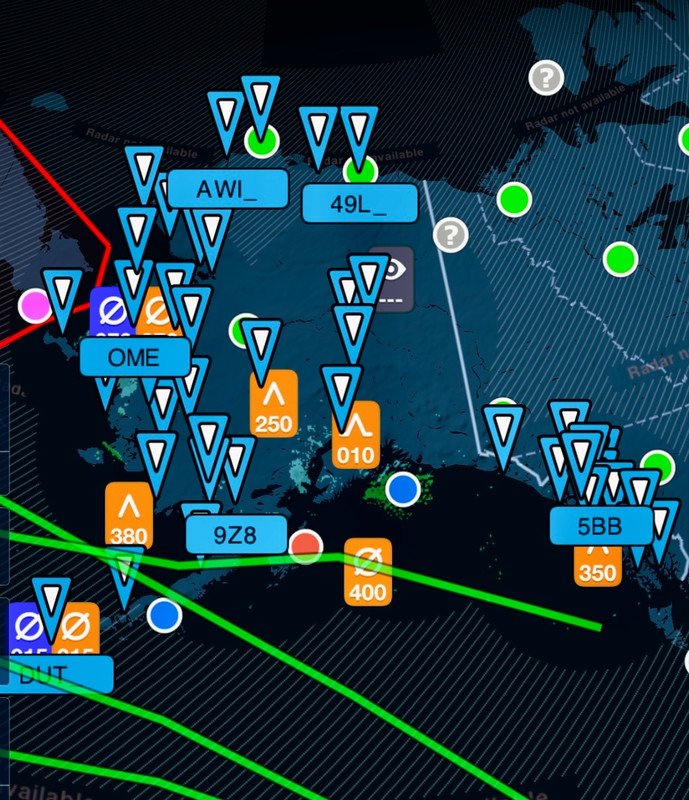
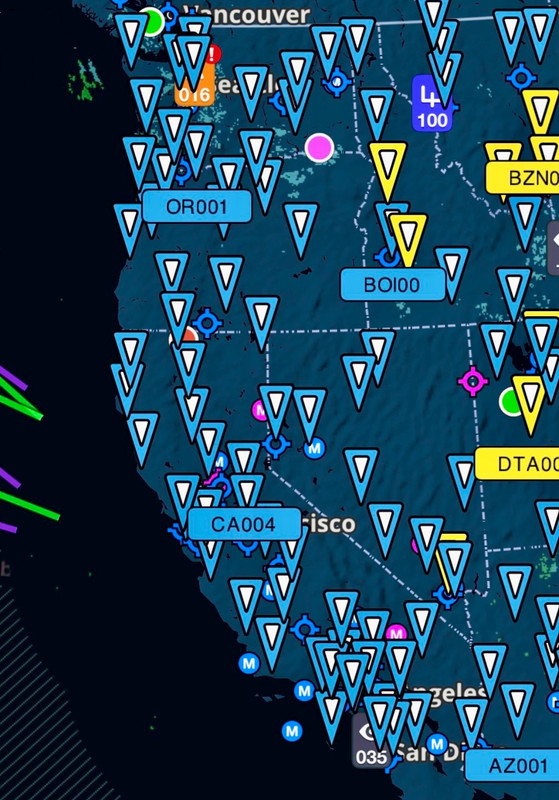
The US FAA opted to use ground based transmitters (GBTs in their vernacular), which in my opinion was the stupidest thing they could have done. As a result, ADS-B coverage in Alaska is VERY poor, and it's not a lot better in the US West, where there are these things called mountains. It seems all the FAA wanted was coverage around busy airports. Their excuse for not going with a space based system? "Cost too much for all that satellite time". So, build a very substandard system which does nobody but perhaps the FAA much good.
I know some operators use one of the aviation tracking devices in their aircraft. Apparently, Bering Air wasn't. I'm a fan of these devices and use InReach in my own plane. Not that anyone bothers to track me. That said, you CAN put the passcode to your device on your master flight plan with Flight Service.....of course, fewer and fewer pilots are using Flight Service any more....including myself.
Most of Alaska has no Cell service either.


Mon Feb 10, 2025 3:04 pm
Re: Backcountry Safety
mtv wrote:Karmutzen wrote:To use an example at hand, there’s a Caravan missing near Nome Alaska today that they are trying to find. Last seen 38 miles from destination airport at 5300’.
No ELT signal, but nobody in the bush would be depending on that these days. On the other hand they should have a remote switch the pilot can activate before ground impact.
Does ADS-B not work to ground level everywhere in Alaska? Canada is going Sat-based, thought Alaska was the same.
What about Spot/Inreach 2 minute tracking, doesn’t everybody use that? Or Skytrac, or SpiderTracks. All our helicopters I flew up north last summer had sat-tracking, and all my planes do as well. I used a Spot up in Tuk, worked fine.
Can iPhones do their sat-thing comms up there?
It doesn't sound like the ELT alerted on that Caravan. Often times, the reason 406 ELTs fail to activate is that the mounting fails, but I've also heard of the antenna cable being severed, or the antenna destroyed. Based on the photos of that Caravan, it may be the ELT alerted but was disconnected from antenna....pure speculation on my part. Terrible tragic accident, and that airplane hit hard.
The US FAA opted to use ground based transmitters (GBTs in their vernacular), which in my opinion was the stupidest thing they could have done. As a result, ADS-B coverage in Alaska is VERY poor, and it's not a lot better in the US West, where there are these things called mountains. It seems all the FAA wanted was coverage around busy airports. Their excuse for not going with a space based system? "Cost too much for all that satellite time". So, build a very substandard system which does nobody but perhaps the FAA much good.
I know some operators use one of the aviation tracking devices in their aircraft. Apparently, Bering Air wasn't. I'm a fan of these devices and use InReach in my own plane. Not that anyone bothers to track me. That said, you CAN put the passcode to your device on your master flight plan with Flight Service.....of course, fewer and fewer pilots are using Flight Service any more....including myself.
Most of Alaska has no Cell service either.
Indeed
ADSB towers in AK & West coast
With the ELT lots of variables when you touch earth, if you mush into treetops nice and soft, was it too soft to trigger?
Hit down very hard and it separates the antenna or something
Plane rolls into the dirt, or sinks too fast in water to get a good signal
One of the reasons some of the books say if you know you’re going down to activate the ELT, now aviate navigate communicate, I’m sure the Internet gods of flying would never forget to switch the ELT on, but is lessor mortals, when everything is gone pear shaped it’s easy to miss that switch
As far as risking SAR lives, I don’t prescribe to that logic. For one many of their aircraft can fly in conditions you just ain’t going to take your bugsmasher in.
For two, I flew critical medevac for a while, the hero you see risking his life to make the save in movies is a actor, if the weather and risk analysis is bad we ain’t going, crashing our ship and killing our crew will not help you, will kill us, will take a critical aircraft and base out of service for others, it’s just not going to happen.
Now what has happened is you go up as a system is coming in, still fine though, something bad happens, you don’t get reported missing for X amount of time, SAR doesn’t get the call for X+Y amount of time and now the system of nasty weather is smack dab on top of the downed aircraft.
Per the ELT / PLB thing there are also some topics on here about CAP and SAR response times, for me, outside of flying the work planes, I got both and I have friends who know how to view the bread crumbs and to keep a eye out for me. Seems the best bet right now, I am also debating upgrading my iPhone to a newer one to get the satellite texting too
- NineThreeKilo offline
- Retired
- Posts: 1679
- Joined: Thu Dec 31, 2009 8:16 pm
- Location: _
Mon Feb 10, 2025 3:59 pm
Re: Backcountry Safety
mtv wrote:Karmutzen wrote:To use an example at hand, there’s a Caravan missing near Nome Alaska today that they are trying to find. Last seen 38 miles from destination airport at 5300’.
No ELT signal, but nobody in the bush would be depending on that these days. On the other hand they should have a remote switch the pilot can activate before ground impact.
Does ADS-B not work to ground level everywhere in Alaska? Canada is going Sat-based, thought Alaska was the same.
What about Spot/Inreach 2 minute tracking, doesn’t everybody use that? Or Skytrac, or SpiderTracks. All our helicopters I flew up north last summer had sat-tracking, and all my planes do as well. I used a Spot up in Tuk, worked fine.
Can iPhones do their sat-thing comms up there?
It doesn't sound like the ELT alerted on that Caravan. Often times, the reason 406 ELTs fail to activate is that the mounting fails, but I've also heard of the antenna cable being severed, or the antenna destroyed. Based on the photos of that Caravan, it may be the ELT alerted but was disconnected from antenna....pure speculation on my part. Terrible tragic accident, and that airplane hit hard.
The US FAA opted to use ground based transmitters (GBTs in their vernacular), which in my opinion was the stupidest thing they could have done. As a result, ADS-B coverage in Alaska is VERY poor, and it's not a lot better in the US West, where there are these things called mountains. It seems all the FAA wanted was coverage around busy airports. Their excuse for not going with a space based system? "Cost too much for all that satellite time". So, build a very substandard system which does nobody but perhaps the FAA much good.
I know some operators use one of the aviation tracking devices in their aircraft. Apparently, Bering Air wasn't. I'm a fan of these devices and use InReach in my own plane. Not that anyone bothers to track me. That said, you CAN put the passcode to your device on your master flight plan with Flight Service.....of course, fewer and fewer pilots are using Flight Service any more....including myself.
Most of Alaska has no Cell service either.
I get why you think ground based is substandard, but as a user of the satellite based system, I would argue it is substandard as well. There is no weather in available for space based systems, which ia a huge advantage of the ground based system. Pros/Cons to both systems.
Mon Feb 10, 2025 5:13 pm
Re: Backcountry Safety
Good inputs about the tragic incident in AK. It's really a sad situation. All that said I really appreciate the open and honest input to this thread. Th BCP community is very very knowledgeable and yet there are few on the site that post. We have so much to share to the aviation community as whole.
That being said I've always remembered the saying "if it's not on you it's not with you" as far as safety gear. I have a vest I wear with my inreach. If I'm able, as I fly into the crash I plan to send an SOS. At least they will be close. If I survive the impact I'll send another.
These small things to us are completely foreign to most GA pilots. They want to explore the areas we love and likely take for granted. I'm working with different agencies to help them do it safely.
I'll do my best to promote the knowledge of this site and BCP itself. This is where it starts.
Thank you!
JC
That being said I've always remembered the saying "if it's not on you it's not with you" as far as safety gear. I have a vest I wear with my inreach. If I'm able, as I fly into the crash I plan to send an SOS. At least they will be close. If I survive the impact I'll send another.
These small things to us are completely foreign to most GA pilots. They want to explore the areas we love and likely take for granted. I'm working with different agencies to help them do it safely.
I'll do my best to promote the knowledge of this site and BCP itself. This is where it starts.
Thank you!
JC
- 185Midwest offline
- Posts: 437
- Joined: Sun Sep 30, 2018 11:58 am
- Location: Fort Wayne
- Aircraft: C-185
Fri Sep 12, 2025 8:09 am
Re: Backcountry Safety
Hello everyone, I'm still recovering from the TIA I experienced in February, and one of the most valuable exercises in my recovery— particularly on the mental side—has been reviewing photos and written notes from my 2023 trip out West with Whiskyblue, my Cessna 170B. Though brief, that trip took me to some of the best-known and most documented airstrips in Idaho, Montana, and Utah. With only that one journey under my belt,
I wouldn't call myself a backcountry flying expert. However, since backcountry flying is largely mountain flying, I can add several hundred hours of experience soaring over the Alps, the Andes, and the Rockies to my pilot credentials.It isFrom this perspective,that I'd like to share some observations about one of the most common pitfalls: blindly following routines that work at your home base but fail in unfamiliar, challenging terrain and weather conditions.
Scolopax aptly put it: “letting complacency creep in”. A "home-base routine" may cause no issues in familiar conditions, but failing to adapt to local weather and topography can have serious consequences—even in the most capable bushplane.
I'd also like to echo somethingfraser_farmer wrote early on in this thread: “Be a student of weather. Watch it, learn to predict it, and understand what the sky around you is telling you about where you are and where you're heading.” By "weather," I don't just mean reading colorful synoptic forecast charts. I mean the actual atmospheric conditions surrounding you —especially wind patterns, which often shift throughout the day due to differential heating of peaks and valleys (anabatic/katabatic flow). Even more constant geostrophic winds can interact with terrain in ways that easily overpower the mostcapable bushplane
One Real-World Example: I witnessed firsthand occurred at Warm Springs Creek, ID. A well- modified straight-tail 182 (Sportsman STOL kit, upgraded prop and tires) departed runway 20 downhill into a soft headwind coming up from the valley. The pilot flew directly down the canyon and into the lee side of a south- north ridge, where the air was descending. Predictably, climb rate dropped dramatically.
As Scolopax noted: "Climbing into an airmass that is going downhill can consume a significant portion of your climb rate." I watched the angle of attack increase while climb rate decreased—not a comfortable sight. Eventually, I ost sight as the aircraft turned toward lower terrain, since there was no way it could outclimb the ridge. This wasn't a high-density- altitude situation, though it may have appeared as such to the pilot. Perhaps he had made that same departure previously without trouble, but even a slight difference in wind speed or direction can completely change the outcome.
When I departed the following morning, I chose a completely different route—toward the sun-drenched northwestern ridge of the valley. That slope, perfectly oriented to catch the morning sun, generated a strong upslope flow from a thermal that boosted my climb rate by approximately 150 fpm. Careful observation of valley circulation patterns had paid off. Watching soaring birds or imagining how a helium toy-balloon would drift can help you visualize airflow patterns. As one soaring master once said when asked his secret to his outstanding flights: "Follow the energy. men!!" This principle applies perfectly as well to the ongoing discussion in the other thread about preparing for reduced-performance flying in mountainous terrain.
Choosing a route that works with natural forces (wind patterns, thermals) rather than despite them is both smarter and safer. On arrival at Warm Springs Creek, I had applied the same thinking. The Idaho Airports webpage recommends landing on runway 02, but both the windsock and a groundspeed versus airspeed comparison during my overflight revealed a 25-mph tailwind. I wanted to avoid a tailwind landing—and more importantly, I didn't like the departure route in case of a go-around, which would require climbing over tall trees and a hill immediately beyond the runway. Instead, I executed two short dogleg turns on base and final to land into the wind. The approach worked perfectly.
Again: Local knowledge and real-time weather assessment often trump published procedures. Stay flexible and always have an escape plan.
I wouldn't call myself a backcountry flying expert. However, since backcountry flying is largely mountain flying, I can add several hundred hours of experience soaring over the Alps, the Andes, and the Rockies to my pilot credentials.It isFrom this perspective,that I'd like to share some observations about one of the most common pitfalls: blindly following routines that work at your home base but fail in unfamiliar, challenging terrain and weather conditions.
Scolopax aptly put it: “letting complacency creep in”. A "home-base routine" may cause no issues in familiar conditions, but failing to adapt to local weather and topography can have serious consequences—even in the most capable bushplane.
I'd also like to echo somethingfraser_farmer wrote early on in this thread: “Be a student of weather. Watch it, learn to predict it, and understand what the sky around you is telling you about where you are and where you're heading.” By "weather," I don't just mean reading colorful synoptic forecast charts. I mean the actual atmospheric conditions surrounding you —especially wind patterns, which often shift throughout the day due to differential heating of peaks and valleys (anabatic/katabatic flow). Even more constant geostrophic winds can interact with terrain in ways that easily overpower the mostcapable bushplane
One Real-World Example: I witnessed firsthand occurred at Warm Springs Creek, ID. A well- modified straight-tail 182 (Sportsman STOL kit, upgraded prop and tires) departed runway 20 downhill into a soft headwind coming up from the valley. The pilot flew directly down the canyon and into the lee side of a south- north ridge, where the air was descending. Predictably, climb rate dropped dramatically.
As Scolopax noted: "Climbing into an airmass that is going downhill can consume a significant portion of your climb rate." I watched the angle of attack increase while climb rate decreased—not a comfortable sight. Eventually, I ost sight as the aircraft turned toward lower terrain, since there was no way it could outclimb the ridge. This wasn't a high-density- altitude situation, though it may have appeared as such to the pilot. Perhaps he had made that same departure previously without trouble, but even a slight difference in wind speed or direction can completely change the outcome.
When I departed the following morning, I chose a completely different route—toward the sun-drenched northwestern ridge of the valley. That slope, perfectly oriented to catch the morning sun, generated a strong upslope flow from a thermal that boosted my climb rate by approximately 150 fpm. Careful observation of valley circulation patterns had paid off. Watching soaring birds or imagining how a helium toy-balloon would drift can help you visualize airflow patterns. As one soaring master once said when asked his secret to his outstanding flights: "Follow the energy. men!!" This principle applies perfectly as well to the ongoing discussion in the other thread about preparing for reduced-performance flying in mountainous terrain.
Choosing a route that works with natural forces (wind patterns, thermals) rather than despite them is both smarter and safer. On arrival at Warm Springs Creek, I had applied the same thinking. The Idaho Airports webpage recommends landing on runway 02, but both the windsock and a groundspeed versus airspeed comparison during my overflight revealed a 25-mph tailwind. I wanted to avoid a tailwind landing—and more importantly, I didn't like the departure route in case of a go-around, which would require climbing over tall trees and a hill immediately beyond the runway. Instead, I executed two short dogleg turns on base and final to land into the wind. The approach worked perfectly.
Again: Local knowledge and real-time weather assessment often trump published procedures. Stay flexible and always have an escape plan.
Last edited by Zzz on Fri Sep 12, 2025 8:59 am, edited 1 time in total.
Reason: Fixed text formatting, removed premature line breaks
Reason: Fixed text formatting, removed premature line breaks

Mon Sep 15, 2025 11:18 am
Re: Backcountry Safety
Well, summer is nearly history for another year, and temperatures cool. This summer, like many in the recent past, included a number of tragic accidents in the west, many of which were precipitated by, or certainly made worse by density altitude. We continue to have pilots come to the mountain West, where operations at airports with field elevations of 4000 to 6000 msl are common. And, the 80 degree F days at those elevations bring about that sneaky bastard known as density altitude.
It's frustrating to those of us to live here, because it's so hard to get the word out. A young couple rents a stock C-172 out on the coast, and heads to Montana. Fueling in Missoula (long range fuel....top it off), the fueler notes the back of the plane is full to the ceiling with camp gear. Off they go in mid afternoon, temps in the high 80s, and fly into the side of a mountain at 7000 feet.
We all need to do some research on density altitude and try to ratchet it up in our list of "concerns" next summer. One of the best things I've done in this regard is install a uAvionix AV-30, which has the capability to display density altitude. Mine is set to show DA on one side of the primary display, and actual altitude on the other side. Garmin G-3s also have this capability, and perhaps other electronic instruments do as well. All it takes is connecting these devices to an external temperature sensor. These things probably don't provide precise DA readouts, but they're close enough to get your attantion, which, really, is the point.
Fly safe.
It's frustrating to those of us to live here, because it's so hard to get the word out. A young couple rents a stock C-172 out on the coast, and heads to Montana. Fueling in Missoula (long range fuel....top it off), the fueler notes the back of the plane is full to the ceiling with camp gear. Off they go in mid afternoon, temps in the high 80s, and fly into the side of a mountain at 7000 feet.
We all need to do some research on density altitude and try to ratchet it up in our list of "concerns" next summer. One of the best things I've done in this regard is install a uAvionix AV-30, which has the capability to display density altitude. Mine is set to show DA on one side of the primary display, and actual altitude on the other side. Garmin G-3s also have this capability, and perhaps other electronic instruments do as well. All it takes is connecting these devices to an external temperature sensor. These things probably don't provide precise DA readouts, but they're close enough to get your attantion, which, really, is the point.
Fly safe.
Thu Sep 18, 2025 6:01 am
Re: Backcountry Safety
Numbers in a POH don't seem to impress some people that have not yet developed an up close and personal relationship with DA.
Someone flying from a lower area can fly loaded with reduced power settings (including/especially takeoff) that yield similar book climb rates at high DA. It can at least blow the dust off of what someone is taking for granted before they rapidly revise them while dodging tall ponderosas and desperately questioning their most recent life choices.
I remember the first time I flew at much lower DA than the pretty high area where I learned to fly and having my own assumptions revised in the other direction.
Someone flying from a lower area can fly loaded with reduced power settings (including/especially takeoff) that yield similar book climb rates at high DA. It can at least blow the dust off of what someone is taking for granted before they rapidly revise them while dodging tall ponderosas and desperately questioning their most recent life choices.
I remember the first time I flew at much lower DA than the pretty high area where I learned to fly and having my own assumptions revised in the other direction.
Thu Sep 18, 2025 9:56 am
Re: Backcountry Safety
Thanks Mike. Until one has experienced high DA then one has no idea how much it truly saps performance.
On another note I’m compiling all of this great content and hope to begin getting some good information out via RAF.
JC
On another note I’m compiling all of this great content and hope to begin getting some good information out via RAF.
JC
- 185Midwest offline
- Posts: 437
- Joined: Sun Sep 30, 2018 11:58 am
- Location: Fort Wayne
- Aircraft: C-185
Thu Sep 18, 2025 12:17 pm
Re: Backcountry Safety
The message is still not getting out there. I'm not sure how you do that, perhaps through the manufacturer or seller?
I was in the backcountry of Idaho on Sunday, watched a nose wheel cub either do a bounce and go or simply low pass (i couldn't see the runway at that point), then power up and do a 180 degree turn about 100' over the trees. He went back down river out of sight, then came back on like an opposite pattern, and did a low pass the opposite direction (now with a tailwind). By the time he got low enough to land he had used up at least 800' of runway. He powered up and started climing, at least this time he was heading to lower terrain, but still had what looked like lots of flaps in.
All the while that I could see him, I couldn't figure out what he was doing, as his location in the valley was not any place I would be for an inspection pass, or an attempt to land. I was pretty certain that he was NOT a skilled pilot and I thought he was going to wad it up while I watched.
I thought about getting on the radio, but didn't. I didn't want to add more to his potentially overloaded brain.
I was in the backcountry of Idaho on Sunday, watched a nose wheel cub either do a bounce and go or simply low pass (i couldn't see the runway at that point), then power up and do a 180 degree turn about 100' over the trees. He went back down river out of sight, then came back on like an opposite pattern, and did a low pass the opposite direction (now with a tailwind). By the time he got low enough to land he had used up at least 800' of runway. He powered up and started climing, at least this time he was heading to lower terrain, but still had what looked like lots of flaps in.
All the while that I could see him, I couldn't figure out what he was doing, as his location in the valley was not any place I would be for an inspection pass, or an attempt to land. I was pretty certain that he was NOT a skilled pilot and I thought he was going to wad it up while I watched.
I thought about getting on the radio, but didn't. I didn't want to add more to his potentially overloaded brain.
- StillLearning offline
- Posts: 417
- Joined: Mon Nov 05, 2018 6:22 pm
- Location: Salmon
- Aircraft: Cessna 180 Skywagon 1953
Fri Sep 19, 2025 4:41 am
Re: Backcountry Safety
Still,
I’m not sure either but with the BCP and the RAF we will will try.
MW
I’m not sure either but with the BCP and the RAF we will will try.
MW
- 185Midwest offline
- Posts: 437
- Joined: Sun Sep 30, 2018 11:58 am
- Location: Fort Wayne
- Aircraft: C-185
DISPLAY OPTIONS
Who is online
Users browsing this forum: No registered users and 0 guests
Latest Features
-
Live to Tell
A Minnesota pilot is surprised to learn that the sudden asymmetric drag of an out-of-rig ski can…Read More -
Creators
Working in some of the Yukon's most beautiful and remote environments, photographer Simon Blakesley captures aircraft in…Read More -
Aircraft Ownership and Maintenance
Upgrading to big tires can make a huge difference in backcountry performance, but with those gains come…Read More -
Tales from Yesteryear
In this tale from bush flying yesteryear, Don Cogger signs up to help Atlee Dodge Jr recovery…Read More


Latest Knowledge Base
-
Destinations
A regional guide with ideas for winter camping destinations in California, Nevada, New Mexico, and Arizona.Read More -
Aircraft
Finding an affordable aircraft that can handle the backcountry for $80K or less? A challenge for sure, but with the…Read More -
Aircraft
01.29.2018 - Zane - Updated tire diameter graphic to add 8.50x10 Guide to tires for use in the backcountry and off-airport landing…Read More -
Pilots
12.22.2013 - Initial article format Operating aircraft on skis and negotiating a snow-covered landscape is an entirely unique skillset and environment.…Read More


