This is an excellent vid. Check out some of the guy's other videos too.
http://www.vimeo.com/11479840
Bird Dog tail cam
Sun Aug 01, 2010 9:50 pm
Re: Bird Dog tail cam
Very cool video's, Z!!
Anybody here on BCP have a L-19? A buddy of mine had a beautifully restored Bird Dog and I absolutely loved the plane!! Lot's of room for my big azz and visibility is great. Would it make for a good back country plane? If not, why?
I guess I can do my own research. But, other than being all metal and bigger engine (I believe 213hp), how does the Bird Dog compare to a Super Cub and a Scout?
Anybody here on BCP have a L-19? A buddy of mine had a beautifully restored Bird Dog and I absolutely loved the plane!! Lot's of room for my big azz and visibility is great. Would it make for a good back country plane? If not, why?
I guess I can do my own research. But, other than being all metal and bigger engine (I believe 213hp), how does the Bird Dog compare to a Super Cub and a Scout?
Sun Aug 01, 2010 10:10 pm
Re: Bird Dog tail cam
Nice find, Zane.
Petaluma and Sonoma Sky Park were two of the airports where I spun my circuits getting my tailwheel endorsement last year. Perfect area to fly an underpowered Cub, provided the weather is as nice as the day in the video. It's a blast skimming the tidal marshes with the door open.
Gets me to thinkin I need another airplane.........
Flynengr
Petaluma and Sonoma Sky Park were two of the airports where I spun my circuits getting my tailwheel endorsement last year. Perfect area to fly an underpowered Cub, provided the weather is as nice as the day in the video. It's a blast skimming the tidal marshes with the door open.
Gets me to thinkin I need another airplane.........
Flynengr
Mon Aug 02, 2010 5:30 am
Re: Bird Dog tail cam
Zane, Nice!
58Skylane,
I used to fly a P Ponk powered Bird Dog. I absolutely love the airplane, and if backcountry means JC and the likes, so will you. Having said that, it ain't a supercub.... and that one had balls... Even an early 180 is a better bush beater and I *think* that is because of the trimable tail...
I have never flown the Marchetti version (turbine) but have always thought that in the right hands, it just might be the ultimate back country buggy. Besides the Turbine, the Marchetti also has a 180 tail, and a rear door.
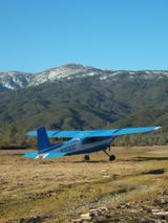
Banner towing has zero to do with backcountry flying, but it sure makes a good barometer of what a particular wing / engine combination will do. I think of it as a flying tractor pull... Take a look at this photo, all four of these airplanes are hauling identical banners (the photo ship was a super stinson ) Look at the attitude of the O-520 powered Bird Dog vs. the attitude of the two O-360 powered cubs, and the Bird Dog even had flaps out... opinions are wonderful, but seeing is believing

58Skylane,
58Skylane wrote:Very cool video's, Z!!
Anybody here on BCP have a L-19? A buddy of mine had a beautifully restored Bird Dog and I absolutely loved the plane!! Lot's of room for my big azz and visibility is great. Would it make for a good back country plane? If not, why?
I guess I can do my own research. But, other than being all metal and bigger engine (I believe 213hp), how does the Bird Dog compare to a Super Cub and a Scout?
I used to fly a P Ponk powered Bird Dog. I absolutely love the airplane, and if backcountry means JC and the likes, so will you. Having said that, it ain't a supercub.... and that one had balls... Even an early 180 is a better bush beater and I *think* that is because of the trimable tail...
I have never flown the Marchetti version (turbine) but have always thought that in the right hands, it just might be the ultimate back country buggy. Besides the Turbine, the Marchetti also has a 180 tail, and a rear door.
Banner towing has zero to do with backcountry flying, but it sure makes a good barometer of what a particular wing / engine combination will do. I think of it as a flying tractor pull... Take a look at this photo, all four of these airplanes are hauling identical banners (the photo ship was a super stinson ) Look at the attitude of the O-520 powered Bird Dog vs. the attitude of the two O-360 powered cubs, and the Bird Dog even had flaps out... opinions are wonderful, but seeing is believing


Mon Aug 02, 2010 6:00 am
Re: Bird Dog tail cam
Wow!! Even with a 520, it struggles??
Researching last night, I noticed most of them came with the O-470-11 (213HP). The Rate of Climb is not very impressive. So probable not a good performer in the backcountry during the warmer months of the year? And no chance of putting AK Bushwheels on a Bird Dog neither, I bet?
For the money, you might be better off with a Cub or a Scout? I noticed most Bird Dogs in great restored condition are selling for well over $100K.
Researching last night, I noticed most of them came with the O-470-11 (213HP). The Rate of Climb is not very impressive. So probable not a good performer in the backcountry during the warmer months of the year? And no chance of putting AK Bushwheels on a Bird Dog neither, I bet?
For the money, you might be better off with a Cub or a Scout? I noticed most Bird Dogs in great restored condition are selling for well over $100K.
Mon Aug 02, 2010 7:32 am
Re: Bird Dog tail cam
Rob
I have zero experience with banner towing, but, I don't quite understand your AOA correlation with performance. Are you saying that the Bird Dog needed flaps to stay in the air, while the Cubs appear to be going flat out? Was the L-19/O-1 at similar percentages of power as the Cubs to go the same speed? What prop did the Pponk have? My experience in a Bird Dog is very limited - two phases in Army flight school, and those were heavy I think. Not much AOA on the ground and relatively heavy empty weight hindered t/o performance I think, and needed the throttle way back in cruise to keep in the engine below the red-line hindered cruise speed as I remember.
Ruby Aviation in Twin Bridges, MT reworked some of the Italian turboprop jobs, and had just weighed one that was about to be delivered, when I stopped in one time. As I remember that one was something like 1900 empty - heavier than many 185s.
I have zero experience with banner towing, but, I don't quite understand your AOA correlation with performance. Are you saying that the Bird Dog needed flaps to stay in the air, while the Cubs appear to be going flat out? Was the L-19/O-1 at similar percentages of power as the Cubs to go the same speed? What prop did the Pponk have? My experience in a Bird Dog is very limited - two phases in Army flight school, and those were heavy I think. Not much AOA on the ground and relatively heavy empty weight hindered t/o performance I think, and needed the throttle way back in cruise to keep in the engine below the red-line hindered cruise speed as I remember.
Ruby Aviation in Twin Bridges, MT reworked some of the Italian turboprop jobs, and had just weighed one that was about to be delivered, when I stopped in one time. As I remember that one was something like 1900 empty - heavier than many 185s.
Mon Aug 02, 2010 8:32 am
Re: Bird Dog tail cam
Resky,
I have flown all three airplanes in that picture, in all manner of flight. I'm certainly not an aeronautical engineer, but I can say without a doubt that the only thing that Bird Dog did better than the other two, was sky write, and ferry fast and comfortable. Workwise the cubs will tow an identical load faster (IMHO that means more efficient flying) and slower (again in my mind more efficient flying) Bear in mind that they are accomplishing all that with two less cylinders and a fixed pitch vs. the 88" Mac. The reason I pointed out the AOA is because it is struggling to do what the others are doing... it actually would have flown without flaps, but with an even greater penalty on the AOA
To address the flap question, You can get by towing without flaps in the bird dog, but not in formation with cubs for very long. Hauling say 3500 square feet of sign in a cub you can just blip the throttle when it settles some, and it will start flying again. The BD doesn't have the wing to let it get that slow, and relying on power alone takes too long...It is also not conducive to good cooling as the nose starts getting a little too high... They make a good glider tug, but you tow gliders quite a bit faster than banners.
I would have to look up the weight on the C-305, But I want to say it was in the low 1600s not a porker, but not exactly a featherweight either.
Again, I actually love the Bird Dog, but since the original question pitted it up against the cub in the back country.... Well..sorry IMHO it just ain't happening... And again IMHO (which doesn't account for much) A good, light 180 is probably going to be a better bet by a good amount.
Of course all of this also depends on your interpretation of back country
I think Back country wise it is probably similar performance wise to a Scout, but using more horsepower to accomplish the same results. <~~~ that oughta get the natives all up in arms
Take care, Rob
I have flown all three airplanes in that picture, in all manner of flight. I'm certainly not an aeronautical engineer, but I can say without a doubt that the only thing that Bird Dog did better than the other two, was sky write, and ferry fast and comfortable. Workwise the cubs will tow an identical load faster (IMHO that means more efficient flying) and slower (again in my mind more efficient flying) Bear in mind that they are accomplishing all that with two less cylinders and a fixed pitch vs. the 88" Mac. The reason I pointed out the AOA is because it is struggling to do what the others are doing... it actually would have flown without flaps, but with an even greater penalty on the AOA
To address the flap question, You can get by towing without flaps in the bird dog, but not in formation with cubs for very long. Hauling say 3500 square feet of sign in a cub you can just blip the throttle when it settles some, and it will start flying again. The BD doesn't have the wing to let it get that slow, and relying on power alone takes too long...It is also not conducive to good cooling as the nose starts getting a little too high... They make a good glider tug, but you tow gliders quite a bit faster than banners.
I would have to look up the weight on the C-305, But I want to say it was in the low 1600s not a porker, but not exactly a featherweight either.
Again, I actually love the Bird Dog, but since the original question pitted it up against the cub in the back country.... Well..sorry IMHO it just ain't happening... And again IMHO (which doesn't account for much) A good, light 180 is probably going to be a better bet by a good amount.
Of course all of this also depends on your interpretation of back country
I think Back country wise it is probably similar performance wise to a Scout, but using more horsepower to accomplish the same results. <~~~ that oughta get the natives all up in arms
Take care, Rob
Mon Aug 02, 2010 6:44 pm
Re: Bird Dog tail cam
How about stalling speed for the Bird Dog??
Mon Aug 02, 2010 7:53 pm
Re: Bird Dog tail cam
58Skylane wrote:How about stalling speed for the Bird Dog??
Is the L-19 wing the same at the 170B? If so, coupled with the slightly beefier airframe, I'd guess that the dirty power-off stall speed would be somewhere in the mid-50's (mph)
- Zzz offline


- Posts: 2855
- Joined: Fri Oct 08, 2004 11:09 pm
- Location: northern
- Aircraft: Swiveling desk chair
Half a century spent proving “it is better to be thought a fool than to open your mouth and remove all doubt.”
Mon Aug 02, 2010 9:43 pm
Re: Bird Dog tail cam
1SeventyZ wrote:58Skylane wrote:How about stalling speed for the Bird Dog??
Is the L-19 wing the same at the 170B? If so, coupled with the slightly beefier airframe, I'd guess that the dirty power-off stall speed would be somewhere in the mid-50's (mph)
Not bad, I guess. Any idea how that compares to a 180hp Scout?
And so the big question for me is.............Take of distance to clear a 50ft obstacle for the Bird Dog compared to a 180hp Scout with at least 31" AKBW tires at........let's go with about 4,000-5,000 ft elevation??
Or does elevation even matter when comparing the two?? (I don't know)
Mon Aug 02, 2010 11:21 pm
Re: Bird Dog tail cam
Great video!
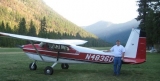
Here's my attempt at editing, not quite the same quality but was. Fun day giving rides off the lake! The army one is mine & the other we just picked up Monday from getin a new USAF paintjob.
I find it hard to believe they struggle to pull a banner, I've never towed with mine, but i know alot of them are used for pulling banners & used to launch gliders in Hawaii.
I don't think I've seen one w/ bushwheels, but you can get the Wittiker Tandem gear, two 6.00's in a truck configuration like an airliner.
I think the stall speed is published at 52 or 54 mph. T/o & landing distance is very short, I would think it would be a great performer BC.
Here's my attempt at editing, not quite the same quality but was. Fun day giving rides off the lake! The army one is mine & the other we just picked up Monday from getin a new USAF paintjob.
I find it hard to believe they struggle to pull a banner, I've never towed with mine, but i know alot of them are used for pulling banners & used to launch gliders in Hawaii.
I don't think I've seen one w/ bushwheels, but you can get the Wittiker Tandem gear, two 6.00's in a truck configuration like an airliner.
I think the stall speed is published at 52 or 54 mph. T/o & landing distance is very short, I would think it would be a great performer BC.
Blessed are the curious, for they shall have great adventures!
Tue Aug 03, 2010 4:07 am
Re: Bird Dog tail cam
Hi L-19,
Cool vid
That was a poor use of words on my part... Of course a bird dog is a good tug, and does fine towing gliders and up to about 3500 square feet of banner. It is a struggle if you are trying to tow with one in formation with the cubs or trying to tow larger signs (trick cubs will tow as much as 5000 square feet)... And I suspect if you are trying to follow mauleguy or a few of his friends into a 300'-400' boulder strewn gravel bench, it will also be a struggle. On such a beach the cub is not even breathing hard (assuming equal proficiency in each case)
So again, an individuals idea of flying 'back country' will largely determine the fun factor you get out of the 305 and whether or not it will compare to a cub...
Zs wing analogy is good, it is almost the same wing, and is the same tail as a 170, except that the flaps on a 305 go to 60° It's a giant plus *except* most 305 owners I have met never use flaps 60, and some even seem scared of it
And of course all of this is just opinion...
did I mention I love Bird Dogs?
Take care, Rob
Cool vid
That was a poor use of words on my part... Of course a bird dog is a good tug, and does fine towing gliders and up to about 3500 square feet of banner. It is a struggle if you are trying to tow with one in formation with the cubs or trying to tow larger signs (trick cubs will tow as much as 5000 square feet)... And I suspect if you are trying to follow mauleguy or a few of his friends into a 300'-400' boulder strewn gravel bench, it will also be a struggle. On such a beach the cub is not even breathing hard (assuming equal proficiency in each case)
So again, an individuals idea of flying 'back country' will largely determine the fun factor you get out of the 305 and whether or not it will compare to a cub...
Zs wing analogy is good, it is almost the same wing, and is the same tail as a 170, except that the flaps on a 305 go to 60° It's a giant plus *except* most 305 owners I have met never use flaps 60, and some even seem scared of it
And of course all of this is just opinion...
did I mention I love Bird Dogs?
Take care, Rob
Tue Aug 03, 2010 5:46 am
Re: Bird Dog tail cam
Well, for me, this has been very good information and discussion about the Bird Dog so far! I'm sure there's more to learn. But, realistically, if I want to keep up with my Cub and Scout friends, I think a 180hp Scout is what I'm leaning towards (when the time is right  ).
).
But damn it!!! I'm truly in love with the Bird Dog. Maybe I'll hit the lotto soon and I can have both a Bird Dog and Scout. And keep my 58 Skylane. And buy a 206.........and.......
).But damn it!!! I'm truly in love with the Bird Dog. Maybe I'll hit the lotto soon and I can have both a Bird Dog and Scout. And keep my 58 Skylane. And buy a 206.........and.......
Tue Aug 03, 2010 6:02 am
Re: Bird Dog tail cam
Here's a bunch a great pictures of the L-19 Bird Dog!
http://www.airliners.net/search/photo.search?search_field=datedesc&q=l-19+bird+dog&page=1&page_limit=120&sid=3e82460354e71e63b40251be6b1934bd&sort_order=photo_id+desc&thumbnails=
Here's a hard working Dog. Is it more, or are those flaps damn near vertical??

http://www.airliners.net/search/photo.search?search_field=datedesc&q=l-19+bird+dog&page=1&page_limit=120&sid=3e82460354e71e63b40251be6b1934bd&sort_order=photo_id+desc&thumbnails=
Here's a hard working Dog. Is it more, or are those flaps damn near vertical??
Tue Aug 03, 2010 8:22 am
Re: Bird Dog tail cam
A Birddog would be an awesome backcountry bird even if only because
it can mark it's territory with a white phosphorus rocket.
Best I can do is dribble a litte oil.
Dale
it can mark it's territory with a white phosphorus rocket.
Best I can do is dribble a litte oil.
Dale
Tue Aug 03, 2010 10:46 am
Re: Bird Dog tail cam
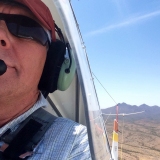
Sometimes I think it would be sweet to have all that rearward visibility.
http://www.vimeo.com/13581483
I'm not going to lie...side by side on the ground, the 170 looks a might bit sleeker. But I've always loved having as much plexi around me as possible, and that is one thing about 'Dog that is really cool.
For real backcountry performance...come on. There's knowing that your machine can do it, and there's you actually having the skills. Attach 220hp to my stock 170 and I could prob live with that plane for the rest of my days knowing that my skills would likely never match the aircraft's capability. Many guys in their uber-trick cubs can't match a light Cessna 170B in capable hands. Didn't Bill Rusk (or maybe a different Bill) teach the cub dudes a lesson at New Holstein a few years ago in a shortfield landing contest? That big buzzard Cessna wing with 40 deg flaps, and washout...is pretty damned awesome and you can fly really slow with a little power on, even without a STOL leading edge cuff. Gross weight and the nut behind the stick are the biggest variables.
On the other hand, a lightweight, low wing-loaded aircraft like a cub makes you work a lot less for the same results. Pat, I've always wanted a 8GCBC too, so I think you're on the right track there. I find myself becoming more attracted to rag and tube construction too.
http://www.vimeo.com/13581483
I'm not going to lie...side by side on the ground, the 170 looks a might bit sleeker. But I've always loved having as much plexi around me as possible, and that is one thing about 'Dog that is really cool.
For real backcountry performance...come on. There's knowing that your machine can do it, and there's you actually having the skills. Attach 220hp to my stock 170 and I could prob live with that plane for the rest of my days knowing that my skills would likely never match the aircraft's capability. Many guys in their uber-trick cubs can't match a light Cessna 170B in capable hands. Didn't Bill Rusk (or maybe a different Bill) teach the cub dudes a lesson at New Holstein a few years ago in a shortfield landing contest? That big buzzard Cessna wing with 40 deg flaps, and washout...is pretty damned awesome and you can fly really slow with a little power on, even without a STOL leading edge cuff. Gross weight and the nut behind the stick are the biggest variables.
On the other hand, a lightweight, low wing-loaded aircraft like a cub makes you work a lot less for the same results. Pat, I've always wanted a 8GCBC too, so I think you're on the right track there.
I find myself becoming more attracted to rag and tube construction too.- Zzz offline
- Posts: 2855
- Joined: Fri Oct 08, 2004 11:09 pm
- Location: northern
- Aircraft: Swiveling desk chair
Half a century spent proving “it is better to be thought a fool than to open your mouth and remove all doubt.”
Tue Aug 03, 2010 6:27 pm
Re: Bird Dog tail cam
Cool video, Z!! Looks like fun guys to hang around with and get into plenty of trouble! Are they here on this forum or friends of yours? Perhaps they might be interested in flying the B Dog over to Austin later this month?? I would love to bum a ride in the B Dog 
I finally found this picture. I'm pretty sure this is the plane my buddy (Bradshaw) had at one time (sometime between 93-98). It was perfectly restored and beautiful. I got a ride in it twice. Once down in the Charlotte, NC area and another around Rochester, MN area. Had a blast and the visibility is awesome (as you can see in the video's). Lot's of room for a big guy like me, too. The two main reason's why I love that plane so much (great visibility and lot's of cabin space). Anyway, enough with the chit chat.........

Are they here on this forum or friends of yours? Perhaps they might be interested in flying the B Dog over to Austin later this month?? I would love to bum a ride in the B Dog I finally found this picture. I'm pretty sure this is the plane my buddy (Bradshaw) had at one time (sometime between 93-98). It was perfectly restored and beautiful. I got a ride in it twice. Once down in the Charlotte, NC area and another around Rochester, MN area. Had a blast and the visibility is awesome (as you can see in the video's). Lot's of room for a big guy like me, too. The two main reason's why I love that plane so much (great visibility and lot's of cabin space). Anyway, enough with the chit chat.........
Tue Aug 03, 2010 7:00 pm
Re: Bird Dog tail cam

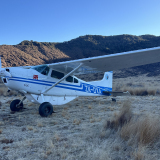
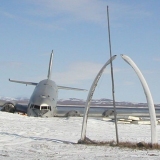
280 hp Backcountry Bird Dog on duty in the Yukon a few years ago. The operator did not like it nearly as much as his 180hp light 170 which was on rebuild. The BD was much heavier and esp in the tail and no option of taking the extra passengers he said. Big flaps though.
Last edited by JamieG on Tue Aug 03, 2010 7:08 pm, edited 1 time in total.
Tue Aug 03, 2010 7:08 pm
Re: Bird Dog tail cam
JamieG wrote:
280 hp Backcountry Bird Dog on duty in the Yukon a few years ago. The operator did not like it nearly as much as his 180hp light 170 which was on rebuild. The BD was much heavier and esp in the tail and no option of taking the extra passengers he said. Big flaps though.

280hp and still not a good performer?? Why was the Bird Dog heavier in the rear? Cool picture, but do you have a larger picture (never mind. It comes out good in your album)?
Tue Aug 03, 2010 7:17 pm
Re: Bird Dog tail cam
The problem with the Bird Dog is the same as the C170s and the 172/175 conventional gear conversions... You can't trim the tail. Now stick C180/185 tailfeathers on a Bird Dog and you'd have a sweet airplane.
Gump
Gump
DISPLAY OPTIONS
Who is online
Users browsing this forum: No registered users and 4 guests
Latest Features
-
Live to Tell
A Minnesota pilot is surprised to learn that the sudden asymmetric drag of an out-of-rig ski can…Read More -
Creators
Working in some of the Yukon's most beautiful and remote environments, photographer Simon Blakesley captures aircraft in…Read More -
Aircraft Ownership and Maintenance
Upgrading to big tires can make a huge difference in backcountry performance, but with those gains come…Read More -
Tales from Yesteryear
In this tale from bush flying yesteryear, Don Cogger signs up to help Atlee Dodge Jr recovery…Read More


Latest Knowledge Base
-
Destinations
A regional guide with ideas for winter camping destinations in California, Nevada, New Mexico, and Arizona.Read More -
Aircraft
Finding an affordable aircraft that can handle the backcountry for $80K or less? A challenge for sure, but with the…Read More -
Aircraft
01.29.2018 - Zane - Updated tire diameter graphic to add 8.50x10 Guide to tires for use in the backcountry and off-airport landing…Read More -
Pilots
12.22.2013 - Initial article format Operating aircraft on skis and negotiating a snow-covered landscape is an entirely unique skillset and environment.…Read More


