The Maule Airplane Flight Manual is one of the skimpiest pilot operating handbooks I've ever seen. Since I want to explore some of the backcountry strips in Idaho and Washington State, I'd like a little more hard data on my plane's climb performance at various weights and density altitudes. Some real life performance graphs would be great to have. In my search for how to compile this data, I came across the spreadsheet models created by Dr. John Lowry, an aviation physicist and all around smart guy. I plan to use his system to develop performance charts for my plane at various gross weights. Before I do, I was wondering if any other BCP pilots have gone through his process. If so, do you have any practical advice for me before I start my data collection efforts? Here is a link to his article in AvWeb that includes his spreadsheet for calculating performance numbers for a plane with a constant speed propeller. He has published a parallel article and spreadsheet for planes with fixed pitch props. I also posted this question on the Maule Pilots website, but given the broader participation here, I thought it would be well worth reposting. By the way, the recent issue of Kitplanes has a story about this process written by a Bearhawk builder. That is what got me started down this path to enlightenment.
http://www.avweb.com/news/airman/182418-1.html?redirected=1
Bootstrap Performace Analysis
Thu Mar 19, 2015 4:02 pm


Fri Mar 20, 2015 12:38 pm
Re: Bootstrap Performace Analysis
I played around with that spreadsheet using data for my Savannah. It was a kit plane, and came with a POH that was less than useful, so I ran a number of experiments and used that data to enter into the spread sheet you are asking about. The results seemed to be pretty good. For example, the Savannah, with minimal load, was predicted to have a maximum ceiling of about 18000 feet. I gave it a try and was making about 100 ft/min climb at 17500. I called it good. Nice view from up there.
Here's is a pretty good book that covers flight testing of aircraft:
"Flight Testing of Homebuilt Aircraft" by Vaughan Askue.
All that said, my experience in flying has shown that you rarely have all the variables known well enough to just look stuff up and go with that number. Conditions are constantly changing, and you need some safety factor to accommodate the real world. How close you want to slice it is up to the individual pilot.
Have fun with your plane,
tom
Here's is a pretty good book that covers flight testing of aircraft:
"Flight Testing of Homebuilt Aircraft" by Vaughan Askue.
All that said, my experience in flying has shown that you rarely have all the variables known well enough to just look stuff up and go with that number. Conditions are constantly changing, and you need some safety factor to accommodate the real world. How close you want to slice it is up to the individual pilot.
Have fun with your plane,
tom
- Savannah-Tom offline

- Posts: 891
- Joined: Mon Mar 06, 2006 3:26 pm
- Location: Corvallis, OR
Fri Mar 20, 2015 1:23 pm
Re: Bootstrap Performace Analysis
I like it. It is easy to see just how much an engine upgrade or other improvement might affect performance.
Sat Mar 21, 2015 10:07 am
Re: Bootstrap Performace Analysis
I saw this article in Kitplanes magazine as well. Good stuff. I plan on using this approach for a Rans S-20 Raven I will be building this fall. 
Sun Mar 22, 2015 9:31 am
Re: Bootstrap Performace Analysis
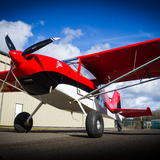
That's Jared Yates.


DISPLAY OPTIONS
Who is online
Users browsing this forum: No registered users and 0 guests
Latest Features
-
-
Featured Bush Planes
As one of the undisputed legends of bush flying, the Cessna 180 hauls a…Read More -
Aircraft Ownership and Maintenance
9 modification mistakes aircraft owners make when trying to "bush out" their birds—why some…Read More -
Live to Tell
A Minnesota pilot is surprised to learn that the sudden asymmetric drag of an…Read More




Latest Knowledge Base
-
Destinations
Canada offers some of the most spectacular backcountry flying on the continent. Here's what you need to know before you go.Read More -
Safety and Survival
Hope that you never have to use your survival vest but knowing you have it and knowing how to use…Read More -
Destinations
A regional guide with ideas for winter camping destinations in California, Nevada, New Mexico, and Arizona.Read More -
Aircraft
Finding an affordable aircraft that can handle the backcountry for $80K or less? A challenge for sure, but with the…Read More



