Cessna 182 Spring Steel Main vs. Tubular Main
Mon Jun 23, 2014 9:16 am
Cessna 182 Spring Steel Main vs. Tubular Main
My understanding is that Cessna changed the main gear on the Cessna 182 around 1972, from the traditional "Spring Steel" to a Tubular landing gear. Looking to get a PIREP from someone that has flown both. Plus and Minuses?


Tue Jun 24, 2014 12:21 am
Re: Cessna 182 Spring Steel Main vs. Tubular Main
Pretty sure bushwheels are only STCd on the spring gear, the tubular gear flexes a lot front to rear so toe in and out and looks flimsy when taxiing to me.
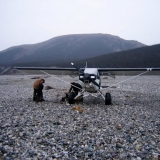
tricycles are for little girls
Tue Jun 24, 2014 7:22 am
Re: Cessna 182 Spring Steel Main vs. Tubular Main
If I'm not mistaken, the spring gear sits the plane a little higher, but not sure.
I doubt that the differences would mean much in real life, frankly. I'm sure that with focus and intent, you could break either one.
MTV
I doubt that the differences would mean much in real life, frankly. I'm sure that with focus and intent, you could break either one.
MTV


Tue Jun 24, 2014 1:16 pm
Re: Cessna 182 Spring Steel Main vs. Tubular Main
I believe the 1956 182 has the tallest gear out of all of them and the best prop clearance. I'm not a 182 expert though so I could be wrong.

Tue Jun 24, 2014 5:22 pm
Re: Cessna 182 Spring Steel Main vs. Tubular Main
Indeed the 56 does have the tallest gear, a full 8" taller than my D models gear. Does anybody know if its possible with todays faa to legally swap mine for a taller set?
- boyfalldown offline

- Posts: 25
- Joined: Tue Apr 17, 2012 2:35 pm
- Location: Canyon Country
Thu Jun 26, 2014 7:27 pm
Re: Cessna 182 Spring Steel Main vs. Tubular Main
When I was instructing and doing SE charter, we had a 58 or 59 on the line--narrow body, so it was a little quicker than later models. I owned with a partner a 70. Both had spring steel gear.
We also had a 73 and two 74s on the line, with tubular gear (73 was the first year for tubular). The 73 was the "instrument trainer" with a full King package--state of the art for the time. The 74s had more basic panels, a single navcom, an ADF, and a transponder.
I flew all of these a lot, and except for the slight speed advantage of the oldest one, they all flew and landed just like 182s--imagine that!
The oldest also had manual gear; everything else had the pre-select electric with the notched flap lever slot. All of them had 40 flaps max extension. From an operational standpoint, I couldn't tell the difference.
There are those who argue that the spring steel gear is stronger and that the tubular gear flexes more so it must be weaker. There are also those who think the spring steel is harder to land because it bounces back more easily. Honestly I can't tell the difference. All 182s have pretty stout main gear; the problem is that all 182s have pretty vulnerable nose gear; 70s and newer have somewhat stronger, but not much, nose gear. When you bend it, it takes out the firewall and does other damage to the under floor structure. If the hard landing also was a runway excursion, then the chances of damaging the main gear boxes is great, and it doesn't matter whether it's spring steel or tubular gear, the boxes are what is damaged.
Incidentally, the tubular gear has a fairing over the actual gear leg. I damaged one of those on the 73--hit a Mallard duck at about 135 knots. Blood and gore on the dented fairing and along the empennage, and identifiable feathers caught in the trim rod under the horizontal tail. Made an awfully loud bang! Cessna 1, duck 0.
Cary
We also had a 73 and two 74s on the line, with tubular gear (73 was the first year for tubular). The 73 was the "instrument trainer" with a full King package--state of the art for the time. The 74s had more basic panels, a single navcom, an ADF, and a transponder.
I flew all of these a lot, and except for the slight speed advantage of the oldest one, they all flew and landed just like 182s--imagine that!
The oldest also had manual gear; everything else had the pre-select electric with the notched flap lever slot. All of them had 40 flaps max extension. From an operational standpoint, I couldn't tell the difference.
There are those who argue that the spring steel gear is stronger and that the tubular gear flexes more so it must be weaker. There are also those who think the spring steel is harder to land because it bounces back more easily. Honestly I can't tell the difference. All 182s have pretty stout main gear; the problem is that all 182s have pretty vulnerable nose gear; 70s and newer have somewhat stronger, but not much, nose gear. When you bend it, it takes out the firewall and does other damage to the under floor structure. If the hard landing also was a runway excursion, then the chances of damaging the main gear boxes is great, and it doesn't matter whether it's spring steel or tubular gear, the boxes are what is damaged.
Incidentally, the tubular gear has a fairing over the actual gear leg. I damaged one of those on the 73--hit a Mallard duck at about 135 knots. Blood and gore on the dented fairing and along the empennage, and identifiable feathers caught in the trim rod under the horizontal tail. Made an awfully loud bang! Cessna 1, duck 0.
Cary

"I have slipped the surly bonds of earth..., put out my hand and touched the face of God." J.G. Magee
Thu Jul 03, 2014 3:12 pm
Re: Cessna 182 Spring Steel Main vs. Tubular Main
As a proud owner of a '56 with the tall gear, I can add a few things to the discussion. The '56 had the weakest main gear, which is the limiting factor for the gross weight, which is only 2550 lbs, with the lowered stance in '57, the gross weight also went up. A desirable mod on the '56 is to actually put 57-59 main gear on, as replacements are easier to come by. Mine needed a left main when I bought it, and finding a replacement was a challenge. I find the taller gear to be easier to land than the lower geared models, but that's probably just me. All in all, I like my '56 a lot, and while a slightly wider cabin and a little more useful load would be nice, it's a great mountain and traveling airplane. Will probably never get rid of it.

DISPLAY OPTIONS
Who is online
Users browsing this forum: No registered users and 3 guests
Latest Features
-
Live to Tell
A Minnesota pilot is surprised to learn that the sudden asymmetric drag of an out-of-rig ski can…Read More -
Creators
Working in some of the Yukon's most beautiful and remote environments, photographer Simon Blakesley captures aircraft in…Read More -
Aircraft Ownership and Maintenance
Upgrading to big tires can make a huge difference in backcountry performance, but with those gains come…Read More -
Tales from Yesteryear
In this tale from bush flying yesteryear, Don Cogger signs up to help Atlee Dodge Jr recovery…Read More


Latest Knowledge Base
-
Destinations
A regional guide with ideas for winter camping destinations in California, Nevada, New Mexico, and Arizona.Read More -
Aircraft
Finding an affordable aircraft that can handle the backcountry for $80K or less? A challenge for sure, but with the…Read More -
Aircraft
01.29.2018 - Zane - Updated tire diameter graphic to add 8.50x10 Guide to tires for use in the backcountry and off-airport landing…Read More -
Pilots
12.22.2013 - Initial article format Operating aircraft on skis and negotiating a snow-covered landscape is an entirely unique skillset and environment.…Read More


