glacier wrote:Another very nicely done video. One way to help read bars is to look upstream and see if the channels and currents that formed the bar would have cross cut it at higher water levels. This can also show how various sized gravel and rocks are distributed across the bar. Sometimes it is just hard to tell no matter what, and even dragging the surface with a lightly touching touch and go can be a bad idea if the undulations are big enough and spaced just right to induce oscillations.
Ocean beaches can be hard to read this way too, what might just be patterns of different colored sand on a perfectly flat beach can look exactly the same as rhythmic undulations big enough and spaced just right to put a plane on its back.
That is a great tip.
There is one gravel bar I always land at, we had a period of rain so did not go there like for a month,went back, did a very low pass, where I used to land I saw some new grass growing, nothing else, it looked fine, I just had a hunch , and landed in the rocky section next to the water.
When I inspected it, the new grass section had lots of undulations , and big ones, it would have been ugly.
New grass meant the water was stuck there for a while and the are flooded , and probably created some pools before it dried.
This was impossible to see from the air.
So be aware of new grass!
You can see it on this video on the second landing on the left side.
 good thing was a jump and not a depression in the surface.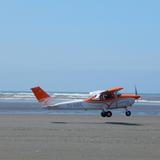
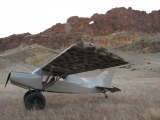
 Don't drag a spot, then land right next to it. Requires that you get some landmarks you can see when landing.


