Dynamic proactive control movement needs to be rapid because it depends on immediate knowledge of results. Whether gross or fine, rapid rudder movement (alternating side to side just off target) will give us the rapid corrective knowledge necessary to effectively direct an aircraft down a centerline or to any target.
Slower and restricted travel of control pressure is also classical conditioning, as the reward eventually comes. We purposely slow and restrict our control pressure when flying by reference to instruments. Our cross check is rapid and dynamic as we need to start the control response quickly,. But we limit control pressure and range.
Integration of instrument with contact techniques work fine in the high altitude environment. Once high enough that either man or computer can respond quickly enough to recover from loss of control, stall, or upset, the slower pressure on controls creep us to the desired results. When IMC and totally dependant on instrument indications which we then respond to, this slow and careful control pressure techniques is necessary to prevent self induced upset.
The low altitude environment, what was officially labeled "maneuvering flight," has both vertical and horizontal space available limitations. Traffic patterns also have vertical and horizontal space available limitations. Instruments landing systems eliminate the horizontal space available limitations on the procedural track. Conflict with other aircraft is guaranteed. Visual meteorological conditions, however, require see and avoid. Maneuvering flight requires rapid and unrestricted control movement, immediately knowledge of results, and total energy management to keep the wing flying and to miss obstructions and terrain.
We instructors could move all the way to Skinner's operant conditioning by popping an M&M into the student's mouth, but taming the beast is enough reward to create muscle memory. Yet, dynamic proactive control movement techniques need not be discovery learning, as when a child first gets up on his or her bicycle. We can actually teach students to walk the rudder. We can teach them to stay ahead of the airplane rather than just recovery techniques. Reactive rudder pressure, sometimes including differential braking, is no substitute for dynamic proactive control movement to direct our course down the centerline, centerline extended, or to any target. Stall recovery technique is no substitute for the muscle memory to pitch only enough to zoom just over the obstacle with the outcome of the maneuver never in doubt.
We could completely go operant by attaching electrical wires to the student's feet, but the instructor yelling, "walk the rudder, walk the rudder," works fine. Or we could program bot with dynamic proactive stabilization so he could stand erect, fly tailwheel airplanes, and hover helicopters.
Classical conditioning
Sun Feb 02, 2020 2:08 am
- contactflying offline
- Posts: 4972
- Joined: Wed Apr 03, 2013 7:36 pm
- Location: Aurora, Missouri 2H2
Download my free "https://tinyurl.com/Safe-Maneuvering" e-book.
Mon Feb 03, 2020 3:10 pm
Re: Classical conditioning
Student pilot here... I have read many of contacts posts as well as Safe Maneuvering Flight Techniques, and need some help.
What exactly does it mean to “walk the rudder,” reactive rudder pressure, etc...???
Can you describe this process in detail? My interpretation is moving the rudder side to side?? If so, how much movement? How quickly? What are you looking to see or feel? Are you doing this all the time?
Any info would be greatly appreciated! Thanks!
What exactly does it mean to “walk the rudder,” reactive rudder pressure, etc...???
Can you describe this process in detail? My interpretation is moving the rudder side to side?? If so, how much movement? How quickly? What are you looking to see or feel? Are you doing this all the time?
Any info would be greatly appreciated! Thanks!
- FFSchooley offline
- Posts: 30
- Joined: Mon Feb 03, 2020 3:00 pm
- Location: Martinez
- Aircraft: Piper PA-22 150
Mon Feb 03, 2020 5:26 pm
Re: Classical conditioning
FFSchooley wrote:Student pilot here... I have read many of contacts posts as well as Safe Maneuvering Flight Techniques, and need some help.
What exactly does it mean to “walk the rudder,” reactive rudder pressure, etc...???
Can you describe this process in detail? My interpretation is moving the rudder side to side?? If so, how much movement? How quickly? What are you looking to see or feel? Are you doing this all the time?
Any info would be greatly appreciated! Thanks!
And ^^THIS^^ is exactly the issue I have with Contact's language, even while stating I agree with the principle he's espousing. I am 99% sure he does NOT mean that one should go full left rudder then full right rudder during the "dynamic proactive control movement" he discusses. My confidence is because I know he used to fly helicopters, and if one were to try that in a helicopter, it would be unlikely the pilot would reach Contact's level of wisdom and experience (i.e. - ripe old age)! But unfortunately, it is far too easy for someone not familiar with his technique to interpret it that way... I know I did at first, and was very confused as to his intent – until I got a lot of clarifications from him.
Here's what I believe he's trying to get across, and maybe he can chime in and confirm / correct my interpretation:
1) A new pilot who waits until a "rate of movement" becomes obvious, and THEN reacts to that perception will invariably react too late, thus ensuring that you must over-react to make the appropriate correction. New tailwheel pilots (and new helicopter pilots, by the way) can easily fall into that trap, with the initial small swerve to the left on power application turning into a larger swerve to the right as the pilot over-corrects (too late), only to be followed by a ground-loop to the left when the airplane responds to the even greater swerve back to the left... This is what Contact refers to as "reactive mode" and I agree that it is not a good thing...
2) At the other extreme, a pilot who takes Contact's "dynamic proactive control movement" too literally (and carries it too far) will create tremendous stress to the airframe (specifically to the vertical fin and rudder, and to the aft fuselage these attach to) because they will be applying maximum rudder first one way and then the other, in a continuous pattern. How long will it take to cause damage? I don't know, nor do I wish to find out. I do know that if you do this in a helicopter that is in a stabilized hover, you WILL cause the helicopter to descend, and if you keep it up, you can enter the infamous "vortex ring state" (formerly known as "settling with power") in very short order. (This is what I meant when I said Contact probably didn't do this in helicopters for very long and live to tell about it...)
3) There is a happy medium, where the pilot uses their feet to "nibble" at the edges of the rudder control's effectiveness. Think of it as taking up the slack, or as exploring just how far one can move the rudder pedals in each direction WITHOUT causing the airplane to react. There is a small range in there for most airplanes (and helicopters) where slight movements of the rudder (or anti-torque pedals in the case of the helicopter) will NOT cause the aircraft to noticeably yaw. Move it one millimeter farther, and the aircraft begins to react. Learning to sense that "zone" and to control the pedal movement enough to move the pedals without causing the aircraft to over-react is a great way to acquire "control touch" – the holy grail of doing that pilot stuff. A new tailwheel (or helicopter) pilot will be making larger "dynamic proactive control movements" than a more experienced one in the same situation and conditions. But as one's experience grows, the size of the "bite" the controls take will become smaller, until the movements – though still there – are almost imperceptible to a novice. But they are still there, trust me...
One way to acquire (and maintain) that "touch" is to apply Contact's "dynamic proactive control movement" in a constant, ongoing manner – making those tiny movements to sense the "edge" of that neutral zone under varying conditions of airspeed, wind speed and direction, aircraft load, etc. The aviation environment is fluid and constantly changing. Dynamic proactive control movement trains you to know exactly how far you need to move the rudder before it takes effect, and (equally importantly) how far you have to move it in the opposite direction to counteract the previous movement.
I hope I've got that right, and I hope it helps explain what Contact is "preaching"... I would not word it the way he does, but every instructor and pilot communicates in a slightly different manner. That's the origin for the "different strokes for different folks" saying...

Mon Feb 03, 2020 6:37 pm
Re: Classical conditioning
Ok, that makes complete sense. Thank you for that. I hope contact will reply and clarify.
So with that said, I will now go back and re-read all this stuff so I can better understand when to use this proactive (instead of reactive) rudder response.
So with that said, I will now go back and re-read all this stuff so I can better understand when to use this proactive (instead of reactive) rudder response.
- FFSchooley offline
- Posts: 30
- Joined: Mon Feb 03, 2020 3:00 pm
- Location: Martinez
- Aircraft: Piper PA-22 150
Mon Feb 03, 2020 10:49 pm
Re: Classical conditioning
FFSchooley,
I speak in tongues and Jim Parker, JP256 is my interpreter. His explanation of dynamic proactive control movement is more elegant than mine. I have only one clarification on his very correct explanation. When slow, mainly taxi in tailwheel airplanes, the rudder can be moved rapidly to the stop to dynamically and proactively maintain the centerline. In helicopters at hover, it can be gross to hold the target. I use this techniques with zero timers, and cautiously with old pros and instructors to demonstrate the theory. As long as the alternating walk is rapid, the distance of movement doesn't really matter. The nose, between our legs, will stay on the yellow line. Jim caution about structural stress is pertinent, but gross can actually work while fast as well. The reason I do this is to alleviate the fear of doing too much that mitigates rapid learning. At Fort Wolters, Ronnie Westmoreland would take the controls, put the anti-torque pedal to the stop, do a complete 360, and stop pointing exactly at the pole. And that was with a motorcycle throttle. "Move the damn control and see what it does," he would say. We all crawl before we walk, gross before fine. It is how we learn quickly.
Getting to the nibble (dynamic and proactive) is where Jim and I want you to go. Starting there would require way too much demonstration. We learn quickest and best by doing. Move the damn control dynamically and proactively to see what it does. You will get immediately knowledge of results. Move it. If you don't like that, move it the other way (all in less than a second.)
A caution about how their position on the airplane determines how controls can effectively be used. The rudder and elevator are mounted on the longitudinal axis. They are primary, dependable controls, especially with prop blast. The ailerons, because of adverse yaw, do exactly what we don't want them to do. That is why rudder must lead aileron to be effective. To make aileron do what we want it to do. Dynamic proactive aileron, wing wagging, is not the way we should direct the nose to a target, down the centerline, or down the centerline extended on final. If dynamic proactive rudder only holds the centerline extended, the wing is automatically level.
We use coordinated rudder (the leader) and aileron in turns. Dutch rolls to 45 degree bank will guarantee that we lead rudder. These are very slowly dynamic proactive and much more difficult, as we do not have immediately knowledge of results.
I speak in tongues and Jim Parker, JP256 is my interpreter. His explanation of dynamic proactive control movement is more elegant than mine. I have only one clarification on his very correct explanation. When slow, mainly taxi in tailwheel airplanes, the rudder can be moved rapidly to the stop to dynamically and proactively maintain the centerline. In helicopters at hover, it can be gross to hold the target. I use this techniques with zero timers, and cautiously with old pros and instructors to demonstrate the theory. As long as the alternating walk is rapid, the distance of movement doesn't really matter. The nose, between our legs, will stay on the yellow line. Jim caution about structural stress is pertinent, but gross can actually work while fast as well. The reason I do this is to alleviate the fear of doing too much that mitigates rapid learning. At Fort Wolters, Ronnie Westmoreland would take the controls, put the anti-torque pedal to the stop, do a complete 360, and stop pointing exactly at the pole. And that was with a motorcycle throttle. "Move the damn control and see what it does," he would say. We all crawl before we walk, gross before fine. It is how we learn quickly.
Getting to the nibble (dynamic and proactive) is where Jim and I want you to go. Starting there would require way too much demonstration. We learn quickest and best by doing. Move the damn control dynamically and proactively to see what it does. You will get immediately knowledge of results. Move it. If you don't like that, move it the other way (all in less than a second.)
A caution about how their position on the airplane determines how controls can effectively be used. The rudder and elevator are mounted on the longitudinal axis. They are primary, dependable controls, especially with prop blast. The ailerons, because of adverse yaw, do exactly what we don't want them to do. That is why rudder must lead aileron to be effective. To make aileron do what we want it to do. Dynamic proactive aileron, wing wagging, is not the way we should direct the nose to a target, down the centerline, or down the centerline extended on final. If dynamic proactive rudder only holds the centerline extended, the wing is automatically level.
We use coordinated rudder (the leader) and aileron in turns. Dutch rolls to 45 degree bank will guarantee that we lead rudder. These are very slowly dynamic proactive and much more difficult, as we do not have immediately knowledge of results.
- contactflying offline
- Posts: 4972
- Joined: Wed Apr 03, 2013 7:36 pm
- Location: Aurora, Missouri 2H2
Download my free "https://tinyurl.com/Safe-Maneuvering" e-book.
Mon Feb 03, 2020 11:08 pm
Re: Classical conditioning
FFSchooley,
I again read your original questions.
Walk the rudder means to constantly apply as fine as possible but gross is ok constant dynamic proactive rudder movement (pressure is too often just a thought with no movement).
The reason gross teaches quickly and effectively is that it immediately answers the question, "how much movement?" Not quite that much, but that much is fine if dynamic. Much left, much right, lots less left, lots less right, a little less left, a little less right. Hey! Don t stop. Keep walking the rudder. Walk it.
Go for it, tailwheel or nose wheel. Like Jim says, we can take the slack out of any control.
I again read your original questions.
Walk the rudder means to constantly apply as fine as possible but gross is ok constant dynamic proactive rudder movement (pressure is too often just a thought with no movement).
The reason gross teaches quickly and effectively is that it immediately answers the question, "how much movement?" Not quite that much, but that much is fine if dynamic. Much left, much right, lots less left, lots less right, a little less left, a little less right. Hey! Don t stop. Keep walking the rudder. Walk it.
Go for it, tailwheel or nose wheel. Like Jim says, we can take the slack out of any control.
- contactflying offline
- Posts: 4972
- Joined: Wed Apr 03, 2013 7:36 pm
- Location: Aurora, Missouri 2H2
Download my free "https://tinyurl.com/Safe-Maneuvering" e-book.
Tue Feb 04, 2020 8:36 am
Re: Classical conditioning
Contact and Jim,
Thank you both. Much more clear now. I just need to go back and re-read to figure out when exactly this is done....
Thank you both. Much more clear now. I just need to go back and re-read to figure out when exactly this is done....
- FFSchooley offline
- Posts: 30
- Joined: Mon Feb 03, 2020 3:00 pm
- Location: Martinez
- Aircraft: Piper PA-22 150
Tue Feb 04, 2020 12:21 pm
Re: Classical conditioning
Its done all the time. The tendency is to let your feet go to sleep when on a longer cross country, and when you come in to land they are still sleeping. Constant movement prevents that.FFSchooley wrote:Contact and Jim,
Thank you both. Much more clear now. I just need to go back and re-read to figure out when exactly this is done....
Tue Feb 04, 2020 2:59 pm
Re: Classical conditioning
Yes David, a good trick to stay awake on cross country is to put hands in lap and direct nose, between legs, to target with rudder. In crosswind component, direct a spot on cowl, away from crosswind, toward target.
- contactflying offline
- Posts: 4972
- Joined: Wed Apr 03, 2013 7:36 pm
- Location: Aurora, Missouri 2H2
Download my free "https://tinyurl.com/Safe-Maneuvering" e-book.
Tue Feb 04, 2020 5:21 pm
Re: Classical conditioning
The guy who just purchased my Champion 7ECA flew it from Dallas to Wisconsin. I told him "you have an autopilot - your feet..." He found (as I did earlier) that you could let go of the stick and just lightly dance with the pedals and maintain your heading very well. And after trimming to the approximate airspeed you wanted (trim lever is overhead and slightly behind you, where fine movements are impractical), you just slightly tweak the throttle to fine-tune for zero rate of climb/descent. He did that and said it was amazing to find the airplane was that stable.
Plus, it's a good way to stay awake on a long cross-country!
Plus, it's a good way to stay awake on a long cross-country!
Tue Feb 04, 2020 5:48 pm
Re: Classical conditioning
I like it!!! Makes sense. Thanks fellas!
- FFSchooley offline
- Posts: 30
- Joined: Mon Feb 03, 2020 3:00 pm
- Location: Martinez
- Aircraft: Piper PA-22 150
Wed Feb 05, 2020 7:56 am
Re: Classical conditioning
The First Officer is monitoring the dynamically proactive computer controlling the Airbus while the Captain naps and the nine year kid (me) is monitoring that the gyros stabilized wing leveler follows the DG bug while Mr Maxwell naps. This is not the best way to learn to control an aircraft. Learn the procedural track, yes.
- contactflying offline
- Posts: 4972
- Joined: Wed Apr 03, 2013 7:36 pm
- Location: Aurora, Missouri 2H2
Download my free "https://tinyurl.com/Safe-Maneuvering" e-book.
Thu Feb 06, 2020 6:48 am
Re: Classical conditioning
FFSchooley,
Because of the bungee connection between rudder and aileron in your Tri-Pacer, both rudder and aileron have a heavier control feel. While lighter in weight than the 172, the control feel is similar to the 182. That will dampen Jim Parker's legitimate concerns with over ham fisting it.
It is a fine trainer, by the way. It will just require a bit more muscle when strongly crossing the rudder and aileron to side slip in crosswind or forward slip to lose altitude without speeding up. Because of the short, high lift wing and less effective (use full) flaps, we have to pitch fairly high to decelerate enough to land. It really will sink on short final, but we add power to control the glide angle. This prop blast covers greater percentage of the wing than Cessnas. That's why they have the better flaps. Anyway, you can touchdown very near the same speed as 172.
Because of the bungee connection between rudder and aileron in your Tri-Pacer, both rudder and aileron have a heavier control feel. While lighter in weight than the 172, the control feel is similar to the 182. That will dampen Jim Parker's legitimate concerns with over ham fisting it.
It is a fine trainer, by the way. It will just require a bit more muscle when strongly crossing the rudder and aileron to side slip in crosswind or forward slip to lose altitude without speeding up. Because of the short, high lift wing and less effective (use full) flaps, we have to pitch fairly high to decelerate enough to land. It really will sink on short final, but we add power to control the glide angle. This prop blast covers greater percentage of the wing than Cessnas. That's why they have the better flaps. Anyway, you can touchdown very near the same speed as 172.
- contactflying offline
- Posts: 4972
- Joined: Wed Apr 03, 2013 7:36 pm
- Location: Aurora, Missouri 2H2
Download my free "https://tinyurl.com/Safe-Maneuvering" e-book.
Thu Feb 06, 2020 3:47 pm
Re: Classical conditioning
JP256 wrote:The guy who just purchased my Champion 7ECA flew it from Dallas to Wisconsin
Snip
Wait. You sold your Citabria?
Thu Feb 06, 2020 3:54 pm
Re: Classical conditioning
Thanks for the tri specific info! I always like to learn about the intricacies of my short wing.
- FFSchooley offline
- Posts: 30
- Joined: Mon Feb 03, 2020 3:00 pm
- Location: Martinez
- Aircraft: Piper PA-22 150
Fri Feb 07, 2020 11:13 am
Re: Classical conditioning
aftCG wrote:JP256 wrote:The guy who just purchased my Champion 7ECA flew it from Dallas to Wisconsin
Snip
Wait. You sold your Citabria?
Yeah, it's a great airplane, and was a lot of fun to fly for me. But it really sucked for flying Young Eagles... All they could see was the back of my head and shoulders, and a tiny sliver of ground and sky between the top of the wing and the window sill. My grandkids are just about old enough to enjoy flying with me, and I want them to enjoy it, which involves being able to see something when we're flying.
So, with great regret, I sold it (in 2 days, thanks to Barnstormers... LOL).
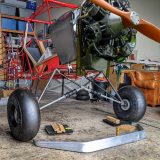
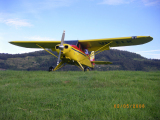
I've found a great Rans S-6ES (registered as E-LSA, which means I can take the weekend course and do all my own maintenance and inspections), made an offer on it, and it was accepted. So now it's just waiting for the weather to cooperate, so I can go get it. Bonus points for getting some transition training and mountain flying training while I'm in the high country! (Preview picture is my new avatar - higher resolution version coming soon, after the bigger tires, etc. that were added as part of the purchase.)
Sun Feb 09, 2020 4:31 pm
Re: Classical conditioning
What's that thing hanging down to the ground in the front?
- marcusofcotton offline

- Posts: 257
- Joined: Sun Jan 02, 2011 6:44 am
- Location: Northern MN
Sun Feb 09, 2020 5:39 pm
Re: Classical conditioning
The future.
In the old days no examiner would question tail wagging, constantly moving the rudder dynamically and proactively, on final even in a tricycle airplane. Now they may comment, "tailwheel pilot right?"
The demise of "conventional" airplanes doesn't bother me. The demise of dynamic proactive rudder movement does.
In the old days no examiner would question tail wagging, constantly moving the rudder dynamically and proactively, on final even in a tricycle airplane. Now they may comment, "tailwheel pilot right?"
The demise of "conventional" airplanes doesn't bother me. The demise of dynamic proactive rudder movement does.
- contactflying offline
- Posts: 4972
- Joined: Wed Apr 03, 2013 7:36 pm
- Location: Aurora, Missouri 2H2
Download my free "https://tinyurl.com/Safe-Maneuvering" e-book.
Sun Feb 09, 2020 5:59 pm
Re: Classical conditioning
Flying an aircraft seems so complicated 
Sun Feb 09, 2020 7:41 pm
Re: Classical conditioning
Naw. Just like riding a bike. Backhoe or helicopter is complicated. Dynamic and proactive with both hands and both feet. Nibble with feet in airplane and the wing stays level. Drive all day with feet only. Start with rudder and the down aileron won't turn us the wrong way, or funk up the turn.
But you were probably pulling my leg.
But you were probably pulling my leg.
- contactflying offline
- Posts: 4972
- Joined: Wed Apr 03, 2013 7:36 pm
- Location: Aurora, Missouri 2H2
Download my free "https://tinyurl.com/Safe-Maneuvering" e-book.
DISPLAY OPTIONS
Who is online
Users browsing this forum: No registered users and 0 guests
Latest Features
-
Live to Tell
A Minnesota pilot is surprised to learn that the sudden asymmetric drag of an out-of-rig ski can…Read More -
Creators
Working in some of the Yukon's most beautiful and remote environments, photographer Simon Blakesley captures aircraft in…Read More -
Aircraft Ownership and Maintenance
Upgrading to big tires can make a huge difference in backcountry performance, but with those gains come…Read More -
Tales from Yesteryear
In this tale from bush flying yesteryear, Don Cogger signs up to help Atlee Dodge Jr recovery…Read More


Latest Knowledge Base
-
Destinations
A regional guide with ideas for winter camping destinations in California, Nevada, New Mexico, and Arizona.Read More -
Aircraft
Finding an affordable aircraft that can handle the backcountry for $80K or less? A challenge for sure, but with the…Read More -
Aircraft
01.29.2018 - Zane - Updated tire diameter graphic to add 8.50x10 Guide to tires for use in the backcountry and off-airport landing…Read More -
Pilots
12.22.2013 - Initial article format Operating aircraft on skis and negotiating a snow-covered landscape is an entirely unique skillset and environment.…Read More


