Hey there,
I am wondering what your guys experience has been with cold winter flying. Like coldest days flown, cold start up tricks, what kind of heaters used, if the fuselage warmed up, that kind of thing.
I am from Alberta, near Grand Prairie. And we have had lots of cold weather in the last couple weeks, like from -10 to -30 degrees Fahrenheit. And I am getting itchy to fly!!
I am thinking the Alaskans know these temperatures well. And will have some input/advice for us southerners! Haha
Tannon
Sent from my iPhone using Tapatalk
Cold Winter Flying
Fri Dec 09, 2016 3:40 pm
Fri Dec 09, 2016 3:49 pm
Re: Cold Winter Flying
Good beginner for skis info....
FAA AC 8083-23-4 CHAPTER (7):
https://www.faa.gov/regulations_policies/handbooks_manuals/aviation/seaplane_handbook/media/faa-h-8083-23-4.pdf
Iditarod Site took down their excellent flying tips. Members only now?
http://www.dogflying.com
https://www.backcountrypilot.org/knowledge-base/pilots/ski-flying
FAA AC 8083-23-4 CHAPTER (7):
https://www.faa.gov/regulations_policies/handbooks_manuals/aviation/seaplane_handbook/media/faa-h-8083-23-4.pdf
Iditarod Site took down their excellent flying tips. Members only now?
http://www.dogflying.com
https://www.backcountrypilot.org/knowledge-base/pilots/ski-flying

CFII, MEI, CFISES, ATPME, IA/AP, RPPL, Ski&Amphib ops, RHC mechanic cert, RHC SC— 3000TT
Fri Dec 09, 2016 4:07 pm
Re: Cold Winter Flying
Hi - I live by Lamont, Alberta and fly for work to Fort Murray.
I highly recommend buying the reiff turbo xp heater kit for the engine. It heats the oil pan and has individual band heaters for the cylinders. With an insulated engine and prop cover, even in -20 deg c weather the engine is hot in about 4-6 hrs. Prop/spinner cover is important otherwise the front bearing can stay frozen. Before I had a plug in at my stall in Mcmurray I carried a little 1000 watt suitcase honda genset, it ran the system no problem.
Once i got the plug in stall I installed a removable car interior warmer heater - https://www.amazon.ca/Zerostart-260-090 ... B000NM73ZA, I permanently mounted the slide on bracket and ran the cord through the firewall so i could plug the block heater and interior warmer in at the cowl at the same time. Trying to run a cold brittle cord through the door or window was just looking for problems. I remove the heater and stored it in the seat back before flying.
Coldest i have flown in was -30 C, since then i have set my limit at -25 c . I try to fly most of the winter weather permitting. I am not a fan of the air heaters like the dragons, they mainly just heat the heads, you need a deep heat to prevent any damage or excessive wear. I preheat if below 5 deg c, it just doesn't take as long as if it is really cold.
I highly recommend buying the reiff turbo xp heater kit for the engine. It heats the oil pan and has individual band heaters for the cylinders. With an insulated engine and prop cover, even in -20 deg c weather the engine is hot in about 4-6 hrs. Prop/spinner cover is important otherwise the front bearing can stay frozen. Before I had a plug in at my stall in Mcmurray I carried a little 1000 watt suitcase honda genset, it ran the system no problem.
Once i got the plug in stall I installed a removable car interior warmer heater - https://www.amazon.ca/Zerostart-260-090 ... B000NM73ZA, I permanently mounted the slide on bracket and ran the cord through the firewall so i could plug the block heater and interior warmer in at the cowl at the same time. Trying to run a cold brittle cord through the door or window was just looking for problems. I remove the heater and stored it in the seat back before flying.
Coldest i have flown in was -30 C, since then i have set my limit at -25 c . I try to fly most of the winter weather permitting. I am not a fan of the air heaters like the dragons, they mainly just heat the heads, you need a deep heat to prevent any damage or excessive wear. I preheat if below 5 deg c, it just doesn't take as long as if it is really cold.
Fri Dec 09, 2016 4:41 pm
Re: Cold Winter Flying
I learned to fly at the Elmendorf AFB Aeroclub in Anchorage 44 years ago, and after leaving the USAF, flew for the next 23 years out of Laramie before moving to the warmer climes of Fort Collins (or so I thought--it's been damn cold the last few days!).
I have a Reiff "standard" system on my 180hp Lycoming powered C172. With a padded cowl cover and prop and spinner covers, it will bring the CHTs to 70 F and the oil temp to the bottom of the green without difficulty in my unheated hangar, in several hours. Otherwise, my engine is a bear to start at anything below 30 F. I also have a Kats interior heater mounted under the passenger seat, to preheat the cabin, which it will do in an hour or two. For a couple of years, I used a cell phone switch to turn these things on (I live about 55 minutes from my hangar), but that burned out last winter. So now I leave the Reiff plugged in so the engine is constantly warm and plug in the Kats when I arrive, so that by the time I eat lunch or breakfast at the local airport cafe and do my preflight, the cabin is comfy warm.
Back in olden times, I can think of many times I started various airplane engines at or around 10 F and sometimes colder, with a lot of priming. That was before either Reiff or Tanis existed, so if it was too cold, we'd use a salamander heater to blow hot air into the engine compartments. A couple of guys I knew had Red Dragon heaters that did the same thing. Carelessness with hot air sometimes resulted in scorched paint on the cowls. Carelessness with priming using the throttle instead of the primer resulted in occasional engine fires (don't use the throttle to prime! ) We didn't preheat the cabins, so our tube-type avionics usually didn't start working until after we'd taxied out and completed our run-up. I can think of many -20F days in which I had to sit for a few minutes after completing the run-up before I could call for an IFR clearance.
My current airplane, a much modified P172D, has a pretty good heater (modified by my IA), so that it's shirt-sleeve comfortable down to about +10 F. The coldest OAT I've seen with it was -40 F at 13,000' over Alamosa last year, and I was comfortable wearing a down vest. I'd started out with a heavy coat on over the vest, but pretty soon I was too warm so I took it off, but I wanted to keep the airplane heater on full to keep ol' Molly Dog warm in the back seat.
The coldest I can remember as ground temp when I flew was -35 F at Laramie, though more often it was in the area of -20 to -25 F. When I was learning to fly in Anchorage, there were a few days in the -30 F range.
One trick I was taught when I was learning was that sometimes partial carb heat helped the engines run more smoothly, even at take off or cruise--apparently it atomizes the fuel/air mixture better.
One thing that I'll never forget that I learned in Anchorage was not to forget carb heat in preparation for landing. I was on short final to 34 at Merrill Field when the 150's engine just quit--prop stopped and all, because I'd forgotten to pull the carb heat on. I think the embarrassment of having several airplanes go around until I could push the airplane off at the next taxiway made the lesson so memorable. In retrospect, I'm glad that my instructor was a strong believer in learning to land without power--but usually the engine was at least idling!
Another powerful lesson was the death of one of the guys in my ground school class, Bill Fletcher, who incidentally, we had informally voted would be the first to die in an airplane, due to his "I'm-a-better-pilot-than-you" attitude. He was a few weeks ahead of me in his flight training, and right after he passed his checkride, he bought a nice little 170B from one of our Aeroclub instructors. He promptly started doing illegal charters, and he and his 2 passengers died when his slightly overloaded airplane stalled on take off into the trailer park off the departure end of 7 at Merrill Field. He had failed to clean off the snow and ice from the wings and tail of his airplane, and the engine was running rough due to the cold and not being warmed enough before departure. When it hiccuped, the wing stalled.
The most desirable thing about winter flying is the extra performance, and often the air is very smooth. Getting the airplane ready to fly is the least desirable, and sometimes people do that too quickly because of the cold, like Fletch did above.
Cary
I have a Reiff "standard" system on my 180hp Lycoming powered C172. With a padded cowl cover and prop and spinner covers, it will bring the CHTs to 70 F and the oil temp to the bottom of the green without difficulty in my unheated hangar, in several hours. Otherwise, my engine is a bear to start at anything below 30 F. I also have a Kats interior heater mounted under the passenger seat, to preheat the cabin, which it will do in an hour or two. For a couple of years, I used a cell phone switch to turn these things on (I live about 55 minutes from my hangar), but that burned out last winter. So now I leave the Reiff plugged in so the engine is constantly warm and plug in the Kats when I arrive, so that by the time I eat lunch or breakfast at the local airport cafe and do my preflight, the cabin is comfy warm.
Back in olden times, I can think of many times I started various airplane engines at or around 10 F and sometimes colder, with a lot of priming. That was before either Reiff or Tanis existed, so if it was too cold, we'd use a salamander heater to blow hot air into the engine compartments. A couple of guys I knew had Red Dragon heaters that did the same thing. Carelessness with hot air sometimes resulted in scorched paint on the cowls. Carelessness with priming using the throttle instead of the primer resulted in occasional engine fires (don't use the throttle to prime!
) We didn't preheat the cabins, so our tube-type avionics usually didn't start working until after we'd taxied out and completed our run-up. I can think of many -20F days in which I had to sit for a few minutes after completing the run-up before I could call for an IFR clearance. My current airplane, a much modified P172D, has a pretty good heater (modified by my IA), so that it's shirt-sleeve comfortable down to about +10 F. The coldest OAT I've seen with it was -40 F at 13,000' over Alamosa last year, and I was comfortable wearing a down vest. I'd started out with a heavy coat on over the vest, but pretty soon I was too warm so I took it off, but I wanted to keep the airplane heater on full to keep ol' Molly Dog warm in the back seat.
The coldest I can remember as ground temp when I flew was -35 F at Laramie, though more often it was in the area of -20 to -25 F. When I was learning to fly in Anchorage, there were a few days in the -30 F range.
One trick I was taught when I was learning was that sometimes partial carb heat helped the engines run more smoothly, even at take off or cruise--apparently it atomizes the fuel/air mixture better.
One thing that I'll never forget that I learned in Anchorage was not to forget carb heat in preparation for landing. I was on short final to 34 at Merrill Field when the 150's engine just quit--prop stopped and all, because I'd forgotten to pull the carb heat on. I think the embarrassment of having several airplanes go around until I could push the airplane off at the next taxiway made the lesson so memorable. In retrospect, I'm glad that my instructor was a strong believer in learning to land without power--but usually the engine was at least idling!
Another powerful lesson was the death of one of the guys in my ground school class, Bill Fletcher, who incidentally, we had informally voted would be the first to die in an airplane, due to his "I'm-a-better-pilot-than-you" attitude. He was a few weeks ahead of me in his flight training, and right after he passed his checkride, he bought a nice little 170B from one of our Aeroclub instructors. He promptly started doing illegal charters, and he and his 2 passengers died when his slightly overloaded airplane stalled on take off into the trailer park off the departure end of 7 at Merrill Field. He had failed to clean off the snow and ice from the wings and tail of his airplane, and the engine was running rough due to the cold and not being warmed enough before departure. When it hiccuped, the wing stalled.
The most desirable thing about winter flying is the extra performance, and often the air is very smooth. Getting the airplane ready to fly is the least desirable, and sometimes people do that too quickly because of the cold, like Fletch did above.
Cary
"I have slipped the surly bonds of earth..., put out my hand and touched the face of God." J.G. Magee
Fri Dec 09, 2016 6:53 pm
Re: Cold Winter Flying
Besides the low density altitude, the other great thing about cold weather flying is , NO BUGS! Clean the wind shield in mid Dec. ( in my caseanyway), and it stays clean until April or so, gotta love that. I'm putting the skis on TOMORROW. 
- courierguy offline

- Posts: 4197
- Joined: Thu Mar 31, 2005 6:52 pm
- Location: Idaho
"Its easier to apologize then ask permission"
Tex McClatchy
Tex McClatchy
Fri Dec 09, 2016 7:03 pm
Re: Cold Winter Flying
Tannon, we deal with Celsius up here. Enough of that Fahrenheit talk. I was thinking the other day that we should have built you guys a winter front for that 182 when it was here. I'll put it on the list. Other then that, the advice above is great. Mark nailed it pretty good, although I do think just a good pan heater ad covered up does do a good job heating, just takes a bit longer. Problem with that 182 is that it's dang hard to cover with those canards! You shouldn't have a problem with heating the cabin at -25. The 180 would cook me out at that. But I still like to keep my layers on, it's easier if the cloths are already on if something happens. Make sure you warm up the plane good before you takeoff, otherwise you'll blow a seal like I did last Christmas.
Last but not least, enjoy the thick air and awesome performance!
And can I borrow the 182 to fly north for Christmas? Haha.
Last but not least, enjoy the thick air and awesome performance!
And can I borrow the 182 to fly north for Christmas? Haha.

Fri Dec 09, 2016 7:25 pm
Re: Cold Winter Flying
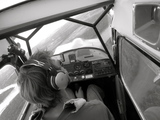
It was 25 degrees flying today and I was dang cold, this heater used to be good for women to well below zero. Time to finish the interior project haha!!!

Fri Dec 09, 2016 8:12 pm
Re: Cold Winter Flying
Skalywag wrote:It was 25 degrees flying today and I was dang cold, this heater used to be good for women to well below zero. Time to finish the interior project haha!!!
You going to go the closed cell foam and utility look Luke?
Sat Dec 10, 2016 8:38 am
Re: Cold Winter Flying
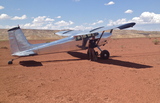
David, yes that's the plan. Haven't decided on flooring yet, and still have to tackle the doors and firewall. Got a lot of wiring to re-route through the floor etc. Now that winter is upon us I'll have to get back on top of this project, it's really cold and pretty loud.
Sat Dec 10, 2016 8:43 am
Re: Cold Winter Flying
When I worked north and west out of Fairbanks, AK, our cutoff was -40. The nice thing about -40 is you don't have to convert or ask whether it's farenheight or Celsius. And that's the only good thing about -40.
I tried to avoid flights colder than -30 F, but sometimes stuff happens. Temps below -30 start to get dangerous. I had a cub on skis parked on Alexander Lake in Galena one winter after we'd finished moose surveys. Too dark to go home day before so parked overnight, planning to leave in AM. Got up and checked temp.....-38 in Galena...good enough.
Plane was plugged in overnight. The lake sits in a depression in the middle of town, and dumps into the Yukon at its south end. Pre flighted plane.....brrrr, really cold! Got covers off, engine nice and warm, loaded passenger, got aboard and fired up.
When you start a warm engine in very cold temps like this, the "engine warm up" is actually a gradual cool down. Let it run at 1000 rpm for a few minutes, taxi and go.
I taxied to the north end of the lake, turned around and noticed this cub had an OAT gauge in the left side window....which read -60F.
Now, I'd been on the road counting moose for ~ three weeks, and I was ready to go home. Weather was clear, and I knew that with the typical interior Alaska inversion, the temp at several hundred feet would be a lot warmer.
So, I pushed the throttle up....not to max, and took off. Not my best ever decision.
 .
.
That said, temps at 1000 feet were a balmy -25F. Unfortunately, strong easterly winds slowed us down to a crawl, and now I started thinking about gas. So, down into the inversion to minimize headwind..... .
.
Coming past Tanana, I asked my back seater if he wanted to stop there for a bathroom break. He said sure. I called Tanana FSS and asked for current weather. "Tanana is reporting sky clear, visibility 2 miles mist and haze, wind calm, temperature minus 58, say intentions". Before I could say anything, backseater said "I don't have to pee."
Onward to FAI, arriving in the dark at -35 F after 4.7 hours enroute.
Not one of my brightest piloting experiences.
Two points: "Get home itis" is very real, and rationalization can become king.
Secondly, in deep interior parts of the country, if it's -20 in some town, it may well be -30 or colder on the surface of a lake in the area. And, guess where you're going to land if anything goes wrong?
I was enrote from FAI to Chloya Lake in the Upper Yukon one winter. Exxon had a 250 man seismic camp on the ice there, and I was the environmental monitor. Fort Yukon was the nearest reporting station...about 25 miles from the lake, and FYU was reporting light wind and -19 F. FAI was -30, so I should have been suspicious.
Got over the lake and the helos were all parked. Hmmmm, should be working with good weather. Duh!
As the 185 descended below the trees, it literally felt like I was diving into water.....and the cabin was instantly very cold. I taxied back, plugged the plane in, threw the engine cover on, then walked over to the official NWS certified thermometer. -58 F.
Guess I'll spend the night.....
The surface of that lake is probably ~ 30 feet lower than FYU, and both thermometers were correct. Cold air settles.
Be careful out there.
MTV
I tried to avoid flights colder than -30 F, but sometimes stuff happens. Temps below -30 start to get dangerous. I had a cub on skis parked on Alexander Lake in Galena one winter after we'd finished moose surveys. Too dark to go home day before so parked overnight, planning to leave in AM. Got up and checked temp.....-38 in Galena...good enough.
Plane was plugged in overnight. The lake sits in a depression in the middle of town, and dumps into the Yukon at its south end. Pre flighted plane.....brrrr, really cold! Got covers off, engine nice and warm, loaded passenger, got aboard and fired up.
When you start a warm engine in very cold temps like this, the "engine warm up" is actually a gradual cool down. Let it run at 1000 rpm for a few minutes, taxi and go.
I taxied to the north end of the lake, turned around and noticed this cub had an OAT gauge in the left side window....which read -60F.
Now, I'd been on the road counting moose for ~ three weeks, and I was ready to go home. Weather was clear, and I knew that with the typical interior Alaska inversion, the temp at several hundred feet would be a lot warmer.
So, I pushed the throttle up....not to max, and took off. Not my best ever decision.
. That said, temps at 1000 feet were a balmy -25F. Unfortunately, strong easterly winds slowed us down to a crawl, and now I started thinking about gas. So, down into the inversion to minimize headwind.....
.Coming past Tanana, I asked my back seater if he wanted to stop there for a bathroom break. He said sure. I called Tanana FSS and asked for current weather. "Tanana is reporting sky clear, visibility 2 miles mist and haze, wind calm, temperature minus 58, say intentions". Before I could say anything, backseater said "I don't have to pee."
Onward to FAI, arriving in the dark at -35 F after 4.7 hours enroute.
Not one of my brightest piloting experiences.
Two points: "Get home itis" is very real, and rationalization can become king.
Secondly, in deep interior parts of the country, if it's -20 in some town, it may well be -30 or colder on the surface of a lake in the area. And, guess where you're going to land if anything goes wrong?
I was enrote from FAI to Chloya Lake in the Upper Yukon one winter. Exxon had a 250 man seismic camp on the ice there, and I was the environmental monitor. Fort Yukon was the nearest reporting station...about 25 miles from the lake, and FYU was reporting light wind and -19 F. FAI was -30, so I should have been suspicious.
Got over the lake and the helos were all parked. Hmmmm, should be working with good weather. Duh!
As the 185 descended below the trees, it literally felt like I was diving into water.....and the cabin was instantly very cold. I taxied back, plugged the plane in, threw the engine cover on, then walked over to the official NWS certified thermometer. -58 F.
Guess I'll spend the night.....
The surface of that lake is probably ~ 30 feet lower than FYU, and both thermometers were correct. Cold air settles.
Be careful out there.
MTV
Last edited by mtv on Sat Dec 10, 2016 10:09 am, edited 1 time in total.


Sat Dec 10, 2016 8:45 am
Re: Cold Winter Flying
Awesome, thanks guys.
And David I was just in MN for 2 weeks, I'm basically an American now, Fahrenheit just comes naturally! Haha
I took up the 150 the other day, it was prob -25 C out. I couldn't believe it started for me. And I about froze up there with my gloves and heavy coat on. But I am itching to try the 182 in this thick air. It'll feel like a rocket compared to the 150 this summer at 85F!!!!
Sent from my iPad using Tapatalk
And David I was just in MN for 2 weeks, I'm basically an American now, Fahrenheit just comes naturally! Haha
I took up the 150 the other day, it was prob -25 C out. I couldn't believe it started for me. And I about froze up there with my gloves and heavy coat on. But I am itching to try the 182 in this thick air. It'll feel like a rocket compared to the 150 this summer at 85F!!!!
Sent from my iPad using Tapatalk
Sat Dec 10, 2016 9:58 am
Re: Cold Winter Flying
Dang Mike (MTV) Just reading that made me turn my heater up. I guess being it was -20 here this morning might have had something to do with it also.
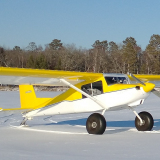
I have flown in some pretty cold temps, but not nearly as bad as you. I will mention I went up a couple of days ago and while I forget what the temp was, the good old 172 has an awesome heater! I am at the age and wise enough to not go flying much in the winter anymore unless I have too!
I have flown in some pretty cold temps, but not nearly as bad as you. I will mention I went up a couple of days ago and while I forget what the temp was, the good old 172 has an awesome heater! I am at the age and wise enough to not go flying much in the winter anymore unless I have too!
Sat Dec 10, 2016 10:12 am
Re: Cold Winter Flying
Keith,
For the record I never flew for recreation at colder than -20. And the longer I worked that country, the more conservative my decisions on flying cold became. The events I described here were fairly early in my tenure in interior Alaska.
MTV
For the record I never flew for recreation at colder than -20. And the longer I worked that country, the more conservative my decisions on flying cold became. The events I described here were fairly early in my tenure in interior Alaska.
MTV
Sat Dec 10, 2016 3:14 pm
Re: Cold Winter Flying
My Kitfox doesn't have a heater but has a biological stick shaker that activates when it's too cold to fly. Usually about 20 degrees F.
tcj
Sat Dec 10, 2016 7:00 pm
Re: Cold Winter Flying
tcj wrote:My Kitfox doesn't have a heater but has a biological stick shaker that activates when it's too cold to fly. Usually about 20 degrees F.
Biological stick-shaker... Too funny! Made my day. We're suffering through our coldest weather of the winter - finally got down below 32℉ yesterday. Wife broke down and turned on the heater for the first time since last February.
(I know - you guys will all "get even" with me when August get's here and it's over 105℉...)

DISPLAY OPTIONS
Who is online
Users browsing this forum: No registered users and 0 guests
Latest Features
-
-
Featured Bush Planes
As one of the undisputed legends of bush flying, the Cessna 180 hauls a…Read More -
Aircraft Ownership and Maintenance
9 modification mistakes aircraft owners make when trying to "bush out" their birds—why some…Read More -
Live to Tell
A Minnesota pilot is surprised to learn that the sudden asymmetric drag of an…Read More


Latest Knowledge Base
-
Destinations
Canada offers some of the most spectacular backcountry flying on the continent. Here's what you need to know before you go.Read More -
Safety and Survival
Hope that you never have to use your survival vest but knowing you have it and knowing how to use…Read More -
Destinations
A regional guide with ideas for winter camping destinations in California, Nevada, New Mexico, and Arizona.Read More -
Aircraft
Finding an affordable aircraft that can handle the backcountry for $80K or less? A challenge for sure, but with the…Read More