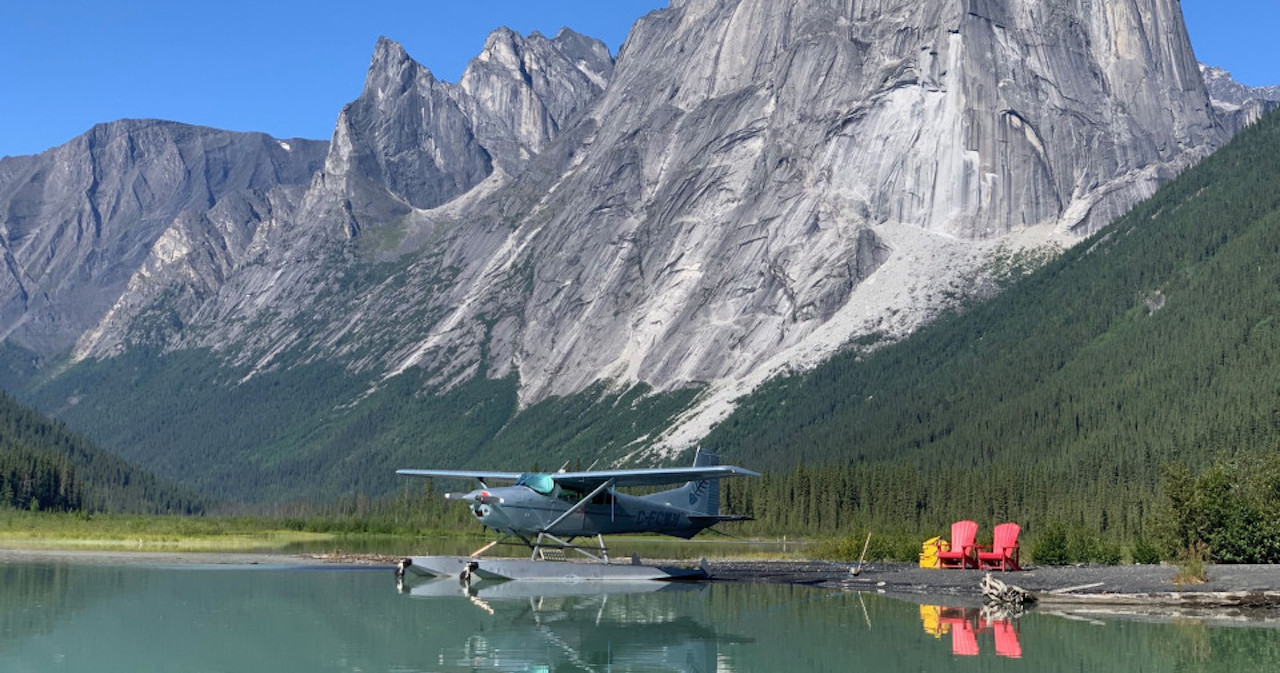
My plane is down for maintenance and improvements, so Instead of airplane adventuring, I've been thinking about airplane adventuring.
Thought that this might make for an interesting thread focused on the community gleaning knowledge from the pool of experience, some of which could possibly be absorbed in to the knowledge base. I know that this is a pretty wide open topic, but the combined ocean of experience here is pretty vast. Let's see where it goes?
A few questions for airplane adventurers:
1. What are the most common mechanical issues that you have encountered in the back-country/bush?
2. What are the best actions that can be taken before each phase of operations to minimize the risk of problems in the back-country?
3. What are the most essential tools to carry along for getting out of situations?
4. Once things have gone sideways, what strategies are effective in turning situations around? And what reactions can be disastrous?
An example: Years ago, I put my C170 on it's nose in a short strip because of a brake failure on landing. I elected to loop it rather than aborting the landing for a larger field where I likely could have rolled to a stop on one brake. The consequences of not getting off of the ground straight ahead (150 ft of strip left) and out climbing obstacles with a medium to heavy load on the hot summer afternoon were very daunting. I am definitely convinced that this turned out to be the right decision. Since that incident, I always test the brakes prior to landing.
Another: I made the mistake of landing on a damp cub strip in Alaska once and ended up stuck in a mud bog after aborting the takeoff. I tore up some gear ineffectively yanking on the plane using a Z-drag tied to some screw anchors. I then found that I was able to walk the plane out of the bog by alternating the chock from wheel to wheel while getting under the horizontal and pushing sideways from right to left. It took a while, but we did get the plane to a suitable takeoff zone. A legitimate come along would have made it much easier, but the tail lever method worked out pretty well.
And another: The 26 inch Goodyears looked a little soft, but not too bad. After parking, fishing, hiking, snacking and so forth, we returned to the plane to find the right main flat. I do not carry tire repair tools because I have no carry along jacking system for a Cessna taildragger. Ended up flying in the necessary tools for repair later after a ten mile hike out. I found that the left main was at 14 psi, and that the right valve stem had a little cut at the base from tire slippage. Anybody have a carry along jacking solution for lifting a Cessna MLG?
Common Issues and Preparations for Back-country Operations
Fri Feb 06, 2015 3:50 pm
- Scolopax offline

- Posts: 1717
- Joined: Tue Sep 27, 2005 5:02 pm
- Location: Nottingham
- FindMeSpot URL: http://share.findmespot.com/shared/face ... 4aYqSexnZC
Fri Feb 06, 2015 4:31 pm
Re: Common Issues and Preparations for Back-country Operatio
1. Barbed wire fences damage, broken tail wheel spring mount bolt, standing or cut crop and natural debris in air filter, prop nicks and leading edge damage from rocks and blowing tumbleweeds, bent prop from hitting water, broken nose gear push pull tube, holes in fabric from brush and rocks, blowing dust damage to windscreen, bird strike damage to leading edges.
- contactflying offline
- Posts: 4972
- Joined: Wed Apr 03, 2013 7:36 pm
- Location: Aurora, Missouri 2H2
Download my free "https://tinyurl.com/Safe-Maneuvering" e-book.
Fri Feb 06, 2015 5:05 pm
Re: Common Issues and Preparations for Back-country Operatio
1. What are the most common mechanical issues that you have encountered in the back-country/bush?
Hopefully none! None so far anyway, have the plane the best it can be
2. What are the best actions that can be taken before each phase of operations to minimize the risk of problems in the back-country?
Well remembering the keys to the hanger helps and saves another hour, did that yesterday(forgot the bloody keys). Having all the fishing gear correct helps and I also discovered that the time preparing plus the time caused by forgetting the keys plus the time cleaning the aeroplane afterwards plus the time unpacking, cleaning and putting away all the gear equaled the time spent in the back country. But it was worth it, I caught a load of crayfish which was the object of the trip

3. What are the most essential tools to carry along for getting out of situations?
I am of the opinion that if it cant be fixed with simple tools, duct tape and wire, it can't be fixed onsite. Stuff to hike out with if it goes pear shaped is something high on my mind.
4. Once things have gone sideways, what strategies are effective in turning situations around? And what reactions can be disastrous?
Your stories are great, fortunately I haven't had these problems. You do give a tick for Bushwheels though, at least they can be fixed without jacking the plane in some circumstances, with either a plug or an external patch. I carry both plus a pump. Plus the above mentioned hiking stuff!
Here is yesterdays location ...

- aussie bob offline
- Posts: 66
- Joined: Mon Jul 07, 2014 2:23 am
- Location: Sheffield, Tasmania, Australia
Fri Feb 06, 2015 7:23 pm
Re: Common Issues and Preparations for Back-country Operatio
Good solid survival gear and good survival skills can prevent most backcountry hiccups from turning into an emergency.
I see lots of folks who claim to carry survival gear, but I wonder if they'd really be prepared to camp out for three or four days, mentally and skills-wise.
Flat tires can be an issue. Can of Fix a Flat can fix a few of those, but carrying a GOOD quality tire pressure gauge and USING it during pre flight....at least once in a while.....is all it takes to prevent sheared valve stems, and many other tire problems. Frankly, most folks have no idea where their tire pressure is at any point in time.
A small tool kit. A SPOT or In Reach or sat phone can get you help for something you can't fix.
Bottom line: Good maintenance and preventive maintenance and some camping gear and skills will prevent most back country "breakdown".
MTV
I see lots of folks who claim to carry survival gear, but I wonder if they'd really be prepared to camp out for three or four days, mentally and skills-wise.
Flat tires can be an issue. Can of Fix a Flat can fix a few of those, but carrying a GOOD quality tire pressure gauge and USING it during pre flight....at least once in a while.....is all it takes to prevent sheared valve stems, and many other tire problems. Frankly, most folks have no idea where their tire pressure is at any point in time.
A small tool kit. A SPOT or In Reach or sat phone can get you help for something you can't fix.
Bottom line: Good maintenance and preventive maintenance and some camping gear and skills will prevent most back country "breakdown".
MTV


Sun Feb 08, 2015 10:09 am
Re: Common Issues and Preparations for Back-country Operatio
What MTV said is right on, especially about skills (training).
Knock on wood, I've been fortunate to not have any mechanical issues in the backcountry or off-airport. Probably because I'm always looking for things that are coming loose, wearing, showing signs of fatigue or failure, etc. The two things I expect to most likely occur are dead battery and punctured tire. I carry an Antigravity Start Battery kit as well as a lightweight battery charger for the former, and Notubes, a tire pump and patch kit for the latter.
Look the airplane over thoroughly after every flight. After every flight/adventure I clean the bugs off the prop, looking for rock chip damage as well as cracks. Once I found spider cracks on the back side of one of the composite blades on the SQ2, pulled and shipped the prop and got the blade replaced no charge (which meant I didn't fly it at my next adventure). Keeping the prop clean (and the rest of the plane) means I know what things look like so easily spot anything that looks different before it becomes serious. I also clean the wing and tail surface leading edges, at the same time I'm checking to see that all the VG's are still attached, and on the SQ2 checking for tears or damage to the fabric. I look over the landing gear bolts to be sure none are bent or getting loose, and I check the brakes for fluid leaks. I check the tires for any new cuts, as well as for proper inflation. I do a walk around looking for screws that are coming loose or have fallen out. I check for new oil leaks. I replenish any water I may have drank, as well as oil bottles, and Marvel Mystery bottles.
I replace all the landing gear bolts on the SQ2 during its conditional, sooner if they become loose (which means they are stretching) or if they are bent.
Before every flight I look at the tires for proper inflation, check the engine oil level, and on the 185 check the alternator belt (I can see it through the oil dipstick door opening). If changing planes I transfer my backcountry tool kit, survival kit, tiedowns, and inReach. Of course I check that Foreflight and Garmin Pilot are updated. And check the weather, including any webcams that may exist enroute or at the destination.
Sitting here at my desk and not out with planes I'm sure I'll forget something but here goes:
Survival Kit of course, hooded jacket, sleeping bag.
Satellite Phone (Iridium)
Handheld UHF Radio
And a Backcountry Tool Kit (which is also my standard tool kit) which includes:
Antigravity Battery to start the plane and/or keep everything else charged
Work gloves
Axe (I carry a Gerber axe)
Tree-saw (I carry a Sven saw)
Shovel (I carry a military entrenching tool)
Knife
Rope (I carry three 25' tiedown ropes, and two 50' mountain climbing ropes for HitchMaster or whatever)
HitchMaster (rope pulley system for lifting or pulling the plane)
Abe's Tiedowns (to tie the plane down in soft earth AND use as anchor for HitchMaster to pull against)
Duckbill Earth Anchors (to tie the plane down during a big blow or if I needed to leave it, and use as anchor for rope pulley system to pull against)
Storm Force Tiedowns (to tie the plane down in hard earth. I replaced its hammer with a titanium roofer's hammer)
Duct Tape
Rescue Tape
Safety Wire
Tie-wraps (Zip ties)
Hand tools
Spark plugs (2)
I bought a solar charger that's also in my Backcountry Tool Kit but haven't tested it yet. This is my reminder to do so.
1. Don't panic
2. Don't panic
3. Don't panic
Now:
1. Review and understand your situation
2. Inventory what you have with you that you can use
3. Get on your Cell/Sat phone and call friends for assistance and let loved ones know you are all right but might be delayed
4. Take a drink, check your water supply. Do you have enough water till you get out of here? If not find water or have friends bring it, or both.
1. Don't panic.
2. Take your time, think things through.
3. Don't do anything that might cause you an injury, take your time, wait for help if need be.
4. Don't allow "get home-itis" to take hold.
Scolopax wrote:1. What are the most common mechanical issues that you have encountered in the back-country/bush?
Knock on wood, I've been fortunate to not have any mechanical issues in the backcountry or off-airport. Probably because I'm always looking for things that are coming loose, wearing, showing signs of fatigue or failure, etc. The two things I expect to most likely occur are dead battery and punctured tire. I carry an Antigravity Start Battery kit as well as a lightweight battery charger for the former, and Notubes, a tire pump and patch kit for the latter.
Scolopax wrote:2. What are the best actions that can be taken before each phase of operations to minimize the risk of problems in the back-country?
Look the airplane over thoroughly after every flight. After every flight/adventure I clean the bugs off the prop, looking for rock chip damage as well as cracks. Once I found spider cracks on the back side of one of the composite blades on the SQ2, pulled and shipped the prop and got the blade replaced no charge (which meant I didn't fly it at my next adventure). Keeping the prop clean (and the rest of the plane) means I know what things look like so easily spot anything that looks different before it becomes serious. I also clean the wing and tail surface leading edges, at the same time I'm checking to see that all the VG's are still attached, and on the SQ2 checking for tears or damage to the fabric. I look over the landing gear bolts to be sure none are bent or getting loose, and I check the brakes for fluid leaks. I check the tires for any new cuts, as well as for proper inflation. I do a walk around looking for screws that are coming loose or have fallen out. I check for new oil leaks. I replenish any water I may have drank, as well as oil bottles, and Marvel Mystery bottles.
I replace all the landing gear bolts on the SQ2 during its conditional, sooner if they become loose (which means they are stretching) or if they are bent.
Before every flight I look at the tires for proper inflation, check the engine oil level, and on the 185 check the alternator belt (I can see it through the oil dipstick door opening). If changing planes I transfer my backcountry tool kit, survival kit, tiedowns, and inReach. Of course I check that Foreflight and Garmin Pilot are updated. And check the weather, including any webcams that may exist enroute or at the destination.
Scolopax wrote:3. What are the most essential tools to carry along for getting out of situations?
Sitting here at my desk and not out with planes I'm sure I'll forget something but here goes:
Survival Kit of course, hooded jacket, sleeping bag.
Satellite Phone (Iridium)
Handheld UHF Radio
And a Backcountry Tool Kit (which is also my standard tool kit) which includes:
Antigravity Battery to start the plane and/or keep everything else charged
Work gloves
Axe (I carry a Gerber axe)
Tree-saw (I carry a Sven saw)
Shovel (I carry a military entrenching tool)
Knife
Rope (I carry three 25' tiedown ropes, and two 50' mountain climbing ropes for HitchMaster or whatever)
HitchMaster (rope pulley system for lifting or pulling the plane)
Abe's Tiedowns (to tie the plane down in soft earth AND use as anchor for HitchMaster to pull against)
Duckbill Earth Anchors (to tie the plane down during a big blow or if I needed to leave it, and use as anchor for rope pulley system to pull against)
Storm Force Tiedowns (to tie the plane down in hard earth. I replaced its hammer with a titanium roofer's hammer)
Duct Tape
Rescue Tape
Safety Wire
Tie-wraps (Zip ties)
Hand tools
Spark plugs (2)
I bought a solar charger that's also in my Backcountry Tool Kit but haven't tested it yet. This is my reminder to do so.
Scolopax wrote:4. Once things have gone sideways, what strategies are effective in turning situations around? And what reactions can be disastrous?
1. Don't panic
2. Don't panic
3. Don't panic
Now:
1. Review and understand your situation
2. Inventory what you have with you that you can use
3. Get on your Cell/Sat phone and call friends for assistance and let loved ones know you are all right but might be delayed
4. Take a drink, check your water supply. Do you have enough water till you get out of here? If not find water or have friends bring it, or both.
1. Don't panic.
2. Take your time, think things through.
3. Don't do anything that might cause you an injury, take your time, wait for help if need be.
4. Don't allow "get home-itis" to take hold.
- Barnstormer offline
- Posts: 2700
- Joined: Sun Oct 14, 2012 7:42 am
- Location: Alaska
- Aircraft: C185
Sun Feb 08, 2015 10:22 am
Re: Common Issues and Preparations for Back-country Operatio
I'd really like to highlight a small part of what MTV said.
Be mentally prepared to camp out anywhere you're planning to land or go adventuring. This was a huge consideration flying single engine helicopters around Alaska. Not so much about landing for us because that's easy in a helicopter, but in case of an engine failures, too. If I'm not prepared to stay the night, I'll plan and fly quite a bit more conservatively.
Be mentally prepared to camp out anywhere you're planning to land or go adventuring. This was a huge consideration flying single engine helicopters around Alaska. Not so much about landing for us because that's easy in a helicopter, but in case of an engine failures, too. If I'm not prepared to stay the night, I'll plan and fly quite a bit more conservatively.
- CamTom12 offline

- Posts: 3705
- Joined: Sun Jul 08, 2012 1:08 pm
- Location: Huntsville
- FindMeSpot URL: https://share.delorme.com/camtom12
- Aircraft: Ruppe Racer
Experimental Pacer
home hand jam "wizard"
Sun Feb 08, 2015 1:19 pm
Re: Common Issues and Preparations for Back-country Operatio
Nice topic and good thoughts above!
Matt
1. What are the most common mechanical issues that you have encountered in the back-country/bush?
Dead Battery
Flat tire
Brake Line failure
Fabric Tear
Horizontal Stabilizer ding
Starter Solenoid Failure
Brain freeze / Vacation head
2. What are the best actions that can be taken before each phase of operations to minimize the risk of problems in the back-country?
Dead Battery - can be tested, replaced, but stuff happens. Talk of the Earth X, but my thinking is more pilots need to learn how to prop start an aircraft / their aircraft safely. Becoming a lost skill. When I flew the J3 across the counttry, lots of interesting looks from pilots who had never seen it done. Finding yourself stranded with a dead battery is NOT THE TIME TO LEARN TO PROP A PLANE. ALWAYS have the plane tied down
Flat tire - As stated, check tire pressures. Skywagon tailwheels require 60-70 PSI or you can get a pinch flat just taxiing with a load, let alone when you botch a landing on a rough strip and bounce the tail (Thanks Chet Harris, for the help fixing my flat) Carry spare tubes for each of your tires in addition to a patch kit. Next time you change your tire, use ONLY THE TOOLS IN YOUR REPAIR KIT. Figure out a light weight jacking method.
Brake Line failure - Secure the brake line to the gear leg with extra zip ties or other device. Evaluate routing of the brake lines. Need to avoid having them caught by tall grasses and brush while still allowing "slack" to permit gear leg flexion without cracking line.
Fabric Tear - 100mph tape
Horizontal Stabilizer dings - sometimes inevitable, but more common when heavy braking is applied on rocky surface.
Prop dings can be minimized by leaving brakes locked, full power "short field TO technique" to your checkride. Smooth application of power is usually adequate.
Starter Solenoid - replace if trouble, but it's always good to include the thought of a possible stuck solenoid on an aircraft when it seems the battery is depleted, but radios and such seem to work. Engaging the key/starter button while tapping on the solenoid with a rod or stick should answer the question.
Do owner assisted annuals and as much of your own maintenance as possible. In other words, get to know your aircraft.
Brain freeze / Vacation head - sometimes we can be so intelligent and capable in our daily lives, but while on vacation, we can become thoughtless airheads. - slow down and think about what you are doing!
To that end, the most common, seems to be when someone maneuvers on a dirt strip and turns with power so as to completely dust me, my aircraft or camp. Pilots can forget that a 270 degree turn to the right gets you the same place as a 90 degree turn to the left and can better direct your prop blast. My parents said two wrongs don't make a right, but I say three rights do make a left!
3. What are the most essential tools to carry along for getting out of situations?
Different for every situation whether on skis, floats or wheels and what your local terrain is like.
4. Once things have gone sideways, what strategies are effective in turning situations around? And what reactions can be disastrous?
I agree with the slow down and think, but after a brief period of contemplation, there is a time to dig in and Get R' Done. I deal with too many people who act helpless and hopeless. I cringe when pilots and other "adventurers" claim they just carry a spot or their cell / sat phone as their entire emergency supplies. You should be able to take care of yourself and minor issues with the plane, without needing to call in the troops on an emergency basis. Far too many people call an ambulance because they have a stuffy nose or stubbed their toe - no really they do.
Since that incident, I always test the brakes prior to landing.
YES, even on a fixed gear plane, GUMPS "Undercarriage" should include a brake pressure check!
Anybody have a carry along jacking solution for lifting a Cessna MLG?
All of the manufactured gear leg jack points attach way up the gear leg which is great for a big bottle jack in your hangar, but not for the size you want to carry. I ended up welding a jack point that has the flange widths such that it attaches at the lowest possible spot on the gear leg, so I can use a smaller jack. Other option is to buy some inner stub axles for wheel skis, even if you don't fly skis. Make a perfect jack point. $500 for the set from Airglas or maybe cheaper used vs. $100 or more for other jack points that don't work near as well.
2 ton bottle jack is the smallest you can get easily. Carry a few squares of 1" wood for jack pad spacers.
Now that you have it together, USE IT to change your tires in the hangar to make sure it works for you.
Matt
1. What are the most common mechanical issues that you have encountered in the back-country/bush?
Dead Battery
Flat tire
Brake Line failure
Fabric Tear
Horizontal Stabilizer ding
Starter Solenoid Failure
Brain freeze / Vacation head
2. What are the best actions that can be taken before each phase of operations to minimize the risk of problems in the back-country?
Dead Battery - can be tested, replaced, but stuff happens. Talk of the Earth X, but my thinking is more pilots need to learn how to prop start an aircraft / their aircraft safely. Becoming a lost skill. When I flew the J3 across the counttry, lots of interesting looks from pilots who had never seen it done. Finding yourself stranded with a dead battery is NOT THE TIME TO LEARN TO PROP A PLANE. ALWAYS have the plane tied down
Flat tire - As stated, check tire pressures. Skywagon tailwheels require 60-70 PSI or you can get a pinch flat just taxiing with a load, let alone when you botch a landing on a rough strip and bounce the tail (Thanks Chet Harris, for the help fixing my flat) Carry spare tubes for each of your tires in addition to a patch kit. Next time you change your tire, use ONLY THE TOOLS IN YOUR REPAIR KIT. Figure out a light weight jacking method.
Brake Line failure - Secure the brake line to the gear leg with extra zip ties or other device. Evaluate routing of the brake lines. Need to avoid having them caught by tall grasses and brush while still allowing "slack" to permit gear leg flexion without cracking line.
Fabric Tear - 100mph tape
Horizontal Stabilizer dings - sometimes inevitable, but more common when heavy braking is applied on rocky surface.
Prop dings can be minimized by leaving brakes locked, full power "short field TO technique" to your checkride. Smooth application of power is usually adequate.
Starter Solenoid - replace if trouble, but it's always good to include the thought of a possible stuck solenoid on an aircraft when it seems the battery is depleted, but radios and such seem to work. Engaging the key/starter button while tapping on the solenoid with a rod or stick should answer the question.
Do owner assisted annuals and as much of your own maintenance as possible. In other words, get to know your aircraft.
Brain freeze / Vacation head - sometimes we can be so intelligent and capable in our daily lives, but while on vacation, we can become thoughtless airheads. - slow down and think about what you are doing!
To that end, the most common, seems to be when someone maneuvers on a dirt strip and turns with power so as to completely dust me, my aircraft or camp. Pilots can forget that a 270 degree turn to the right gets you the same place as a 90 degree turn to the left and can better direct your prop blast. My parents said two wrongs don't make a right, but I say three rights do make a left!
3. What are the most essential tools to carry along for getting out of situations?
Different for every situation whether on skis, floats or wheels and what your local terrain is like.
4. Once things have gone sideways, what strategies are effective in turning situations around? And what reactions can be disastrous?
I agree with the slow down and think, but after a brief period of contemplation, there is a time to dig in and Get R' Done. I deal with too many people who act helpless and hopeless. I cringe when pilots and other "adventurers" claim they just carry a spot or their cell / sat phone as their entire emergency supplies. You should be able to take care of yourself and minor issues with the plane, without needing to call in the troops on an emergency basis. Far too many people call an ambulance because they have a stuffy nose or stubbed their toe - no really they do.
Since that incident, I always test the brakes prior to landing.
YES, even on a fixed gear plane, GUMPS "Undercarriage" should include a brake pressure check!
Anybody have a carry along jacking solution for lifting a Cessna MLG?
All of the manufactured gear leg jack points attach way up the gear leg which is great for a big bottle jack in your hangar, but not for the size you want to carry. I ended up welding a jack point that has the flange widths such that it attaches at the lowest possible spot on the gear leg, so I can use a smaller jack. Other option is to buy some inner stub axles for wheel skis, even if you don't fly skis. Make a perfect jack point. $500 for the set from Airglas or maybe cheaper used vs. $100 or more for other jack points that don't work near as well.
2 ton bottle jack is the smallest you can get easily. Carry a few squares of 1" wood for jack pad spacers.
Now that you have it together, USE IT to change your tires in the hangar to make sure it works for you.
- Matt 7GCBC offline
- Posts: 330
- Joined: Fri Feb 11, 2005 11:12 pm
- Location: Northwest
- FindMeSpot URL: http://share.findmespot.com/shared/face ... vXLMMuZOv7
Sun Feb 08, 2015 1:58 pm
Re: Common Issues and Preparations for Back-country Operatio
Excellent post, Matt.
I've jacked a Cessna wheel off the ground with one of those purpose-built jack pads. That was easy enough and worked well, but what about Cub-style gear? Or Oleo Maule? I'm standing here looking at the Oleo design of the Bearhawk and wondering what kind of jack pad apparatus I could use. There doesn't seem to be a good spot.
I've jacked a Cessna wheel off the ground with one of those purpose-built jack pads. That was easy enough and worked well, but what about Cub-style gear? Or Oleo Maule? I'm standing here looking at the Oleo design of the Bearhawk and wondering what kind of jack pad apparatus I could use. There doesn't seem to be a good spot.

Sun Feb 08, 2015 2:43 pm
Re: Common Issues and Preparations for Back-country Operatio
Wing jack will work on most anything (Hi lift jack with pipe or 2x4 extension). They are heavy for hauling around but if you are stuck 200 miles the other side of nowhere they are worth drawing along. 
DENNY
DENNY
DENNY
Sun Feb 08, 2015 3:18 pm
Re: Common Issues and Preparations for Back-country Operatio
For back country operations, travel in pairs whenever possible, just like snowmobiling. My .02
Sun Feb 08, 2015 7:57 pm
Re: Common Issues and Preparations for Back-country Operatio
So far the only issue I've personally had was a deflated nose strut, which occurred on landing at Marble a couple years ago. To protect the prop, I taxied very slowly to parking, then a couple days later when I left, taxied again very slowly, and just used soft field technique for take-off. No damage, and the strut repair was pretty simple for my IA. Since that happened, I've added a rubber bumper to the strut, held in place with a safety-wired hose clamp. If it were to deflate again, the bumper will keep the nose up sufficiently.
On another trip, a friend's tailwheel deflated, so figuring a flat could happen to me, I now carry a tire pump and am putting together a tire repair kit. I haven't checked this yet, but I think a standard Cessna jack pad on the spring gear plus a jack like my Ranger pickup has (crank type, similar in size to a small bottle jack) would work pretty well. Still enough winter left to get the details right on this.
I carry a small come-along and nylon strap and with my tie downs, I can move the airplane around by myself, or extricate it from soft ground. My survival kit, which meets Alaska requirements, includes a folding shovel. If by chance it's not a camping trip, the survival kit includes basic shelter makings and enough survival rations for a few days (I like Clif bars, FWIW ). Of course, I carry a minimalist tool kit sufficient for many purposes, with extra screws, safety wire, etc.
But I think having the airplane well maintained will minimize the need for too much stuff. Sure, a flat can happen to anyone, but most mechanical things short of something catastrophic can be prevented. Ideally, having the necessary stuff will create the karma that keeps anything bad from happening!
Cary
On another trip, a friend's tailwheel deflated, so figuring a flat could happen to me, I now carry a tire pump and am putting together a tire repair kit. I haven't checked this yet, but I think a standard Cessna jack pad on the spring gear plus a jack like my Ranger pickup has (crank type, similar in size to a small bottle jack) would work pretty well. Still enough winter left to get the details right on this.
I carry a small come-along and nylon strap and with my tie downs, I can move the airplane around by myself, or extricate it from soft ground. My survival kit, which meets Alaska requirements, includes a folding shovel. If by chance it's not a camping trip, the survival kit includes basic shelter makings and enough survival rations for a few days (I like Clif bars, FWIW
). Of course, I carry a minimalist tool kit sufficient for many purposes, with extra screws, safety wire, etc.But I think having the airplane well maintained will minimize the need for too much stuff. Sure, a flat can happen to anyone, but most mechanical things short of something catastrophic can be prevented. Ideally, having the necessary stuff will create the karma that keeps anything bad from happening!
Cary
"I have slipped the surly bonds of earth..., put out my hand and touched the face of God." J.G. Magee
Sun Feb 08, 2015 8:22 pm
Re: Common Issues and Preparations for Back-country Operatio
What's my survival plan if crap hits the fan?
Activate my SPOT, set up and relax in my lawn chair with a 6 pack of beer, some smokes and my 45 and 12 gauge by my side!
Activate my SPOT, set up and relax in my lawn chair with a 6 pack of beer, some smokes and my 45 and 12 gauge by my side!
Mon Feb 09, 2015 3:41 pm
Re: Common Issues and Preparations for Back-country Operatio
Flats: Spare tube. Patches. Small bike pump. Same size tires is nice.
Jacking up a side: two persons can get a main off the ground fairly easily by using the wings carefully. It doesn't take he-men to roll a 180 with a guy pulling down and a guy lifting up, and use of ropes to get a stump positioned.
Plug kit.
Extra coax and antenna for the ELT.
Preheat kit. Whisperlight stove, electric fan, 12V solar panel. Works well.
12V solar panel: can recharge a partially charged battery in about 6-8 hours of full sun with a cheap 40W panel spitting out 2.5 amps or so. Weighs nothing. Flat, fits on hat rack. Keeps the music devices and XM weather charged.
Enough supplies and equipment to have a comfortable time hiking out of wherever I picked to try and get stuck at, especially if it is more than a day's stroll.
ePirb.
Small flat and round metal files for the prop dingers.
Jacking up a side: two persons can get a main off the ground fairly easily by using the wings carefully. It doesn't take he-men to roll a 180 with a guy pulling down and a guy lifting up, and use of ropes to get a stump positioned.
Plug kit.
Extra coax and antenna for the ELT.
Preheat kit. Whisperlight stove, electric fan, 12V solar panel. Works well.
12V solar panel: can recharge a partially charged battery in about 6-8 hours of full sun with a cheap 40W panel spitting out 2.5 amps or so. Weighs nothing. Flat, fits on hat rack. Keeps the music devices and XM weather charged.
Enough supplies and equipment to have a comfortable time hiking out of wherever I picked to try and get stuck at, especially if it is more than a day's stroll.
ePirb.
Small flat and round metal files for the prop dingers.
DISPLAY OPTIONS
Who is online
Users browsing this forum: No registered users and 2 guests
Latest Features
-
-
Featured Bush Planes
As one of the undisputed legends of bush flying, the Cessna 180 hauls a…Read More -
Aircraft Ownership and Maintenance
9 modification mistakes aircraft owners make when trying to "bush out" their birds—why some…Read More -
Live to Tell
A Minnesota pilot is surprised to learn that the sudden asymmetric drag of an…Read More


Latest Knowledge Base
-
Destinations
Canada offers some of the most spectacular backcountry flying on the continent. Here's what you need to know before you go.Read More -
Safety and Survival
Hope that you never have to use your survival vest but knowing you have it and knowing how to use…Read More -
Destinations
A regional guide with ideas for winter camping destinations in California, Nevada, New Mexico, and Arizona.Read More -
Aircraft
Finding an affordable aircraft that can handle the backcountry for $80K or less? A challenge for sure, but with the…Read More