Yeah you'd have to have the aircraft certified for the relevant parts of the FARs/CARs (as applicable) to do commercial ops wouldn't you? Pt.135 is it?? Anyway it wouldn't be free of charge. It's probably cheaper overall just to share costs equally if your pocket is really that sore? Unless you have a lot of wealthy friends with open wallets.
I am in the same boat as the others, I think rjb put it eloquently - I don't want to expose my friends to the true costs. They probably wouldn't enjoy it as much.
Cost sharing rules in the real world
Sun Jan 13, 2013 9:00 pm

Sun Jan 13, 2013 9:08 pm
Re: Cost sharing rules in the real world
Contrary to popular belief, getting one's commercial certificate does not make one a commercial pilot, i.e., being able to charge for your services as a pilot. As you'll see if you read some of the Counsel's opinion's, to avoid the illegal charter issue you must either limit your operations to the 25 mile radius sight seeing without landing, or jump through the hoops to create a Part 135 operation. That requires a lot of things, not the least of which is that each of the pilots must have a commercial certificate and an IR (although can't file and fly in IMC in a SE without additional hoops) and pass a Part 135 checkride every 6 months (known colloquially as an ATCO ride--Air Taxi & Commercial Operator). Without jumping through all those hoops, you're still exercising the privileges of a private pilot as far as the FAA is concerned, regardless whether you have a commercial or ATP, which means that you're able to split the costs among the passengers if you all have a common purpose for the trip, with the pilot's share not being less than the allowable expenses divided by the total filled seats.
Cary
Cary
"I have slipped the surly bonds of earth..., put out my hand and touched the face of God." J.G. Magee
Sun Jan 13, 2013 9:19 pm
Re: Cost sharing rules in the real world
Glidergeek, yeah I'm sure thats the truth. That's why I fly for fun. Thinking about the money takes the fun out of it. The bottom line is that I'm gonna fly every chance I get and it's always more fun to share it with someone else.
Besides, if you let them in on how much it truly costs, you'll scare them away from GA before they are truly hooked and who wants that?
Brent
Besides, if you let them in on how much it truly costs, you'll scare them away from GA before they are truly hooked and who wants that?
Brent
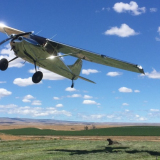
'49 170A. (his)
'56 172. (hers)
'56 172. (hers)
Mon Jan 14, 2013 6:02 am
Re: Cost sharing rules in the real world
Cary wrote:Contrary to popular belief, getting one's commercial certificate does not make one a commercial pilot, i.e., being able to charge for your services as a pilot. As you'll see if you read some of the Counsel's opinion's, to avoid the illegal charter issue you must either limit your operations to the 25 mile radius sight seeing without landing, or jump through the hoops to create a Part 135 operation. That requires a lot of things, not the least of which is that each of the pilots must have a commercial certificate and an IR (although can't file and fly in IMC in a SE without additional hoops) and pass a Part 135 checkride every 6 months (known colloquially as an ATCO ride--Air Taxi & Commercial Operator). Without jumping through all those hoops, you're still exercising the privileges of a private pilot as far as the FAA is concerned, regardless whether you have a commercial or ATP, which means that you're able to split the costs among the passengers if you all have a common purpose for the trip, with the pilot's share not being less than the allowable expenses divided by the total filled seats.
Cary
And even that's only part of the requirements. You need a certificate to hold out for hire...as noted, a 135 or? Doing the within 25 NMR point to return point sight seeing tours?? That requires a letter of authorization from the FAA (and about a ten month wait In many districts) and an approved drug testing program.
There are exemptions...see FAR 119. For air tours in FAI, I simply gave them an "introductory flying lesson" as a CFI. My insurance covered that, and no operating certificate required for insructing.
There's more to operating commercially than many realize......I too would rather just take someone for a ride and call it good.
MTV

Mon Jan 14, 2013 7:31 am
Re: Cost sharing rules in the real world
The IRS was mentioned jokingly, but the FAA and IRS have different definitions of what is commercial. Part 91 business flights must keep a manifest of who is on the airplane. If the CEO's wife rides along she gets to pay federal income tax on the free ride she got. The IRS doesn't care how you pay said tax, but if she, or her husband, writes a check to the company to cover it the FAA says that makes it a commercial operation requiring a 135 certificate. So, after several oops moments involving accountants, the FAA and IRS many years ago the outcome is the CEO's W2 gets ramped up in order to cover the extra tax. He could write a separate check to the IRS but the W2 increase is already covered by the mandatory manifest paperwork.

John
KSBP
KSBP
Mon Jan 14, 2013 9:23 am
Re: Cost sharing rules in the real world
porterjet wrote:The IRS was mentioned jokingly, but the FAA and IRS have different definitions of what is commercial. Part 91 business flights must keep a manifest of who is on the airplane. If the CEO's wife rides along she gets to pay federal income tax on the free ride she got. The IRS doesn't care how you pay said tax, but if she, or her husband, writes a check to the company to cover it the FAA says that makes it a commercial operation requiring a 135 certificate. So, after several oops moments involving accountants, the FAA and IRS many years ago the outcome is the CEO's W2 gets ramped up in order to cover the extra tax. He could write a separate check to the IRS but the W2 increase is already covered by the mandatory manifest paperwork.
Interesting. As they say, the only things guaranteed are death and taxes. I could see where this one could trip up folks.
MTV
Mon Jan 14, 2013 7:23 pm
Re: Cost sharing rules in the real world
When in my plane with me as PIC I don't ask for or expect anything, help with gas costs or whatever is welcome after the flight and within limits.
When a guest with someone else in their plane I usually pay for the gas or at least offer to. If it is another local pilot we often just trade rides.
When a guest with someone else in their plane I usually pay for the gas or at least offer to. If it is another local pilot we often just trade rides.
DISPLAY OPTIONS
Who is online
Users browsing this forum: No registered users and 1 guest
Latest Features
-
Live to Tell
A Minnesota pilot is surprised to learn that the sudden asymmetric drag of an out-of-rig ski can…Read More -
Creators
Working in some of the Yukon's most beautiful and remote environments, photographer Simon Blakesley captures aircraft in…Read More -
Aircraft Ownership and Maintenance
Upgrading to big tires can make a huge difference in backcountry performance, but with those gains come…Read More -
Tales from Yesteryear
In this tale from bush flying yesteryear, Don Cogger signs up to help Atlee Dodge Jr recovery…Read More


Latest Knowledge Base
-
Destinations
A regional guide with ideas for winter camping destinations in California, Nevada, New Mexico, and Arizona.Read More -
Aircraft
Finding an affordable aircraft that can handle the backcountry for $80K or less? A challenge for sure, but with the…Read More -
Aircraft
01.29.2018 - Zane - Updated tire diameter graphic to add 8.50x10 Guide to tires for use in the backcountry and off-airport landing…Read More -
Pilots
12.22.2013 - Initial article format Operating aircraft on skis and negotiating a snow-covered landscape is an entirely unique skillset and environment.…Read More


