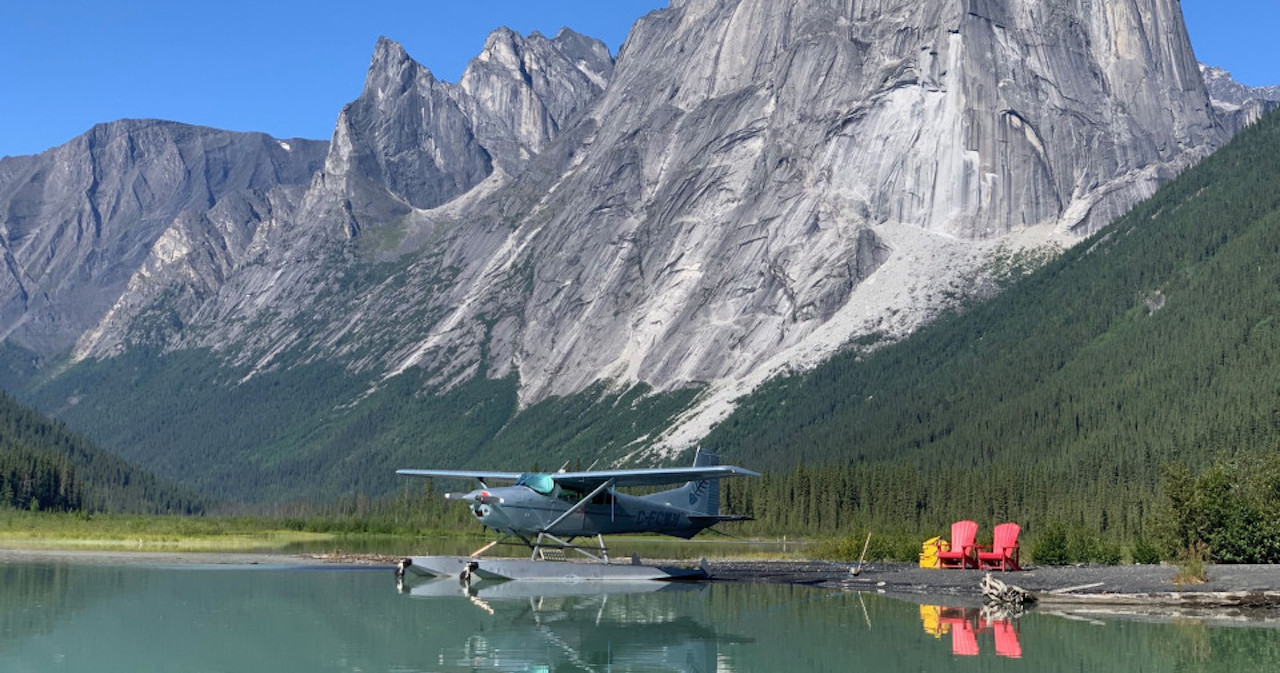
Most articles talk a lot about swell/wind/ditching-direction relationship. And that you should in most cases ditch gear up with a flatter angle, with a mention that fixed gear aircraft tend to act differently, namely pitching up on their nose.
I was wondering if you guys had any thoughts as ditching in an fixed gear aircraft? Be it a tailwheel or trike.
Ditching in water with a fixed gear aircraft.
Tue Oct 04, 2016 9:58 am
- MountainFlyerN22 offline
- Posts: 80
- Joined: Fri Nov 20, 2015 12:23 am
- Location: Catskill
Tue Oct 04, 2016 10:59 am
Re: Ditching in water with a fixed gear aircraft.
After speaking with a pilot that survived a ditching in a fixed gear trike, take your feet off the pedals before splashing in. Had one or both, I don't remember, been a long time, ankles broken from the nose wheel torquing over when it hit the water.

Wed Oct 05, 2016 3:57 pm
Re: Ditching in water with a fixed gear aircraft.
I would bet no matter what you do w/ fixed gear AC you are going to end up upside down.
When you are driving down the road at 55 mph stick you hand out the window with palm facing forward. Imagine your gear encountering water at the same speed. Gear stops and everything above that keeps going.
Study up on water egress or take a class if you spend lots of time over water.
TD
When you are driving down the road at 55 mph stick you hand out the window with palm facing forward. Imagine your gear encountering water at the same speed. Gear stops and everything above that keeps going.
Study up on water egress or take a class if you spend lots of time over water.
TD
Wed Oct 05, 2016 5:02 pm
Re: Ditching in water with a fixed gear aircraft.
What if... you had a fat tire taildragger and calm water: Would the nose-over be more or less violent if you came down hot and skied to the point of sinking, vs flying in low ground effect until the stall? 
Last edited by denalipilot on Wed Oct 05, 2016 11:24 pm, edited 1 time in total.
- denalipilot offline


- Posts: 2793
- Joined: Mon Oct 15, 2007 4:53 pm
- Location: Denali
- Aircraft: C-170B+
Wed Oct 05, 2016 9:23 pm
Re: Ditching in water with a fixed gear aircraft.
I've seen video of fixed gear airplane's landing in water, and none I recall went over.
MTV
MTV


Wed Oct 05, 2016 10:50 pm
Re: Ditching in water with a fixed gear aircraft.
denalipilot wrote:What if... you had a fat tire taildragger and calm water: Would the nose-over be more of less violent if you came down hot and skied to the point of sinking, vs flying in low ground effect until the stall?
Water skiing has always been my plan if I have to ditch. My theory is that you would be going slower once you finally penetrate the water because the wheels as well as the wings would be supporting some of the weight while you hydroplane.
Wed Oct 05, 2016 11:11 pm
Re: Ditching in water with a fixed gear aircraft.
I have a feeling most planes would end up on their backs. If I ever have to deal with that I hope to be proven wrong. Besides, it depends on where you end up in the water, if it's in the cold water of Alaska you're going to die of exposure before anyone will get to you.
Ben
Ben
keep them flying!
Thu Oct 06, 2016 12:02 am
Re: Ditching in water with a fixed gear aircraft.
Heaviest part is the engine...once it hits the water you will not get it to lift out, so they all end up nose down, and it is a pretty sudden stop...according to my DPE when I took my private checkride anyway...
But I have seen videos of float planes flipping if they had wheels down on amphib floats...but then they turn back nose donwn...
Sent from my iPad using Tapatalk
But I have seen videos of float planes flipping if they had wheels down on amphib floats...but then they turn back nose donwn...
Sent from my iPad using Tapatalk
- Troy Hamon offline

- Posts: 915
- Joined: Tue Apr 06, 2010 8:27 am
- Location: King Salmon
- FindMeSpot URL: http://share.findmespot.com/shared/face ... 04iX0FXjV2
- Aircraft: Piper PA-22
Thu Oct 06, 2016 1:35 am
Re: Ditching in water with a fixed gear aircraft.
I have always though that I would try to get the tailwheel in first, but realistically I think the chances of flipping are very high. I fly over water a lot.
- daedaluscan offline

- Posts: 1301
- Joined: Sat Jan 12, 2013 1:06 pm
- Location: Texada BC
Thu Oct 06, 2016 3:40 am
Re: Ditching in water with a fixed gear aircraft.
Sorry, had to edit this post to correct the link.
I thought we were discussing land planes, not amphibians. Amphibians are so top heavy that they do frequently flip if landed gear down. But those sure don't wind up floating nose down.
But, when discussing "regular" aircraft ditching S, take a look at this data:
http://www.equipped.org/ditchingmyths.htm
Specifically: "In the 179 accidents we reviewed, only one mentioned flipping over on impact. It was a high wing, fixed-gear single (a Cessna 172). But at least 60 other high wing airplanes ditched and none of the pilots reported flipping over."
MTV
I thought we were discussing land planes, not amphibians. Amphibians are so top heavy that they do frequently flip if landed gear down. But those sure don't wind up floating nose down.
But, when discussing "regular" aircraft ditching S, take a look at this data:
http://www.equipped.org/ditchingmyths.htm
Specifically: "In the 179 accidents we reviewed, only one mentioned flipping over on impact. It was a high wing, fixed-gear single (a Cessna 172). But at least 60 other high wing airplanes ditched and none of the pilots reported flipping over."
MTV
Thu Oct 06, 2016 8:49 am
Re: Ditching in water with a fixed gear aircraft.
That's pretty interesting, good to see the statistics.
keep them flying!
Thu Oct 06, 2016 10:00 am
Re: Ditching in water with a fixed gear aircraft.
I had the unfortunate experience of watching a 206 go into the water. Short story is that he took off with a strong quartering downwind on a runway with 3 to four inches of slush, did a soft field but never lowered the nose. So he was flying, nose high in ground effect, but the wind blew him off the runway, over the Kachemak bay and out of ground effect. The plane stalled into the bay. The plane did not flip. It landed 75 yards off shore, in 2-3 foot seas. The plane almost immediately sank to where only wings were exposed. It took them what I thought was forever but all four got out the pilot's door and climbed on the wing. Three swam for the shore and made it, the pilot got half way and started yelling he couldn't swim, I thought that he had a broken leg or something, turns out he just couldn't swim. One of the villagers swam out and got him. They took all of them straight up to the school where the hot showers were already waiting for them (this was not the first rodeo for this village). This was in February or March, that water was cold.
My "take aways"
On wheels my plan is to stall it in and be ready to move fast. The plane will float but barely, and I don't know for how long. That one was still floating when I took off 45 minutes later. The ELT did not activate, activating the ELT is now on my engine out flow. If it ends up upside down the ELT may not get a signal out, so I figure anything I can get while still in the air is worth the embarrassment I may feel if I get it started again or end up landing safely.
That was the first crash I have witnessed and have decided to cross that shit off my list, I never want to see another.
I don't think water skiiing in will work in most water scenarios as the waves will get you, but if it is fairly smooth and that is in your "tool box" (it isn't in mine) maybe it will work.
My "take aways"
On wheels my plan is to stall it in and be ready to move fast. The plane will float but barely, and I don't know for how long. That one was still floating when I took off 45 minutes later. The ELT did not activate, activating the ELT is now on my engine out flow. If it ends up upside down the ELT may not get a signal out, so I figure anything I can get while still in the air is worth the embarrassment I may feel if I get it started again or end up landing safely.
That was the first crash I have witnessed and have decided to cross that shit off my list, I never want to see another.
I don't think water skiiing in will work in most water scenarios as the waves will get you, but if it is fairly smooth and that is in your "tool box" (it isn't in mine) maybe it will work.
- Headoutdaplane offline
- Posts: 526
- Joined: Thu May 29, 2008 5:21 pm
- Location: Homer, AK
The winner is the person with the most stories when he dies, not the most gold.
www.belugaair.com
www.belugaair.com
Thu Oct 06, 2016 12:02 pm
Re: Ditching in water with a fixed gear aircraft.
Whether the airplane flips or not, it'll be a pretty disorienting experience in most cases, and you'll be under water part of the time. An inflatable PFD (inflated after exiting the airplane) can make the difference between life and death, and it's only good if it's being worn before you go in--trying to put on a PFD while treading water is tough in a nice warm swimming pool; I can't imagine trying to do it in bitter cold water after ditching. So if you're flying over water, best to have the PFD on all the time.
Cary
Cary
"I have slipped the surly bonds of earth..., put out my hand and touched the face of God." J.G. Magee
Thu Oct 06, 2016 1:20 pm
Re: Ditching in water with a fixed gear aircraft.
I have all my clients wear the Coast Guard approved float suspenders by mustang, I had an FAA PMI tell me one time that those aren't legal on my plane. I showed him that I also carried the FAA approved PFDs that are in the bags. I asked him.
1. Would he rather have the FAA or the coast guard approve his PFD?
2. Would he rather be wearing a PFD or try and remember to take one with him out of the plane, open it with cold hands and fingers and then get it on?
3. Why every single POI that has given me my 135 rides, worn one of mine or a similar one that they own?
The Coast Guard doesn't go around approving aircraft why the hell is the FAA approving PFDs?
....End of rant......
The thing is that we are talking about wheel planes here that mostly don't fly out of gliding distance to land, so they probably don't have the PFDs.
1. Would he rather have the FAA or the coast guard approve his PFD?
2. Would he rather be wearing a PFD or try and remember to take one with him out of the plane, open it with cold hands and fingers and then get it on?
3. Why every single POI that has given me my 135 rides, worn one of mine or a similar one that they own?
The Coast Guard doesn't go around approving aircraft why the hell is the FAA approving PFDs?
....End of rant......
The thing is that we are talking about wheel planes here that mostly don't fly out of gliding distance to land, so they probably don't have the PFDs.
- Headoutdaplane offline
- Posts: 526
- Joined: Thu May 29, 2008 5:21 pm
- Location: Homer, AK
The winner is the person with the most stories when he dies, not the most gold.
www.belugaair.com
www.belugaair.com
Thu Oct 06, 2016 2:33 pm
Re: Ditching in water with a fixed gear aircraft.
Many long years ago, I took my family across both Lake Erie and Lake Michigan in our partnered Skylane, climbing to 12,000' to increase the chances that if the engine died, we'd be able to glide close to shore. But with the Lake Erie crossing, that meant that there was a gap of roughly 22 miles, and with the Lake Michigan crossing there was a gap of roughly 35 miles, where gliding to shore was not possible. Up until that time, I had never had an engine glitch of any kind, so by climbing high, I thought I was minimizing an unlikely risk. The last such trip was something like 36 years ago.
I've had 3 engine failures since then, 2 partial and one total, so I absolutely know that they can happen unexpectedly. In retrospect, those crossings were both naive and incredibly foolish--I put my family at substantial risk in the event we went down, because we had no flotation devices of any kind aboard. Even in the summer time, those lakes are cold, and even strong swimmers have limited ability to swim any distance in cold water. I find it hard to believe that I took such a chance with all of us.
So a couple of years ago, thinking that I might make another Great Lakes crossing in the future or some other excursion across water, I bought an inflatable PFD--USCG approved, designed as aviation-specific (but not FAA approved), designed for continuous wear. As it happens, I haven't taken such an over water trip since buying it, but I keep it in the airplane whenever I'm flying toward any large body of water, with the plan that I'll put it on at the fuel stop before I get to the water. Since most of my long cross countries are solo, I didn't spring for more than just the one. But if I were to plan a trip with passengers across any body of water, as part of the preparation I'd get one for each passenger.
Cary
I've had 3 engine failures since then, 2 partial and one total, so I absolutely know that they can happen unexpectedly. In retrospect, those crossings were both naive and incredibly foolish--I put my family at substantial risk in the event we went down, because we had no flotation devices of any kind aboard. Even in the summer time, those lakes are cold, and even strong swimmers have limited ability to swim any distance in cold water. I find it hard to believe that I took such a chance with all of us.
So a couple of years ago, thinking that I might make another Great Lakes crossing in the future or some other excursion across water, I bought an inflatable PFD--USCG approved, designed as aviation-specific (but not FAA approved), designed for continuous wear. As it happens, I haven't taken such an over water trip since buying it, but I keep it in the airplane whenever I'm flying toward any large body of water, with the plan that I'll put it on at the fuel stop before I get to the water. Since most of my long cross countries are solo, I didn't spring for more than just the one. But if I were to plan a trip with passengers across any body of water, as part of the preparation I'd get one for each passenger.
Cary
"I have slipped the surly bonds of earth..., put out my hand and touched the face of God." J.G. Magee
Thu Oct 06, 2016 7:02 pm
Re: Ditching in water with a fixed gear aircraft.
Having been in an air pocket in my overturned boat in Coos Bay Oregon last February, I can say that having a wife totally panicked made my workload difficult. Having an inflatable (not auto inflate) suspender type PFD would have been handy once we were in open water clear of the boat. the water was 50 degrees and we were in it for close to 15 minutes. A lot colder where some of you are. I now own two of them and have tested them out at a warm lake.
Tim
Tim
- qmdv offline

- Posts: 3635
- Joined: Wed Feb 15, 2006 10:22 pm
- Location: Payette
- FindMeSpot URL: http://share.findmespot.com/shared/face ... I5tqEOk0rc
- Aircraft: Cessna 182
Thu Oct 06, 2016 8:46 pm
Re: Ditching in water with a fixed gear aircraft.
Headoutdaplane wrote:I have all my clients wear the Coast Guard approved float suspenders by mustang, I had an FAA PMI tell me one time that those aren't legal on my plane. I showed him that I also carried the FAA approved PFDs that are in the bags. I asked him.
1. Would he rather have the FAA or the coast guard approve his PFD?
2. Would he rather be wearing a PFD or try and remember to take one with him out of the plane, open it with cold hands and fingers and then get it on?
3. Why every single POI that has given me my 135 rides, worn one of mine or a similar one that they own?
The Coast Guard doesn't go around approving aircraft why the hell is the FAA approving PFDs?
....End of rant......
The thing is that we are talking about wheel planes here that mostly don't fly out of gliding distance to land, so they probably don't have the PFDs.
That's what I did for my whole career in Alaska....stowed the worthless FAA TSO vests in the seat pockets and made everyone wear a "wearable" vest. Good for you for taking this stuff serious. My idea of a good operator is one who goes the extra mile to make their customers safer.
MTV
Thu Oct 06, 2016 9:50 pm
Re: Ditching in water with a fixed gear aircraft.
robw56 wrote:denalipilot wrote:What if... you had a fat tire taildragger and calm water: Would the nose-over be more of less violent if you came down hot and skied to the point of sinking, vs flying in low ground effect until the stall?
Water skiing has always been my plan if I have to ditch. My theory is that you would be going slower once you finally penetrate the water because the wheels as well as the wings would be supporting some of the weight while you hydroplane.
This would be in line with the proper procedure. The key would be interfacing with the water at a speed that would assure good hydroplaning, stalling, or dragging the tail wheel into the water would result in a higher than normal penetration speed resulting in higher acceleration forces that could possibly cause injury. Trycz or dragger, get the mains on the water to establish a clean hydroplane, then hold on till penetration speed is archived. I think in a Miller video it was stated the 26 mph was a typical penetration speed for a cub, this is easily survivable. The plane will most likely go over unless the CG is way back. This is helpful if you want to stay up right. Don't ask me how I know this. 4 " of water could put you on the nose if there is no weight in the back. All the way over if there is no hard ground below the surface to stick the prop into.
- Sidewinder offline
- Posts: 340
- Joined: Mon Sep 30, 2013 5:07 pm
- Location: SouthWest Kanada eh?
Fri Oct 07, 2016 7:07 pm
Re: Ditching in water with a fixed gear aircraft.
I say get close to the water, roll inverted so when the airplane flips over you will be right side up again.
Fri Oct 07, 2016 7:55 pm
Re: Ditching in water with a fixed gear aircraft.
+1 on the inflatable PFDs.
- MountainFlyerN22 offline
- Posts: 80
- Joined: Fri Nov 20, 2015 12:23 am
- Location: Catskill
DISPLAY OPTIONS
Who is online
Users browsing this forum: No registered users and 1 guest
Latest Features
-
-
Featured Bush Planes
As one of the undisputed legends of bush flying, the Cessna 180 hauls a…Read More -
Aircraft Ownership and Maintenance
9 modification mistakes aircraft owners make when trying to "bush out" their birds—why some…Read More -
Live to Tell
A Minnesota pilot is surprised to learn that the sudden asymmetric drag of an…Read More



Latest Knowledge Base
-
Destinations
Canada offers some of the most spectacular backcountry flying on the continent. Here's what you need to know before you go.Read More -
Safety and Survival
Hope that you never have to use your survival vest but knowing you have it and knowing how to use…Read More -
Destinations
A regional guide with ideas for winter camping destinations in California, Nevada, New Mexico, and Arizona.Read More -
Aircraft
Finding an affordable aircraft that can handle the backcountry for $80K or less? A challenge for sure, but with the…Read More