Backcountry Pilot • Downwind landings

Downwind landings

Share tips, techniques, or anything else related to flying.
13 postsPage 1 of 1

Downwind landings

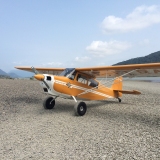
Thought I'd drop into the bush strip at Tsek hot springs for a soak, flew the 40 minutes there only to find I'd be landing in a 10-15 mph tailwind (floatplane/helicopter guy, I read the wind from water ripples and cat paws on nearby lakes, and fluttering cottonwood leaves). Strip is 900' if you plant it real early, and has 100' trees at the end, so one way committed. My 7GCBC POH says 310' ground roll, 690' from over a 50' obstacle, so this strip is tight if on the numbers on a calm day. My decision was to turn around and go home to try it another day. Did I fold my hand too early?

Curious how the rest of the backcountry community deals with bad winds and one-way strips. Any "fudge factor" you apply to a tailwind - I've seen charts for other aircraft somewhere.

Image
Karmutzen offline
User avatar
Posts: 711
Joined: Tue Apr 24, 2012 7:47 pm
Location: Great Bear Rainforest
'74 7GCBC, 26" ABW, Aera 660 feeding G5 and FC-10 FF.

Re: Downwind landings

Karmutzen-You made a good decision. First, extra airspeed on top of a downwind is a really bad decision. It makes the ground speed excessive. I don't want to encourage any bad decisions so I'll explain how I would make the landing in headwind or no wind. Then the problem with that much downwind will become apparent.

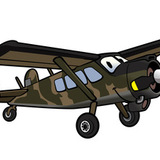
I have not been there and one cannot get the feel of a place from a picture, so this is hypothetical. I would get down into low ground effect on the river. From there I would hover taxi through the cut in the trees that is at a fifteen degree angle to the runway. The fifteen degree left cross controlled rudder turn, in low ground effect over the rocks and scrub, to align with the runway is not a problem.

Knowing how it turned out in varying degrees of good conditions would be mandatory before attempting bad conditions. The problem with the big tailwind is that we would be crabbing into that wind in low ground effect. With the nose crabbed right, the left wings level rudder turn to align with the runway would now be more than fifteen degrees. The trees will block some of the tailwind, but we can't depend on that.

This is a place where landing fast over the trees and using brakes could end poorly.

We have a similar situation at Kingsley's. It used to be a fifteen degree angle through the trees, but with a half mile runway was no problem. With loaded Pawnees we took off downhill and stayed in low ground effect through the trees. Don't worry about it now. We have cleared most of the trees. Just a five degree low ground effect rudder turn will do it now. Or you can go over the trees and scare me to death.
contactflying offline
Posts: 4972
Joined: Wed Apr 03, 2013 7:36 pm
Location: Aurora, Missouri 2H2
Download my free "https://tinyurl.com/Safe-Maneuvering" e-book.

Re: Downwind landings

agreed, downwind adds a lot more distance than you would think.
porterjet offline
User avatar
Posts: 776
Joined: Tue Dec 08, 2009 11:37 am
Location: San Luis Obispo
John
KSBP

Re: Downwind landings

Best way to figure that out is go out to a strip some time and practice a few down wind landings!
Your approach is going to be quite different as your ground speed is going to be faster, so everything looks different! If you land at 50 with a 20 mph TW you are traveling 40 mph faster than landing upwind!(ground speed) Quick (So in 10 seconds how much farther did you travel at that 40 mph rate??)
Don't be afraid to land down wind, just be careful.
Keep a good grip of the stick or yoke and don't let the wind grab it out of your hand!
Note, When you get just about stopped pay attention to your elevator and rudder!! You might have to use them a bit different as they may be working in reverse or you might have to use power to make them act correctly!(as in just like taxing) You just can't hold the stick back and assume the tail is going to stay on the ground (you might have to shove it all the way forward to make it stay down!!??)(Make the wind hold the tail down!)
Keep plenty of pressure on your rudder as the wind might just snatch it away from you and slam it to one side or the other.
I think most problems on down wind landings are from not thinking about what you have to do to get stopped after you quit flying!!
Also 1 thing to be aware of in the trees is that sometimes when you get to that last 10 feet the wind is probably going to be quite different than at the top of the trees!!
Go practice, tis the only cure!!!!!

MHO and $.02
GT
M6RV6 offline
User avatar
Posts: 2313
Joined: Mon Feb 25, 2008 5:52 pm
Location: Rice Wa. 82WN Magee Creek AERODROME
FindMeSpot URL: http://share.findmespot.com/shared/face ... sWKXuhKlg2
Have as much Fun as is Safe, and Keep SMILIN! GT,

Re: Downwind landings

Practice, practice, practice... And if your strip is one-way, I'd be really familiar with it before I attempted much of a tailwind. You need to know pretty much exactly where you can touch down and get stopped on a headwind or no-wind day, then add to that factoring in a tailwind.

Amazing how much real estate you can eat up with 15-20 KTS up the ass. And looking at trees or rocks rushing at you with only a few feet of runway left, can make you make some really poor decisions. Like try a go-around when it's not possible.

Trees with brakes locked at 20 MPH bends shit. Go-around attempt, wallowing in ground effect at 40 MPH and then hitting said trees, kills you.


Gump
GumpAir offline
User avatar
Posts: 4557
Joined: Wed Feb 14, 2007 9:14 am
Location: Lost somewhere in Nevada
Aircraft: Old Clunker

Re: Downwind landings

We often landed at our 1600' lodge strip with a significant tailwind. Very similar setup as your picture. Not exactly one way, but required 25kts or so to drop over the trees on the high end. In that particular situation it would go from tailwind to no wind immediately below the tree line which made for a fantastic sinker. No big deal if you are ready with a handful of throttle.

Proceed with caution obviously and do what you're comfortable with. Every day is different.
gbflyer offline
User avatar
Posts: 2317
Joined: Sun Oct 14, 2007 5:35 pm
Location: SE Alaska

Re: Downwind landings

GumpAir wrote:Trees with brakes locked at 20 MPH bends shit. Go-around attempt, wallowing in ground effect at 40 MPH and then hitting said trees, kills you.


This is an excellent point. Well said. Sometimes you gotta figure out how to eat a shit sandwich.
Zzz offline
Janitorial Staff
User avatar
Posts: 2855
Joined: Fri Oct 08, 2004 11:09 pm
Location: northern
Aircraft: Swiveling desk chair
Half a century spent proving “it is better to be thought a fool than to open your mouth and remove all doubt.”

Re: Downwind landings

Just for the hell of it I plugged some numbers into my handy T.O.P. computer

70F with a pressure altitude of 1000 ft ( elevation of lake Lillooet surface 695 ft.)
Grass strip
0% slope
12 mph tailwind
With POH information provided.

You would become a wood chipper on take off at about 82% gross weight, assuming your 50ft obstacle is at 900ft.

Now none of this takes into account the actual horsepower your engine is developing over new, any down drafts from the trees, or any other negative conditions.

I know the T.O.P. computer is conservative, but then I have become an old pilot.

Just my $0.02 worth.

Could you get it on the strip, probably. Could you get it out, maybe.
TomD offline
User avatar
Posts: 1113
Joined: Mon Jul 03, 2006 5:17 pm
Location: Seattle
Aircraft: Maule M5-235C

Re: Downwind landings

I remember my first downwind landing some 35 years ago, at McCarran at Las Vegas, in a 182. I was shocked at how far past my planned touchdown point I actually touched down, and then how long the roll-out was, compared to my normal landings. I don't recall the tailwind exactly, but I believe it was 12-15 knots.

Since that time, I've made other landings with a tailwind, including coming into Marble last September. It wasn't much of a tailwind, just enough to raise the windsock from limp, but I touched down at least 200' or more past my usual touchdown spot. Of course, Marble is plenty long so it wasn't an issue.

But on a tight strip, where everything has to be done just right, I'd say you did exactly the right thing.

Cary
Cary offline
User avatar
Posts: 3801
Joined: Sun Jan 10, 2010 6:49 pm
Location: Fort Collins, CO
"I have slipped the surly bonds of earth..., put out my hand and touched the face of God." J.G. Magee

Re: Downwind landings

With a tailwind that strong, I would have been very inclined to follow your suit. Maybe if I really needed to go there, I'd try a dummy approach to gauge groundspeed - if I were in a powerful aircraft - but I'd hope that my better judgement would have prevailed. :oops:
Battson offline
Knowledge Base Author
User avatar
Posts: 1810
Joined: Wed May 09, 2012 11:19 pm
Location: New Zealand
Aircraft: Bearhawk 4-place
IO-540 260hp

Re: Downwind landings

Would it also make sense to be mindful of wet grass? Tailwind landing at a very short grass strip and hard braking with slick tires may not turn out so well when the grass is wet, I would think.
58Skylane offline
User avatar
Posts: 5297
Joined: Thu Oct 11, 2007 12:36 pm
Location: Cody Wyoming

Re: Downwind landings

If brakes are a part of your plan to go in there, don't go. Cubs, champs, taylorcraft, etc. had mechanical brakes so they wouldn't be on their nose all the time. We were expected to land slow (ground speed.) We were expected to land slow whether landing upwind or downwind. How can we get slow with a tailwind? Get into ground effect before the target and use power/pitch to hover up. Or make a very steep power/pitch approach over the trees and touch down very close to the trees. Yes, you will be behind the power curve, requiring power to control the mush. The reason the airspeed indicator didn't work below 40 mph, in the old trainers, was that you weren't supposed to use it while busy landing.
contactflying offline
Posts: 4972
Joined: Wed Apr 03, 2013 7:36 pm
Location: Aurora, Missouri 2H2
Download my free "https://tinyurl.com/Safe-Maneuvering" e-book.

Re: Downwind landings

So this might be helpful when running your #'s, a 10% increase in approach speed will increase your landing distance by 21%.

Now for take off with a tailwind it gets more complicated to calculate but here is the formula:
The tailwind takeoff distance is equal to 110% of the computed takeoff distance for the existing density altitude plus the value of the tailwind component divided by the rotation speed, or
110% of (D/A T/O distance)=A TW/Vr =B A+B= T/O distance.

Go out and practice on a long runway and get the feel for it.
Kitfox5 offline
User avatar
Posts: 132
Joined: Tue Mar 20, 2012 2:41 pm
Location: Albany, Oregon
Aircraft: Kitfox5 Lycoming O290 Powered
Vans RV6
C180K

DISPLAY OPTIONS

13 postsPage 1 of 1

Who is online

Users browsing this forum: No registered users and 1 guest
Latest Features

Latest Knowledge Base