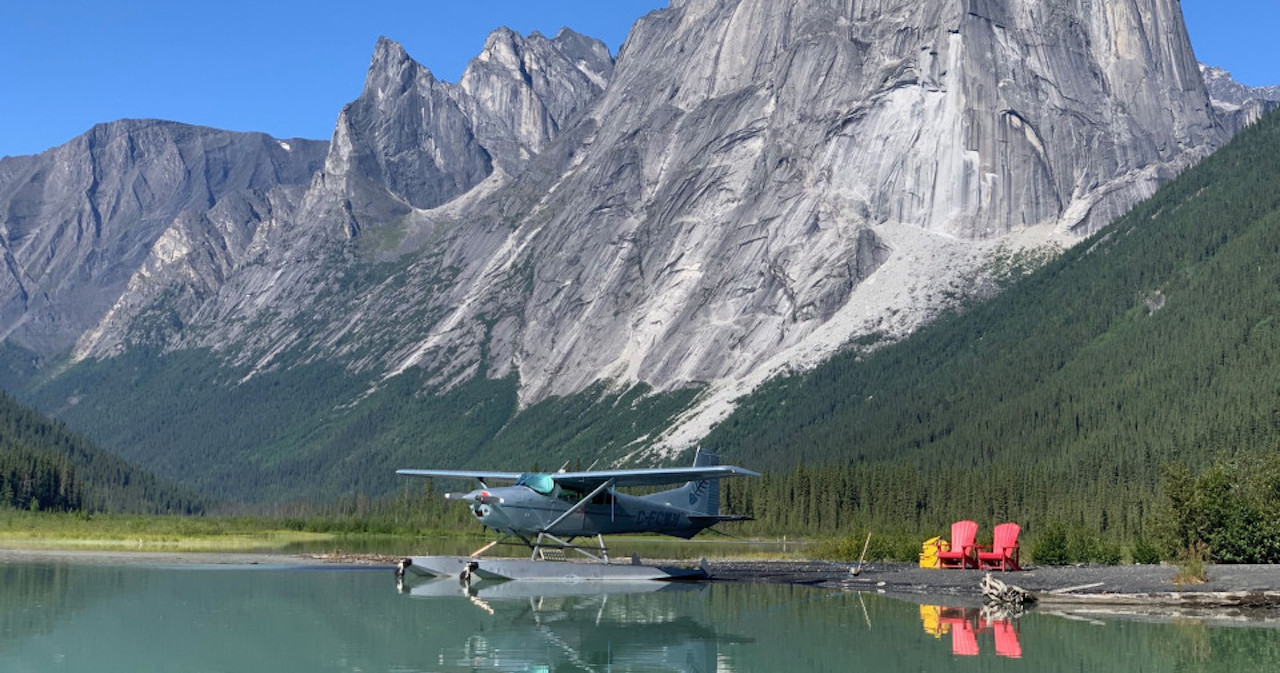
Energy management concepts are included in the new Airmen Certification Standards, ACS. Hopefully they include most of these. If any of you instructors know a sanctioned reference for their elaboration, let me know.
TAKEOFF
Engine thrust
Mixture
Prop blade pitch
Wind energy management
Takeoff into best headwind component where
practicable considering down slope and/or down
drainage egress
Heat/DA management
Avoid heat of day except when wind energy
compensates for higher DA and or mission requires
timely takeoff
Flaps to increase camber
Friction management
Nosewheel just off when possible
Mains just off when possible
Angle of attack management
Level fuselage in low ground effect
Kinetic energy management
Accelerate in low ground effect as much as possible
Zoom reserve
Vx
Vy
Maintain designed minimum controllable airspeed
below safe stall altitude
Gravity energy management
Down slope runway
Down drainage takeoff and egress
Obstruction management
Zoom just over
Rudder turn in ground effect around
Energy management turn around
DMCA climb or cruise climb until safe stall altitude
LOW ALTITUDE ORIENTATION (below safe stall altitude)
Energy management turns to target below safe stall altitude (this includes pattern)
Zoom wings level first if zoom reserve available
Allow nose to go down naturally in all turns
Orograraphic lift
Thermal lift
Wave lift
Potential gravity thrust of altitude
Pitch down increase in airspeed is kinetic, but think
realized gravity thrust
Pitch down in downdrafts and up in updrafts to maintain altitude and airspeed in unstable air
Wind energy management
Use crosswind/headwind to decrease diameter and
groundspeed of turn to target, canyon turn, base to
final turn
Allow nose to go down naturally
Maintain designed minimum controllable airspeed
except short final deceleration
Reduce airspeed in confined areas with very limited vertical space available
HIGH ALTITUDE ORIENTATION
Wind management
Climb to best practicable tailwind component to
increase cruise groundspeed
Generally stay as low as practicable in headwind
component
Use headwind component where practicable to
teardrop holding and procedure turn
LANDING
Gait/descent management on final, short final, entering ground effect, and low ground effect
Stabilized 1.3 Vso approach to short final
Flaps to increase camber
Full flaps to increase drag
Apparent brisk walk rate of closure short final to
touchdown
Behind power curve or lift drag curve may happen with
no headwind component or downwind component
coming into ground effect
Use headwind component to decrease groundspeed
Full stall or near full stall (wheel landing) in low ground
effect touchdown (well below Vso oge) for short
ground roll
Brakes for competition short ground roll
Angle across in extreme crosswind to use more headwind component and have sufficient rudder against down wing
Energy Management Concpts
Sun Jan 19, 2020 1:38 am
- contactflying offline
- Posts: 4972
- Joined: Wed Apr 03, 2013 7:36 pm
- Location: Aurora, Missouri 2H2
Download my free "https://tinyurl.com/Safe-Maneuvering" e-book.
Sun Jan 19, 2020 7:12 am
- aktahoe1 offline
- Posts: 2052
- Joined: Sun Jul 13, 2008 8:22 am
- Location: Alaska and Lake Tahoe = aktahoe
If it looks smooth, it might be. If it looks rough, it is...www.bigtirepilot.com ...www.alaskaheliski.com
Sun Jan 19, 2020 7:20 am
Re: Energy Management Concpts
Power and Energy Management at its best. STOL Drag


AKT
Sent from my iPhone using Tapatalk
AKT
Sent from my iPhone using Tapatalk
- aktahoe1 offline
- Posts: 2052
- Joined: Sun Jul 13, 2008 8:22 am
- Location: Alaska and Lake Tahoe = aktahoe
If it looks smooth, it might be. If it looks rough, it is...www.bigtirepilot.com ...www.alaskaheliski.com
Sun Jan 19, 2020 10:10 am
Re: Energy Management Concpts
Thanks, Kevin, for that reference to sanctioned energy management. It explains why the FAA was able to change from elevator controls airspeed and power controls glide angle to just the opposite. The stabilized approach technique makes no admission of deceleration below 1.3 Vso. With no energy consideration of flight below 1.3 Vso, the elevator controls glide angle quite well and the throttle controls airspeed quite well. We old, pre 70s, pilots have a problem with that (muscle memory). The problem for everybody from the round out and hold off crowd to the STOL crowd is that below 1.3 Vso we enter the realm where only elevator controls airspeed effectively (especially if throttle is closed) and only power controls glide angle (especially sink) effectively. This reverse in control function, both elevator and throttle, is confusing for the round out and hold off pilot and simply not acceptable to the STOL pilot, especially behind the power or lift drag curve.
What is, in the interest of safety, unfortunate is that total energy available is not addressed. If you look at my list, engine power is only a portion of total energy available. Management of the rest is of major concern to me and hopefully others.
What is, in the interest of safety, unfortunate is that total energy available is not addressed. If you look at my list, engine power is only a portion of total energy available. Management of the rest is of major concern to me and hopefully others.
- contactflying offline
- Posts: 4972
- Joined: Wed Apr 03, 2013 7:36 pm
- Location: Aurora, Missouri 2H2
Download my free "https://tinyurl.com/Safe-Maneuvering" e-book.
Sun Jan 19, 2020 9:00 pm
Re: Energy Management Concpts
If we consider rule 4 in the energy management article, we are looking at high altitude orientation. "When managing your airplane's energy your goal is to detect, correct, and prevent altitude and airspeed deviations." The chart will tell us to increase throttle in a level turn to correct total energy error of slowing and descending .Yes, pulling back in the turn is poor form even at high altitude. But at high altitude, either contact or instrument, neither rate of turn nor diameter of turn is an issue. At low altitude, where horizontal space is limited, both rate and diameter of turn are critical. By trading airspeed for extra altitude, wings level, prior to the turn, we create more vertical space available and slow down to create faster rate of turn and decrease the horizontal space required to miss obstructions. This extra vertical space can be spent by allowing the nose to go down naturally. This is the safer energy management turn used by crop dusters and gunship pilots. This could be the safer pattern turn.
This thinking about kinetic and potential energy management through airspeed and altitude, elevator and throttle management, will certainly help. Adding ground effect, friction management, slope, down drainage egress, orographic lift, thermal lift, and wave lift would also help. Also we could look at more effective techniques to control both airspeed and altitude all the way to touchdown slowly and softly where we desire, I mean exactly where we desire. We are capable of efficient energy management.
This thinking about kinetic and potential energy management through airspeed and altitude, elevator and throttle management, will certainly help. Adding ground effect, friction management, slope, down drainage egress, orographic lift, thermal lift, and wave lift would also help. Also we could look at more effective techniques to control both airspeed and altitude all the way to touchdown slowly and softly where we desire, I mean exactly where we desire. We are capable of efficient energy management.
- contactflying offline
- Posts: 4972
- Joined: Wed Apr 03, 2013 7:36 pm
- Location: Aurora, Missouri 2H2
Download my free "https://tinyurl.com/Safe-Maneuvering" e-book.
Mon Jan 20, 2020 3:43 pm
Re: Energy Management Concpts
Contact,If you're looking to the ACS to increase piloting skills I have some sad news for you.
I did a reinstatement ride last spring after having let my CFI lapse in 2007. I couldn't escape diving deep into the ACS because the DPE has you demonstrate (and "teach") from the ACS (both Private and Commercial are fair game).
In the late 90s when I learned to fly "slow flight" meant flying around with the stall horn blaring. My instructor would have me fly circles at a specified back angle following the definition of minimum controllable airspeed. ANY increase in bank angle or back pressure and over she went. Hope you had the ball in the middle.
It took what seemed like a ton of extra power. Damn near full power actually. Turns one way took a ton of right rudder. Turns the other way just took less right rudder.
Now? The examiner will expect you to slow the plane unit you hear the first tick from the stall horn, and then add 5 knots. I s*** you not, that is slow flight now. The whole point of MCA (I thought, silly me) was to develop a feel for that fine edge of a wing at the limit. Now it is to show that you can configure the airplane as specified and not fall asleep.
I recall steep turns being 60 degrees back in the day. Bank that far now and you'll fail the maneuver. I don't have my knee board with me but I think Private is 45 degrees and Commercial is 50 (+/-5 in both cases). I concede that reducing the bank angle isn't catastrophic to flight training since that is the only time you bank much. Exceed 30 during the rest of the ride and the examiner's seat cushion will disappear.
Lazy 8s? That one actually ticks me off. The whole "picking out points at the 45, 90 and 135" thing is completely unnecessary if the maneuver were flown the way it used to be. I know you know this, but ever wonder why lazy 8s and chandelles are listed in the aerobatic section on the POH? It sure as hell isn't because they were flown to a maximum bank of 30-45 degrees and pitch +/- 30!
That's me and it's not my best work. My airspeed across the top showed 30mph in a plane that stalls at 50. Conservation of momentum exactly as you preach.
While I'm still on a rant, that link above is a great explanation - for someone who already flies and understands the pitch/power debate.
Try throwing that lengthy explanation to someone with 3 hours in their logbook and their head will implode.
Pitching for airspeed has yet to kill me in 1500 hours (including the T-6), so I think I'll keep using it.
Rant off. All of this aside, nothing prevents a flight instructor from going above and beyond the PTS, ACS or any other alphabet document because they are the MINIMUM standards that will get the rating sought by the applicant.
Any of my former students know that I clearly label sections of lessons with "the answer to the FAA test question is..." and ", you will be asked to demonstrate the maneuver this way...", versus "this is how to not die in an airplane"
By that I mean that I can't send a candidate for a ride who will fly the lazy 8 the way I do. I treat short and soft field maneuvers like compulsory ice skating. There's no such thing as a short paved runway with imaginary 50' trees is there? And I've probably landed on mushy grass runways that were 3000' long but no obstacles but I can't think of where.
I'll shut up now.
I did a reinstatement ride last spring after having let my CFI lapse in 2007. I couldn't escape diving deep into the ACS because the DPE has you demonstrate (and "teach") from the ACS (both Private and Commercial are fair game).
In the late 90s when I learned to fly "slow flight" meant flying around with the stall horn blaring. My instructor would have me fly circles at a specified back angle following the definition of minimum controllable airspeed. ANY increase in bank angle or back pressure and over she went. Hope you had the ball in the middle.
It took what seemed like a ton of extra power. Damn near full power actually. Turns one way took a ton of right rudder. Turns the other way just took less right rudder.
Now? The examiner will expect you to slow the plane unit you hear the first tick from the stall horn, and then add 5 knots. I s*** you not, that is slow flight now. The whole point of MCA (I thought, silly me) was to develop a feel for that fine edge of a wing at the limit. Now it is to show that you can configure the airplane as specified and not fall asleep.
I recall steep turns being 60 degrees back in the day. Bank that far now and you'll fail the maneuver. I don't have my knee board with me but I think Private is 45 degrees and Commercial is 50 (+/-5 in both cases). I concede that reducing the bank angle isn't catastrophic to flight training since that is the only time you bank much. Exceed 30 during the rest of the ride and the examiner's seat cushion will disappear.
Lazy 8s? That one actually ticks me off. The whole "picking out points at the 45, 90 and 135" thing is completely unnecessary if the maneuver were flown the way it used to be. I know you know this, but ever wonder why lazy 8s and chandelles are listed in the aerobatic section on the POH? It sure as hell isn't because they were flown to a maximum bank of 30-45 degrees and pitch +/- 30!
That's me and it's not my best work. My airspeed across the top showed 30mph in a plane that stalls at 50. Conservation of momentum exactly as you preach.
While I'm still on a rant, that link above is a great explanation - for someone who already flies and understands the pitch/power debate.
Try throwing that lengthy explanation to someone with 3 hours in their logbook and their head will implode.
Pitching for airspeed has yet to kill me in 1500 hours (including the T-6), so I think I'll keep using it.
Rant off. All of this aside, nothing prevents a flight instructor from going above and beyond the PTS, ACS or any other alphabet document because they are the MINIMUM standards that will get the rating sought by the applicant.
Any of my former students know that I clearly label sections of lessons with "the answer to the FAA test question is..." and ", you will be asked to demonstrate the maneuver this way...", versus "this is how to not die in an airplane"
By that I mean that I can't send a candidate for a ride who will fly the lazy 8 the way I do. I treat short and soft field maneuvers like compulsory ice skating. There's no such thing as a short paved runway with imaginary 50' trees is there? And I've probably landed on mushy grass runways that were 3000' long but no obstacles but I can't think of where.
I'll shut up now.
Mon Jan 20, 2020 4:33 pm
Re: Energy Management Concpts
AftCG,
Thanks for the commentary on PTS and ACS. Bureaucratic solutions tend to have lots of lawyer input and endeavor to look good and cover leadership's behind, but at least there is more concern with LOC, Upset, and CFIT issues that keep fatalities level while accidents decline.
Accident reduction, from what I have observed in sixty years, is the result of tremendous pressure on our profession to limit what students think they can or even want to do. To me this also explains the same level of fatalities.
There is hope out there, however. I have flown with far more young instructors, since my disability, willing to learn. I flew with a young DPE in Prescott who already used most of my techniques. I asked how? Self taught.
Safe maneuvering flight techniques are pretty common sense. In our indoctrination, compliance, intimidation, civil sanction, civil penalty environment it would seem that few would chance the theory, flexibility, and lack of legal self preservation required. Not so for two reasons. The techniques are legal and pilots are generally willing to look the horse in the mouth.
Keep up the good work teaching flying, not only the test.
Thanks for the commentary on PTS and ACS. Bureaucratic solutions tend to have lots of lawyer input and endeavor to look good and cover leadership's behind, but at least there is more concern with LOC, Upset, and CFIT issues that keep fatalities level while accidents decline.
Accident reduction, from what I have observed in sixty years, is the result of tremendous pressure on our profession to limit what students think they can or even want to do. To me this also explains the same level of fatalities.
There is hope out there, however. I have flown with far more young instructors, since my disability, willing to learn. I flew with a young DPE in Prescott who already used most of my techniques. I asked how? Self taught.
Safe maneuvering flight techniques are pretty common sense. In our indoctrination, compliance, intimidation, civil sanction, civil penalty environment it would seem that few would chance the theory, flexibility, and lack of legal self preservation required. Not so for two reasons. The techniques are legal and pilots are generally willing to look the horse in the mouth.
Keep up the good work teaching flying, not only the test.
- contactflying offline
- Posts: 4972
- Joined: Wed Apr 03, 2013 7:36 pm
- Location: Aurora, Missouri 2H2
Download my free "https://tinyurl.com/Safe-Maneuvering" e-book.
Mon Jan 20, 2020 5:15 pm
Re: Energy Management Concpts
The old lazy eight was just energy management turns continuously returning to target. The dive to begin and end each 180 and begin the next the other way was unnecessary, but made the zoom portion impressive. You are right that done naturally, without all the instrument indications requirements, it was a much finer teaching maneuver.
- contactflying offline
- Posts: 4972
- Joined: Wed Apr 03, 2013 7:36 pm
- Location: Aurora, Missouri 2H2
Download my free "https://tinyurl.com/Safe-Maneuvering" e-book.
Thu Jan 23, 2020 10:31 pm
Re: Energy Management Concpts
The old lazy eight also taught wind management. Each energy management turn was into the wind the same as back and forth crop dusting. It makes it possible to keep returning to the same target, usually a road. I hope the newer basic instrument lazy eight also teaches this wind management.
- contactflying offline
- Posts: 4972
- Joined: Wed Apr 03, 2013 7:36 pm
- Location: Aurora, Missouri 2H2
Download my free "https://tinyurl.com/Safe-Maneuvering" e-book.
Sat Mar 21, 2020 8:53 pm
Re: Energy Management Concpts
I received email from two pilots yesterday that had read Safe Maneuvering Flight Techniques and had recently experienced engine failures on takeoff. One appreciated the extra free kinetic energy and zoom reserve of the low ground effect. He made the return to field. The other appreciated being low enough, when it quit, that landing on the remaining runway was easy.
Most of mine have been coming out of the crop field and using zoom reserve. One was landing on the remaining runway, however. One helicopter droop cam compensater failure was landing on the remaining runway.
Most of mine have been coming out of the crop field and using zoom reserve. One was landing on the remaining runway, however. One helicopter droop cam compensater failure was landing on the remaining runway.
- contactflying offline
- Posts: 4972
- Joined: Wed Apr 03, 2013 7:36 pm
- Location: Aurora, Missouri 2H2
Download my free "https://tinyurl.com/Safe-Maneuvering" e-book.
Sun Mar 22, 2020 1:47 pm
Re: Energy Management Concpts
I received an email from a U.K. instructors today that has been having good luck and faster solos using the apparent brisk walk rate of closure short final to touchdown. He had some questions about his personal Taylorcraft ballooning when too fast and dropping when too slow. I hedged a little with the excuse that big and thin wing with no or poor flaps, slick and light frame, less percentage of prop blast on wing area than short wing Pipers, and flood and gulping Stromberg carburetor were problems. But, the Mooney guy on here with piper in his callsign handled those problems and Taylorcraft can also slow more with more power.
Anyway I suggested more slow flight and mush out of ground effect and hover taxi on long runways for in low ground effect practice. I will suggest this forum, but I wanted to give You all a heads up first.
Thanks,
Contact
Anyway I suggested more slow flight and mush out of ground effect and hover taxi on long runways for in low ground effect practice. I will suggest this forum, but I wanted to give You all a heads up first.
Thanks,
Contact
- contactflying offline
- Posts: 4972
- Joined: Wed Apr 03, 2013 7:36 pm
- Location: Aurora, Missouri 2H2
Download my free "https://tinyurl.com/Safe-Maneuvering" e-book.
Wed Mar 25, 2020 7:51 am
Re: Energy Management Concpts
Thank YOU , Contact .
Please keep on sharing that experience gained wisdom .
Please keep on sharing that experience gained wisdom .
Wed Mar 25, 2020 2:48 pm
Re: Energy Management Concpts
My next fortnight original post will be Sunday. I will start through the ACS to look at how energy management can be emphasized.
- contactflying offline
- Posts: 4972
- Joined: Wed Apr 03, 2013 7:36 pm
- Location: Aurora, Missouri 2H2
Download my free "https://tinyurl.com/Safe-Maneuvering" e-book.
DISPLAY OPTIONS
Who is online
Users browsing this forum: No registered users and 3 guests
Latest Features
-
-
Featured Bush Planes
As one of the undisputed legends of bush flying, the Cessna 180 hauls a…Read More -
Aircraft Ownership and Maintenance
9 modification mistakes aircraft owners make when trying to "bush out" their birds—why some…Read More -
Live to Tell
A Minnesota pilot is surprised to learn that the sudden asymmetric drag of an…Read More


Latest Knowledge Base
-
Destinations
Canada offers some of the most spectacular backcountry flying on the continent. Here's what you need to know before you go.Read More -
Safety and Survival
Hope that you never have to use your survival vest but knowing you have it and knowing how to use…Read More -
Destinations
A regional guide with ideas for winter camping destinations in California, Nevada, New Mexico, and Arizona.Read More -
Aircraft
Finding an affordable aircraft that can handle the backcountry for $80K or less? A challenge for sure, but with the…Read More