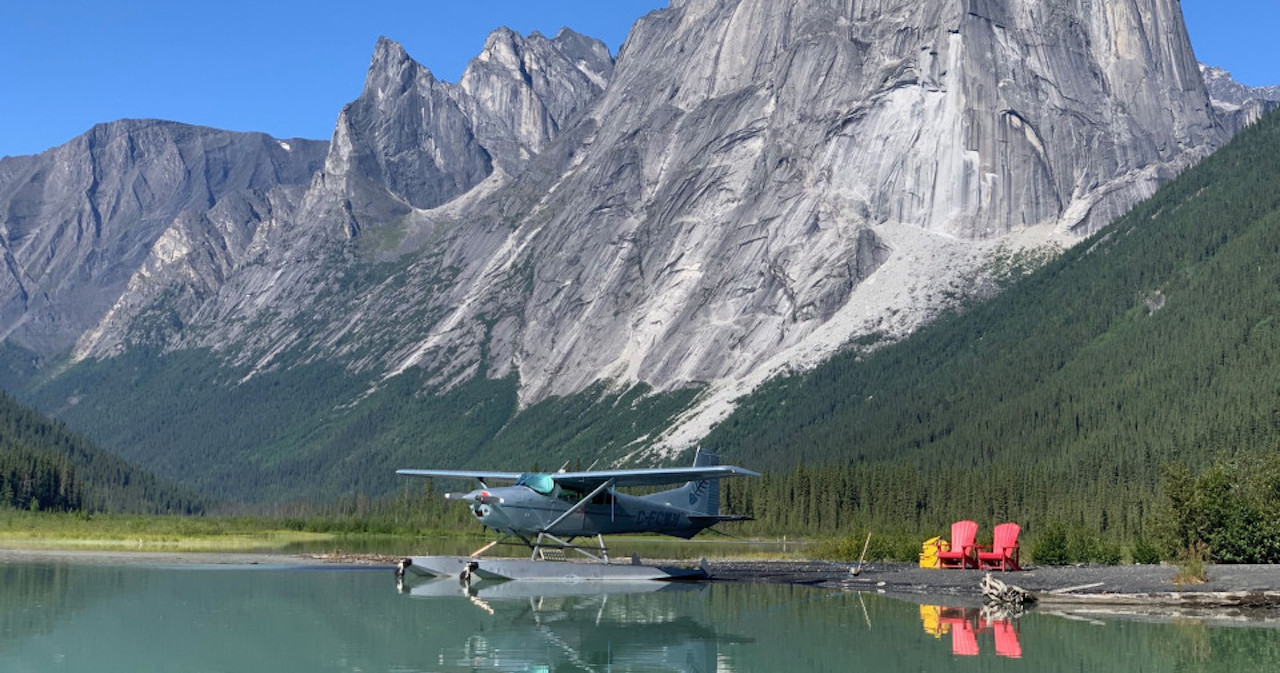
Hey guys, I took a mate of mine from over your way flying the other day in the drifter. Well his fallen in love and is going to get one when he goes home for his son to learn to fly in. He has however asked me a question I must be honest I cant answer as terrain barley gets higher than 3000 feet over here.
he mostly operates at 10 000 + feet density altitude and was wondering just how greatly the drifter with a 2 stroke engine will be effected and if he should be going the extra mile for the 912. He likes the idea of the 2 stroke as its a nice simple engine his son can learn to work on himself, though there is not much point if its not good.
Now the highest density altitude I have ever taken off in is just short of 7000 feet so I dont think I'm a good person to give advice, but given you guys have those mountain things over there I thought you would be much better people to ask. My understanding was that 2 strokes are actually less effected at altitude than a 4 stroke but I may be wrong.
Engines and Density altitude
Thu Oct 01, 2015 2:33 am
- DrifterDriver offline

- Posts: 940
- Joined: Sun Aug 25, 2013 3:37 am
- Location: GOONENGERRY
"When everything seems to be going against you, remember that the airplane takes off against the wind, not with it..." HENRY FORD
Thu Oct 01, 2015 5:36 am
Re: Engines and Density altitude
Other way around... air density affects two-strokes more than fours. Also, jetting for the air density becomes important with a two-stroke. A flat lander two-stroke will run very rich at low density altitudes.
Thu Oct 01, 2015 8:02 am
Re: Engines and Density altitude
Wouldn't it run Rich at high density altitude ?

vail
Thu Oct 01, 2015 8:18 am
Re: Engines and Density altitude
Timbo my mate...
10K DA for take-off and landing with any engine/airframe is an issue.
10K DA for take-off and landing with any engine/airframe is an issue.

CFII, MEI, CFISES, ATPME, IA/AP, RPPL, Ski&Amphib ops, RHC mechanic cert, RHC SC— 3000TT
Thu Oct 01, 2015 8:38 am
Re: Engines and Density altitude
low rider wrote:Wouldn't it run Rich at high density altitude ?
Yes it would!
Mixture is a huge factor.

Keep the Greasy side down!
Thu Oct 01, 2015 8:41 am
Re: Engines and Density altitude
The effects of DA on two strokes has more to do with the porting and scavenging schemes than anything else. Some motors rely on scavenging that is not optimized or compromised (tuned) to work as well at higher altitudes. This can lead, for example, to more of the fuel charge being "short circuited" to the exhaust pipe than at altitudes it was tuned for, or less effective rejection of spent charges from tbe chamber, leading to a lower overall effective heat rate. The curves for the common aero 2 strokes seem to be similar to aero 4 strokes in terms of power loss vs altitude, and that would seem to me to indicate the above problems are not significantly different for aero 2 strokes compared to their 4 stroke aero counterparts.
Thu Oct 01, 2015 10:57 am
Re: Engines and Density altitude
Man, if he's talking about operating at 10K DA regularly, I'd be checking into a turbo charged Rotax if it were me. There's not going to be much ooomph left at 10K in any normally aspirated engine.
The wing isn't going to be all that happy either, by the way.
MTV
The wing isn't going to be all that happy either, by the way.
MTV


Thu Oct 01, 2015 11:16 am
Re: Engines and Density altitude
The wing will perform the same at 10k as it will at sea level for low speed flight. Do you mean lowering the wing loading for the reduced excess HP available?mtv wrote:The wing isn't going to be all that happy either, by the way.
Thu Oct 01, 2015 11:19 am
Re: Engines and Density altitude
Traditionally, the Bing carbs that are run on Rotax 2-strokes are ground-adjusted. They are jetted for a good all-around mixture, and will certainly suffer and run too rich if operated primarily at around 10,000 DA. They seem to work okay in a 5,000 ft altitude window. If you re-jet for an average 8,000 DA, you then run the risk of having an over lean mixture if you go down to visit the beach.
The 912 has an altitude-compensating Bing carburetor. There's no manual mixture adjustment, rather it uses differential pressure between atmosphere and venturi to meter fuel. I'm sure it's more complex than that, but it's quite elegant. I think some 2-strokes have been fitted with aftermarket high altitude compensator kits, but jetting on a 2-stroke can be a more delicate affair, but this guy has developed a HAC system for them: http://www.greenskyadventures.com/bing/ ... rticle.htm
The ultimate of course would be a turbo-normalized or turbocharged 912/914 setup.
The 912 has an altitude-compensating Bing carburetor. There's no manual mixture adjustment, rather it uses differential pressure between atmosphere and venturi to meter fuel. I'm sure it's more complex than that, but it's quite elegant. I think some 2-strokes have been fitted with aftermarket high altitude compensator kits, but jetting on a 2-stroke can be a more delicate affair, but this guy has developed a HAC system for them: http://www.greenskyadventures.com/bing/ ... rticle.htm
The ultimate of course would be a turbo-normalized or turbocharged 912/914 setup.

Tue Oct 13, 2015 9:33 am
Re: Engines and Density altitude
Tell him to go for a 912 and then do a zipper kit. I just installed mine a few weeks ago... Sunday I flew into Leadville, CO (10,000ft elevation) with a passenger (I'm tall and weigh 245, he was about 180-190) and pretty full on fuel, some baggage etc. It wasn't hot out, but it wasn't cold.. wind was brutal, downdrafts and such. Was seeing a good 600 fpm climb from what I could tell (guesstimate due to winds). But I reached pattern altitude by the end of the runway. Without the zipper.... well... it would have done it, but it would have been far more exciting/scary/might still be there trying to climb over the pass.....
With the zipper kit, this plane will climb into airspace I'm not allowed to fly in. Just something to consider. If he can swing the 912 now, he can do a zipper kit later one and get some really good performance while keeping engine weight down and keeping it simple (zipper is 3-4 pounds lighter than a stock 912, and quite a bit lighter than the 914 ~ 35 pounds?). Oh and at really high altitudes the HACman leaner becomes pretty much neccessary with the 912 unless you want to rejet and change needle positions etc. The bings compensate, but only so well and just keep getting richer at high altitudes (just not as bad as non compensating carbs obviously).
With the zipper kit, this plane will climb into airspace I'm not allowed to fly in. Just something to consider. If he can swing the 912 now, he can do a zipper kit later one and get some really good performance while keeping engine weight down and keeping it simple (zipper is 3-4 pounds lighter than a stock 912, and quite a bit lighter than the 914 ~ 35 pounds?). Oh and at really high altitudes the HACman leaner becomes pretty much neccessary with the 912 unless you want to rejet and change needle positions etc. The bings compensate, but only so well and just keep getting richer at high altitudes (just not as bad as non compensating carbs obviously).
- GravityKnight offline
- Posts: 266
- Joined: Tue Sep 15, 2015 10:03 am
- Location: Colorado
- Aircraft: RANS S7S / EP912STi /
Robert's gear / 29" ABWs
VG's / T3 / 75" ww
Tue Oct 13, 2015 3:05 pm
Re: Engines and Density altitude
GravityKnight wrote:Sunday I flew into Leadville, CO (10,000ft elevation) with a passenger (I'm tall and weigh 245, he was about 180-190) and pretty full on fuel, some baggage etc. It wasn't hot out, but it wasn't cold.. wind was brutal, downdrafts and such. Was seeing a good 600 fpm climb from what I could tell
You flew Sunday, October 11th:

...with two-up and fuel into Leadville and were getting 600FPM on the way out of there?
Holy smokes. My Cub really is a dog...
- motosix offline
- Posts: 238
- Joined: Sat Oct 05, 2013 4:37 pm
- Location: Denver
- FindMeSpot URL: http://tinyurl.com/redcubby
Tue Oct 13, 2015 9:25 pm
Re: Engines and Density altitude
he mostly operates at 10 000 + feet density altitude and was wondering just how greatly the drifter with a 2 stroke engine will be effected and if he should be going the extra mile for the 912.
Ouch. The "mostly operates" is the big concern here. A Rotax 582 can be jetted to make that work, but it's not going to be stellar, just like most smaller 4 strokes at that altitude. If you're going up and down, you're going to be watching EGTs closely and examining plugs to find your sweet spot, and it can be done, and the HACman may be a good idea for your friend. As you know, you start talking Rotax 914 you're talking $29,000 vs $5,000 for a Rotax 582.
I'm not an expert, I only know what works for me, and the below pics show coming into Leadville, CO elevation 9,927 ft with a 2 stroke powered Quicksilver, Rotax 582. I approached from the south, clearing the peaks at 12,500, and departed north to 12,000 ft at gross. It wasn't unusual for me to depart with a DA of 10,000-11,000 ft in New Mexico and Colorado, and at gross, but I wouldn't want to do it all the time. A lightly loaded Drifter may be completely different, however, you're working with a 65 hp engine to start with.
The other picture is over approaching Manhattan over the Hudson, and the reason I'm pointing this out is this was the same trip after I cleared Colorado and I never changed the jets or the carb for the entire cross country, Matter of fact, I'm based about 30 miles from the pacific coast, and I've never re-jetted for any of my trips to the east coast. ranging from 12,500 ft over Albuquerque to landing at Key West.
Bottom line, you can make a Rotax 582 2 stroke work, but the Rotax 912 might be better. A Rotax 912 on mine would actually decrease my performance because of the additional weight, so that may be a factor for you to consider also.



Wed Oct 14, 2015 6:03 am
Re: Engines and Density altitude
lesuther wrote:The wing will perform the same at 10k as it will at sea level for low speed flight. Do you mean lowering the wing loading for the reduced excess HP available?mtv wrote:The wing isn't going to be all that happy either, by the way.
Actually, no it won't. At high DA the wing has to operate at a higher AOA to develop the same amount of lift as at lower altitudes. At some point, the wing will reach critical AOA, and no matter how much engine you have.
MTV
Wed Oct 14, 2015 6:04 am
Re: Engines and Density altitude
Zenithguy wrote:he mostly operates at 10 000 + feet density altitude and was wondering just how greatly the drifter with a 2 stroke engine will be effected and if he should be going the extra mile for the 912.
Ouch. The "mostly operates" is the big concern here. A Rotax 582 can be jetted to make that work, but it's not going to be stellar, just like most smaller 4 strokes at that altitude. If you're going up and down, you're going to be watching EGTs closely and examining plugs to find your sweet spot, and it can be done, and the HACman may be a good idea for your friend. As you know, you start talking Rotax 914 you're talking $29,000 vs $5,000 for a Rotax 582.
I'm not an expert, I only know what works for me, and the below pics show coming into Leadville, CO elevation 9,927 ft with a 2 stroke powered Quicksilver, Rotax 582. I approached from the south, clearing the peaks at 12,500, and departed north to 12,000 ft at gross. It wasn't unusual for me to depart with a DA of 10,000-11,000 ft in New Mexico and Colorado, and at gross, but I wouldn't want to do it all the time. A lightly loaded Drifter may be completely different, however, you're working with a 65 hp engine to start with.
The other picture is over approaching Manhattan over the Hudson, and the reason I'm pointing this out is this was the same trip after I cleared Colorado and I never changed the jets or the carb for the entire cross country, Matter of fact, I'm based about 30 miles from the pacific coast, and I've never re-jetted for any of my trips to the east coast. ranging from 12,500 ft over Albuquerque to landing at Key West.
Bottom line, you can make a Rotax 582 2 stroke work, but the Rotax 912 might be better. A Rotax 912 on mine would actually decrease my performance because of the additional weight, so that may be a factor for you to consider also.
Great pirep! Very impressive performance, to say the least.
MTV
Wed Oct 14, 2015 8:56 am
Re: Engines and Density altitude
mtv wrote:lesuther wrote:The wing will perform the same at 10k as it will at sea level for low speed flight. Do you mean lowering the wing loading for the reduced excess HP available?mtv wrote:The wing isn't going to be all that happy either, by the way.
Actually, no it won't. At high DA the wing has to operate at a higher AOA to develop the same amount of lift as at lower altitudes. At some point, the wing will reach critical AOA, and no matter how much engine you have.
Actually, the angle of attack required to produce the same amount of lift at low Mach numbers goes *down* somewhat at lower densities. This is because TAS is inversely proportional to the square root of density, and the angle of attack required is inversely proportional to the TAS squared and inversely proportional to the density. This distinction is very important for things like high speed aeroelasticity issues like flutter and control response. I know this sounds like a stupid nerdy response here on BCP, but if anyone is interested, it is actually pretty easy to explain.
What you may be referring to is the fact that as density altitude increases, the critical angle of attack decreases significantly at high speeds, and the minimum flyable TAS meets the critical Mach number eventually (coffin corner). The lift coefficient for a particular AOA does not change until one gets a lot closer to sonic speed. This is something that us bug smashers need not worry about.
TL;DR: The coffin corner doesn't exist for bug smashers. If you fly the same IAS in a bug smasher, the wing will perform virtually the same at any attainable density altitude, although the AOA may be imperceptibly reduced and the controls will be slightly more effective.
Wed Oct 14, 2015 6:29 pm
Re: Engines and Density altitude
motosix wrote:GravityKnight wrote:Sunday I flew into Leadville, CO (10,000ft elevation) with a passenger (I'm tall and weigh 245, he was about 180-190) and pretty full on fuel, some baggage etc. It wasn't hot out, but it wasn't cold.. wind was brutal, downdrafts and such. Was seeing a good 600 fpm climb from what I could tell
You flew Sunday, October 11th:
...with two-up and fuel into Leadville and were getting 600FPM on the way out of there?
Holy smokes. My Cub really is a dog...
Hey that's a cool tool to go back and check DA!!
Well... the zipper kit and few supporting mods did really wake this thing up. It's pretty light though (~700 pounds empty). I think it has more in it with a longer prop.. but yea.. it does fly really well and I can't complain about it!
- GravityKnight offline
- Posts: 266
- Joined: Tue Sep 15, 2015 10:03 am
- Location: Colorado
- Aircraft: RANS S7S / EP912STi /
Robert's gear / 29" ABWs
VG's / T3 / 75" ww
Thu Oct 15, 2015 9:31 pm
Re: Engines and Density altitude
Speaking only to the density altitude issue and not to 4 stroke vs. 2 stroke engines at any given DA (because I know next to nada about 2 strokes), if he truly does operate consistently at 10,000' DAs, that's pretty darned high! Yeah, I fly at those DAs and higher fairly frequently, but that's not the airport DA except occasionally. So it would help to know if what he means by "operates frequently at 10,000' DA" is the airport DA or the flight DA. If it's the flight DA, that's not a difficult issue; if it's the airport DA with the flight DA going up from there, then that is an issue.
Some examples: I've taken off at Leadville, CO with a DA of 12,100' once; from Marble, CO several times with DAs of around 10,500'; LaGarita Ranch a couple of times with DAs around 10,500'; Alamosa, CO with a DA of 11,000'; Laramie, WY many times with DAs around 10,500', when I lived and instructed there.
Load makes a big difference, so that a nearly full load at 10,500' in a 180hp 172 with CS prop means climb rate is less than 250 fpm--that's roughly gross minus 120#. That's with a healthy, properly leaned engine. Cut the load by another 120#, though, and the climb rate goes up significantly, so that 500 fpm is not difficult.
But get to that Leadville DA of 12,100', and even with a relatively light load (me at 200#, pupdog at 70#, survival stuff at 40#, and 2/3 tanks), and the climb rate was still pretty miserable, about 200 fpm. I did some zig zagging through the mountains to slowly gain enough altitude to get over Milner pass at about 12,000' MSL or (on that day) about 14,500' DA.
When I took off from Alamosa with the 11,000' DA, climb rate was about the same, about 200 fpm. I had a full load--I'd filled the tanks there and already had my usual load of "glamping" gear, pupdog, etc. It was tough getting up high enough to safely clear La Veta Pass--it pretty much ran out of steam at about 10,500' MSL. Often east bound over La Veta is easy because of orographic lifting due to relatively high winds, but on that day there was (shockingly) very little wind in the Valley and none that I could detect as I flew over Fort Garland.
So I guess what I'm saying by example is that if he keeps it light and his flight levels are around 10,000' DA, I'd have few concerns. But if he's going to run it heavy and his airport DAs are in the 10,000' range consistently, it won't be a very spritely airplane.
Of course, all those examples are with a normally aspirated engine. Turbos can make a great difference. When I was in the partnership, we started with a really fine 182. Over the course of ownership, we had the engine overhauled, so it was as powerful as any stock 182 around--O-470 Continental with 230 hp at sea level. Then we traded it for a TR182 with the TO-540 Lycoming with 235 hp at sea level. The difference was dramatic. The stock Continental had lost 30% of its power on a typical summer day in Laramie, whereas the turbo'd Lycoming still had 100% of its power well into the altitude teens. With substantially the same airframe, the difference between 160 usable horsepower and 235 usable horsepower is more than just noticeable! At 12,000' MSL cruising, the Continental in the summer was down to below 100 hp, while the Lycoming was still at 235 hp, so that if there was a need to climb a couple more thousand feet or more, the normal Skylane could do it, but slowly, while the turbo'd Skylane could shoot right up there.
All that FWIW for your friend.
Cary
Some examples: I've taken off at Leadville, CO with a DA of 12,100' once; from Marble, CO several times with DAs of around 10,500'; LaGarita Ranch a couple of times with DAs around 10,500'; Alamosa, CO with a DA of 11,000'; Laramie, WY many times with DAs around 10,500', when I lived and instructed there.
Load makes a big difference, so that a nearly full load at 10,500' in a 180hp 172 with CS prop means climb rate is less than 250 fpm--that's roughly gross minus 120#. That's with a healthy, properly leaned engine. Cut the load by another 120#, though, and the climb rate goes up significantly, so that 500 fpm is not difficult.
But get to that Leadville DA of 12,100', and even with a relatively light load (me at 200#, pupdog at 70#, survival stuff at 40#, and 2/3 tanks), and the climb rate was still pretty miserable, about 200 fpm. I did some zig zagging through the mountains to slowly gain enough altitude to get over Milner pass at about 12,000' MSL or (on that day) about 14,500' DA.
When I took off from Alamosa with the 11,000' DA, climb rate was about the same, about 200 fpm. I had a full load--I'd filled the tanks there and already had my usual load of "glamping" gear, pupdog, etc. It was tough getting up high enough to safely clear La Veta Pass--it pretty much ran out of steam at about 10,500' MSL. Often east bound over La Veta is easy because of orographic lifting due to relatively high winds, but on that day there was (shockingly) very little wind in the Valley and none that I could detect as I flew over Fort Garland.
So I guess what I'm saying by example is that if he keeps it light and his flight levels are around 10,000' DA, I'd have few concerns. But if he's going to run it heavy and his airport DAs are in the 10,000' range consistently, it won't be a very spritely airplane.
Of course, all those examples are with a normally aspirated engine. Turbos can make a great difference. When I was in the partnership, we started with a really fine 182. Over the course of ownership, we had the engine overhauled, so it was as powerful as any stock 182 around--O-470 Continental with 230 hp at sea level. Then we traded it for a TR182 with the TO-540 Lycoming with 235 hp at sea level. The difference was dramatic. The stock Continental had lost 30% of its power on a typical summer day in Laramie, whereas the turbo'd Lycoming still had 100% of its power well into the altitude teens. With substantially the same airframe, the difference between 160 usable horsepower and 235 usable horsepower is more than just noticeable! At 12,000' MSL cruising, the Continental in the summer was down to below 100 hp, while the Lycoming was still at 235 hp, so that if there was a need to climb a couple more thousand feet or more, the normal Skylane could do it, but slowly, while the turbo'd Skylane could shoot right up there.
All that FWIW for your friend.
Cary
"I have slipped the surly bonds of earth..., put out my hand and touched the face of God." J.G. Magee
Fri Oct 16, 2015 8:52 am
Re: Engines and Density altitude
GravityKnight wrote:
Hey that's a cool tool to go back and check DA!!
Well... the zipper kit and few supporting mods did really wake this thing up. It's pretty light though (~700 pounds empty). I think it has more in it with a longer prop.. but yea.. it does fly really well and I can't complain about it!
I keep the last 30 days of all FAA reporting AWOS stations at http://www.awoslog.com if you ever want to check DA or winds or whatever.
If you are ever over by LMO this fall & winter, I would love to check out your little bird. The S7 is high on my lust list although I have no experience with any of the Rans&Rotax lines at all.
- motosix offline
- Posts: 238
- Joined: Sat Oct 05, 2013 4:37 pm
- Location: Denver
- FindMeSpot URL: http://tinyurl.com/redcubby
DISPLAY OPTIONS
Who is online
Users browsing this forum: No registered users and 0 guests
Latest Features
-
-
Featured Bush Planes
As one of the undisputed legends of bush flying, the Cessna 180 hauls a…Read More -
Aircraft Ownership and Maintenance
9 modification mistakes aircraft owners make when trying to "bush out" their birds—why some…Read More -
Live to Tell
A Minnesota pilot is surprised to learn that the sudden asymmetric drag of an…Read More


Latest Knowledge Base
-
Destinations
Canada offers some of the most spectacular backcountry flying on the continent. Here's what you need to know before you go.Read More -
Safety and Survival
Hope that you never have to use your survival vest but knowing you have it and knowing how to use…Read More -
Destinations
A regional guide with ideas for winter camping destinations in California, Nevada, New Mexico, and Arizona.Read More -
Aircraft
Finding an affordable aircraft that can handle the backcountry for $80K or less? A challenge for sure, but with the…Read More