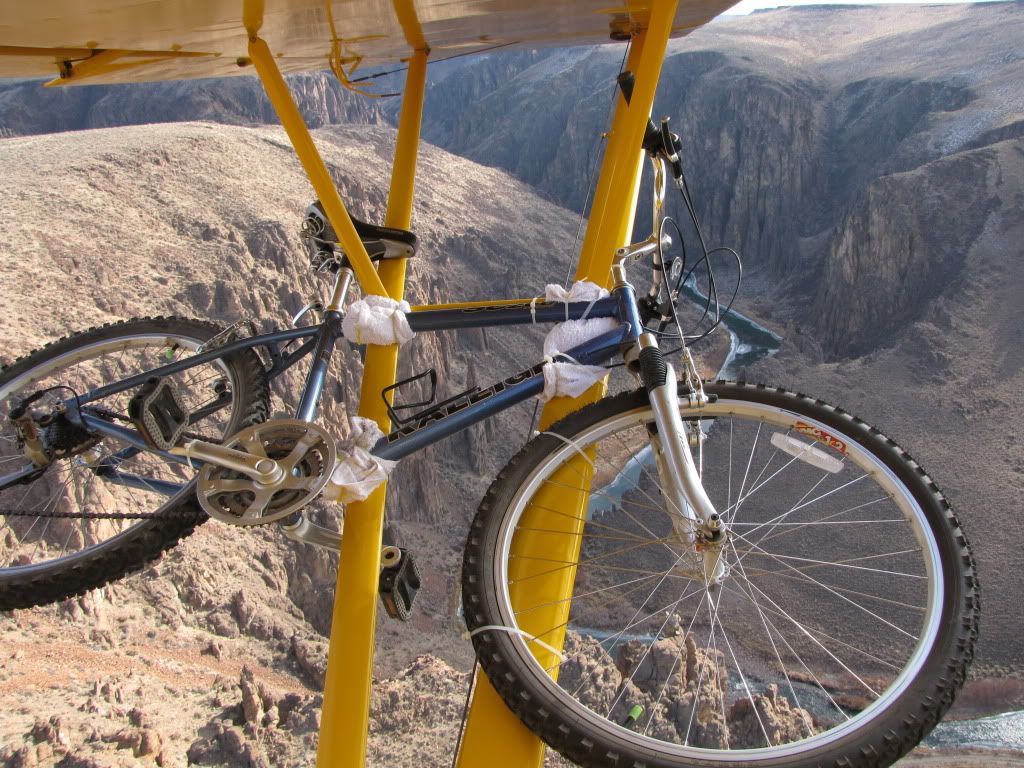
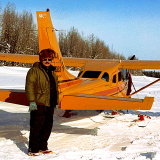
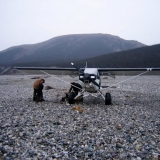
I too would recommend putting plywood on the spreader bars, but...if it flys okay, keep doing what you're doing.
The key to flying external loads is that you are a TEST PILOT any time you do so. Some loads fly better than they look, some are just plain ugly--far worse than they look.
Be VERY careful about all up weight of the plane when an external load is aboard. STAY FAR away from maximum gross weight when operating with external loads. High weight changes the angle of attack of the plane, changes the airflow over the tail, and can reduce rudder effectiveness. Some of the ugliest external loads I've carried were "good loads" attempted at high weights.
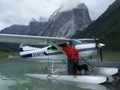
I carry plywood strapped crossways on top of the floats, with ratchet straps around the plywood and the spreader bars. This keeps the plywood far enough forward that it doesn't affect the tail much.
I wouldn't worry too much about wear and tear on hinges--I seriously doubt you'll be carrying enough external loads to cause any serious damage there. I flew a 185 with external loads several hundred hours and we never touched the tail feathers.
And, for those NOT in Canada, carriage of external loads is pretty seriously frowned upon, except in Alaska, where there is a specific (and excellent) policy on carriage of external loads, and in a VERY few other locales in the lower 48. Check with the local feds before you launch off with an external load.
MTV