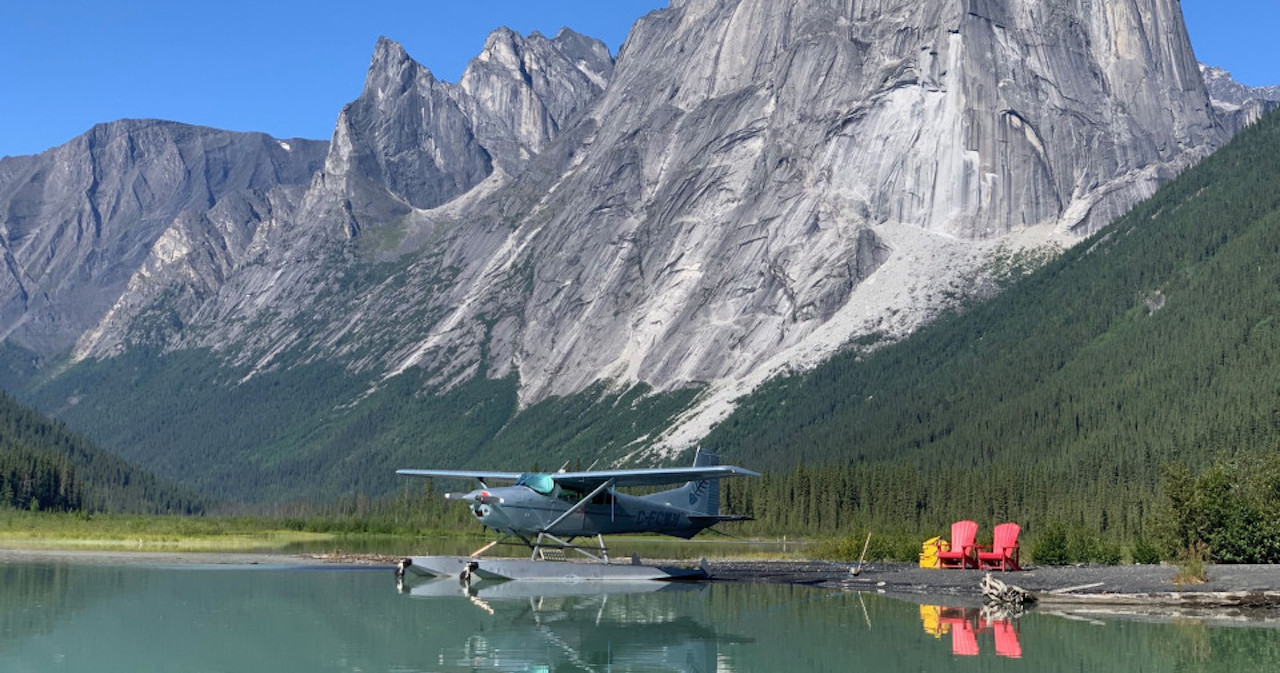
What do you do?
You fly to your favorite restaurant an hour and a half from home for a romantic evening with the missus. You enjoy your meal, company and conversation, and then decide to head back to the airplane for a beautiful night flight home to round out and otherwise perfect time. As you return the courtesy car to its parking space, its lights shine across your airplane. Reflecting in the headlights are thousand of tiny ice crystals that have formed all over your wings, fuselage, windshiels, and control surfaces. You become concerned, since you have been told that, "Any ice or frost on the wings is too much", and "If you fly your plane with frost, you turn yourself into a test pilot".
Now its cold. Your breath freezes in the air, and your fingers are starting to go numb through the thin leather driving gloves you brought along. The missus wants to be inside somewhere warm, and you wish you would have brought along another coat, warm hat, and warmer shoes. The FBO has long since locked up and gone home. There aren't any hangers or heaters around to get the plane into or next to.
What do you do? Do you scrape all the frost off with a credit card? Rub it down with your coat? Is there any fancy spray-on de-icer you could carry in the plane for such occasions? Do you carry wing covers to put on the plane before you go to eat?
Frost on the wings
Tue Jan 24, 2006 12:49 pm
Wed Jan 25, 2006 4:57 am
If it was just frost and it was a nice pretty cloudless night, I'd have flown home. Yes as you know there are spray on de-icers out there. One of our ferry pilots has been known to use car anti freeze on the wings in Bangor.
I think the more "advanced" the aircraft is, the less tolerant they are to things like leading edge damage, ice etc. I've seen some AG planes that fly just fine after excessive leading edge damage from a tree etc. Surely aircraft like what we fly wouldn't have minded a light coat of frost?
I've flown a couple of different kinds of aircraft with frost and it seems the frost pretty quickly disappears. I think it is called sublimination.
I think the more "advanced" the aircraft is, the less tolerant they are to things like leading edge damage, ice etc. I've seen some AG planes that fly just fine after excessive leading edge damage from a tree etc. Surely aircraft like what we fly wouldn't have minded a light coat of frost?
I've flown a couple of different kinds of aircraft with frost and it seems the frost pretty quickly disappears. I think it is called sublimination.
Wed Jan 25, 2006 9:03 am
Roger on a64's post. Couple of toughts and experiences from myself to expand on those,
1. Forethought; anticipate frosty conditions and include a couple of cans of Prestone or other deice fluid. It can be bought at any local auto parts store by the spray can. Just spray the top of the leading edge and what's left just do a general all over the wing and horizontal.
Carry a 15 foot or so length of rope to drag down the wing. Put the missus on the leading edge for simplicity, you'll have to do a little varying on the trailing edge to keep from snagging the flap/aileron edges etc. As long as you get about a foot to foot and a half back from the leading edge you'll make it.
2. Dealing with it after no forethought; couple of things here. If you aren't near the performance capabilities of the airplane and have excess runway you could simply load up and go. Just remember your private training and give yourself a firm abort point on the takeoff roll BEFORE you (which is actually another form of forethought anyway, see the theme?) apply power. Give a little extra on the speed and let it fly off on it's own. If it doesn't do that by the abort point shut 'er down and find some deice or rope!
If you are near the limits of the plane you may try it yourself once with the pax waiting. You may do it more than once if the runway is short to kind of feel into it. Kinda like an off-airport landing at a new place, you don't just chop it and wheel in, you overfly and look then drag it,etc. until you actually land or decide it's to sketchy. Just do that in reverse.
My personal experiences; fertilizing pine trees in the winter we always end up with frost for about four months a year. We aren't at some big airport with facilities either. We do a "dry flight" with no load first thing in the morning. Takeoff and circle up to 3,000' (definetly the highest we get all day) or so and then descend back in. That gives it time to sublimate or even melt off in the case of an inversion. I've had it just start trailing off the wings climbing through a hundred feet and I've had days of true cold where we circled for ten minutes up to 4k to get it off. I have had the occasion that the load was on the plane the night before (maybe five times in 27,000 loads) and I had to just fly it. Keep in mind that I only allowed the plane to be loaded because I was on a 4,000 foot or longer runway and I only had one load of fuel left. In those few cases I just allowed the plane to have it's way and I paid attention to it. Nothing ever felt bad or mushy or on the edge BUT I DIDN'T AGGRIVATE IT! No short field, no maximum or minimum flap, no horsing it off, no hard turn at rotation, no downwind, and no max performance climb. Just simple, 10 degrees or so flap, into the wind, let it roll off, accelerate and climb out wings level.
I do have, however, three documented cases of pilots doing this in the same airplane I did on short grass strips with a full load on and not making it. All three times they needed to horse it off, one was actually slightly downwind (couldn't go the other way) and all three had one wing go first and of course once it drug the ground the cartwheel began.
Just like all other flying; be aware of your personal limits, the limits of your equipment, be sensitive to slight changes or conditions in your operating environment, most importantly remember you are not rescuing babies off of a volcano ravaged island- if you aren't sure after or even before your high speed taxi tests- DON'T GO.
1. Forethought; anticipate frosty conditions and include a couple of cans of Prestone or other deice fluid. It can be bought at any local auto parts store by the spray can. Just spray the top of the leading edge and what's left just do a general all over the wing and horizontal.
Carry a 15 foot or so length of rope to drag down the wing. Put the missus on the leading edge for simplicity, you'll have to do a little varying on the trailing edge to keep from snagging the flap/aileron edges etc. As long as you get about a foot to foot and a half back from the leading edge you'll make it.
2. Dealing with it after no forethought; couple of things here. If you aren't near the performance capabilities of the airplane and have excess runway you could simply load up and go. Just remember your private training and give yourself a firm abort point on the takeoff roll BEFORE you (which is actually another form of forethought anyway, see the theme?) apply power. Give a little extra on the speed and let it fly off on it's own. If it doesn't do that by the abort point shut 'er down and find some deice or rope!
If you are near the limits of the plane you may try it yourself once with the pax waiting. You may do it more than once if the runway is short to kind of feel into it. Kinda like an off-airport landing at a new place, you don't just chop it and wheel in, you overfly and look then drag it,etc. until you actually land or decide it's to sketchy. Just do that in reverse.
My personal experiences; fertilizing pine trees in the winter we always end up with frost for about four months a year. We aren't at some big airport with facilities either. We do a "dry flight" with no load first thing in the morning. Takeoff and circle up to 3,000' (definetly the highest we get all day) or so and then descend back in. That gives it time to sublimate or even melt off in the case of an inversion. I've had it just start trailing off the wings climbing through a hundred feet and I've had days of true cold where we circled for ten minutes up to 4k to get it off. I have had the occasion that the load was on the plane the night before (maybe five times in 27,000 loads) and I had to just fly it. Keep in mind that I only allowed the plane to be loaded because I was on a 4,000 foot or longer runway and I only had one load of fuel left. In those few cases I just allowed the plane to have it's way and I paid attention to it. Nothing ever felt bad or mushy or on the edge BUT I DIDN'T AGGRIVATE IT! No short field, no maximum or minimum flap, no horsing it off, no hard turn at rotation, no downwind, and no max performance climb. Just simple, 10 degrees or so flap, into the wind, let it roll off, accelerate and climb out wings level.
I do have, however, three documented cases of pilots doing this in the same airplane I did on short grass strips with a full load on and not making it. All three times they needed to horse it off, one was actually slightly downwind (couldn't go the other way) and all three had one wing go first and of course once it drug the ground the cartwheel began.
Just like all other flying; be aware of your personal limits, the limits of your equipment, be sensitive to slight changes or conditions in your operating environment, most importantly remember you are not rescuing babies off of a volcano ravaged island- if you aren't sure after or even before your high speed taxi tests- DON'T GO.
- lowflyinG3 offline
- Posts: 534
- Joined: Tue Dec 13, 2005 8:23 am
- Location: Gooding,Idaho
If you're not scarin' yourself, you're not scarin' the crowd!
Thu Jan 26, 2006 12:32 am
Thanks for the input! Found myself in just such a situation one time, and did do the motel thing. I didn't have the rope you all talked about, so I couldn't keep the missus inside the plane long enough to take off! I don't know if I will be able to get her near the airplane if she sees I have a rope in my hands. 
I will get some de-icer and try it on my car. If it runs off of the car, and doesn't re-freeze, I may take along some for my next trip. The rope sounds good...I will take one of those along also. Judging from G3's input though, I think that if the runway is extremely long, and doesn't have any tall buildings or trees at the end, and if there aren't any mountains to climb over, and if I am loaded very very lightly (a lightly loaded 182 still has a pathetic power to weight ratio compared to an empty Ag plane), that maybe...just maybe...I'll go back to town and get a motel. I guess I really don't need to get back that bad.
DEGJR
I will get some de-icer and try it on my car. If it runs off of the car, and doesn't re-freeze, I may take along some for my next trip. The rope sounds good...I will take one of those along also. Judging from G3's input though, I think that if the runway is extremely long, and doesn't have any tall buildings or trees at the end, and if there aren't any mountains to climb over, and if I am loaded very very lightly (a lightly loaded 182 still has a pathetic power to weight ratio compared to an empty Ag plane), that maybe...just maybe...I'll go back to town and get a motel. I guess I really don't need to get back that bad.
DEGJR
Fri Feb 10, 2006 11:59 pm
Wing covers are best for "known" conditions. The rope trick works good too. Rubbing the wings down with gloves or if you have really tough hands (I don't!) Or some Preston in a spray bottle. Make sure the motel has a hot tub!
- YELLOWMAULE offline
- Posts: 410
- Joined: Fri Jan 07, 2005 6:30 pm
- Location: AK
Sat Feb 11, 2006 9:03 am
Years ago I would leave my ultralight set up in my front yard in Spanish Springs. There was a dead end street about 50 yards long right next to my house that I would use for a runway. So one frosty morning, I got up early to clear blue skies and my buddy flying overhead in his U\L he kept in the hanger. I noticed frost on the wings but it was smooth so I didn't think too much about it as I was in a hurry to get airborne with my buddy. Full power rolling down the street I rotated at 30 indicated just like always. Four or five feet was all the higher she would climb and the angle of attack was ever increasing. Now I was over sagebrush with a problem. Just about to stall I pushed the nose down and took my medicine. Amazingly, I didn't bend anything. My buddy landed and helped me dig the plane out of the weeds, and chewed me out for being so stupid. The truth is, I did not know any better which is ignorance not stupidity. Anyway if it could happen to a U\L that can normally get off of Tahoe in the summer imagine the same curcumstances with a real airplane with real airplane weights and speeds.
Sat Feb 11, 2006 10:59 am
Having to scale frost off the wings with a rope is a good argument against having VG's.
Be extremely careful with frost on any flying surfaces. Few years ago a Beech 18 freighter went in off the end of Skagit Regional, taking off on a frosty morning at oh-dark-thirty. Never got out of ground effect, and bellied it in into a field. I suspect he didn't notice the frost, at least he didn't do anything about it. He wasn't hurt but the airplane was sure the worse for wear.
Eric
Be extremely careful with frost on any flying surfaces. Few years ago a Beech 18 freighter went in off the end of Skagit Regional, taking off on a frosty morning at oh-dark-thirty. Never got out of ground effect, and bellied it in into a field. I suspect he didn't notice the frost, at least he didn't do anything about it. He wasn't hurt but the airplane was sure the worse for wear.
Eric

Cessna Skywagon -- accept no substitute!
Sun Feb 12, 2006 6:58 pm
If you are at one of those friendly FBO's that leave the waiting room open all night , you can raid the bathrooms and use the toilet brushes and the self serve fuel ladder. At least it worked in South Dakota recently. 
- Indopilot-ntm offline
- Posts: 10
- Joined: Sun Jul 17, 2005 5:01 pm
Sun Feb 12, 2006 7:44 pm
It happened again...Toilet brush?
Once again, I went to an evening appointment, but this time I went with a couple of my flying buddies. Sure enough, when we got back to the plane after the event, it had about 1/16" of frost all over the wings and elevator. You could write your name (and other $@%^ things) in it with your fingernail . We happened to catch a local pilot, who had a glycol solution he uses to defrost his wings with. He sprayed some on the wings and elevator, and we watched as the frost turned to water. We didn't get complete coverage, but 80% of the frost was gone. So, in we got, and off we went. It was a long runway, and the plane lifted off a little farther down the runway than normal. As I pulled the nose back to climb, the airspeed settled at 80 kts. Normal climb with the same load and temperature is about 600-700 feet per minute. Not a Maule, but not bad either. That night however, it wouldn't do over 300 feet per minute.
So what happened? Did the remaining frost make that much of a difference? Did the liquid on the wings re-freeze? I don't know, but the plane felt like I was flying at high elevation on a hot day.
I think next time, I will take some rags, and wipe all the liquid off of the wings after the glycol solution melts it. Or, a toilet brush. I really like the toilet brush idea!
So what happened? Did the remaining frost make that much of a difference? Did the liquid on the wings re-freeze? I don't know, but the plane felt like I was flying at high elevation on a hot day.
I think next time, I will take some rags, and wipe all the liquid off of the wings after the glycol solution melts it. Or, a toilet brush. I really like the toilet brush idea!
Sun Feb 12, 2006 8:05 pm
Yep, Even works great for those hard to reach areas like between the vortex generators. Kind of like flossing your teeth Boy that was the wrong mental picture. 
Boy that was the wrong mental picture. - Indopilot-ntm offline
- Posts: 10
- Joined: Sun Jul 17, 2005 5:01 pm
Thu Feb 16, 2006 3:23 am
If you use the rope make sure it is a soft cotton rope and not manila or stiff nylon that could damage your surfaces especially if you have a fabric covered plane.
Coil the rope on the floorboard of the car where the heater vent can blast it and turn the heater on high for a couple of minutes. The frost will come off a lot easier with a lot less sawing motion on the rope.
Coil the rope on the floorboard of the car where the heater vent can blast it and turn the heater on high for a couple of minutes. The frost will come off a lot easier with a lot less sawing motion on the rope.
- Supercubber offline

- Posts: 213
- Joined: Sat Jul 16, 2005 1:18 pm
- Location: Rocky Mtns
Fly It Like You Mean It!
Mon Mar 20, 2006 12:05 am
Clear ice on the tail
One day, I rented a Cessna172 to fly my Dad and some business associates North from Prince George, B.C. It was winter, and during my preflight, I noticed some clear ice on top of the horizontal stab. I was very leary of frost on the wings, but this patch of clear ice was not sharp ridged or rough, just a smooth, faired-in patch of ice.
The take off roll seemed a bit longer than usual considering the temperature, but after a lot of pulling on the yoke the 172 lumbered off and the fun began. That clear ice turned the docile 172 into an unstable beast and I had my hands full just keeping it steady in the climb! It took over an hour to sublimate the ice off the tail and I had to work that whole time.
The point of this is to be very conservative on ANY contamination on ANY flying surface. This was one time where"I learned about flying from that"
Cheers, Pete
The take off roll seemed a bit longer than usual considering the temperature, but after a lot of pulling on the yoke the 172 lumbered off and the fun began. That clear ice turned the docile 172 into an unstable beast and I had my hands full just keeping it steady in the climb! It took over an hour to sublimate the ice off the tail and I had to work that whole time.
The point of this is to be very conservative on ANY contamination on ANY flying surface. This was one time where"I learned about flying from that"
Cheers, Pete
Building an RV-8 and dreaming of a Super Cub with big, fat, tires
Mon Mar 20, 2006 2:05 pm
Another thing you want to be very careful of is taxing in slush or water when it's cold. The spray from your tires ends up on the horizontal and drips down around the underside. Increasing the prop thrust during runup can create the wind chill necessary to freeze the accumaltion to the underside of the horizontal.
This happened to me in a T-210 once. After a thorough preflight with everything good to go, taxied to the active through water and slush, did the runup but had a feeling or sneaking hunch that maybe I should check the horizontal. When I checked it I could not believe the amount of ice that had accumalted on the horizontal in that short taxi.
This happened to me in a T-210 once. After a thorough preflight with everything good to go, taxied to the active through water and slush, did the runup but had a feeling or sneaking hunch that maybe I should check the horizontal. When I checked it I could not believe the amount of ice that had accumalted on the horizontal in that short taxi.
- Supercubber offline
- Posts: 213
- Joined: Sat Jul 16, 2005 1:18 pm
- Location: Rocky Mtns
Fly It Like You Mean It!
Mon Mar 20, 2006 3:04 pm
Increasing the prop thrust during runup can create the wind chill necessary to freeze the accumaltion to the underside of the horizontal.
http://www.theweathernetwork.com/inter/ask/ask11.htm#Q6
Mon Mar 20, 2006 4:22 pm
If it wasn't the wind chill then it has to be attributed to the temperature differential between the cooler white surface of the horizontal as compared to the black asphalt.
Those of us who live in colder climates have all seen days when the black asphalt was melted off but the white runway markings and numbers were still iced over.
Don't think it would be to hard to duplicate the process.
Driving down the road in an automobile and having the slush solidify to the wheel wells and rocker panels as big ice clumps is a pretty good example.
Those of us who live in colder climates have all seen days when the black asphalt was melted off but the white runway markings and numbers were still iced over.
Don't think it would be to hard to duplicate the process.
Driving down the road in an automobile and having the slush solidify to the wheel wells and rocker panels as big ice clumps is a pretty good example.
- Supercubber offline
- Posts: 213
- Joined: Sat Jul 16, 2005 1:18 pm
- Location: Rocky Mtns
Fly It Like You Mean It!

Tue Mar 28, 2006 2:56 pm
Hi Guys...I'm new to the forum. I fly an 85HP T_craft on floats and skis. DON'T take off with frost on your wings...it's early spring and the nights are cold and frost is common especially in the mornings. I tried taking off from my lake on skis one spring morning with frost on the wings and almost crashed...the plane was very uncontrollable and barely got off the ground...when it did it was unstable and wouldn't climb. I plunked it back down much the wiser and rubbed the whole plane down with a towel to get the ice off. The ice crystals affect the laminar air flow and disrupt the lift created by the wing....Never try it. If you've done it before...consider yourself lucky and learn from my mistake.
DISPLAY OPTIONS
Who is online
Users browsing this forum: No registered users and 5 guests
Latest Features
-
-
Featured Bush Planes
As one of the undisputed legends of bush flying, the Cessna 180 hauls a…Read More -
Aircraft Ownership and Maintenance
9 modification mistakes aircraft owners make when trying to "bush out" their birds—why some…Read More -
Live to Tell
A Minnesota pilot is surprised to learn that the sudden asymmetric drag of an…Read More


Latest Knowledge Base
-
Destinations
Canada offers some of the most spectacular backcountry flying on the continent. Here's what you need to know before you go.Read More -
Safety and Survival
Hope that you never have to use your survival vest but knowing you have it and knowing how to use…Read More -
Destinations
A regional guide with ideas for winter camping destinations in California, Nevada, New Mexico, and Arizona.Read More -
Aircraft
Finding an affordable aircraft that can handle the backcountry for $80K or less? A challenge for sure, but with the…Read More