I know there are practical limitations to how high a wind is just too high. I've landed my Mooney 201 with a AWOS calling 30 gusting 35 cross wind. Taxied the Husky with cross winds gusting 40 in the lee of parked aircraft, ready to round up into the wind at any moment. Had a 7AC Champ lift a wing to blow over in a 25+ knot gust-- rounding up saved from a scraped wing tip and from then on the Champ stayed in the hangar when winds were 20+ - - just 'cause the winds might be higher when I returned. My Husky rotates at 40 mph, so I know when winds are that strong all senses are on the edge. At Minden, NV we get mountain wave rotor touching down and strong thermal in-rush winds. This gets us our share of "incidents", and my share of handsfree seat grabbing.
I've learned much from reading this and the Husky forum, tips like calling for a fuel truck to "taxi" up wind of me or "flying in place" if necessary until strong winds subside, etc. I know aircraft are different. For instance, a 15 knots x-wind is the safe limit for take-off with my ASH26E, as the high thrust line unloads the steerable tail wheel well before the rudder takes over. Yet having low side surface area allows many gliders, mine included, to safely deal with much higher landing cross winds.
So, how strong a wind conditions have you delt with? What are the practical wind limits for ground or water operations? I assume a float plane could get a wing lifted and might blow over, but not having a seaplane rating don't know for sure. Thoughts?
High wind ground or water ops
Wed Jan 19, 2011 12:08 pm

bumper
Minden, NV
Husky A1-B
Minden, NV
Husky A1-B
Wed Jan 19, 2011 12:31 pm
Re: High wind ground or water ops
Floatplanes have to take off and land into the wind I know some of the guys who land on rivers cheat this a bit but its prity much a hard and fast rule. I know a guy who made the mistake of taking off into the waves ,not nesisarily the same as wind, it lifted a wing and the other tip hit the water it went bad from there! luckily no casualties but a wroteoff 185 and a cold swim.
tricycles are for little girls
Wed Jan 19, 2011 12:50 pm
Re: High wind ground or water ops
The big boys here with the air taxis tend to cut it off at 50 kts. Heavy Cessna and Piper singles on wheels. Not sure what the AK Air policy is. Float operation I have no clue.
GB
GB
Wed Jan 19, 2011 1:15 pm
Re: High wind ground or water ops
All depends on the airplane and runway surface I suppose. In a C207 or C185 40-45 KTS was about it for crosswinds on ice or snow, Caravan or Ho maybe a bit less. 50-60 right down the runway. On pavement with a big crosswind I'd be looking for dirt to use elsewhere if I could.
And this was in northwest Alaska with cool to cold air, at sea level. Try that shit at Minden on a hot day with DA up around 10K I'd splatter myself and my airplane on the asphalt. Cold, thick air lets you get away with a whole lot of stuff you can't do elsewhere.
Gump
And this was in northwest Alaska with cool to cold air, at sea level. Try that shit at Minden on a hot day with DA up around 10K I'd splatter myself and my airplane on the asphalt. Cold, thick air lets you get away with a whole lot of stuff you can't do elsewhere.
Gump
Last edited by GumpAir on Wed Jan 19, 2011 1:58 pm, edited 1 time in total.
Wed Jan 19, 2011 1:22 pm
Re: High wind ground or water ops
GB-
Who is the guy there in Juneau that flies the blue and white PA-12 (I think) with VG's and the 31" tires in the strong winds. Have watched him several times as if he were a helicopter....no BS here, I have even seen him roll out to the taxi way, ad power and go straight up, if not backwards before turning. Just curious who he is...pretty impressive flying he does to say the least.
I was up there last week flying around in the heli's just prior to the huge winds you had. Great skiing...
Who is the guy there in Juneau that flies the blue and white PA-12 (I think) with VG's and the 31" tires in the strong winds. Have watched him several times as if he were a helicopter....no BS here, I have even seen him roll out to the taxi way, ad power and go straight up, if not backwards before turning. Just curious who he is...pretty impressive flying he does to say the least.
I was up there last week flying around in the heli's just prior to the huge winds you had. Great skiing...
- aktahoe1 offline
- Posts: 2052
- Joined: Sun Jul 13, 2008 8:22 am
- Location: Alaska and Lake Tahoe = aktahoe
If it looks smooth, it might be. If it looks rough, it is...www.bigtirepilot.com ...www.alaskaheliski.com
Wed Jan 19, 2011 4:22 pm
Re: High wind ground or water ops
With floats the problem is the sea state when the wind picks up. Kenmore up in Seattle won't fly their light aircraft in anything that causes white caps (about 15 mph).
- littlewheelinback offline
- Posts: 331
- Joined: Mon Nov 29, 2010 8:03 pm
- Location: Bellingham, WA
Wed Jan 19, 2011 8:09 pm
Re: High wind ground or water ops
Seaplanes most assuredly do NOT HAVE to land into the wind. In fact, folks who fly them regularly land them every which way. Wave height is certainly a factor, no doubt. Otherwise, landing a seaplane in a BIG crosswind is really no big deal.
TAXIING a seaplane in a really big wind IS a bitch, however.
My record was 30 knots direct crosswind on the float pond at Fairbanks. A thunderstorm was approaching and this was the gust front. Cessna 185, and a piece of cake....carry some extra speed, when ready put the upwind float in the water, and when ready to park it, close the throttle and settle on. If you judge it right, you can then either drive straight into your parking spot into the wind, or sail backward to your spot downwind. THe airplane weathervanes as you settle, but there's little risk of it capsizing IF you manipulate the controls right, and dump the flaps. But, you need to judge coming off the step precisely, cause taxiing is not much fun.
In Cold Bay, AK in the spring bear season, if a big storm brews, the bear guides all head for Cold Bay to get their planes off the beaches. I've been out there when folks were coming in in Cubs, Cessnas and Maules in 60 knots, but NOBODY was dumb enough to try that as a crosswind. It also required that everyone in town turned out to help grab struts, and manhandle the planes off the runways.....taxi them into town with wing walkers and tie down behind buildings, trucks, etc. The State guys used to roll the plow trucks outside, and the fire trucks for additional shelter for the planes. I think the record while I was there was 15 planes parked around town.
MTV
TAXIING a seaplane in a really big wind IS a bitch, however.
My record was 30 knots direct crosswind on the float pond at Fairbanks. A thunderstorm was approaching and this was the gust front. Cessna 185, and a piece of cake....carry some extra speed, when ready put the upwind float in the water, and when ready to park it, close the throttle and settle on. If you judge it right, you can then either drive straight into your parking spot into the wind, or sail backward to your spot downwind. THe airplane weathervanes as you settle, but there's little risk of it capsizing IF you manipulate the controls right, and dump the flaps. But, you need to judge coming off the step precisely, cause taxiing is not much fun.
In Cold Bay, AK in the spring bear season, if a big storm brews, the bear guides all head for Cold Bay to get their planes off the beaches. I've been out there when folks were coming in in Cubs, Cessnas and Maules in 60 knots, but NOBODY was dumb enough to try that as a crosswind. It also required that everyone in town turned out to help grab struts, and manhandle the planes off the runways.....taxi them into town with wing walkers and tie down behind buildings, trucks, etc. The State guys used to roll the plow trucks outside, and the fire trucks for additional shelter for the planes. I think the record while I was there was 15 planes parked around town.
MTV


Wed Jan 19, 2011 10:33 pm
Re: High wind ground or water ops
The most I've handled with the Citabria was a 27 knot 90 deg xwind....38 knot 20 deg right. I once landed a 172 in a 48 knot 20deg left xwind. Not all winds are the same..sometimes a 15 knot gusty xwind can just kick your ass while a straight wind is more easily handled. Just ask dirtstrip, we did a few one day last spring.
'05 7GCBC High Country Explorer
The faster I go , the farther behind I get.
The faster I go , the farther behind I get.
Wed Jan 19, 2011 10:51 pm
Re: High wind ground or water ops
aktahoe1 wrote:GB-
Who is the guy there in Juneau that flies the blue and white PA-12 (I think) with VG's and the 31" tires in the strong winds. Have watched him several times as if he were a helicopter....no BS here, I have even seen him roll out to the taxi way, ad power and go straight up, if not backwards before turning. Just curious who he is...pretty impressive flying he does to say the least.
I was up there last week flying around in the heli's just prior to the huge winds you had. Great skiing...
I don't know, there are a couple cub guys around. There's another one that hits some of the hillside spots on Chichagof, could be the same one. Used to see Lyn Bennett who's family owns LAB Flying Service in his Helio flying backwards sometimes.
Thu Jan 20, 2011 7:09 am
Re: High wind ground or water ops
hicountry wrote:The most I've handled with the Citabria was a 27 knot 90 deg xwind....38 knot 20 deg right. I once landed a 172 in a 48 knot 20deg left xwind. Not all winds are the same..sometimes a 15 knot gusty xwind can just kick your ass while a straight wind is more easily handled. Just ask dirtstrip, we did a few one day last spring.
It blows there just like South Dakota. Half the reason for wind towers is to slow the damn wind down.
I don't know why but the worst for me is always the quartering right cross wind. Anyone have a preference or isn't there such a thing?
Lynn Sanderson (Dirtstrip) passed away from natural causes in May 2013. He was a great contributor and will be missed dearly.
Thu Jan 20, 2011 9:18 am
Re: High wind ground or water ops
hicountry wrote: Not all winds are the same..sometimes a 15 knot gusty xwind can just kick your ass while a straight wind is more easily handled.
That's it exactly. A steady big wind is actually easy. You feel how much directional control you're going to have way before you get close to actually touching a wheel. Once you get locked in, it's like riding down on a rail. Up north you can set you compass to the winds. They might be blowing out of the northeast at 45 KTS, but they blow out of the northeast at 45 KTS for three weeks. Not 44 KTS or 46 KTS, but 45 KTS.
It's really surprising just how much wind an airplane can function in. The limiting factor is most always pilot ability rather than the airplane's. That was a real eye opener when I first went north. "You want me to fly in this?!?!?!?" With maybe 30 KTS. At the end it took a whole lot more to even register that it was blowing.
Now down here in Nevada. Hot and high DA. This boy is a big chicken shit. That, and as I get older I don't like getting the crap knocked out of me. My hat's off to all you Idaho and other mountain guys who play in this hot, windy shit every day.
Gump
Thu Jan 20, 2011 10:40 am
Re: High wind ground or water ops
I have the most trouble from cross winds when I'm taxiing the 170 on straight skis. Between the O300-A and that round tail it just doesn't have enough rudder authority to keep it tracking straight some days.
-DP
-DP
- denalipilot offline


- Posts: 2789
- Joined: Mon Oct 15, 2007 4:53 pm
- Location: Denali
- Aircraft: C-170B+
Thu Jan 20, 2011 12:02 pm
Re: High wind ground or water ops
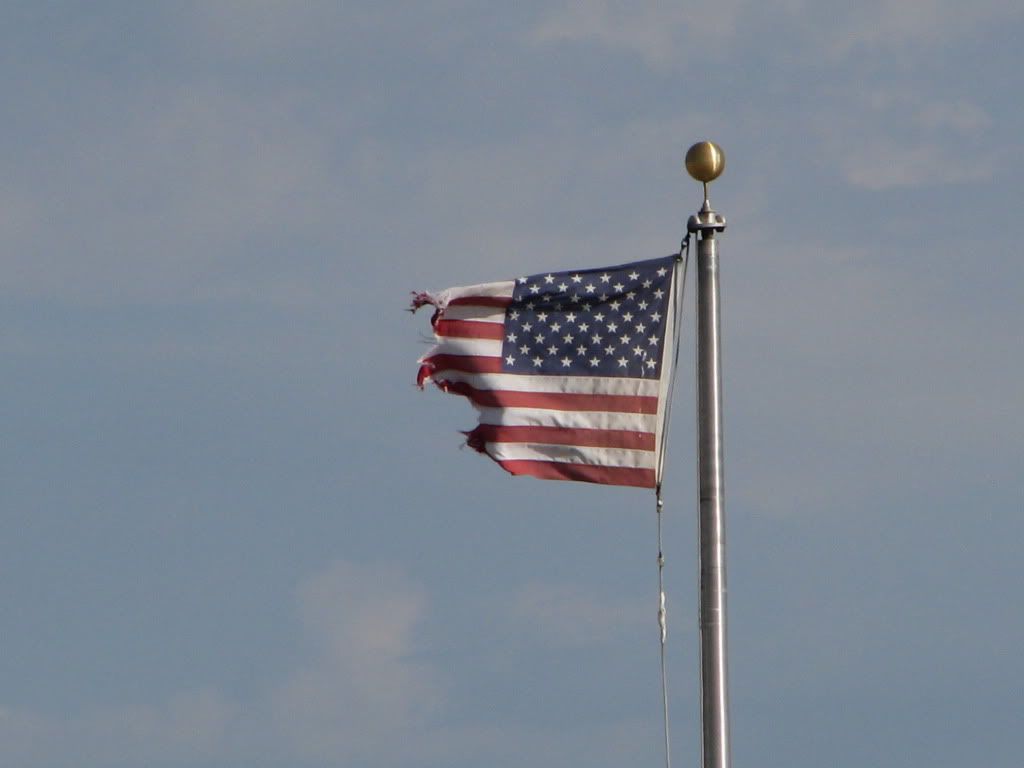
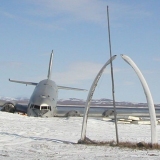
A subtle indicator of what you can expect at this airport. The pole is bent like a longbow and all the giant wind turbines off the end of the runway are churning away. This is a new-ish flag and most of the 13 colonies are already gone.
I landed the Maule once in 33 gusting 41 about 20 degrees crosswind. It was NOT pretty but the wife was in the right seat and she didn't bat an eye, so I counted it as a huge success under pressure. It was a long, slow taxi to the hangar with lots of downwind brake and the stall warning never shut up the whole way. Also discovered that hangar doors can turn into junk yard dogs under these conditions.
YB
- Yellowbelly offline

- Posts: 355
- Joined: Wed Apr 27, 2005 9:03 pm
- Location: Beautiful southern Utah
Maule M-7-235C
I'm lost
but I'm not afraid
I'm lost
but I'm not afraid
Thu Jan 20, 2011 12:14 pm
Re: High wind ground or water ops
denalipilot wrote:I have the most trouble from cross winds when I'm taxiing the 170 on straight skis. Between the O300-A and that round tail it just doesn't have enough rudder authority to keep it tracking straight some days.
-DP
Yup, I experienced the same thing with my 170B on skis. Sometimes I just could not get turned out of wind without taxiing to the lee of a shore.
Rick's Cessna 180 float plane video http://www.youtube.com/watch?v=g6my0FM9F_Q
Thu Jan 20, 2011 2:05 pm
Re: High wind ground or water ops
Mine's a 'B too, I just left that detail off. It worries me less out on a lake. More when there's trees an' stuff to clip on a skinny runway. I've done donuts down the full 3800' length of PAIN, but managed not to take out Once&Future's bird 
(That's with skegs on, too)
-DP
(That's with skegs on, too)
-DP
- denalipilot offline
- Posts: 2789
- Joined: Mon Oct 15, 2007 4:53 pm
- Location: Denali
- Aircraft: C-170B+
Thu Jan 20, 2011 2:48 pm
Re: High wind ground or water ops
Denalipilot,
Get your mechanic to modify that tailwheel steering. There is NO excuse for not having decent steering on one of these airplanes. Now, if it's actually steering, but just sliding on ice, that's a different deal, but in my experience, most C-170s don't steer for beans, and that is fixable.
MTV
Get your mechanic to modify that tailwheel steering. There is NO excuse for not having decent steering on one of these airplanes. Now, if it's actually steering, but just sliding on ice, that's a different deal, but in my experience, most C-170s don't steer for beans, and that is fixable.
MTV
Thu Jan 20, 2011 4:06 pm
Re: High wind ground or water ops
mtv wrote:Denalipilot,
Get your mechanic to modify that tailwheel steering. There is NO excuse for not having decent steering on one of these airplanes. Now, if it's actually steering, but just sliding on ice, that's a different deal, but in my experience, most C-170s don't steer for beans, and that is fixable.
MTV
MTV,
Thanks for the suggestion. I'll ask Jon about it. However, I think that what I'm experiencing is mostly related to the occasional glazed snow and ice conditions. If the snow has some purchase to it, things are great.
I'm running Aero Mfg's wheel penetration tail ski with my Scott 3200, but I've been looking at Burl's Magnum I. Seems like a better and easier attachment, for one thing. I like to have something in back for floatation, for those times I have to horse it around by the BAS handles. Thoughts?
Thanks, -DP
- denalipilot offline
- Posts: 2789
- Joined: Mon Oct 15, 2007 4:53 pm
- Location: Denali
- Aircraft: C-170B+
Thu Jan 20, 2011 6:37 pm
Re: High wind ground or water ops
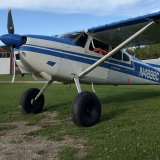
This "person" I know, was flying in a 35 kots gusting 45 knots in wyoming. 40 degrees in a 182. running out of rudder. got it on the ground on the center line and the x-wind blew him right off the pavement on to the grass right after touchdown. he didnt have full aileron into the wind at the time of touch down and the wind kicked his butt. he will never fail to have the yoke fully turned on a x-wind touchdown again. his passengers were NOT excited.
Thu Jan 20, 2011 7:36 pm
Re: High wind ground or water ops
Denalipilot,
I used the Aero tail ski for a while, but it was really hard to get it rigged right, and to keep it from getting beat up.
Burl's Magnum tail ski, on the other hand, is a class piece of equipment. If I were going to put a tail ski on anything, it'd be one of Burl's. They fit well, they rig easily, and they float really well.
Not cheap, but worth the $$ in my opinion. I too am a fan of tail skis. They really do help in MANY situations and conditions.
MTV
I used the Aero tail ski for a while, but it was really hard to get it rigged right, and to keep it from getting beat up.
Burl's Magnum tail ski, on the other hand, is a class piece of equipment. If I were going to put a tail ski on anything, it'd be one of Burl's. They fit well, they rig easily, and they float really well.
Not cheap, but worth the $$ in my opinion. I too am a fan of tail skis. They really do help in MANY situations and conditions.
MTV
Sun Jan 23, 2011 2:26 pm
Re: High wind ground or water ops
Regarding cross wind ops on skis: I just had two incidents a couple days ago where, on some fairly hard crusty snow and with a direct 90 degree wind of maybe 8 to 10 mph, directional control was somewhat lacking. It made me miss my 10' wide ramp, which I have to taxi up to get back in the hangar, so I had to get the tractor out and do it the old fashioned way. The next time I make that same taxing approach, with the same wind, I'll setup offset a bit to compensate.
It was a bit of an eye opener as generally when it's decent winter flying here it is pretty calm, and I was in both places in pretty tight spots with not a lot of waffle room, I too have skegs, and a tail ski, but I now know what to expect so I plan to fly it more like a 2 axis control ultralight and just land into the wind as much as possible.
The real punchline here is when I flew by my place (on the way back from somewhere else, I'd been gone a couple hours) on the way to landing at my old property a couple miles away I eyeballed my wind turbine. I have a standard windsock at the bottom of my property, but I was uphill quite a ways from it, but close enough to the wind turbine to use it's tail vane postion to tell me direction, and then the fact the rotor was not moving told me it was very light winds, as it will start turning in anything more then 6 mph. So, with this updated wind info I proceeded to land uphill by a grove of quakies, pretty close so I'd have more room to make my turn around. I ended up drifting into some of the smaller trees with my left wingtip before coming to a stop, and when I got out I was surprised to feel a stronger breeze then expected. After pulling the plane clear (hard enough snow to make that easy, no snowshoes needed), I blasted off and flew the short leg home, where another glance at the wind turbine told me still not enough wind to matter, as it was not turning.
After missing my taxi approach to the ramp, and finally getting it hangared, I noticed the wind turbine was spinning rapidly, and thought it a little odd that it would ramp up (from being so light) so quickly. Then I heard a pickup truck on my lower road, where my meter base is located, it was an Idaho Power service truck leaving the property. On my shop doorknob was a notice stating they were going to be installing a new meter that day, and the power was going to be off for a while.
That's when the lightbulb over my head went on: my grid tied wind turbine automatically locks up/quits turning when the grid goes down. We don't want to be backfeeding the grid, ever, when it is down. And as a result of the one in 10 billion odds, I happened to be eyeballing it at the time they had just locked it up, if I'd seen it spinning at its usual clip with the actual winds, I would have paid a bit more attention on both landings. As it was I was surprised a bit, twice, but got off easy and got a goods headsup as to cross winds ops, on skis!
It was a bit of an eye opener as generally when it's decent winter flying here it is pretty calm, and I was in both places in pretty tight spots with not a lot of waffle room, I too have skegs, and a tail ski, but I now know what to expect so I plan to fly it more like a 2 axis control ultralight and just land into the wind as much as possible.
The real punchline here is when I flew by my place (on the way back from somewhere else, I'd been gone a couple hours) on the way to landing at my old property a couple miles away I eyeballed my wind turbine. I have a standard windsock at the bottom of my property, but I was uphill quite a ways from it, but close enough to the wind turbine to use it's tail vane postion to tell me direction, and then the fact the rotor was not moving told me it was very light winds, as it will start turning in anything more then 6 mph. So, with this updated wind info I proceeded to land uphill by a grove of quakies, pretty close so I'd have more room to make my turn around. I ended up drifting into some of the smaller trees with my left wingtip before coming to a stop, and when I got out I was surprised to feel a stronger breeze then expected. After pulling the plane clear (hard enough snow to make that easy, no snowshoes needed), I blasted off and flew the short leg home, where another glance at the wind turbine told me still not enough wind to matter, as it was not turning.
After missing my taxi approach to the ramp, and finally getting it hangared, I noticed the wind turbine was spinning rapidly, and thought it a little odd that it would ramp up (from being so light) so quickly. Then I heard a pickup truck on my lower road, where my meter base is located, it was an Idaho Power service truck leaving the property. On my shop doorknob was a notice stating they were going to be installing a new meter that day, and the power was going to be off for a while.
That's when the lightbulb over my head went on: my grid tied wind turbine automatically locks up/quits turning when the grid goes down. We don't want to be backfeeding the grid, ever, when it is down. And as a result of the one in 10 billion odds, I happened to be eyeballing it at the time they had just locked it up, if I'd seen it spinning at its usual clip with the actual winds, I would have paid a bit more attention on both landings. As it was I was surprised a bit, twice, but got off easy and got a goods headsup as to cross winds ops, on skis!
- courierguy offline

- Posts: 4197
- Joined: Thu Mar 31, 2005 6:52 pm
- Location: Idaho
"Its easier to apologize then ask permission"
Tex McClatchy
Tex McClatchy
DISPLAY OPTIONS
Who is online
Users browsing this forum: No registered users and 1 guest
Latest Features
-
Live to Tell
A Minnesota pilot is surprised to learn that the sudden asymmetric drag of an out-of-rig ski can…Read More -
Creators
Working in some of the Yukon's most beautiful and remote environments, photographer Simon Blakesley captures aircraft in…Read More -
Aircraft Ownership and Maintenance
Upgrading to big tires can make a huge difference in backcountry performance, but with those gains come…Read More -
Tales from Yesteryear
In this tale from bush flying yesteryear, Don Cogger signs up to help Atlee Dodge Jr recovery…Read More


Latest Knowledge Base
-
Destinations
A regional guide with ideas for winter camping destinations in California, Nevada, New Mexico, and Arizona.Read More -
Aircraft
Finding an affordable aircraft that can handle the backcountry for $80K or less? A challenge for sure, but with the…Read More -
Aircraft
01.29.2018 - Zane - Updated tire diameter graphic to add 8.50x10 Guide to tires for use in the backcountry and off-airport landing…Read More -
Pilots
12.22.2013 - Initial article format Operating aircraft on skis and negotiating a snow-covered landscape is an entirely unique skillset and environment.…Read More


