I like slow approaches. I like Patrick's (What Wolfgang called the Stall Down Approach) and I like the Army's Apparent Brisk Walk Rate of Closure Approach. Where there are no obstructions, I like to hover taxi in low ground effect to the desired touchdown point.
There is an airplane, I expect most back country pilots have never flown, that can be used to make a teaching impact on any of these approaches. Obviously neither flaps nor the forward slip, both excellent glide angle aids, are necessary for these approaches as the Ercoupe has no flaps or rudder.
Fire up your Ercoupe. If you are at 6500' MSL, the temperature 80 f, and the runway 2600' without obstructions, you will need to make a basic low ground effect takeoff. You will definitely want to take off down drainage. Make a circle (you may have to find some ridge lift or thermal lift to get back around) and get lined up on final the other way. If you land up drainage, you can just turn around to takeoff down drainage next takeoff without having to taxi back. Neither altitude nor distance from the airport matter. Reduce power and pull the stick back to the stop. When the sink begins, control glide angle and rate of descent with reactive throttle. In strong gusts, it is important to move the throttle a lot and then adjust. You are as slow as the airplane will go. When you cushion yourself onto the desired touchdown spot with a little more power, you will not float. You will land right there.
My Mid School Principal, a NM Air Defence Artillery Battalion Commander, had no depth perception whatever. After banging around in the CAP C-172 an hour on approach instruction, I put him in my Ercoupe. He didn't always get the little extra power in at the bottom to cushion it on, but he made good Navy landings. He loved the little airplane.
Yes, I flew off airport a lot with my Ercoupe. It was based off airport at 6500' MSL at Tohatchi, where I taught. The nose gear was at a much slighter angle than other trikes so the nose wheel would scruff and line up straight on crosswind (crabbed to ground) landings. This made it stronger, but the push pull tube linkage with tie rod attachment was weak and troublesome. I flew it to my Med Evac unit at Santa Fe for drill weekends and additional flight training periods. Coming back over the Continental Divide, north of Mt. Taylor, in the afternoon all year around was interesting. It didn't have a real long wing, but made a decent glider. And there was soo much natural energy out there summer afternoons going west into the prevailing wind. It was all about the angles for orographic lift. I didn't have the fuel or time to, on course, thermal up when the wind was strong. Four hours at forty miles per hour would only be 160 miles.
I agree that it is not nearly as much fun without a rudder. And I know I would get run out of town if I started a thread on the backcountry value of the Ercoupe. Still, it was an airplane. It actually flew quite well. And as a first year teacher making $1,000 per month, I could afford a $1,340.00 airplane.
How Ercoupe can teach Stall Down or Apparent Rate Approach
Wed Feb 24, 2016 7:58 pm
- contactflying offline
- Posts: 4972
- Joined: Wed Apr 03, 2013 7:36 pm
- Location: Aurora, Missouri 2H2
Download my free "https://tinyurl.com/Safe-Maneuvering" e-book.
Thu Feb 25, 2016 7:44 am
Re: How Ercoupe can teach Stall Down or Apparent Rate Approa
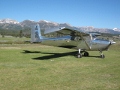
Ercoups are great planes, but I agree not a good choice for backcountry operations. Grass strips are no problems, but backcountry is not a good idea. My first plane was an Ercoupe, and I have over 400 hours in it and 2 others that Dad owned over the years. great planes, and a lot of fun to fly, you can also get strange looks by landing them with the canopy open, or one person that I know of landed one sitting sideways in the seat with his sticking out the left side of the plane and his feet out the right side, tower was not amused.
Dale
Gravity Strikes Again.
Gravity Strikes Again.
Thu Feb 25, 2016 8:17 am
Re: How Ercoupe can teach Stall Down or Apparent Rate Approa
"Adventures With A Desert Bush Pilot"
Great stories from the Mojave with a fellah, his bride, his jeep, and his Ercoupe:
http://shop.maturango.org/adventures-with-a-desert-bush-pilot/
Great stories from the Mojave with a fellah, his bride, his jeep, and his Ercoupe:
http://shop.maturango.org/adventures-with-a-desert-bush-pilot/
Thu Feb 25, 2016 10:23 am
Re: How Ercoupe can teach Stall Down or Apparent Rate Approa
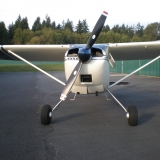
Nose up, high sink rate moderated with power, is a good way to make a steep approach. I've used it a lot.
A guy I know refers to this maneuver as 'stalling it down" which has always bugged me.
The airplane is not stalled, it is mushing down but still flying.
I always wonder why Cessna pilots slip it in when they have this option, plus 40 degrees of barndoor flaps available. More fun maybe, but IMHO not as effective.
As Contact pointed out however, you do have to address the sink rate before touching down, either by adding a bit of power or by pushing the nose down to regain a little airspeed. Otherwise flaring will result in a change of attitude but do nothing to cushion your touchdown.
A guy I know refers to this maneuver as 'stalling it down" which has always bugged me.
The airplane is not stalled, it is mushing down but still flying.
I always wonder why Cessna pilots slip it in when they have this option, plus 40 degrees of barndoor flaps available. More fun maybe, but IMHO not as effective.
As Contact pointed out however, you do have to address the sink rate before touching down, either by adding a bit of power or by pushing the nose down to regain a little airspeed. Otherwise flaring will result in a change of attitude but do nothing to cushion your touchdown.

Cessna Skywagon -- accept no substitute!
Sun Feb 28, 2016 8:52 pm
Re: How Ercoupe can teach Stall Down or Apparent Rate Approa
So we aren't "stalling it down", but how do we select an appropriate approach speed for a given aircraft type? Or am I missing the point? I know that Patrick's videos emphasize deck angle and STABLE airspeed (indeed somewhat slow vs. what many are taught in initial training). Although this is an Internet forum and not flight instruction and realizing all the caveats that implies, I am curious how folks set up on these approaches. What margin over Vso are you giving yourselves, or is this an eyes-outside exercise?

Sun Feb 28, 2016 10:42 pm
Re: How Ercoupe can teach Stall Down or Apparent Rate Approa
Completely eyes outside. The school solution, since PTS came into flight testing, has been to spend hours on stall training while insisting on a well above stall speed approach. Some of us older instructors have always taught a power /pitch approach that makes dynamic use of the throttle and elevator and allows slowing down prior to, rather than after flying over, the numbers.
Covering the airspeed indicator and using the apparent brisk walk rate of closure approach, covered in my e-book, I have soloed many students who had never used the airspeed indicator and who touched down on the numbers three times on that first solo. It is not difficult for beginners as they have not racked up thousands of iterations of way too fast approach.
Covering the airspeed indicator and using the apparent brisk walk rate of closure approach, covered in my e-book, I have soloed many students who had never used the airspeed indicator and who touched down on the numbers three times on that first solo. It is not difficult for beginners as they have not racked up thousands of iterations of way too fast approach.
- contactflying offline
- Posts: 4972
- Joined: Wed Apr 03, 2013 7:36 pm
- Location: Aurora, Missouri 2H2
Download my free "https://tinyurl.com/Safe-Maneuvering" e-book.
Mon Feb 29, 2016 10:49 am
Re: How Ercoupe can teach Stall Down or Apparent Rate Approa
I would load up to your usual weight, get some altitude, and do some landing stalls (full flap, power off) just to see where it lets go at to give you a starting point. Don't abruptly pull the stick back-- ease into it, like you would when doing an approach. Some airplanes don't really want to stall, they will just mush, and will only really stall if you pull back briskly.
The usual advice for a normal landing approach is 1.3 x the stall speed, try that. Then try 1.2. Then (carefully) 1.1. You'll get a feel for it. Remember, the slower you go the more the sink rate increases, and once it starts really coming down changing the airplane's attitude won't do much about that. Add power to reduce sink rate. It seems counter-intuitive but sometimes I've had to both add power and let the nose down a bit to get to the end of the runway. You can carry power (moderating it up and down as required to hit your spot) right into the flare, maybe add a bit of power to cushion that flare. If you get a bit of ground effect float, ease the power off to touch down. If a steep approach is required but not an extremely short landing roll, you can push the nose down at the last minute (instead of or in addition to adding power) to regain enough energy so that flaring will actually do more than just change the attitude.
It's hard to properly describe, you need to just go play around with it. If it makes you feel better, take an instructor with you, but IMHO this isn't necessary -- you're not really breaking new ground here, just exploring the edges of the envelope you're already familiar with.
The usual advice for a normal landing approach is 1.3 x the stall speed, try that. Then try 1.2. Then (carefully) 1.1. You'll get a feel for it. Remember, the slower you go the more the sink rate increases, and once it starts really coming down changing the airplane's attitude won't do much about that. Add power to reduce sink rate. It seems counter-intuitive but sometimes I've had to both add power and let the nose down a bit to get to the end of the runway. You can carry power (moderating it up and down as required to hit your spot) right into the flare, maybe add a bit of power to cushion that flare. If you get a bit of ground effect float, ease the power off to touch down. If a steep approach is required but not an extremely short landing roll, you can push the nose down at the last minute (instead of or in addition to adding power) to regain enough energy so that flaring will actually do more than just change the attitude.
It's hard to properly describe, you need to just go play around with it. If it makes you feel better, take an instructor with you, but IMHO this isn't necessary -- you're not really breaking new ground here, just exploring the edges of the envelope you're already familiar with.
Cessna Skywagon -- accept no substitute!
DISPLAY OPTIONS
Who is online
Users browsing this forum: No registered users and 47 guests
Latest Features
-
-
Featured Bush Planes
As one of the undisputed legends of bush flying, the Cessna 180 hauls a…Read More -
Aircraft Ownership and Maintenance
9 modification mistakes aircraft owners make when trying to "bush out" their birds—why some…Read More -
Live to Tell
A Minnesota pilot is surprised to learn that the sudden asymmetric drag of an…Read More




Latest Knowledge Base
-
Destinations
Canada offers some of the most spectacular backcountry flying on the continent. Here's what you need to know before you go.Read More -
Safety and Survival
Hope that you never have to use your survival vest but knowing you have it and knowing how to use…Read More -
Destinations
A regional guide with ideas for winter camping destinations in California, Nevada, New Mexico, and Arizona.Read More -
Aircraft
Finding an affordable aircraft that can handle the backcountry for $80K or less? A challenge for sure, but with the…Read More



