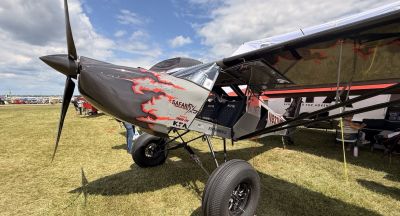
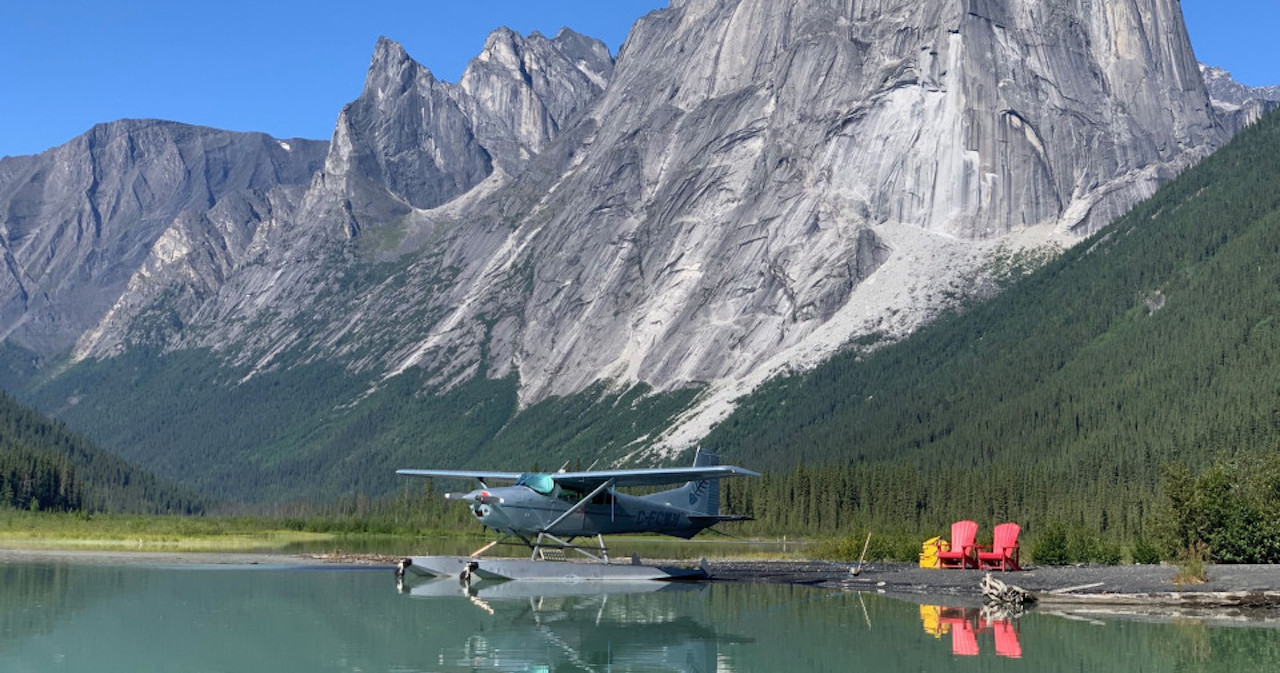
You may think you need to have skis, but surprisingly, most of the planes, other than the Iditarod Air Force, did not have skis. With this years route, even the Iditarod Air Force pilots were landing only on plowed runways. – So don’t count yourself out just because you don’t have winter footwear for your aircraft.
I want to thank Chet and Darcy Harris, Toby Ashley, Brian Padin, Paul and Donna Claus, Kurt MacKenzie, Jim O'Neil, and Larry Eggart for helping make the trip so wonderful.
I flew our Cessna up from Boise to Anchorage giving myself plenty of extra time for weather. As it turned out, the weather was very cooperative. Most of the ski areas in SW BC had closed for lack of snow and all the lakes and rivers were open water. Going NW, I passed just east of Nimpo Lake and none of the interior lakes and rivers was completely frozen. I had intended to camp out several places along the way, but this “fell through” and luckily I didn’t… On reaching Smithers, I still hadn’t seen any water to land on and the Skeena was in full spring flow.
I picked up a friend in SE Alaska and we had a spectacular flight up the coastal range, finally finding a winter playground.

Having winter footwear on the ‘wagon I was able to comfortably take a path over the glacial byways that I had not ventured previously. We went from POW island, up the Stikine, and into Skagway (where gas was ~$4.60/gal!).From Skagway we went toward Glacier Bay and decided to spend the night on Casement Glacier.


Notice the loss of surface features when the light starts to flatten. Just like in the summer, while planning your landing, you need to imprint in your head what obstacles are around you (ice berms, crevasses as opposed to rocks,stumps and trees) - in anticipation of departure.

From there, to the Alsek and into Yakutat.
I always thought glacial activity was something witnessed over lifetimes. Fascinating for me to see some of the glaciers’ changes in the past 7 years that I have been witness. Yakutat Glacier feeding into Harlequin Lake, outside of Yakutat has receded several MILES under my observation. Many other glaciers were similarly altered. Not an enviropolitical statement here, just a surprising realization of the ability to witness grand scale changes in nature.
From Yakutat we headed across the Russel Fiord and travelled up Hubbard Glacier on the flank of Mount Logan and down Logan Glacier into the Chitina drainage.
Mount Logan at the top of Hubbard Glacier

Despite all the spindrift, the ride wasn't bad.

Headed down the Logan Glacier. Time frame on this glacier traverse was measured in hours. There is no way to accurately illustrate the grandeur of this place.


Then continuing the glacier travel through the Bremner, Wernicke, Allen, and Scott Glaciers into Cordova. I MUST return to do some skiing!
Alaska weather finally kicked in going across Prince William Sound and had to work to get into the MatSu Valley. So there we were LATE FEBRUARY Alaska, in the Knik drainage with overcast driving us down below any landing sites on the glacier and NO snow in the valley! There was visible water on Lake George and there was no way I was going to land it without some local Beta on ice thickness. Needless to say, the Fli-Lite design (low ground clearance) does not like loose gravel bars, but they are stout and managed it. Hiked around a while as Palmer AWOS reported ¼ mile vis and then carried on after the weather passed.
I went back with local insight on the ice depth in Lake George. The insight I gained leads me to believe the locals are crazy


Consequently, the ice was over 2-3 feet deep, but the 2" of water on top was "unsettling". Especially as a 185 had gone through the ice at Chakachamna Lake a few days before.


I'm going run out of synonyms for "Spectacular"

Ha, and this brings us to the START of our Iditarod Jouney!!?
...... To Be Continued