Instrument license for VFR pilot 2 ?
Tue Nov 11, 2008 7:57 pm
I did 99 percent of mine at night and I highly recommend it. It was easier for me because you don't have the shadows and sunlight moving across the panel.
- Kenny Chapman offline
- Posts: 146
- Joined: Sun May 22, 2005 8:45 am
- Location: Canby
Tue Nov 11, 2008 8:35 pm
Kenny Chapman wrote:I did 99 percent of mine at night and I highly recommend it. It was easier for me because you don't have the shadows and sunlight moving across the panel.
hum, you may have a point there.
Rob
- OregonMaule offline

- Posts: 6977
- Joined: Fri Sep 01, 2006 9:44 pm
- Location: Orygun
My SPOT page
"They who can give up essential liberty to obtain a little temporary safety, deserve neither liberty nor safety". Ben Franklin
http://en.wikiquote.org/wiki/Benjamin_Franklin
"They who can give up essential liberty to obtain a little temporary safety, deserve neither liberty nor safety". Ben Franklin
http://en.wikiquote.org/wiki/Benjamin_Franklin
Tue Nov 11, 2008 8:55 pm
Tue Nov 11, 2008 9:08 pm
Get as much actual as you can, and fly as often as you can.
It's been 7 years or so, but when I got my IFR ticket my CFII managed to get me over 10 hours of actual by picking crappy days and enroute altitudes that were in the clouds. Most of this was in the winter season in the northeast where I was living at the time, so I had several icing encounters as well.
As others have said, the hood is nothing like the real thing, especially if you are "lucky" enough to have actual weather close to minimums.
Have fun with it, but it will be hard work, as it should be.
It's been 7 years or so, but when I got my IFR ticket my CFII managed to get me over 10 hours of actual by picking crappy days and enroute altitudes that were in the clouds. Most of this was in the winter season in the northeast where I was living at the time, so I had several icing encounters as well.
As others have said, the hood is nothing like the real thing, especially if you are "lucky" enough to have actual weather close to minimums.
Have fun with it, but it will be hard work, as it should be.

Wed Nov 12, 2008 5:42 pm
RobBurson wrote:Kenny Chapman wrote:I did 99 percent of mine at night and I highly recommend it. It was easier for me because you don't have the shadows and sunlight moving across the panel.
hum, you may have a point there.
Rob
"Just a word for the night IFR stuff. For what its worth, if you look at the statistics for light aircraft cracking up flying IFR, a very high percentage of them are at night. So, I guess you could look at that as a good reason to get a lot of IFR night instruction, or a lousy reason for it. "
Wed Nov 12, 2008 6:37 pm
whynotfly wrote:RobBurson wrote:Kenny Chapman wrote:I did 99 percent of mine at night and I highly recommend it. It was easier for me because you don't have the shadows and sunlight moving across the panel.
hum, you may have a point there.
Rob
"Just a word for the night IFR stuff. For what its worth, if you look at the statistics for light aircraft cracking up flying IFR, a very high percentage of them are at night. So, I guess you could look at that as a good reason to get a lot of IFR night instruction, or a lousy reason for it. "
My primary instructor, who has survived 12,000 hours of giving instruction, and at least that much more in the left seat, a fatal crash, a mid - air collision (with flynbeekeeper), and who knows what else, always said there were really very few compelling reasons to launch at night in a single engine airplane, VFR or especially IFR. Now I'm not sure if that's true, but it's always stuck with me. Night flying scares me.
gb
Wed Nov 12, 2008 7:27 pm
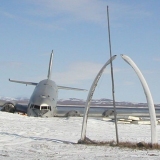
For what it's worth, most of my pro flying career was in the Arctic, and working out of Kotz, Barrow and Deadhorse, I somehow survived a shitload of night, actual IFR hours, mostly in single engine Cessnas. The learning curve was bit sharp at first to get really comfortable, but once I was, I found the night IFR some of the most enjoyable flying I ever did. No whiteout conditions, no spatial disorientation, just a little non-moving cocoon to sit in and watch the gauges do their thing.
But....
It's a hugely unforgiving world when shit breaks, and I was very, very proficient and current with partial panel just to be able to deal with the pump, gauge, and electrical failures. Of course nowdays, partial panel is a whole lot easier with GPS. No more depending on a wet compass for heading info. Almost like cheating, but it's not.
Gump
But....
It's a hugely unforgiving world when shit breaks, and I was very, very proficient and current with partial panel just to be able to deal with the pump, gauge, and electrical failures. Of course nowdays, partial panel is a whole lot easier with GPS. No more depending on a wet compass for heading info. Almost like cheating, but it's not.
Gump
Fri Nov 14, 2008 9:30 am
It's usually not windy or bumpy or hot or real busy at night, just smooth, comfortable and nice. I love night flying, but I used to make a living night flying.
Don't fly night VFR though, unless your instrument rated and proficient, or you will eventually become a Kennedy.
If the engine quits in the clouds, what's it matter if it's dark or not, you still can't see.
Forced landings are better at night anyway. If you don't like what you see when you turn the landing lights on, you can always turn them off.
Don't fly night VFR though, unless your instrument rated and proficient, or you will eventually become a Kennedy.
If the engine quits in the clouds, what's it matter if it's dark or not, you still can't see.
Forced landings are better at night anyway. If you don't like what you see when you turn the landing lights on, you can always turn them off.
Fri Nov 14, 2008 9:55 am
I did probably 90% of my instrument training at night. I liked it a lot better because it's nicer to fly smooth, cool night air, thus taking a little edge off the already challenging training environment. I like night flying in general just fine, and fly night VFR pretty much all fall through spring. IFR wise I can't see where it's anymore dangerous than day flying, just less forgiving. You just need to be honestly proficient, and then pick IFR or VFR and stick with it. If you cheat the IFR-VFR lines you will get bit.
Not "back country" but flying VFR over a major metropolitan area (specially one that has a corridor over a biggie airport) is really cool. And again probably no more dangerous than flying day...
Flying VFR back country is probably not a good plan...
Not "back country" but flying VFR over a major metropolitan area (specially one that has a corridor over a biggie airport) is really cool. And again probably no more dangerous than flying day...
Flying VFR back country is probably not a good plan...


Fri Nov 14, 2008 12:52 pm
I'm just a few weeks away from my IFR checkride, with most of my under-the-hood training at night. Here's my take on all this:
- The IFR ticket is worth doing even if you never fly IFR again after the checkride. Its true - it makes you a much better pilot in many ways.
- The IFR ticket changes how you think about flying in that it moves you firmly into the airplane-as-transport mode, and for a low-time VFR pilot this is a big deal.
- IFR training at night is much more realistic than training during the day - less outside cues, more cockpit organization needed, an extra level of wariness, etc. For me IFR in daylight, even under the hood, is a breeze after training at night.
- IFR in actual is very different from IFR under the hood, even though the procedures are exactly the same. The first time you're IFR in actual and realize that you can handle it and that its no big deal is a huge confidence-building experience.
Just my 2 cents...
- The IFR ticket is worth doing even if you never fly IFR again after the checkride. Its true - it makes you a much better pilot in many ways.
- The IFR ticket changes how you think about flying in that it moves you firmly into the airplane-as-transport mode, and for a low-time VFR pilot this is a big deal.
- IFR training at night is much more realistic than training during the day - less outside cues, more cockpit organization needed, an extra level of wariness, etc. For me IFR in daylight, even under the hood, is a breeze after training at night.
- IFR in actual is very different from IFR under the hood, even though the procedures are exactly the same. The first time you're IFR in actual and realize that you can handle it and that its no big deal is a huge confidence-building experience.
Just my 2 cents...
Fri Nov 14, 2008 6:43 pm
- Grassstrippilot offline

- Posts: 3536
- Joined: Wed May 31, 2006 6:17 am
- Location: Syracuse, UT
- FindMeSpot URL: https://share.garmin.com/WolfAdventures
- Aircraft: Cessna 205
Sat Nov 15, 2008 10:50 pm
wow, even after lot's of nite hours, in and out of slc a lot, you guys have
it way more dialed than me ! at nite, i feel extremely lucky for that little
s-tec 55 in the dash, especially for 0 dark thirty a.m. departures to the
middle fork. nothin' like a good auto pilot to help deal with the smoke
either...
it way more dialed than me ! at nite, i feel extremely lucky for that little
s-tec 55 in the dash, especially for 0 dark thirty a.m. departures to the
middle fork. nothin' like a good auto pilot to help deal with the smoke
either...

jomac
Sat Nov 15, 2008 11:37 pm
Sun Nov 16, 2008 8:01 am
- OregonMaule offline
- Posts: 6977
- Joined: Fri Sep 01, 2006 9:44 pm
- Location: Orygun
My SPOT page
"They who can give up essential liberty to obtain a little temporary safety, deserve neither liberty nor safety". Ben Franklin
http://en.wikiquote.org/wiki/Benjamin_Franklin
"They who can give up essential liberty to obtain a little temporary safety, deserve neither liberty nor safety". Ben Franklin
http://en.wikiquote.org/wiki/Benjamin_Franklin
Sun Nov 16, 2008 10:27 am
Actually, you're going to have to exhibit your knowledge of the NDB approaches as well....even though it's a dinosaur these days. And, I believe if you have neither an ADF or a GPS, you're going to have to find a plane with one or the other for part of the checkride. At least, the examiner can require it.
GPS approaches are the easiest approaches in the book, especially with the Garmin 430/530.
As da man says, though, be prepared to answer questions about all this stuff. They can't ask you questions about specific equipment make and model if it's not available to you, though.
MTV
GPS approaches are the easiest approaches in the book, especially with the Garmin 430/530.
As da man says, though, be prepared to answer questions about all this stuff. They can't ask you questions about specific equipment make and model if it's not available to you, though.
MTV

Tue Nov 18, 2008 10:09 am
Be wary of an autopilot. It's real easy to become too reliant on one and lose you basic instrument proficiency. Also be real wary of that dry vacuum pump. I replaced mine with an Airwolf, (Pesco) wet pump and will install an electric artificial horizon soon.
Rather than spending the money on an autopilot, I went the wet pump and back-up Horizon route as I can only afford one or the other.
Rather than spending the money on an autopilot, I went the wet pump and back-up Horizon route as I can only afford one or the other.
DISPLAY OPTIONS
Who is online
Users browsing this forum: No registered users and 5 guests
Latest Features
-
Live to Tell
A Minnesota pilot is surprised to learn that the sudden asymmetric drag of an out-of-rig ski can…Read More -
Creators
Working in some of the Yukon's most beautiful and remote environments, photographer Simon Blakesley captures aircraft in…Read More -
Aircraft Ownership and Maintenance
Upgrading to big tires can make a huge difference in backcountry performance, but with those gains come…Read More -
Tales from Yesteryear
In this tale from bush flying yesteryear, Don Cogger signs up to help Atlee Dodge Jr recovery…Read More


Latest Knowledge Base
-
Destinations
A regional guide with ideas for winter camping destinations in California, Nevada, New Mexico, and Arizona.Read More -
Aircraft
Finding an affordable aircraft that can handle the backcountry for $80K or less? A challenge for sure, but with the…Read More -
Aircraft
01.29.2018 - Zane - Updated tire diameter graphic to add 8.50x10 Guide to tires for use in the backcountry and off-airport landing…Read More -
Pilots
12.22.2013 - Initial article format Operating aircraft on skis and negotiating a snow-covered landscape is an entirely unique skillset and environment.…Read More


