One of my Jedi mentors tells me not to dance on the rudder peddles and just give it what it needs. Another Jedi mentor promotes proactive and dynamic rudder use.
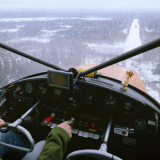
Truth be told, I seldom give it any conscious thought in practice, but last night I inadvertantly used a camera angle that actually showed what the rudder was doing and it really caught my attention.
What do you guys think. Do you strive for finesse, or dance away?
Jedi Rudder Techniques
Fri Nov 03, 2017 2:07 pm
Fri Nov 03, 2017 2:13 pm
Re: Jedi Rudder Techniques
I don't think I'm the dancing type, but now I'm intrigued... Time to hook up the camera...
- Chris In Marshfield offline

- Posts: 238
- Joined: Mon Apr 04, 2016 6:54 am
- Location: Northern
- Aircraft: Vans RV-6
Quicksilver Sprint II
Warner Spacewalker II
Fri Nov 03, 2017 2:35 pm
Re: Jedi Rudder Techniques
I prefer to stab and release, maybe some would call that dancing. If it's all happening subconsciously, and you're not in the weeds, you've probably gotten to where you want to be.

Fri Nov 03, 2017 2:48 pm
Re: Jedi Rudder Techniques
I've been flying TW less than a year so in no way an expert, but have learned and flown a lot in that time, about 160 hours in my 180. I find the "dancing" to be the best way for me. In the Citabria I learned in, it wasn't necessary. In my 180, it's totally necessary. I believe that the high frequency of jabs is good across the board. Like Contact says, proactive and dynamic. However, I also believe that better more experienced TW pilots can use jabs of high frequency, but it may not appear like it because the amplitude of their jabs are smaller. Generally, the more experienced guys will catch the need for correction sooner than less experienced, meaning that less correction is required, making it look like their feet are calm.
This had gotten to be moderately subliminal to me until I started flying a PA28-200 for commercial lessons and without a spring in the path of the nose steering, my taxis looked like a drunken sailor because I wasn't aware of how dynamic i was on the rudders while taxiing. In my 180, it just happens because it needs to, and I had some scary moments before it got subliminal. That being said, every flight in my plane is a lesson and on short final (especially in gusty conditions), I do a "feet alive" ritual and get ready to go dancing with my 60 year old girlfriend. She's a real cougar picking up a 26 year old like me.
-Asa
This had gotten to be moderately subliminal to me until I started flying a PA28-200 for commercial lessons and without a spring in the path of the nose steering, my taxis looked like a drunken sailor because I wasn't aware of how dynamic i was on the rudders while taxiing. In my 180, it just happens because it needs to, and I had some scary moments before it got subliminal. That being said, every flight in my plane is a lesson and on short final (especially in gusty conditions), I do a "feet alive" ritual and get ready to go dancing with my 60 year old girlfriend. She's a real cougar picking up a 26 year old like me.
-Asa

Fri Nov 03, 2017 2:54 pm
Re: Jedi Rudder Techniques
A pilot who wags his tail even in a tricycle airplane makes my heart proud.
- contactflying offline
- Posts: 4972
- Joined: Wed Apr 03, 2013 7:36 pm
- Location: Aurora, Missouri 2H2
Download my free "https://tinyurl.com/Safe-Maneuvering" e-book.
Fri Nov 03, 2017 3:18 pm
Re: Jedi Rudder Techniques
I tend to dance, making small taps helps me see how the plane feels when I'm slow. I liken it to the same technique as using brakes on a tractor to steer while blading a ditch or doing field work. I do the same thing while spraying to stay on the line, small taps are much more efficient at keeping the light bar lit up right, as compared to jamming a rudder if you drift off course.
- CenterHillAg offline

- Posts: 204
- Joined: Sun Nov 09, 2014 3:13 pm
- Location: Texas Coast
- Aircraft: J3 Cub
'56 182
Fri Nov 03, 2017 4:42 pm
Re: Jedi Rudder Techniques
CFOT wrote:One of my Jedi mentors tells me not to dance on the rudder peddles and just give it what it needs. Another Jedi mentor promotes proactive and dynamic rudder use.
Truth be told, I seldom give it any conscious thought in practice, but last night I inadvertantly used a camera angle that actually showed what the rudder was doing and it really caught my attention.
What do you guys think. Do you strive for finesse, or dance away?
Great technique. The aircraft was aligned with the runway all the way in. My former next door neighbor was a gazillion hour Stearman/Agcat/SuperCub/ and whatever else pilot with ZERO accidents or incidents during well over 50 years in the cockpit.. He described his technique as "tap dancing" in the sky. I think he'd be complimentary of your technique.
- PapernScissors offline
- Posts: 419
- Joined: Sun Mar 06, 2016 8:49 pm
- Location: Spokane
- Aircraft: Cessna 172
Fri Nov 03, 2017 4:44 pm
Re: Jedi Rudder Techniques
I'm not sure what is meant by "dancing". I'm sure my rudder looks like that depending on the wind, but I'm not just moving the pedals for the sake of moving, I'm putting in corrections that I feel the airplane needs to be straight in proportion to how straight it is, and how reactive the airplane is to my inputs.
It sounds like one instructor is saying relax and do what is needed, and the other is saying that putting in some degree of arbitrary movement gets you focused. If that's true, I would probably go with the instructor that says relax and do what is needed, because arbitrary movement on the rudder while landing sounds really odd to me.
The very best TW instruction I ever got was from my friend Lee. He said that perfect tailwheel landings would be most effectively achieved by 3 people, each independently doing their jobs. One person would only use aileron to keep the airplane in the center of the runway, another person would only use rudder to keep the airplane in line with the runway, and one person would run the throttle and elevator to lower the airplane onto the runway.
How he taught this was for me to run one control at a time, while he basically bounced the airplane down the runway. So for ailerons, he would pitch up, down, hit the rudder, throttle, and after three trips bouncing down the run way with me doing nothing but aileron I was able to keep it in the center no matter what he did. For rudder he would do the same to distract me and make me work for it, but after a little practice, I could keep the airplane absolutely parallel with the runway no matter what. For elevator, he ran the power too, and let me tell you, trying to get the airplane to land with someone playing with the power is super interesting.
The exercise was challenging because we had to both be good enough pilots to ignore each others inputs, and trust each other to not wad up the airplane. Three touch and goes per pass, with 3 passes per control, taught me what would take hundreds of landings to figure out. I learned more in that 3 hours than I did in all of my primary tailwheel training. No matter what the airplane was doing I could decouple and keep it straight, in the center, and softly let it down.
The next weekend I was playing with 1000ft strips in the sticks and a month after that I was landing in 12kt-18kt direct crosswind on pavement only having my endorsement for the summer.
So here is the point, a good tailwheel instructor is the best insurance you can get. Choose wisely.
schu
It sounds like one instructor is saying relax and do what is needed, and the other is saying that putting in some degree of arbitrary movement gets you focused. If that's true, I would probably go with the instructor that says relax and do what is needed, because arbitrary movement on the rudder while landing sounds really odd to me.
The very best TW instruction I ever got was from my friend Lee. He said that perfect tailwheel landings would be most effectively achieved by 3 people, each independently doing their jobs. One person would only use aileron to keep the airplane in the center of the runway, another person would only use rudder to keep the airplane in line with the runway, and one person would run the throttle and elevator to lower the airplane onto the runway.
How he taught this was for me to run one control at a time, while he basically bounced the airplane down the runway. So for ailerons, he would pitch up, down, hit the rudder, throttle, and after three trips bouncing down the run way with me doing nothing but aileron I was able to keep it in the center no matter what he did. For rudder he would do the same to distract me and make me work for it, but after a little practice, I could keep the airplane absolutely parallel with the runway no matter what. For elevator, he ran the power too, and let me tell you, trying to get the airplane to land with someone playing with the power is super interesting.
The exercise was challenging because we had to both be good enough pilots to ignore each others inputs, and trust each other to not wad up the airplane. Three touch and goes per pass, with 3 passes per control, taught me what would take hundreds of landings to figure out. I learned more in that 3 hours than I did in all of my primary tailwheel training. No matter what the airplane was doing I could decouple and keep it straight, in the center, and softly let it down.
The next weekend I was playing with 1000ft strips in the sticks and a month after that I was landing in 12kt-18kt direct crosswind on pavement only having my endorsement for the summer.
So here is the point, a good tailwheel instructor is the best insurance you can get. Choose wisely.
schu

Fri Nov 03, 2017 5:58 pm
Re: Jedi Rudder Techniques
CFOT wrote:What do you guys think. Do you strive for finesse, or dance away?
How you describe my technique probably depends on the day and the conditions.

I use as much rudder is required for my confidence that the airplane continues pointing in the direction I desire.
- CamTom12 offline

- Posts: 3705
- Joined: Sun Jul 08, 2012 1:08 pm
- Location: Huntsville
- FindMeSpot URL: https://share.delorme.com/camtom12
- Aircraft: Ruppe Racer
Experimental Pacer
home hand jam "wizard"
Fri Nov 03, 2017 6:23 pm
Re: Jedi Rudder Techniques
Riding with someone who is "walking the rudders" drives me up the wall. You don't swing the steering wheel on your car left and right when you car is tracking straight in the center of your lane do you? You should not move any control in the airplane just because you feel a need to be moving something, actually that applies to operating any type of equipment. This doesn't mean you should not make corrections if needed.
Tim
Tim
Fri Nov 03, 2017 6:49 pm
Re: Jedi Rudder Techniques
Yes auto, yes dozer blade, yes backhoe controls, yes collective, yes cyclic, yes anti-torque pedals, yes feet when playing sports, yes rudder pedals. "We're better when we move."
- contactflying offline
- Posts: 4972
- Joined: Wed Apr 03, 2013 7:36 pm
- Location: Aurora, Missouri 2H2
Download my free "https://tinyurl.com/Safe-Maneuvering" e-book.
Fri Nov 03, 2017 7:53 pm
Re: Jedi Rudder Techniques
I guess I move my feet quite a bit on take off. I don't think so much when landing for some reason. A friend was letting me fly a 185 on floats and I was doing it----he said "a taildragger pilot huh?". A Cherokee pilot here at home said he noticed the rudder moving when I take off and I told him I guess I'm not too good yet.

Fri Nov 03, 2017 9:13 pm
Re: Jedi Rudder Techniques
Let's say you are playing tight man to man defense on the basketball player with the ball and he hasn't picked it up (stopped dribbling.) Watch his number for direction of movement. When he goes, you move to stay between him and the goal. As a ref, I know who is going to foul by blocking or who is going to foul by offensive contact before he even makes his move. ARE YOUR FEET MOVING? If not, you will not intercept between him and the goal. You will cause contact because you are late.
Let's say you are starting to dig a pond, tank in Texas, in pretty hard soil. You push down on the blade lever to start digging and just wait until deep enough. You will kill the engine. Unless you push too much, too little, too much, etc, it just doesn't work.
With a tailwheel airplane or any helicopter, you can wait for the nose to come off target and then correct. Because you are not already moving, the reaction will not come until the nose comes off significantly. You will no longer be on the centerline and trying to get back will make it worse in the other direction. Yes the tail will start around. At this point differential braking may be tried. Things are coming unglued.
Yes, everybody is getting down without ground looping most of the time. If they are not consciously or unconsciously moving the nose a bit left of centerline, a bit right, etc, dynamically and proactively, it is not pretty.
Let's say you are starting to dig a pond, tank in Texas, in pretty hard soil. You push down on the blade lever to start digging and just wait until deep enough. You will kill the engine. Unless you push too much, too little, too much, etc, it just doesn't work.
With a tailwheel airplane or any helicopter, you can wait for the nose to come off target and then correct. Because you are not already moving, the reaction will not come until the nose comes off significantly. You will no longer be on the centerline and trying to get back will make it worse in the other direction. Yes the tail will start around. At this point differential braking may be tried. Things are coming unglued.
Yes, everybody is getting down without ground looping most of the time. If they are not consciously or unconsciously moving the nose a bit left of centerline, a bit right, etc, dynamically and proactively, it is not pretty.
- contactflying offline
- Posts: 4972
- Joined: Wed Apr 03, 2013 7:36 pm
- Location: Aurora, Missouri 2H2
Download my free "https://tinyurl.com/Safe-Maneuvering" e-book.
Fri Nov 03, 2017 9:15 pm
Re: Jedi Rudder Techniques
contactflying wrote:Yes auto, yes dozer blade, yes backhoe controls, yes collective, yes cyclic, yes anti-torque pedals, yes feet when playing sports, yes rudder pedals. "We're better when we move."
Help me understand what you are saying here. Are you saying "yes" constantly move these controls wether an input is necessary or not?
Sat Nov 04, 2017 2:18 am
Re: Jedi Rudder Techniques
Yes. We bracket the desired spot with various controls, most controls. Nature has few sweet spots or hover buttons. The static control is an illusion caused by an operator or pilot who is quick enough to bracket with minute control movement. The athlete is the same. He may be shifting from foot to foot quickly and minutely. Point me to the coach that wants a flat footed, stationary player. Show me the software guy that is going for static control input until disruption. Sit in a passenger seat on a DC-3 and listen to the constant hydraulic squeak as the pilot constantly moves the controls. Go to the Army Quick Kill range to see troops learn to point and shoot just like Sundance, who's great line was, "I'm better when I move."
- contactflying offline
- Posts: 4972
- Joined: Wed Apr 03, 2013 7:36 pm
- Location: Aurora, Missouri 2H2
Download my free "https://tinyurl.com/Safe-Maneuvering" e-book.
Sat Nov 04, 2017 4:33 am
Re: Jedi Rudder Techniques
Opinions, Opinions, Opinions.....
So, here's mine. Remember the five steps of learning. It plays a big part. Using the rudder as needed and 'dancing' are two completely different things. We all start mechanically, but hopefully internalize/ get subliminal with it. What it takes to get there is experience. You need this to anticipate what is needed and when. Little movements on the rudder in anticipation/ required is good technique. The IDEA is that you don't stray from the centerline.... keep it straight until you STOP.
The dancing technique on the other hand has the pilot just moving the rudder pedals left and right, alternating WITHOUT regard to what the airplane actually needs. There is NO anticipation, just mechanical input. The idea is that you can stay ahead of things. The worst thing about this technique is that it totally masks what the airplane needs and obscures the experience needed to attain the next step of skill. In my opinion, this is a BAD idea and will lead to bad things.
I believe, as Contact says, you gotta be moving, you gotta be awake and on your A game. It may look like dancing when you get it right and the winds require it. I've seen the results of the mechanical way.... as bad as those who give up once the wheels touch the ground. Remember it ain't over until the airplane is shut down.
Keep it Straight! my two cents...
gunny
So, here's mine. Remember the five steps of learning. It plays a big part. Using the rudder as needed and 'dancing' are two completely different things. We all start mechanically, but hopefully internalize/ get subliminal with it. What it takes to get there is experience. You need this to anticipate what is needed and when. Little movements on the rudder in anticipation/ required is good technique. The IDEA is that you don't stray from the centerline.... keep it straight until you STOP.
The dancing technique on the other hand has the pilot just moving the rudder pedals left and right, alternating WITHOUT regard to what the airplane actually needs. There is NO anticipation, just mechanical input. The idea is that you can stay ahead of things. The worst thing about this technique is that it totally masks what the airplane needs and obscures the experience needed to attain the next step of skill. In my opinion, this is a BAD idea and will lead to bad things.
I believe, as Contact says, you gotta be moving, you gotta be awake and on your A game. It may look like dancing when you get it right and the winds require it. I've seen the results of the mechanical way.... as bad as those who give up once the wheels touch the ground. Remember it ain't over until the airplane is shut down.
Keep it Straight! my two cents...
gunny
Sat Nov 04, 2017 7:13 am
Re: Jedi Rudder Techniques
I agree with Gunny about anticipation and pre-emptive movement of controls. Dynamic proactive might be ovremphasis for training purposes. It allows gross dynamic proactive rudder movement, when learning, which makes learning go much faster.
However, l do believe many things are unbalanced and unpredictable in nature. The tendency of the tail to try to come around, in tailwheel airplanes is one of them. Experience can allow us to anticipate which way it will try to go. Dynamic proactive rudder movement, gross or fine, can make it easier even when tired and distracted.
I have found the technique to be helpful any time a directed course to a target is necessary or desirable. I have found small coordinated turns, commonly used for correction, not to be helpful.
However, l do believe many things are unbalanced and unpredictable in nature. The tendency of the tail to try to come around, in tailwheel airplanes is one of them. Experience can allow us to anticipate which way it will try to go. Dynamic proactive rudder movement, gross or fine, can make it easier even when tired and distracted.
I have found the technique to be helpful any time a directed course to a target is necessary or desirable. I have found small coordinated turns, commonly used for correction, not to be helpful.
- contactflying offline
- Posts: 4972
- Joined: Wed Apr 03, 2013 7:36 pm
- Location: Aurora, Missouri 2H2
Download my free "https://tinyurl.com/Safe-Maneuvering" e-book.
Sat Nov 04, 2017 7:26 am
Re: Jedi Rudder Techniques
Batt443 said something about not swinging the steering wheel of your car back and forth to keep tracking straight .If you keep the steering wheel from moving at all while you are tracking straight in your car it won't be long until you are not in your lane . Tiny movements are required to keep the car going where you want . Same with the airplane . Not talking about big movements for no reason , just little movements to keep it where you want it .

vail
Sat Nov 04, 2017 7:31 am
Re: Jedi Rudder Techniques
low rider wrote:Batt443 said something about not swinging the steering wheel of your car back and forth to keep tracking straight .If you keep the steering wheel from moving at all while you are tracking straight in your car it won't be long until you are not in your lane . Tiny movements are required to keep the car going where you want . Same with the airplane . Not talking about big movements for no reason , just little movements to keep it where you want it .
Yes, however small and minute, in the car, those are movements of correction, not arbitrary movements for the sake of movement like some advocate.
Sat Nov 04, 2017 8:19 am
Re: Jedi Rudder Techniques
In skid gear helicopters we would apply pressure/counter-pressure on the pedals when picking up from unimproved surfaces to ensure the skids weren’t snagged and the nose stayed on heading - especially important in tundra/muskeg/mud. No real perceptive movement of the pedals, but a constant pressure/counter-pressure. Maybe that’s the type of dynamic/proactive movements that Jimmy’s talking about.
I just can’t see Jimmy saying that you need to wag the rudder just because. That seems like a lot of wasted motion. My interpretation of his comments is to make continuous small corrections to ensure the nose points in the direction you want it to. In other words - don’t be a passenger on your airplane. Command its movement, and many small inputs work way better than a few large ones.
If that’s the case, then I agree wholeheartedly with his technique.
I just can’t see Jimmy saying that you need to wag the rudder just because. That seems like a lot of wasted motion. My interpretation of his comments is to make continuous small corrections to ensure the nose points in the direction you want it to. In other words - don’t be a passenger on your airplane. Command its movement, and many small inputs work way better than a few large ones.
If that’s the case, then I agree wholeheartedly with his technique.
- CamTom12 offline
- Posts: 3705
- Joined: Sun Jul 08, 2012 1:08 pm
- Location: Huntsville
- FindMeSpot URL: https://share.delorme.com/camtom12
- Aircraft: Ruppe Racer
Experimental Pacer
home hand jam "wizard"
DISPLAY OPTIONS
Who is online
Users browsing this forum: No registered users and 9 guests
Latest Features
-
-
Featured Bush Planes
As one of the undisputed legends of bush flying, the Cessna 180 hauls a…Read More -
Aircraft Ownership and Maintenance
9 modification mistakes aircraft owners make when trying to "bush out" their birds—why some…Read More -
Live to Tell
A Minnesota pilot is surprised to learn that the sudden asymmetric drag of an…Read More




Latest Knowledge Base
-
Destinations
Canada offers some of the most spectacular backcountry flying on the continent. Here's what you need to know before you go.Read More -
Safety and Survival
Hope that you never have to use your survival vest but knowing you have it and knowing how to use…Read More -
Destinations
A regional guide with ideas for winter camping destinations in California, Nevada, New Mexico, and Arizona.Read More -
Aircraft
Finding an affordable aircraft that can handle the backcountry for $80K or less? A challenge for sure, but with the…Read More



