Learning "The Bush Pilot Landing"
Fri Apr 06, 2012 7:48 pm
Learning "The Bush Pilot Landing"
Now that I'm using bushwheels in short, obstacle-rich off-airport situations, I've begun to appreciate "the bush pilot landing" technique: three-point at touchdown for minimum speed, then tail up for visibility, and maximum braking. Without getting the tail up, it is impossible to keep the the planned rollout path in sight and dodge the obstacles. But what is the best way to perfect the technique--learn to increase braking force on wheel landings, or learn to reduce up elevator on 3-point landings with maximum braking? Besides continuing to practice, practice, practice, have you any tips to improve pitch and yaw control during rollout?
- Noe Flightrisk offline

- Posts: 54
- Joined: Thu Dec 29, 2011 11:22 pm
- Location: California
Fri Apr 06, 2012 8:23 pm
Re: Learning "The Bush Pilot Landing"
Noe Flightrisk wrote:Now that I'm using bushwheels in short, obstacle-rich off-airport situations, I've begun to appreciate "the bush pilot landing" technique: three-point at touchdown for minimum speed, then tail up for visibility, and maximum braking. Without getting the tail up, it is impossible to keep the the planned rollout path in sight and dodge the obstacles. But what is the best way to perfect the technique--learn to increase braking force on wheel landings, or learn to reduce up elevator on 3-point landings with maximum braking? Besides continuing to practice, practice, practice, have you any tips to improve pitch and yaw control during rollout?
Your going to be blowing tires and breaking tail wheels if your three pointing at touchdown in the rougher stuff. Tail low (for me anyhow) is always preferred on just about all of my landings. As for roll out and visibility, personally I spend a bunch of time taxiing around with my tail up. You will burn a bit of brakes up but its pretty nice being able to keep your tail up with various speeds and pressure on the breaks. Then add turning and driving around a large area. Its also pretty damn fun. Picked up this trick from Steve Henry watching him drive his highlander around on a knife ridge. It sure helps when your landing requires turns and swerves....
Anyhow, just my two cents.
AKT
- aktahoe1 offline
- Posts: 2052
- Joined: Sun Jul 13, 2008 8:22 am
- Location: Alaska and Lake Tahoe = aktahoe
If it looks smooth, it might be. If it looks rough, it is...www.bigtirepilot.com ...www.alaskaheliski.com
Fri Apr 06, 2012 8:42 pm
Re: Learning "The Bush Pilot Landing"
Some thing to remember, keep the yoke in your lap after touchdown. If you don't and apply the brakes you will nose over. Its a good thing to remember. So many people slack on the yoke after touchdown. When I touch down I dump the flaps as well.
Ken
Ken
- akflyer2001 offline
- Posts: 479
- Joined: Sun May 24, 2009 3:25 pm
- Location: North Pole , Alaska
Fri Apr 06, 2012 8:59 pm
Re: Learning "The Bush Pilot Landing"
akflyer2001 wrote:Some thing to remember, keep the yoke in your lap after touchdown. If you don't and apply the brakes you will nose over. Its a good thing to remember. So many people slack on the yoke after touchdown. When I touch down I dump the flaps as well.
Ken
I have a nose wheel and do not dump flaps on touchdown. I like the drag to help slow down. Most of my landing are on grass and that works good for slowing down too. Should be same with tailwheel.
Tim
- qmdv offline
- Posts: 3635
- Joined: Wed Feb 15, 2006 10:22 pm
- Location: Payette
- FindMeSpot URL: http://share.findmespot.com/shared/face ... I5tqEOk0rc
- Aircraft: Cessna 182
Fri Apr 06, 2012 9:07 pm

Fri Apr 06, 2012 9:56 pm
Re: Learning "The Bush Pilot Landing"
Thanks, AKT, for making the distinction between 3-point and tail low. I'll keep that in mind. It will also reduce the pitch change from touchdown attitude to rollout attitude, making that transition easier. I also like your recommendation to practice tail-high taxiing, I'll bet that will be a big help.
Doing 3-point or wheel touch-downs or anything in between is not a problem, nor is making a liesurely tail-high rollout from a wheel landing. The main challenges are quickly/smoothly making the tail-low to tail-high transition mentioned above while adding brakes, and the max braking rollout while balancing brake against elevator as the aerodynamic forces are rapidly diminishing. A lesser one is keeping the left and right brake forces balanced while modulating the braking force--I guess that's why the Valdez videos often show planes making an unintended turn at the end of their rollout as rudder effectiveness goes to zero.
So, to control pitch initially--while the elevator still has effectiveness--do you prefer to use elevator while keeping braking force constant, or vice versa, or some of both?
Doing 3-point or wheel touch-downs or anything in between is not a problem, nor is making a liesurely tail-high rollout from a wheel landing. The main challenges are quickly/smoothly making the tail-low to tail-high transition mentioned above while adding brakes, and the max braking rollout while balancing brake against elevator as the aerodynamic forces are rapidly diminishing. A lesser one is keeping the left and right brake forces balanced while modulating the braking force--I guess that's why the Valdez videos often show planes making an unintended turn at the end of their rollout as rudder effectiveness goes to zero.
So, to control pitch initially--while the elevator still has effectiveness--do you prefer to use elevator while keeping braking force constant, or vice versa, or some of both?
- Noe Flightrisk offline
- Posts: 54
- Joined: Thu Dec 29, 2011 11:22 pm
- Location: California
Sat Apr 07, 2012 7:26 am
Re: Re: Learning "The Bush Pilot Landing"
qmdv wrote:akflyer2001 wrote:Some thing to remember, keep the yoke in your lap after touchdown. If you don't and apply the brakes you will nose over. Its a good thing to remember. So many people slack on the yoke after touchdown. When I touch down I dump the flaps as well.
Ken
I have a nose wheel and do not dump flaps on touchdown. I like the drag to help slow down. Most of my landing are on grass and that works good for slowing down too. Should be same with tailwheel.
Tim
I always dump the flaps as soon as my wheels are down. Although they create drag, the lift they are create reduces braking efficiency considerably. I noticed a big difference when I started dumping them as opposed to not.
David
Sent from my Galaxy Nexus using Tapatalk

Sat Apr 07, 2012 8:45 am
Re: Learning "The Bush Pilot Landing"
Just to reiterate, a key aspect of "The Bush Pilot Landing" is to keep the tail up, even while braking as hard as possible. This goes against all the conventional tailwheel training we have received, because it results in a prop strike if done poorly. The reason for doing so is to protect the tailwheel from damage and to gain visibility over the nose so we don't run into an obstacle (which is just another way to have a prop strike).
I agree with akflyer2001 that flaps cause a pitch-down moment, so dumping them does help keep the tail down. However, with yoke in lap and no flaps, I can't seem to brake hard enough to get the tail up until I've bled off considerable speed. Also, the change in pitch moment when dumping flaps makes it even harder to control pitch, so after my first 50 tries I stopped dumping the flaps. Besides--and this surprised me at first--few of the competitors at Valdez seem to dump flaps during rollout; they either dump them before touchdown to help hit their aim point, or leave them on during the rollout. Usually the reason for dumping flaps is to reduce lift and get more weight on the mains so we can brake harder, but with the tail up probably the AOA is reduced enough that we get sufficient lift reduction even with flaps on.
I agree with akflyer2001 that flaps cause a pitch-down moment, so dumping them does help keep the tail down. However, with yoke in lap and no flaps, I can't seem to brake hard enough to get the tail up until I've bled off considerable speed. Also, the change in pitch moment when dumping flaps makes it even harder to control pitch, so after my first 50 tries I stopped dumping the flaps. Besides--and this surprised me at first--few of the competitors at Valdez seem to dump flaps during rollout; they either dump them before touchdown to help hit their aim point, or leave them on during the rollout. Usually the reason for dumping flaps is to reduce lift and get more weight on the mains so we can brake harder, but with the tail up probably the AOA is reduced enough that we get sufficient lift reduction even with flaps on.
- Noe Flightrisk offline
- Posts: 54
- Joined: Thu Dec 29, 2011 11:22 pm
- Location: California
Sat Apr 07, 2012 12:30 pm
Re: Learning "The Bush Pilot Landing"
Cant honestly say I ever dump the flaps or keep my yoke in my lap on landing. The second half of that sounds like a tri-gear off field landing.
There is a fine line on the yoke pressure when landing in my opinion and when the speed slows there becomes more forward pressure to keep the tail off the ground depending upon your braking. Go taxi around with your tail off the ground at different heights. It is pretty hard to do and your yoke is not in your lap ever. Same goes for landing.
AKT
There is a fine line on the yoke pressure when landing in my opinion and when the speed slows there becomes more forward pressure to keep the tail off the ground depending upon your braking. Go taxi around with your tail off the ground at different heights. It is pretty hard to do and your yoke is not in your lap ever. Same goes for landing.
AKT
- aktahoe1 offline
- Posts: 2052
- Joined: Sun Jul 13, 2008 8:22 am
- Location: Alaska and Lake Tahoe = aktahoe
If it looks smooth, it might be. If it looks rough, it is...www.bigtirepilot.com ...www.alaskaheliski.com
Sat Apr 07, 2012 5:20 pm
Re: Learning "The Bush Pilot Landing"
AKT. I agree with you 100%. There is no way that I can keep my tail up with my stick pulled full back. Once my wheels are down and I get slow I actually have to push forward quite a bit. I have done some landings with my flaps down, and it is easier to keep my tail up that way, so I guess its just habit to dump them. Most of my landings ate in grass not super rough ground, so I usually 3 point. This summer however I plan on landing a lot more gravel/sand bars, and will have to get my tail low landings nailed.
Sent from my Galaxy Nexus using Tapatalk
Sent from my Galaxy Nexus using Tapatalk
Sat Apr 07, 2012 5:24 pm
Re: Learning "The Bush Pilot Landing"
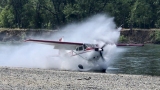
If you're braking hard enough you NEED the yoke in your lap to keep from going over. I can brake to a stop like this with my tail still in the air.
Sat Apr 07, 2012 5:47 pm
Re: Learning "The Bush Pilot Landing"
My Citabria tail is quite heavy, and on anything I've landed on so far, my wheels slide before the tail comes up, unless I don't have the stick full back. Unless I am on pavement. Then I have to pull full back, but then I'm doing 3 point, and not braking hard as usually there's plenty of room... in order for me to taxi with my tail up I need a lot of power and quite a bit of brake, especially at slow speeds. Its good to practice, but eats up brakes pretty fast.
David
Sent from my Galaxy Nexus using Tapatalk
David
Sent from my Galaxy Nexus using Tapatalk
Sat Apr 07, 2012 5:50 pm
Re: Learning "The Bush Pilot Landing"
On some planes it's not a big help to dump the flaps but on others it is. On my new Highlander dumping them transfers a lot of weight quickly from the wings to the tires and I can stop a lot shorter.
When I really need to stop short I have my brakes on pretty hard before touchdown. That is not something that I would recommend trying in most taildraggers though.
When I land where it is really rough I try to keep my tail just off the ground to keep the CG back as much as possible without beating my tailwheel across the rough ground.
When I 1st touch down in a 3 point, hanging on the prop attitude, I will often push the stick forward for a split second and then I have it way back and on the brakes to stop while keeping the tail off the ground. The main gear is well forward on a Highlander which allows real serious braking.
Steve Henry
WildWestAircraft
When I really need to stop short I have my brakes on pretty hard before touchdown. That is not something that I would recommend trying in most taildraggers though.
When I land where it is really rough I try to keep my tail just off the ground to keep the CG back as much as possible without beating my tailwheel across the rough ground.
When I 1st touch down in a 3 point, hanging on the prop attitude, I will often push the stick forward for a split second and then I have it way back and on the brakes to stop while keeping the tail off the ground. The main gear is well forward on a Highlander which allows real serious braking.
Steve Henry
WildWestAircraft
- taildrgfun offline
- Posts: 139
- Joined: Tue Sep 16, 2008 7:55 pm
- Location: Nampa Idaho
Loving life and thankful for each day I am blessed with!
Sun Apr 08, 2012 8:03 am
Re: Learning "The Bush Pilot Landing"
I can't seem to brake hard enough to get the tail up until I've bled off considerable speed
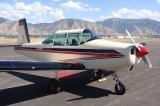
Noe Flightrisk: When I changed from 8 x 6 tires to 26" goodyears, I had to add another set of disc brakes as it became very difficult to stop the airplane. The wider circumference of larger tires greatly increases the torque of the tire as it spins.
Matco has a page on their website which will calculate what you need for braking power. Enter the values of your original tires and then the values of your new bushwheels...I needed twice the braking action. Installing the double pucks made a world of difference for me.
http://matco.veracart.com/HowtoChoose-tp2-27-how-to-choose.html
Sun Apr 08, 2012 8:25 am
Re: Learning "The Bush Pilot Landing"
Bushcaddy - Thanks for checking to make sure I have double puck brakes, since the larger diameter tires do require them. I installed them at the same time as the 31" Bushwheels, and recently serviced them to make sure they are operating correctly. When doing a 3-point landing with no wind, I can stop in less than 300'.
- Noe Flightrisk offline
- Posts: 54
- Joined: Thu Dec 29, 2011 11:22 pm
- Location: California
DISPLAY OPTIONS
Who is online
Users browsing this forum: No registered users and 1 guest
Latest Features
-
-
Featured Bush Planes
As one of the undisputed legends of bush flying, the Cessna 180 hauls a…Read More -
Aircraft Ownership and Maintenance
9 modification mistakes aircraft owners make when trying to "bush out" their birds—why some…Read More -
Live to Tell
A Minnesota pilot is surprised to learn that the sudden asymmetric drag of an…Read More




Latest Knowledge Base
-
Destinations
Canada offers some of the most spectacular backcountry flying on the continent. Here's what you need to know before you go.Read More -
Safety and Survival
Hope that you never have to use your survival vest but knowing you have it and knowing how to use…Read More -
Destinations
A regional guide with ideas for winter camping destinations in California, Nevada, New Mexico, and Arizona.Read More -
Aircraft
Finding an affordable aircraft that can handle the backcountry for $80K or less? A challenge for sure, but with the…Read More



