Thanks all, I love this site (and aviation in general) for all the helpful people.
In the interest of brevity I’ll try and address comments in one reply.
GBFlyer and CenterHill, I’ve been locked on the cowl/horizon perspective, trying to maintain the right attitude. We typically land fairly near the shore so the peripheral aspect is available but I don’t think I’ve really been using it. I’ll mix in some glances downward too, that might help me anchor the whole process.
Gary, I’m usually pretty good at watching and learning but it isn’t working as well this time. I know what to do intellectually but my brain and reflexes are not working with adequate coordination. I sat in the plane for 40 minutes before our last flight, working the yoke, trim and throttle trying to drive in the muscle memory of descent, flare, add power, touchdown, hold attitude, pull back power. It definitely helped but I’m still not 100% "in the moment" in that critical phase of flight. I’m concentrating on touchdown and missing the right amount of power to arrest sink or I’m focused on the sink and losing the attitude a bit or everything works out perfectly and I grease it on.
With input thus far, I think the right answer is to break the process down and isolate the steps so that I don’t get overwhelmed when they all happen at once. I’m embarrassed to admit I’ve never really practised holding a precise altitude in ground effect with power and I think adding/removing power to compensate for sink/balloon is the variable that is creating the most confusion.
Losing situational awareness between flare and touchdown
Sat Sep 08, 2018 9:49 am
Sat Sep 08, 2018 9:53 am
Re: Losing situational awareness between flare and touchdown
mtv wrote:A question for the OP: If you can’t find a CFI to fly with now, how do you plan to get certified and legal to fly that plane? Also, have you considered the ramifications of an accident, even one that’s caused by a mechanical, not a pilot? Insurance isn’t going to be happy.
It’s an amphib, so presumably you’re current and legal to fly it on wheels. Assuming you’ve kinda figured that out, find a good float CFI somewhere, fly there on wheels, and learn to fly the thing.
On the other hand, in your initial discussion, are you talking about landings on wheels or on floats? Very different evolutions.
MTV
Mike, I’ve been working very closely with my insurance company on this. I need 15 hours before I solo, on wheels or floats, and my wife needs 10 so flying to an instructor won’t work. Believe it or not, there is only one CFI that gives float ratings within a reasonable distance. My wife and I did a day of groundschool with him but during my wife's first training flight with him in our plane the instructor’s other plane crashed and he lost his only plane and pretty much his entire staff. After dealing with the tragedy and business upheaval he hasn’t had much bandwidth for training but my wife has just managed to accumulate her 10 hours with him. She is signed off on wheels but wants more instruction on floats. Insurance has been very helpful trying to help me find training and has signed off on my present instructor even though he isn’t a CFI. In Canada a seaplane rating doesn’t require a CFI sign off, just a CPL or ATPL with 50 hours of float time. Of course, insurance is important, but I won’t quit training just because I meet their minimums if I don’t feel 100% safe and competent.
My issue in this post is landing on floats, not wheels. It is an amphib. My landings on wheels have been OK but the sight picture took some getting used to.
Sat Sep 08, 2018 10:17 am
Re: Losing situational awareness between flare and touchdown
Hi Allan sorry I missed your focus here was mainly on floats. No matter what config though there's lots of potential action going on.
The low approach control on floats without landing is something I practice after a long winter layoff. I've been asked why didn't you land, even by the FAA - not and issue just a question. The reason is as the folks have pointed out well is fine line control in ground effect and in a landing configuration close to touchdown. I'm looking for trim - airspeed - power and any unexpected airframe behavior a few feet off the water.
My goal is to establish a stabilized approach through the landing from altitude down and configure the airframe to give the target airspeed. Then I use power to control altitude, rate of decent, and ultimately water contact. I do little with the elevator other than monitor once any lift devices or trim are preset for landing speed.
There's a delay in airframe and engine response so pressure on and off controls works better than gross movements for me. To minimize throttle hand movement I grab the throttle with the back of my fist with my finger tips against the throttle's lock ring or panel to hold that position, the apply slow pressure in and out to make fine adjustments to power.
The rest is practice and feel for the event.
Gary
The low approach control on floats without landing is something I practice after a long winter layoff. I've been asked why didn't you land, even by the FAA - not and issue just a question. The reason is as the folks have pointed out well is fine line control in ground effect and in a landing configuration close to touchdown. I'm looking for trim - airspeed - power and any unexpected airframe behavior a few feet off the water.
My goal is to establish a stabilized approach through the landing from altitude down and configure the airframe to give the target airspeed. Then I use power to control altitude, rate of decent, and ultimately water contact. I do little with the elevator other than monitor once any lift devices or trim are preset for landing speed.
There's a delay in airframe and engine response so pressure on and off controls works better than gross movements for me. To minimize throttle hand movement I grab the throttle with the back of my fist with my finger tips against the throttle's lock ring or panel to hold that position, the apply slow pressure in and out to make fine adjustments to power.
The rest is practice and feel for the event.
Gary
Sat Sep 08, 2018 10:23 am
Re: Losing situational awareness between flare and touchdown
Here is a little more info on the whole process, not just the touchdown phase that is giving me trouble.
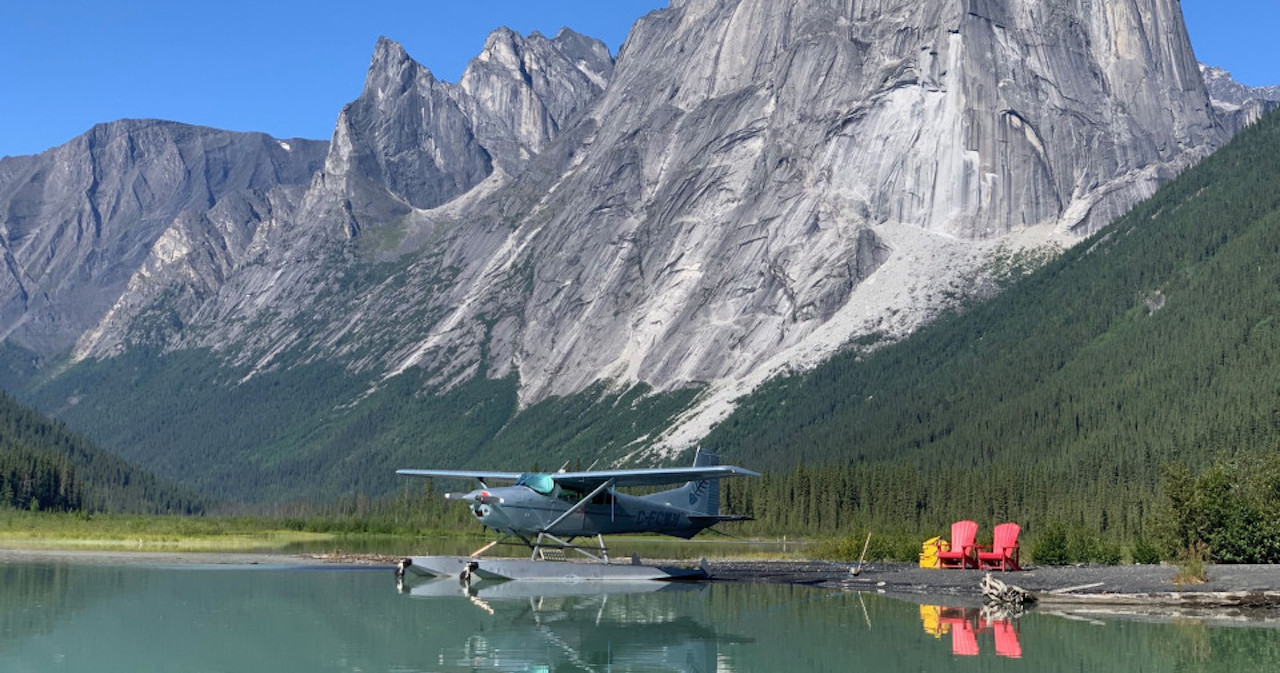
The plane (AKA Wanda) is a ’63 182, fresh PPonk, JPI EDM-900, 2 blade MT, Sportsman STOL, Wing-Ex, EDO 2790 amphibs, We usually start with 62 gallons usable, I’ve got 50 lbs of dead weight and 15 lbs of survival gear in the baggage compartment to compensate for considerable nose heaviness. I will be adding some weight in the tail eventually.
Most training has been done with a light breeze, not enough wind to make the water rough but enough to give some definition to the landing surface.
Takeoff has been pretty straightforward. Trim neutral, 20 degrees flaps (have experimented with 30 but didn’t seem to help) water rudders up, yoke full back, full power in two quick stages (to minimize water on prop) then push her over onto the step when the bow wave is behind the strut and/or when the nose quits rising. Find the sweet spot, hold it there, then she flies off when ready. I’ve read the 2790s require a different technique but they are all I’ve ever known so that hasn’t been an issue.
Typically I climb to about 500agl and keep the speed within the white arc. Near the end of downwind I add 10 degrees of flap, another 20 on base, then when I’m lined up on final I add 40 flap, push in the mixture and prop, set trim full nose up and do a GUMP check. I find a power setting that will give me 70mph (have to push the nose down to achieve this) and about 300 fpm decent. I flare when I can see fine detail on the water below, bring the nose up to a landing attitude and wait. If I start to sink too quickly I add power to slow the rate of descent until I feel the floats make contact then I hold that attitude and pull the power out. Things get pretty quiet and comfortable then, and I have to remind myself to keep flying the plane until I’m off the step and the water rudders go down.
note: bolded portion is where I'm struggling.
So far I’ve read the FAA’s guide to seaplanes, C. Marin Faure’s book on flying floats and Burke Meese’s book (my favorite) as well as flying with 3 very experienced float pilots. Everybody has a slightly different way of doing things but the above is how we’re doing it so far. I’d love to hear comments and ideas.
The plane (AKA Wanda) is a ’63 182, fresh PPonk, JPI EDM-900, 2 blade MT, Sportsman STOL, Wing-Ex, EDO 2790 amphibs, We usually start with 62 gallons usable, I’ve got 50 lbs of dead weight and 15 lbs of survival gear in the baggage compartment to compensate for considerable nose heaviness. I will be adding some weight in the tail eventually.
Most training has been done with a light breeze, not enough wind to make the water rough but enough to give some definition to the landing surface.
Takeoff has been pretty straightforward. Trim neutral, 20 degrees flaps (have experimented with 30 but didn’t seem to help) water rudders up, yoke full back, full power in two quick stages (to minimize water on prop) then push her over onto the step when the bow wave is behind the strut and/or when the nose quits rising. Find the sweet spot, hold it there, then she flies off when ready. I’ve read the 2790s require a different technique but they are all I’ve ever known so that hasn’t been an issue.
Typically I climb to about 500agl and keep the speed within the white arc. Near the end of downwind I add 10 degrees of flap, another 20 on base, then when I’m lined up on final I add 40 flap, push in the mixture and prop, set trim full nose up and do a GUMP check. I find a power setting that will give me 70mph (have to push the nose down to achieve this) and about 300 fpm decent. I flare when I can see fine detail on the water below, bring the nose up to a landing attitude and wait. If I start to sink too quickly I add power to slow the rate of descent until I feel the floats make contact then I hold that attitude and pull the power out. Things get pretty quiet and comfortable then, and I have to remind myself to keep flying the plane until I’m off the step and the water rudders go down.
note: bolded portion is where I'm struggling.
So far I’ve read the FAA’s guide to seaplanes, C. Marin Faure’s book on flying floats and Burke Meese’s book (my favorite) as well as flying with 3 very experienced float pilots. Everybody has a slightly different way of doing things but the above is how we’re doing it so far. I’d love to hear comments and ideas.
Sat Sep 08, 2018 11:51 am
Re: Losing situational awareness between flare and touchdown
albravo wrote:Here is a little more info on the whole process, not just the touchdown phase that is giving me trouble.
<<Hi Allan. My comments are personal preferences so seek a CFI for real assessment and instruction. I've flown a stock C-182 briefly on floats and recently a C-180 w/P-Ponk, Sportsman, Wing X, EDO 2960 straight floats. I've only flown a C-172 with MT prop so not much to say except the spin up and down rpms faster than a metal prop. Most of my float time is in a C-185 on straight floats>>
The plane (AKA Wanda) is a ’63 182, fresh PPonk, JPI EDM-900, 2 blade MT, Sportsman STOL, Wing-Ex, EDO 2790 amphibs, We usually start with 62 gallons usable, I’ve got 50 lbs of dead weight and 15 lbs of survival gear in the baggage compartment to compensate for considerable nose heaviness. I will be adding some weight in the tail eventually.
<<Some I hear add measured water as variable aft ballast to the rear float compartments and adjust accordingly to attain a desirable CG. It's a weight of about 8# per gallon and some measurement of the arm to the compartment and effect on CG is required prior to flight. A dipstick can be used to maintain and adjust the ballast. Confirm this with your A&P and CFI before however>>
Most training has been done with a light breeze, not enough wind to make the water rough but enough to give some definition to the landing surface.
Takeoff has been pretty straightforward. Trim neutral, 20 degrees flaps (have experimented with 30 but didn’t seem to help) water rudders up, yoke full back, full power in two quick stages (to minimize water on prop) then push her over onto the step when the bow wave is behind the strut and/or when the nose quits rising. Find the sweet spot, hold it there, then she flies off when ready. I’ve read the 2790s require a different technique but they are all I’ve ever known so that hasn’t been an issue.
<<I've not flown 2790's. On straight floats I prefer to trim for the sweet spot near takeoff speed with the load onboard not just a neutral setting. Find that trim position (yes I know elevator trim tab versus adjustable stabilizer) and mark it by operating near takeoff speed with partial power while still on the water and set the trim to create a hands off control attitude that can be preset and repeated if desired>>
Typically I climb to about 500agl and keep the speed within the white arc. Near the end of downwind I add 10 degrees of flap, another 20 on base, then when I’m lined up on final I add 40 flap, push in the mixture and prop, set trim full nose up and do a GUMP check. I find a power setting that will give me 70mph (have to push the nose down to achieve this) and about 300 fpm decent. I flare when I can see fine detail on the water below, bring the nose up to a landing attitude and wait. If I start to sink too quickly I add power to slow the rate of descent until I feel the floats make contact then I hold that attitude and pull the power out. Things get pretty quiet and comfortable then, and I have to remind myself to keep flying the plane until I’m off the step and the water rudders go down.
<<You are permitted to land with less flap deflection on final and should practice that. Sometimes 20-30* results in a lower rate of sink near the water that requires less correction with power. Trim and elevator control airspeed for me; power controls rate of descent. You or your CFI may choose otherwise. Set and stabilize the reference airspeed (Vref; typically 1.3 Vso slowing to 1.2 near the water) prior to landing. 2-300 fpm ok (I rarely look) but I do like to put the landing zone or spot on top of the nose of the cowl and do whatever it takes to keep it there with power adjustments until the flare. Try less flap deflection and see if that helps the last minute drop on the water. Feel for a quick uncommanded attitude change just prior to touchdown. They do that sometimes>>
note: bolded portion is where I'm struggling.
So far I’ve read the FAA’s guide to seaplanes, C. Marin Faure’s book on flying floats and Burke Meese’s book (my favorite) as well as flying with 3 very experienced float pilots. Everybody has a slightly different way of doing things but the above is how we’re doing it so far. I’d love to hear comments and ideas.
Sat Sep 08, 2018 2:20 pm
Re: Losing situational awareness between flare and touchdown
albravo wrote:Here is a little more info on the whole process, not just the touchdown phase that is giving me trouble.
The plane (AKA Wanda) is a ’63 182, fresh PPonk, JPI EDM-900, 2 blade MT, Sportsman STOL, Wing-Ex, EDO 2790 amphibs, We usually start with 62 gallons usable, I’ve got 50 lbs of dead weight and 15 lbs of survival gear in the baggage compartment to compensate for considerable nose heaviness. I will be adding some weight in the tail eventually.
Most training has been done with a light breeze, not enough wind to make the water rough but enough to give some definition to the landing surface.
Takeoff has been pretty straightforward. Trim neutral, 20 degrees flaps (have experimented with 30 but didn’t seem to help) water rudders up, yoke full back, full power in two quick stages (to minimize water on prop) then push her over onto the step when the bow wave is behind the strut and/or when the nose quits rising. Find the sweet spot, hold it there, then she flies off when ready. I’ve read the 2790s require a different technique but they are all I’ve ever known so that hasn’t been an issue.
Typically I climb to about 500agl and keep the speed within the white arc. Near the end of downwind I add 10 degrees of flap, another 20 on base, then when I’m lined up on final I add 40 flap, push in the mixture and prop, set trim full nose up and do a GUMP check. I find a power setting that will give me 70mph (have to push the nose down to achieve this) and about 300 fpm decent. I flare when I can see fine detail on the water below, bring the nose up to a landing attitude and wait. If I start to sink too quickly I add power to slow the rate of descent until I feel the floats make contact then I hold that attitude and pull the power out. Things get pretty quiet and comfortable then, and I have to remind myself to keep flying the plane until I’m off the step and the water rudders go down.
note: bolded portion is where I'm struggling.
So far I’ve read the FAA’s guide to seaplanes, C. Marin Faure’s book on flying floats and Burke Meese’s book (my favorite) as well as flying with 3 very experienced float pilots. Everybody has a slightly different way of doing things but the above is how we’re doing it so far. I’d love to hear comments and ideas.
Thanks for the clarifications of configuration (floats), Canadian rules, and your practices.
First thing I would try: use 30 degrees of flap on final, rather than 40. That will reduce drag in the flare considerably, and things will happen a bit slower. Play with that for a bit and see if things improve. If so, perfect that, then give full flaps another try after you’ve got the timing down better.
MTV


Sat Sep 08, 2018 10:18 pm
Re: Losing situational awareness between flare and touchdown
Regarding the legality of not using an instructor.
In Canada, ratings can be added to your license by any commercial pilot. Night rating, VFR over the top rating, and float ratings are included to the best of my knowledge.
At least some, if not all of an IFR rating can be added by a commercially rated, instrument current pilot.
I can’t cite the regulation, but believe I have this correct, so let’s not worry about whether Allbravo is legal, just try to answer his question in as many different ways as possible until an explanation gets through to him and helps him sort this out.
In that regard, all I can say is keep practicing. Make sure your eye height is set just right, assuming you have articulating seats. They’re not for finding the most comfortable position for your posterior, those adjustments are there to give you the best possible outside perspective. Make sure your torso is erect. Jack the elevation until your headset is brushing on the headliner or nearly so. In a 182, you shouldn’t be losing sight of the end of the runway during flare. I’ll qualify this by saying I have no Sportsman time. Look at where you want to touch down, or just before it. When the runway or water start to rush at you, or that illusion appears, look a couple thousand feet down the runway. To the end might be too much on a 2 mile runway or 5 mile lake!
Keep your trainer with you to make sure you don’t bend the airplane is the process of figuring this out, and just keep practicing. It’ll come to you. Be patient. There isn’t a silver bullet to kill bad landings.
In Canada, ratings can be added to your license by any commercial pilot. Night rating, VFR over the top rating, and float ratings are included to the best of my knowledge.
At least some, if not all of an IFR rating can be added by a commercially rated, instrument current pilot.
I can’t cite the regulation, but believe I have this correct, so let’s not worry about whether Allbravo is legal, just try to answer his question in as many different ways as possible until an explanation gets through to him and helps him sort this out.
In that regard, all I can say is keep practicing. Make sure your eye height is set just right, assuming you have articulating seats. They’re not for finding the most comfortable position for your posterior, those adjustments are there to give you the best possible outside perspective. Make sure your torso is erect. Jack the elevation until your headset is brushing on the headliner or nearly so. In a 182, you shouldn’t be losing sight of the end of the runway during flare. I’ll qualify this by saying I have no Sportsman time. Look at where you want to touch down, or just before it. When the runway or water start to rush at you, or that illusion appears, look a couple thousand feet down the runway. To the end might be too much on a 2 mile runway or 5 mile lake!
Keep your trainer with you to make sure you don’t bend the airplane is the process of figuring this out, and just keep practicing. It’ll come to you. Be patient. There isn’t a silver bullet to kill bad landings.
Sun Sep 09, 2018 8:51 am
Re: Losing situational awareness between flare and touchdown
I first want to clarify I am no expert on this and I do not have X thousand hours to justify my opinion. I just want to give practical experience of mine that may help. I have had similar problems with my wheel landings in C180 and happen stance is what helped me correct my problem. The key FOR ME was my sight picture. I have a habit of looking very close to the nose when approaching and flaring, when I changed that sight picture to the end of where I was landing, my perception of wind drift, sink, float became 1000 times more evident and thus gave me more time to correct for the given issue. It would seem to me to be even more important when landing on water that gives off even less perception of the relative motion.
Here's the irony. I used to teach drivers ed in college and I really worked hard on trying to teach the kids to look 2-3-4 cars ahead of them so they could anticipate and have a better perception of what was going to happen before it happened. I think this translates into the flare and touch down portion of flying as well.
Again, I am no expert but this did help me a ton! Just my .02 cents worth.
Here's the irony. I used to teach drivers ed in college and I really worked hard on trying to teach the kids to look 2-3-4 cars ahead of them so they could anticipate and have a better perception of what was going to happen before it happened. I think this translates into the flare and touch down portion of flying as well.
Again, I am no expert but this did help me a ton! Just my .02 cents worth.
- gypsywagon offline
- Posts: 124
- Joined: Thu Jan 25, 2018 7:26 am
- Location: Little Rock
- Aircraft: Cessna 185D
Sun Sep 09, 2018 1:42 pm
Re: Losing situational awareness between flare and touchdown
mtv wrote:
First thing I would try: use 30 degrees of flap on final, rather than 40. That will reduce drag in the flare considerably, and things will happen a bit slower. Play with that for a bit and see if things improve. If so, perfect that, then give full flaps another try after you’ve got the timing down better.
MTV
Just less flap? Everything else still the same? 70 mph? I've never looked but I assume that means I've been touching down around 65 or maybe a bit slower.
I'm excited to get back up there and try this.
Allan
Sun Sep 09, 2018 2:33 pm
Re: Losing situational awareness between flare and touchdown
albravo wrote:mtv wrote:
First thing I would try: use 30 degrees of flap on final, rather than 40. That will reduce drag in the flare considerably, and things will happen a bit slower. Play with that for a bit and see if things improve. If so, perfect that, then give full flaps another try after you’ve got the timing down better.
MTV
Just less flap? Everything else still the same? 70 mph? I've never looked but I assume that means I've been touching down around 65 or maybe a bit slower.
I'm excited to get back up there and try this.
Allan
Your plane......you tell me what the approach speed should be. If you haven’t figured that out already, you need to go do a bunch of slow flight and stalls to figure it out, then use about 1.2 Vso for starters.
That said, 70 to 65 sounds in the ballpark.
MTV
Sun Sep 09, 2018 2:34 pm
Re: Losing situational awareness between flare and touchdown
Hi Allan. We exchanged private messages and in there were some suggestions for flight testing, and if found beneficial, then later application. I suggest you develop a training plan with an experienced instructor that includes learning more about how your plane performs and the various configurations that affect flight. Without a plan and instructor you may just end up spending more time than necessary - your choice however and of course it's your interest and weather dependent.
If there's no qualified local instruction available then bring someone in that will help you focus and improve your expected performance. You need to develop actual performance parameters for your plane as configured and however you expect to later operate. That takes time and money of course but the process can be a positive experience if you find the right help.
Gary
If there's no qualified local instruction available then bring someone in that will help you focus and improve your expected performance. You need to develop actual performance parameters for your plane as configured and however you expect to later operate. That takes time and money of course but the process can be a positive experience if you find the right help.
Gary
Sun Sep 09, 2018 5:29 pm
Re: Losing situational awareness between flare and touchdown
Gary, Gary, Gary......you never got the memo that the best way to learn to fly is over the Internet??

MTV
MTV
Sun Sep 09, 2018 6:03 pm
Re: Losing situational awareness between flare and touchdown
Mike,
In WWII and Vietnam we had certified leaders who actually read the notes in the suggestion box. In Vietnam we called them "lessons learned." The administrator does a good job in that he keeps a lid on us. More so here than in Canada. Teachers teach and common solders see a lot "up close and personal." You and I have been that common soldier, but we are also certified. Both sides of the equation are useful.
In WWII and Vietnam we had certified leaders who actually read the notes in the suggestion box. In Vietnam we called them "lessons learned." The administrator does a good job in that he keeps a lid on us. More so here than in Canada. Teachers teach and common solders see a lot "up close and personal." You and I have been that common soldier, but we are also certified. Both sides of the equation are useful.
- contactflying offline
- Posts: 4972
- Joined: Wed Apr 03, 2013 7:36 pm
- Location: Aurora, Missouri 2H2
Download my free "https://tinyurl.com/Safe-Maneuvering" e-book.
Sun Sep 09, 2018 6:45 pm
Re: Losing situational awareness between flare and touchdown
https://www.exploresquamish.com
Hey Mike you're about due for some fresh salt air and float flying. I suggested to Allan privately that he seriously try to get you to be a tourist and visit. Might turn into a good vacation and some water fun.
Gary
Hey Mike you're about due for some fresh salt air and float flying. I suggested to Allan privately that he seriously try to get you to be a tourist and visit. Might turn into a good vacation and some water fun.
Gary
Sun Sep 09, 2018 7:32 pm
Re: Losing situational awareness between flare and touchdown
PA1195 wrote:https://www.exploresquamish.com
Hey Mike you're about due for some fresh salt air and float flying. I suggested to Allan privately that he seriously try to get you to be a tourist and visit. Might turn into a good vacation and some water fun.
Gary
Vacation there might be fun
. Got so many trips coming up the next two months it isn’t funny. Trying to find time to fly my airplane.MTV
Tue Sep 11, 2018 1:48 pm
Re: Losing situational awareness between flare and touchdown
albravo wrote:Here is a little more info on the whole process, not just the touchdown phase that is giving me trouble.
The plane (AKA Wanda) is a ’63 182, fresh PPonk, JPI EDM-900, 2 blade MT, Sportsman STOL, Wing-Ex, EDO 2790 amphibs, We usually start with 62 gallons usable, I’ve got 50 lbs of dead weight and 15 lbs of survival gear in the baggage compartment to compensate for considerable nose heaviness. I will be adding some weight in the tail eventually.
Most training has been done with a light breeze, not enough wind to make the water rough but enough to give some definition to the landing surface.
Takeoff has been pretty straightforward. Trim neutral, 20 degrees flaps (have experimented with 30 but didn’t seem to help) water rudders up, yoke full back, full power in two quick stages (to minimize water on prop) then push her over onto the step when the bow wave is behind the strut and/or when the nose quits rising. Find the sweet spot, hold it there, then she flies off when ready. I’ve read the 2790s require a different technique but they are all I’ve ever known so that hasn’t been an issue.
Typically I climb to about 500agl and keep the speed within the white arc. Near the end of downwind I add 10 degrees of flap, another 20 on base, then when I’m lined up on final I add 40 flap, push in the mixture and prop, set trim full nose up and do a GUMP check. I find a power setting that will give me 70mph (have to push the nose down to achieve this) and about 300 fpm decent. I flare when I can see fine detail on the water below, bring the nose up to a landing attitude and wait. If I start to sink too quickly I add power to slow the rate of descent until I feel the floats make contact then I hold that attitude and pull the power out. Things get pretty quiet and comfortable then, and I have to remind myself to keep flying the plane until I’m off the step and the water rudders go down.
note: bolded portion is where I'm struggling.
So far I’ve read the FAA’s guide to seaplanes, C. Marin Faure’s book on flying floats and Burke Meese’s book (my favorite) as well as flying with 3 very experienced float pilots. Everybody has a slightly different way of doing things but the above is how we’re doing it so far. I’d love to hear comments and ideas.
Am I detecting in there that you aren't actually trimming for your final approach speed? You said that you "set trim for full nose up" and later said that you "push the nose down". Not good, if I'm understanding you correctly. You should be trimming for your desired final approach speed with your desired flap setting and your desired power setting, so that if you take your hand off the yoke, pitch won't change. That your airplane is nose heavy doesn't change that. If you don't trim properly for the approach, you'll be bobbling and chasing the proper pitch. It is much easier to pull the yoke against trim than to push it, to maintain proper pitch for the level off and flare.
Regardless of legality, I'm still confident that you'd learn a whole lot faster with a competent seaplane instructor in the right seat.
Cary
"I have slipped the surly bonds of earth..., put out my hand and touched the face of God." J.G. Magee
Tue Sep 11, 2018 3:02 pm
Re: Losing situational awareness between flare and touchdown
Cary wrote: You should be trimming for your desired final approach speed with your desired flap setting and your desired power setting, so that if you take your hand off the yoke, pitch won't change. That your airplane is nose heavy doesn't change that. If you don't trim properly for the approach, you'll be bobbling and chasing the proper pitch.
Cary
I didn't want to give dual over the internet, so I kept my comments short, but I was wondering about that too. I would think that airplane would probably need a couple of cases of oil in the baggage with two people up front.
- PilotMikeTx offline
- Posts: 69
- Joined: Tue Oct 23, 2007 11:20 am
- Location: Dallas
Fri Oct 05, 2018 10:34 am
Re: Losing situational awareness between flare and touchdown
Update to this...
Weather and instructor availability have been particularly vexing these past couple months but I've had the chance to get out and fly again in the last couple weeks.
A simple thing made a huge difference in the flare for me. On takeoff I had been instructed to push the throttle full, then tighten the friction to hold it there. I had never done that before but I think my instructor developed the habit when Cessna seat position locks weren't 100% reliable and the redundancy of throttle tightened to full power made sense to me.
My mistake was not loosening it enough when adjusting to climb power, then again as the circuit developed. Just a bit too much throttle friction was slowing my response to sink and focusing my attention on the throttle friction instead of everything else.
I've taken now to really loosening the friction on base and the throttle responds to effortless movement and I can concentrate much more on attitude and sink rate. When I think to add power it automatically happens and I'm quicker to pull the throttle all the way back after touch down. My water landings now are as good or better than my wheeled landings.
Obviously, I'm not saying this is how everyone should do it, I'm just explaining what ended up working for me and my 52 year old brain/muscle combination.
Cary, with respect to trim for final, I've found the full nose up trim works really well. It does force me to push the nose down to hold desired speed on final but I haven't noticed any problem holding it there and full nose up is approximately the right trim setting for the flare. I like not having to fight to hold the plane in the correct attitude in the flare when a lot of things are happening at once, especially if the water is glassy and the flare attitude lasts a long time. I suppose I could trim for descent on final then trim again to hold the right attitude for flare but I'm accustomed to this method now.
Weather and instructor availability have been particularly vexing these past couple months but I've had the chance to get out and fly again in the last couple weeks.
A simple thing made a huge difference in the flare for me. On takeoff I had been instructed to push the throttle full, then tighten the friction to hold it there. I had never done that before but I think my instructor developed the habit when Cessna seat position locks weren't 100% reliable and the redundancy of throttle tightened to full power made sense to me.
My mistake was not loosening it enough when adjusting to climb power, then again as the circuit developed. Just a bit too much throttle friction was slowing my response to sink and focusing my attention on the throttle friction instead of everything else.
I've taken now to really loosening the friction on base and the throttle responds to effortless movement and I can concentrate much more on attitude and sink rate. When I think to add power it automatically happens and I'm quicker to pull the throttle all the way back after touch down. My water landings now are as good or better than my wheeled landings.
Obviously, I'm not saying this is how everyone should do it, I'm just explaining what ended up working for me and my 52 year old brain/muscle combination.
Cary, with respect to trim for final, I've found the full nose up trim works really well. It does force me to push the nose down to hold desired speed on final but I haven't noticed any problem holding it there and full nose up is approximately the right trim setting for the flare. I like not having to fight to hold the plane in the correct attitude in the flare when a lot of things are happening at once, especially if the water is glassy and the flare attitude lasts a long time. I suppose I could trim for descent on final then trim again to hold the right attitude for flare but I'm accustomed to this method now.
Sat Oct 06, 2018 7:50 pm
Re: Losing situational awareness between flare and touchdown
I always taught my students to get comfortable with looking out at the nine o'clock position and use the wingtip as their primary reference to the ground during the portion of the landing they couldn't see over the nose.
It works in helicopters, too!
It works in helicopters, too!
- Kilo India offline

- Posts: 5
- Joined: Tue Oct 02, 2018 10:14 pm
- Location: Copperas Cove
- Aircraft: Building a Zenith CH-750 STOL
Sun Oct 07, 2018 12:29 am
Re: Losing situational awareness between flare and touchdown
Well not everybody has the knack. If there's a slow disconnect between desired performance and results then human engineering comes into play. Accept that what is versus what's desired. Just like a backhoe operator that can do three things at once maybe it's not your gift. Don't know.
My flying is without thought of what I need to do next. If there's a feedback loop proceedure you need or mentally created then it'll take time to react.
Gary
My flying is without thought of what I need to do next. If there's a feedback loop proceedure you need or mentally created then it'll take time to react.
Gary
DISPLAY OPTIONS
Who is online
Users browsing this forum: No registered users and 12 guests
Latest Features
-
-
Featured Bush Planes
As one of the undisputed legends of bush flying, the Cessna 180 hauls a…Read More -
Aircraft Ownership and Maintenance
9 modification mistakes aircraft owners make when trying to "bush out" their birds—why some…Read More -
Live to Tell
A Minnesota pilot is surprised to learn that the sudden asymmetric drag of an…Read More


Latest Knowledge Base
-
Destinations
Canada offers some of the most spectacular backcountry flying on the continent. Here's what you need to know before you go.Read More -
Safety and Survival
Hope that you never have to use your survival vest but knowing you have it and knowing how to use…Read More -
Destinations
A regional guide with ideas for winter camping destinations in California, Nevada, New Mexico, and Arizona.Read More -
Aircraft
Finding an affordable aircraft that can handle the backcountry for $80K or less? A challenge for sure, but with the…Read More