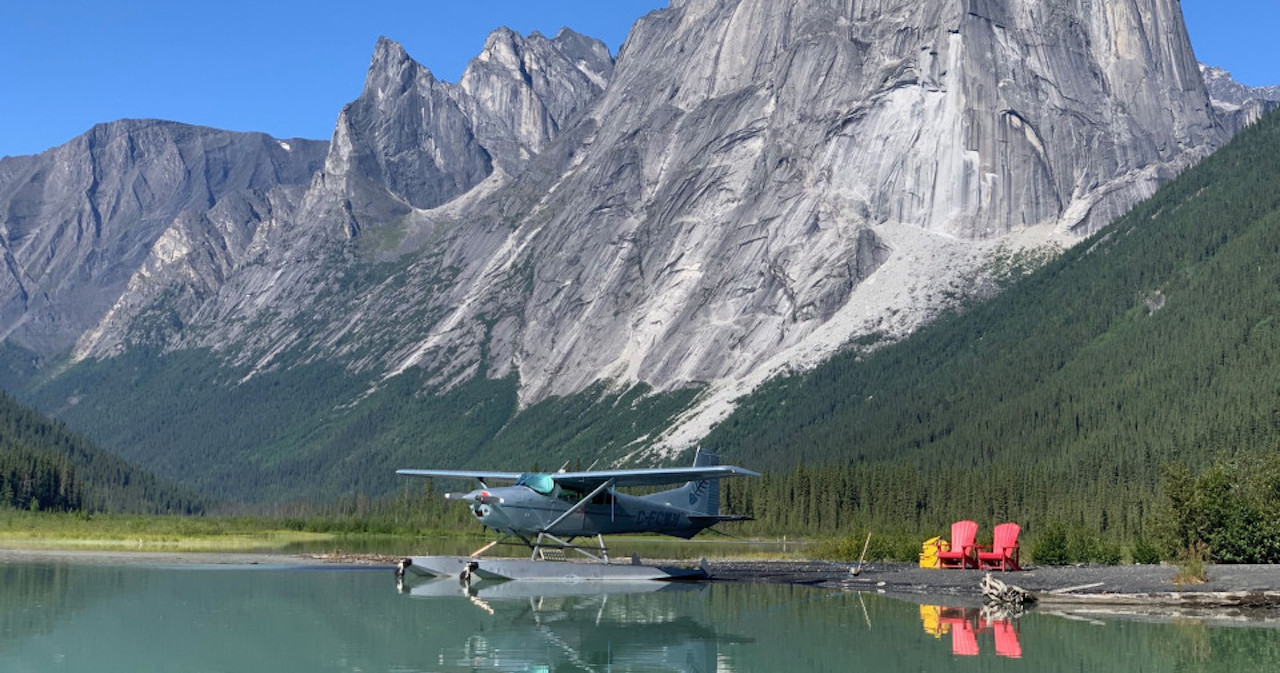
What did you always want to know about maneuvering flight but were afraid to ask?
I think I have covered everything in "Safe Maneuvering Flight Techniques" driving Zane crazy in the process. Enough should have vaccinations this year to end the pandemic. I hope to get back on the free seminar/clinic circuit and I hope more of you come by 2H2 Aurora Missouri to fly with me.
[email protected] if you want privicy or any of my free ebooks including Bob Reser's excellent free aerodynamics ebook, "How to Fly Airplanes."
Basic low ground effect takeoff, dynamic proactive control movement, rudder pulls aileron, why the nose is designed to go down in all turns and why we should listen to the airplane in this respect, rudder dampens turbulence upset, down drainage egress, energy management turn, law of the roller coaster, canyon turn, on course thermalling, use of ridge or hydraulic or orographic lift, topographic map reading, angle across runway for safe strong crosswind takeoff and landing, six second low level forced landing, elevator fixed pitch RPM control, danger of trying to maintain altitude in strong downdraft, why rudder only to direct course and level wing on short final, the apparent brisk walk short final deceleration to touchdown slowly and softly on the numbers every time.
This stuff is not difficult, it is actually easier than the certification standard way.
Maneuvering flight topics.
Sun Feb 14, 2021 2:53 am
- contactflying offline
- Posts: 4972
- Joined: Wed Apr 03, 2013 7:36 pm
- Location: Aurora, Missouri 2H2
Download my free "https://tinyurl.com/Safe-Maneuvering" e-book.
Mon Feb 15, 2021 7:31 am
Re: Maneuvering flight topics.
Your efforts are appreciated Jim. Hang in there...
Blue skies,
Tom
Blue skies,
Tom
Mon Feb 15, 2021 6:16 pm
Re: Maneuvering flight topics.
I’d love to fly down and learn. I struggle to retain by reading. I’ll shoot you an email.
- Barrakudaman offline
- Posts: 157
- Joined: Sun Jun 21, 2020 7:15 pm
- Location: Fonddulac
- Aircraft: 1960 Cessna 182
Mon Feb 15, 2021 8:10 pm
Re: Maneuvering flight topics.
Jim, I just downloaded your books and images. I read a few chapters that pertain to my current learning needs. WOW, great stuff and thanks.
Jay
Jay
Sun Feb 21, 2021 7:14 pm
Re: Maneuvering flight topics.
Curiosity prompted me to start reading Contact Flying Revised this weekend. Great stuff! I am looking forward to putting some of these techniques into practice when the ice goes out this spring.
- Osprey0470 offline
- Posts: 6
- Joined: Wed May 27, 2020 7:15 pm
- Location: Raquette Lake
- Aircraft: C180J
Mon Mar 08, 2021 7:25 am
Re: Maneuvering flight topics.
E3 Expanded Envelope Exercises
There was mention of this effort to reduce LOC accidents in last weeks AOPA video. I was curious enough to research and watch this 1.5 hr. presentation https://youtu.be/8k8PeC9n_8Y Worthwhile watching. Many of the conclusions are quite different than current thinking.
These LOC Avoidance techniques are positioned between Conventional Flight Instruction and LOC Recovery programs.
Curiously the techniques/thinking overlap significantly with our own Jim Dulin who wrote Contact Flying.
Emphasis is on Cognitive Availability — that is being airplane aware plus having the ability to handle distractions. In many accident cases the pilot has simply run out of Cognitive ability to process the events that are occurring (fully saturated). In cases like this the pilot is completely unaware and thus may deny a certain event occurred (if they live to tell).
In the presentation there is a video clip of a Malibu crash (at Oshkosh?). Conventional thinking is classic stall/spin but Ed Wischmeyer the presenter offers some different thoughts.
Ed’s contact info, etc. below..
Blue skies,
Tom
Ed Wischmeyer, Ph.D., ATP/CFII
912 665-2969
https://www.linkedin.com/in/edwischmeyer/
https://www.youtube.com/watch?v=hf2wmAqKdWs
https://airfactsjournal.com/2020/04/is- ... cy-enough/
https://www.planeandpilotmag.com/articl ... r-spirals/
https://www.ainonline.com/aviation-news ... ss-control
https://www.ainonline.com/aviation-news ... rcises-ain
There was mention of this effort to reduce LOC accidents in last weeks AOPA video. I was curious enough to research and watch this 1.5 hr. presentation https://youtu.be/8k8PeC9n_8Y Worthwhile watching. Many of the conclusions are quite different than current thinking.
These LOC Avoidance techniques are positioned between Conventional Flight Instruction and LOC Recovery programs.
Curiously the techniques/thinking overlap significantly with our own Jim Dulin who wrote Contact Flying.
Emphasis is on Cognitive Availability — that is being airplane aware plus having the ability to handle distractions. In many accident cases the pilot has simply run out of Cognitive ability to process the events that are occurring (fully saturated). In cases like this the pilot is completely unaware and thus may deny a certain event occurred (if they live to tell).
In the presentation there is a video clip of a Malibu crash (at Oshkosh?). Conventional thinking is classic stall/spin but Ed Wischmeyer the presenter offers some different thoughts.
Ed’s contact info, etc. below..
Blue skies,
Tom
Ed Wischmeyer, Ph.D., ATP/CFII
912 665-2969
https://www.linkedin.com/in/edwischmeyer/
https://www.youtube.com/watch?v=hf2wmAqKdWs
https://airfactsjournal.com/2020/04/is- ... cy-enough/
https://www.planeandpilotmag.com/articl ... r-spirals/
https://www.ainonline.com/aviation-news ... ss-control
https://www.ainonline.com/aviation-news ... rcises-ain
Mon Mar 08, 2021 2:08 pm
Re: Maneuvering flight topics.
Tommy,
I watched Ed's entire presentation and I hope he gets some traction. As with everything in aviation, making the FAA look good is generally the only way to get traction. They are looking for new ideas anyway, so perhaps. I like Ed because he handles Zoom exactly as do I.
Jim, actually Jimmy on my birth certificate and in the Army. Got to love our mothers.
I watched Ed's entire presentation and I hope he gets some traction. As with everything in aviation, making the FAA look good is generally the only way to get traction. They are looking for new ideas anyway, so perhaps. I like Ed because he handles Zoom exactly as do I.
Jim, actually Jimmy on my birth certificate and in the Army. Got to love our mothers.
- contactflying offline
- Posts: 4972
- Joined: Wed Apr 03, 2013 7:36 pm
- Location: Aurora, Missouri 2H2
Download my free "https://tinyurl.com/Safe-Maneuvering" e-book.
Mon Mar 08, 2021 10:07 pm
Re: Maneuvering flight topics.
Tommy,
In Contact Flying or the revised edit there is the story of my CallAir forced landing in Fabens Texas that was similar to the Malibu crash Ed had a video of in his presentation. I also put a wing into the ground trying to line up with cotton rows. My cognitive disassociation with bank and pitch, like he was pointing out, was due to Parathion poisoning. It makes you high and euphoric. I was happy with my performance and thought I had leveled the wing prior to touchdown, but the Border Patrol guy a hundred yards away on the Rio Grande levee said I stayed in the turn until the right wing hit. Similar mess on the ground as the Malibu. Right wing spar broken twice, engine knocked almost off, and left wing and tail feathers reusable on another CallAir. Mine was a cartwheel.
I agree with Ed that we are not getting it done with both stall spin and graveyard spiral into the ground. Stall spin doesn't scatter parts much and graveyard spiral to ground does. Also target fixation where the airplane sticks if stall and slides if the pull up doesn't get enough ground effect boost like we do when we get too close going into a crop field.
In Contact Flying or the revised edit there is the story of my CallAir forced landing in Fabens Texas that was similar to the Malibu crash Ed had a video of in his presentation. I also put a wing into the ground trying to line up with cotton rows. My cognitive disassociation with bank and pitch, like he was pointing out, was due to Parathion poisoning. It makes you high and euphoric. I was happy with my performance and thought I had leveled the wing prior to touchdown, but the Border Patrol guy a hundred yards away on the Rio Grande levee said I stayed in the turn until the right wing hit. Similar mess on the ground as the Malibu. Right wing spar broken twice, engine knocked almost off, and left wing and tail feathers reusable on another CallAir. Mine was a cartwheel.
I agree with Ed that we are not getting it done with both stall spin and graveyard spiral into the ground. Stall spin doesn't scatter parts much and graveyard spiral to ground does. Also target fixation where the airplane sticks if stall and slides if the pull up doesn't get enough ground effect boost like we do when we get too close going into a crop field.
- contactflying offline
- Posts: 4972
- Joined: Wed Apr 03, 2013 7:36 pm
- Location: Aurora, Missouri 2H2
Download my free "https://tinyurl.com/Safe-Maneuvering" e-book.
Wed Mar 10, 2021 6:23 pm
Re: Maneuvering flight topics.
I passed your comments on to Ed; interesting! The pressurized PA-46 is pretty tough. People usually survive incidents like this or Runway LOC excursions.
Wonder if there are some flying exercises we can do to increase Cognitive Availability?
Best,
Tommy
Wonder if there are some flying exercises we can do to increase Cognitive Availability?
Best,
Tommy
Wed Mar 10, 2021 10:40 pm
Re: Maneuvering flight topics.
Tommy,
I am not enough psychologist to come up with cognitive exercises for the missed Gorilla. John Boyd calls this coming unglued. Dutch Rolls teach that we have to lead rudder and side slip to landing teaches rubbing our tummy while patting our head, but those are just muscle memory things. I think over emphasis on coordination, which is not really coordination concerning the need to lead rudder, causes pilots to totally miss how much the rudder has to do with directing our longitudinal axis to a target so much that doing so precisely using a tight braketing dynamic proactive rudder gets lost in the cognitive struggle to keep track of aileron and rudder coordination. I think the ball is one of the instruments that gets pilots distracted from the business of making the nose move (rate of turn) appropriate for the angle of bank. I find that 90% of pilots initially use so little rudder in steep turns as to be severely slipping around. This slipping dangerously reduces the rate of turn so necessary to miss things in maneuvering flight.
After my hurtful crash of the Ultralight Challenger II, the speech therapists had me do a drill about how you would take care of certain tasks and in what order. They were sorta indication that I had some brain damage, but my wife told them I had always been that disorganized. A check list might make us cover everything in the proper order, but we still might miss the Gorilla. As Ed said, we need to be comfortable with the way airplanes work, what they want to do, the safety design features that all airplanes have to demonstrate to be certified, which controls more efficiently do what along with the coordination that comes after the lead of rudder and then coordinated rudder and aileron until we get banked so steeply that the dihedral of the wing causes more bank requiring more rudder and ol contact is yelling "push that nose around." We could suck back on that stick some more and get that graveyard spiral that Ed is talking about going, or just push that well down nose around and not worry about skidding.
One way to stay away from the Gorilla is to limit bank and to not fly in the wind and to not fly in the mountains when the sun gets high and a lot of avoidance stuff. I also have avoided stuff my entire career. i have avoided confusing other pilots by reporting my position at 200' AGL where they are not going to see me nor am I traffic anyway. I have avoided climbing up through traffic to 1,000' pattern altitude to just come back down through traffic to land. I have avoided being in front of faster airplanes, actually any airplane, by giving way and landing behind the last guy in the traffic pattern (this has held me up about five minutes in 17,000 hours,) I have avoided the centerline extended both on takeoff and landing, and when equipment, mission, and currency were there I flew IFR. Having ATC help with all those distractions is helpful. Nearly all of my 400 hours of actual instrument were with a co-pilot and in a Huey. The other pilot many times saw the Gorilla. Dave Trujillo's white cloud canceled out my black cloud.
I guess what I am saying about the cognitive thing is to fly loose if you are not organized. Most pilots are organized so probably not a really useful suggestion.
So how goes the mountain flying?
contact
I am not enough psychologist to come up with cognitive exercises for the missed Gorilla. John Boyd calls this coming unglued. Dutch Rolls teach that we have to lead rudder and side slip to landing teaches rubbing our tummy while patting our head, but those are just muscle memory things. I think over emphasis on coordination, which is not really coordination concerning the need to lead rudder, causes pilots to totally miss how much the rudder has to do with directing our longitudinal axis to a target so much that doing so precisely using a tight braketing dynamic proactive rudder gets lost in the cognitive struggle to keep track of aileron and rudder coordination. I think the ball is one of the instruments that gets pilots distracted from the business of making the nose move (rate of turn) appropriate for the angle of bank. I find that 90% of pilots initially use so little rudder in steep turns as to be severely slipping around. This slipping dangerously reduces the rate of turn so necessary to miss things in maneuvering flight.
After my hurtful crash of the Ultralight Challenger II, the speech therapists had me do a drill about how you would take care of certain tasks and in what order. They were sorta indication that I had some brain damage, but my wife told them I had always been that disorganized. A check list might make us cover everything in the proper order, but we still might miss the Gorilla. As Ed said, we need to be comfortable with the way airplanes work, what they want to do, the safety design features that all airplanes have to demonstrate to be certified, which controls more efficiently do what along with the coordination that comes after the lead of rudder and then coordinated rudder and aileron until we get banked so steeply that the dihedral of the wing causes more bank requiring more rudder and ol contact is yelling "push that nose around." We could suck back on that stick some more and get that graveyard spiral that Ed is talking about going, or just push that well down nose around and not worry about skidding.
One way to stay away from the Gorilla is to limit bank and to not fly in the wind and to not fly in the mountains when the sun gets high and a lot of avoidance stuff. I also have avoided stuff my entire career. i have avoided confusing other pilots by reporting my position at 200' AGL where they are not going to see me nor am I traffic anyway. I have avoided climbing up through traffic to 1,000' pattern altitude to just come back down through traffic to land. I have avoided being in front of faster airplanes, actually any airplane, by giving way and landing behind the last guy in the traffic pattern (this has held me up about five minutes in 17,000 hours,) I have avoided the centerline extended both on takeoff and landing, and when equipment, mission, and currency were there I flew IFR. Having ATC help with all those distractions is helpful. Nearly all of my 400 hours of actual instrument were with a co-pilot and in a Huey. The other pilot many times saw the Gorilla. Dave Trujillo's white cloud canceled out my black cloud.
I guess what I am saying about the cognitive thing is to fly loose if you are not organized. Most pilots are organized so probably not a really useful suggestion.
So how goes the mountain flying?
contact
- contactflying offline
- Posts: 4972
- Joined: Wed Apr 03, 2013 7:36 pm
- Location: Aurora, Missouri 2H2
Download my free "https://tinyurl.com/Safe-Maneuvering" e-book.
Thu Mar 11, 2021 9:47 am
Re: Maneuvering flight topics.
“So how goes the Mountain Flying”
I’ve been based at KSGU for the last 3 months and have flown here from 46U, locally and down over the Grand Canyon and return. Also went down to KVGT (vectored right over Nellis). Flown around lots of the big rocks up near Zion and Bryce...
Wanted to be able to do RNAV approaches so had a Garmin GPS 175 and GI 275 (as dedicated HSI) installed here. Went up with a CFII to learn the buttonology and shot some approaches.Works amazingly well with my Century 2000 autopilot. Decided to put another GI 275 in as PFD to get rid of the other steam-driven instruments. So in a few weeks will have a glass panel of sorts. Going down to Tucson for 2 weeks while the new avionics are installed. Then back to 46U in WY where mountain flying is about the only flying. Will advise.
Blue skies,
Tommy
I’ve been based at KSGU for the last 3 months and have flown here from 46U, locally and down over the Grand Canyon and return. Also went down to KVGT (vectored right over Nellis). Flown around lots of the big rocks up near Zion and Bryce...
Wanted to be able to do RNAV approaches so had a Garmin GPS 175 and GI 275 (as dedicated HSI) installed here. Went up with a CFII to learn the buttonology and shot some approaches.Works amazingly well with my Century 2000 autopilot. Decided to put another GI 275 in as PFD to get rid of the other steam-driven instruments. So in a few weeks will have a glass panel of sorts. Going down to Tucson for 2 weeks while the new avionics are installed. Then back to 46U in WY where mountain flying is about the only flying. Will advise.
Blue skies,
Tommy
Thu Mar 11, 2021 10:51 am
Re: Maneuvering flight topics.
You have a good instrument aircraft. ATC doesn't keep asking, "what altitude are you passing through."
Soon you will find some terrific thermals out there in the desert. After the jolt and you see 1,000 fpm on the VSI, pitch up to Vy and you will easily peg the VSI. When it starts wiggling, level to see whats going on. If it is now showing 1,000 fpm down, pitch down to fly through the downdraft quickly. High Flight. Do you have oxygen? DA? Not a factor after takeoff if you use that heat to on course thermal (dolphinging) up. Once way up there, you can cruise descend going really fast. Or just use ground effect across the desert to enjoy the red rocks.
Soon you will find some terrific thermals out there in the desert. After the jolt and you see 1,000 fpm on the VSI, pitch up to Vy and you will easily peg the VSI. When it starts wiggling, level to see whats going on. If it is now showing 1,000 fpm down, pitch down to fly through the downdraft quickly. High Flight. Do you have oxygen? DA? Not a factor after takeoff if you use that heat to on course thermal (dolphinging) up. Once way up there, you can cruise descend going really fast. Or just use ground effect across the desert to enjoy the red rocks.
- contactflying offline
- Posts: 4972
- Joined: Wed Apr 03, 2013 7:36 pm
- Location: Aurora, Missouri 2H2
Download my free "https://tinyurl.com/Safe-Maneuvering" e-book.
Fri Mar 12, 2021 8:37 pm
Re: Maneuvering flight topics.
Back to Ed's cognitive ability, or lack in LOC, and pilot's failure to handle both horizontal and vertical control, one becoming the gorilla I think. I actually experienced this with a local instructor this week. We were practicing strong wind with gust spread takeoff and landing in the 172. I will cover the whole story tomorrow in my fortnight OP. My thoughts have always been that lack of good muscle memory with good rudder control is the cause of most longitudinal alignment problems. I have flown with this instructor quite a bit now and he is coming around with energy management turns. He is beginning to push the nose around appropriately in steep turns and getting down slowly and softly on the numbers using apparent rate of closure. He had not had much strong wind with gust spread experience, however. We had a gust on short final put us in a 30 degree left bank that brought the nose well off the centerline to the left. Even with my bad leg I beat him to the floor with right rudder. He had right aileron and not nearly enough rudder.
So I still think it takes lots of iterations of walking the rudder to keep the wing level on short final, but in this incident I think he may have been locked into leveling the wing and did not see that longitudinal misalignment started the problem. Granted, gust put the left wing near the ground. I think longitudinal alignment might be the gorilla in upsets causing serious banking near the ground.
So I still think it takes lots of iterations of walking the rudder to keep the wing level on short final, but in this incident I think he may have been locked into leveling the wing and did not see that longitudinal misalignment started the problem. Granted, gust put the left wing near the ground. I think longitudinal alignment might be the gorilla in upsets causing serious banking near the ground.
- contactflying offline
- Posts: 4972
- Joined: Wed Apr 03, 2013 7:36 pm
- Location: Aurora, Missouri 2H2
Download my free "https://tinyurl.com/Safe-Maneuvering" e-book.
Sat Mar 13, 2021 7:08 am
Re: Maneuvering flight topics.
Contact,
Looking forward to your evolving thinking on this topic.
Best,
Tommy
Looking forward to your evolving thinking on this topic.
Best,
Tommy
Sat Mar 13, 2021 8:49 am
Re: Maneuvering flight topics.
Cognitive separation of control movement, on purpose, is a training mechanism to go from where the student is to where the student want's to be. The tough start with kids on a bicycle is stepping on the raised close pedal while exaggerating the dynamic proactive off balance lean over the two wheels to get the cycle of dynamic proactive pedal and balance movement going. With the backhoe, we separate out the various control movements to learn one at a time initially. Same with dynamic proactive anti-torque pedals first to control longitudinal alignment with the instructor controlling collective, throttle, and cyclic.
But, moving right along, we have to learn to coordinate these control movements in some maneuvers and learn to rub tummy while patting head in other control movements where one or more controls work independently to accomplish the desired effect efficiently. Longitudinal alignment with dynamic proactive rudder only, which by the way keeps the wing level, comes to mind. There are maneuvers where control pressure is adequate while others require control movement to accomplish the rapid transition safely.
Ed is talking about LOC, and upset is often involved in that. I am beginning to see that cognitive dis-association of lateral and vertical control, as in the Malibu crash and perhaps my CallAir crash, may result when upset triggers over emphasis on just one of the controls. I still think I was just way behind the airplane, poisoned high, when I just turned the CallAir into the ground fat and happy. No, engine failure (this was number ten or so) was no longer upsetting to me.
And while the one with the instructor I will address tonight might have been upset, I had noticed the lack of strong dynamic proactive rudder training to maintain longitudinal alignment prevalent in most pilots, including instructors, today. Also, we briefed the effect of strong wind with gust spread and the fact that throttle would have to be moved reactively in balloon and sink and that the airplane might be moved sideways several feet and that we would want the longitudinal axis going in the direction of our butts on touchdown, even if that was in the grass beside the runway. Anyway I was not as picky as I should have been, because of the wind effect, and I allowed him to come off the centerline quite a bit before the gust put the left wing down. My bum leg put the right rudder to the floor ahead of him possibly. Or it was possible he was totally involved in using aileron to level the wing which was actually working against us by bringing the nose further off longitudinal alignment.
I think we should get Ed involved in this one. Read the post (after midnight here) first. I do a lot of my thinking and writing after my 0200 cath. No distractions except what is "swimming around in my brain", as the little green insurance guy says. Like Churchill, I can;t keep my paws off a good quote and advertising provides so many.
But, moving right along, we have to learn to coordinate these control movements in some maneuvers and learn to rub tummy while patting head in other control movements where one or more controls work independently to accomplish the desired effect efficiently. Longitudinal alignment with dynamic proactive rudder only, which by the way keeps the wing level, comes to mind. There are maneuvers where control pressure is adequate while others require control movement to accomplish the rapid transition safely.
Ed is talking about LOC, and upset is often involved in that. I am beginning to see that cognitive dis-association of lateral and vertical control, as in the Malibu crash and perhaps my CallAir crash, may result when upset triggers over emphasis on just one of the controls. I still think I was just way behind the airplane, poisoned high, when I just turned the CallAir into the ground fat and happy. No, engine failure (this was number ten or so) was no longer upsetting to me.
And while the one with the instructor I will address tonight might have been upset, I had noticed the lack of strong dynamic proactive rudder training to maintain longitudinal alignment prevalent in most pilots, including instructors, today. Also, we briefed the effect of strong wind with gust spread and the fact that throttle would have to be moved reactively in balloon and sink and that the airplane might be moved sideways several feet and that we would want the longitudinal axis going in the direction of our butts on touchdown, even if that was in the grass beside the runway. Anyway I was not as picky as I should have been, because of the wind effect, and I allowed him to come off the centerline quite a bit before the gust put the left wing down. My bum leg put the right rudder to the floor ahead of him possibly. Or it was possible he was totally involved in using aileron to level the wing which was actually working against us by bringing the nose further off longitudinal alignment.
I think we should get Ed involved in this one. Read the post (after midnight here) first. I do a lot of my thinking and writing after my 0200 cath. No distractions except what is "swimming around in my brain", as the little green insurance guy says. Like Churchill, I can;t keep my paws off a good quote and advertising provides so many.
- contactflying offline
- Posts: 4972
- Joined: Wed Apr 03, 2013 7:36 pm
- Location: Aurora, Missouri 2H2
Download my free "https://tinyurl.com/Safe-Maneuvering" e-book.
Fri Mar 19, 2021 1:20 am
Re: Maneuvering flight topics.
I thought of something to add to the Bush Air thread about canyon turn, but decided to go back to a better title.
I have had questions about the pretty significant nose tuck when making 180 degree return to target energy management turns. I have talked about it being OK to use a little back movement, not much pressure because the speed is slow at the start of the turn, to take some of the nose down tuck out.
I didn't want to relate too much to aerial gunnery, because I consider this a normal turn. However, when we pitch up using the near max airspeed in the bottom of a gun run to start a 180 degree return to that target, we are looking for that target coming back around in this turn as the nose begins to drop. Rather than allow the nose to pitch down below the target, we hold the sight reticle pipper on the target both laterally and vertically. This vertical pipper on target is holding enough back on the stick to prevent too much nose tuck which would cause the rockets to impact short of target.
So the school solution, gunnery wise, to how much to prevent the tuck is to point the nose at the target both laterally with rudder now and vertically with elevator. Of course the nose is well down here, preventing much load factor with this pull on the stick. Certainly not stall.
So before starting a significantly banked energy management turn, consider the bottom of the drainage or canyon going down drainage as the target and after the pitch up to slow down, locate a good hole to turn to and put the nose on that target both vertically and laterally. No, MTV, we don't want to dive all the way to the bottom of the canyon or valley. We just want to be going downhill with enough energy to absolutely not be able to stall the wing while concerned with not hitting the other side of the valley or flying into the downdraft over that way and such. We have enough on our mind to not need to be perfectly at the exact correct airspeed for whatever airplane we are flying and the flap or slat or whatever configuration. Hell with all that crap. Just turn in a way that it is impossible to stall.
It is the same as with the Ercoupe. We pilots just want to think of ourselves as too proficient at the level turn to ever stall. Well, we certainly do it from time to time. I owned two of those beautiful but soo hated machines. When I made energy management turns, wait steep turns, no thought of whether it was energy management or not. I didn't have enough elevator to prevent the nose going down sufficient to prevent stall. In that airplane, I could haul back all the way on the stick and the nose would still go down sufficient to prevent stall. I couldn't kill myself. Who would ever want such an airplane?
I have had questions about the pretty significant nose tuck when making 180 degree return to target energy management turns. I have talked about it being OK to use a little back movement, not much pressure because the speed is slow at the start of the turn, to take some of the nose down tuck out.
I didn't want to relate too much to aerial gunnery, because I consider this a normal turn. However, when we pitch up using the near max airspeed in the bottom of a gun run to start a 180 degree return to that target, we are looking for that target coming back around in this turn as the nose begins to drop. Rather than allow the nose to pitch down below the target, we hold the sight reticle pipper on the target both laterally and vertically. This vertical pipper on target is holding enough back on the stick to prevent too much nose tuck which would cause the rockets to impact short of target.
So the school solution, gunnery wise, to how much to prevent the tuck is to point the nose at the target both laterally with rudder now and vertically with elevator. Of course the nose is well down here, preventing much load factor with this pull on the stick. Certainly not stall.
So before starting a significantly banked energy management turn, consider the bottom of the drainage or canyon going down drainage as the target and after the pitch up to slow down, locate a good hole to turn to and put the nose on that target both vertically and laterally. No, MTV, we don't want to dive all the way to the bottom of the canyon or valley. We just want to be going downhill with enough energy to absolutely not be able to stall the wing while concerned with not hitting the other side of the valley or flying into the downdraft over that way and such. We have enough on our mind to not need to be perfectly at the exact correct airspeed for whatever airplane we are flying and the flap or slat or whatever configuration. Hell with all that crap. Just turn in a way that it is impossible to stall.
It is the same as with the Ercoupe. We pilots just want to think of ourselves as too proficient at the level turn to ever stall. Well, we certainly do it from time to time. I owned two of those beautiful but soo hated machines. When I made energy management turns, wait steep turns, no thought of whether it was energy management or not. I didn't have enough elevator to prevent the nose going down sufficient to prevent stall. In that airplane, I could haul back all the way on the stick and the nose would still go down sufficient to prevent stall. I couldn't kill myself. Who would ever want such an airplane?
- contactflying offline
- Posts: 4972
- Joined: Wed Apr 03, 2013 7:36 pm
- Location: Aurora, Missouri 2H2
Download my free "https://tinyurl.com/Safe-Maneuvering" e-book.
Fri Mar 19, 2021 2:46 am
Re: Maneuvering flight topics.
I'm flying in a small bathtub in BC. Butch Washtock and MTV are right, I feel a lot safer going slow in here. The slope of the mountains is too steep for normal orographic lift. When I come to an intersection with another canyon, the air like water will find the least resistance. There is water in the bottom of this tub. No way to know which way is down drainage. Scary. Up there where the other canyon intersects, I could get updraft, I could get downdraft, it could be rough. Slow and easy does it. I can turn back level at this airspeed. I hear Butch yelling, "rudder pulls aileron." Wait! I am in my Ercoupe. No rudder! It is getting tighter up here. Too tight, I am turning back. Too late, I will hit the other ridge! I bank enough to miss the other ridge while holding the yoke all the way back to stay level in this sixty degree bank. The nose goes down and I didn't stall! What the hell happened?
The design of every tractor mounted engine airplane is to fly and not stall. However, we have for years trained pilots to override this designed safety dynamic neutral stability feature by pulling back on the stick to remain level in all turns, No Matter What. So Fred Weick designed the Ercoupe with too little up elevator travel to stall the wing. In the scenario above, the pilot is forced to adhere to the dynamic neutral stability safety feature. In the steep turn, even with full up elevator, the nose went down as designed to do for safety. If there was 100' of vertical space available, I turned back without incident. If not, I flew all the way to the crash.
No, I don't like Ercoupe as well as other airplanes. I am a rudder guy. I teach rudder a lot, lots of rudder, rudder only and such. However, I appreciate what Mr. Weick was trying to do. Save my sorry ass. So I allow the nose to go down in all turns, not just steep turns. That way, even with rudders and with lots of up elevator available I still will not stall the normal airplane in a turn and kill myself. If I don't have enough vertical space available I will probably use a rudder turn in low ground effect. I know aerodynamically that is not possible. Sorry...rudder yaw. Whatever it takes to get there without stalling.
The design of every tractor mounted engine airplane is to fly and not stall. However, we have for years trained pilots to override this designed safety dynamic neutral stability feature by pulling back on the stick to remain level in all turns, No Matter What. So Fred Weick designed the Ercoupe with too little up elevator travel to stall the wing. In the scenario above, the pilot is forced to adhere to the dynamic neutral stability safety feature. In the steep turn, even with full up elevator, the nose went down as designed to do for safety. If there was 100' of vertical space available, I turned back without incident. If not, I flew all the way to the crash.
No, I don't like Ercoupe as well as other airplanes. I am a rudder guy. I teach rudder a lot, lots of rudder, rudder only and such. However, I appreciate what Mr. Weick was trying to do. Save my sorry ass. So I allow the nose to go down in all turns, not just steep turns. That way, even with rudders and with lots of up elevator available I still will not stall the normal airplane in a turn and kill myself. If I don't have enough vertical space available I will probably use a rudder turn in low ground effect. I know aerodynamically that is not possible. Sorry...rudder yaw. Whatever it takes to get there without stalling.
- contactflying offline
- Posts: 4972
- Joined: Wed Apr 03, 2013 7:36 pm
- Location: Aurora, Missouri 2H2
Download my free "https://tinyurl.com/Safe-Maneuvering" e-book.
Fri Mar 19, 2021 3:53 am
Re: Maneuvering flight topics.
Speaking of rudder yaw...not turn, Cessna Owner's Manuel (pre-POH) had a rudder turn...sorry yaw technique for inadvertent IMC. "Take your hands off the yoke. Use rudder only to get the turn needle half way to the doghouse. Time two minutes (half standard rate) or by compass use opposite rudder only to center the turn needle." They actually called it the emergency instrument turn.
When I was in Army Aviation's "Blue Canoe," for instrument procedural training, I never touched the collective or cyclic. I just used the anti-torque (rudder) pedals to make the red ink roller on the map desk go exactly where I wished on the approach plate. Piece of cake.
When I was in Army Aviation's "Blue Canoe," for instrument procedural training, I never touched the collective or cyclic. I just used the anti-torque (rudder) pedals to make the red ink roller on the map desk go exactly where I wished on the approach plate. Piece of cake.
- contactflying offline
- Posts: 4972
- Joined: Wed Apr 03, 2013 7:36 pm
- Location: Aurora, Missouri 2H2
Download my free "https://tinyurl.com/Safe-Maneuvering" e-book.
Fri Mar 19, 2021 6:49 am
Re: Maneuvering flight topics.
With that first who knows how high time 75 hp Ercoupe, I had to stop (in the mountains) every two hours to put in another 2 quarts of oil in a 4 quart sump. It could be ol contact wasn't proficient enough to make level turns in the mountains. We will never know. He sure kept track of which way was down drainage, however. And off airport operations? Yes, that Ercoupe did quite well. Occasionally had to hit the rancher up for some gas as well.
- contactflying offline
- Posts: 4972
- Joined: Wed Apr 03, 2013 7:36 pm
- Location: Aurora, Missouri 2H2
Download my free "https://tinyurl.com/Safe-Maneuvering" e-book.
Fri Mar 19, 2021 7:55 am
Re: Maneuvering flight topics.
Tommy,
I realized I hadn't read all of Ed's articles. The bottom three said page cannot be found.
The spiral I am familiar with is what was called the graveyard spiral. Back when most trainers didn't have flaps, we entered a very tight spiral to get down quickly from higher than where we would use the forward slip. Trying to pull out with a wing still down increased the bank and tightened the turn. We taught level the wing and then pull out from the dive before airspeed increased too much. As Ed says, lots of altitude loss here.
I caution pilots using the energy management turn to level the wing prior to pull out or pull up in the case of crop dusting. This wings level before back pressure on the elevator is to prevent the graveyard spiral and to keep from putting a down wing into a wire or obstruction going into the field. Either with the spiral down or with the bottom of the energy management turn, getting the turn or last turn in the case of the spiral done early and in time to level the wing before pull up is very important. Get most of the turn done early while slow and the bank can be decreased as necessary toward the bottom to align with the crop row or runway or to roll out on target.
Jimmy
I realized I hadn't read all of Ed's articles. The bottom three said page cannot be found.
The spiral I am familiar with is what was called the graveyard spiral. Back when most trainers didn't have flaps, we entered a very tight spiral to get down quickly from higher than where we would use the forward slip. Trying to pull out with a wing still down increased the bank and tightened the turn. We taught level the wing and then pull out from the dive before airspeed increased too much. As Ed says, lots of altitude loss here.
I caution pilots using the energy management turn to level the wing prior to pull out or pull up in the case of crop dusting. This wings level before back pressure on the elevator is to prevent the graveyard spiral and to keep from putting a down wing into a wire or obstruction going into the field. Either with the spiral down or with the bottom of the energy management turn, getting the turn or last turn in the case of the spiral done early and in time to level the wing before pull up is very important. Get most of the turn done early while slow and the bank can be decreased as necessary toward the bottom to align with the crop row or runway or to roll out on target.
Jimmy
- contactflying offline
- Posts: 4972
- Joined: Wed Apr 03, 2013 7:36 pm
- Location: Aurora, Missouri 2H2
Download my free "https://tinyurl.com/Safe-Maneuvering" e-book.
DISPLAY OPTIONS
Who is online
Users browsing this forum: No registered users and 5 guests
Latest Features
-
-
Featured Bush Planes
As one of the undisputed legends of bush flying, the Cessna 180 hauls a…Read More -
Aircraft Ownership and Maintenance
9 modification mistakes aircraft owners make when trying to "bush out" their birds—why some…Read More -
Live to Tell
A Minnesota pilot is surprised to learn that the sudden asymmetric drag of an…Read More


Latest Knowledge Base
-
Destinations
Canada offers some of the most spectacular backcountry flying on the continent. Here's what you need to know before you go.Read More -
Safety and Survival
Hope that you never have to use your survival vest but knowing you have it and knowing how to use…Read More -
Destinations
A regional guide with ideas for winter camping destinations in California, Nevada, New Mexico, and Arizona.Read More -
Aircraft
Finding an affordable aircraft that can handle the backcountry for $80K or less? A challenge for sure, but with the…Read More