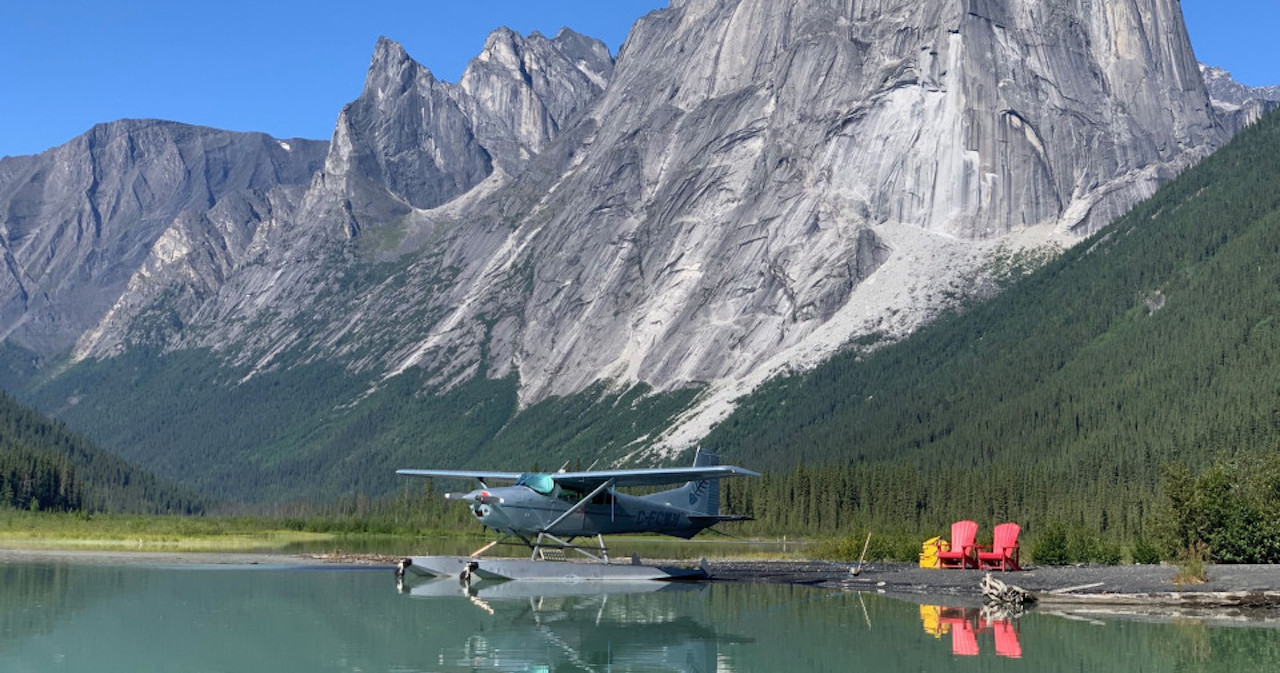
The concept of microclimates cannot be over emphasized. As noted by another contributor, this especially true in the Cascades. Flying around the local volcanoes can be a real challenge. If the volcano has a cap on it (lenticular cloud), flying around it is not a good idea. Even though the weather gurus are forecasting winds of less than ten, You can count on the fact that close-in and around the volcano the winds will exceed 25.
A low on the east side of the Cascades can create winds in the lower passes of the Cascades in excess of 35 knots. It is important to check the winds that are forecast for these passes. Frequently it may be that winds in Seattle or Portland are minimal, but 30 miles to the east they are from the east at 20 to 35 knots. The converse is also true. Since I fly out of an airport at the base of the Cascades I can attest that the winds can be severe.
Moss Farmer
Mountain Flying page in the Knowledge Base
Mon Mar 16, 2015 8:13 am
- Moss farmer offline
- Posts: 101
- Joined: Wed Feb 05, 2014 5:44 pm
- Location: Enumclaw
- Aircraft: Cessna 1963 Cessna 182f
Mon Mar 16, 2015 9:26 am
Re: Mountain Flying page in the Knowledge Base
Very good point, Anarchisto. Any time the thorough map recon and wind estimate has not worked out and our windward ridge (the one downwind of the valley) becomes lee, we have to execute an energy management turn to the middle of the drainage going down valley. Tailwind is helpful with both thermalling and ridge riding. When taking on ridges with enough crosswind component of headwind to give significant lift, we have to be prepared to go back. However, the stronger the crosswind (or tailwind) the greater the lift.
In a crooked valley formed by two ridges going up to a pass (saddle), the most common problem is a curve that brings the windward (downwind of the valley) ridge we are riding into a direct headwind or even downwind alignment. Now we either have to move across the valley to the other ridge or turn down the valley and try somewhere or sometime else. The safest move is an energy management or descending turn to the middle of the valley (lowest point of the drainage) and back down valley to reassess.
As always, we may not be able to go that way. All I am saying is that we can test the waters (air currents.) In years of instructing, I have found very experienced pilots of small engine airplanes surprised to discover that flying passes rather than the long way down and up big river valleys was safely possible.
In a crooked valley formed by two ridges going up to a pass (saddle), the most common problem is a curve that brings the windward (downwind of the valley) ridge we are riding into a direct headwind or even downwind alignment. Now we either have to move across the valley to the other ridge or turn down the valley and try somewhere or sometime else. The safest move is an energy management or descending turn to the middle of the valley (lowest point of the drainage) and back down valley to reassess.
As always, we may not be able to go that way. All I am saying is that we can test the waters (air currents.) In years of instructing, I have found very experienced pilots of small engine airplanes surprised to discover that flying passes rather than the long way down and up big river valleys was safely possible.
- contactflying offline
- Posts: 4972
- Joined: Wed Apr 03, 2013 7:36 pm
- Location: Aurora, Missouri 2H2
Download my free "https://tinyurl.com/Safe-Maneuvering" e-book.
Wed Mar 18, 2015 9:23 am
Re: Mountain Flying page in the Knowledge Base
Energy Management in Desert Mountains
"Diurnal temperature variations are greatest very near the earth’s surface.
High desert areas typically have the greatest diurnal temperature variations. Low lying, humid areas typically have the least. This explains why an area like the Snake River Plain can have high temperatures of 38 °C (100 °F) during a summer day, and then have lows of 5–10 °C (41–50 °F). At the same time, Washington D.C., which is much more humid, has temperature variations of only 8 °C (14 °F);[1] urban Hong Kong has a diurnal temperature range of little more than 4 °C (7 °F). Charaña, Bolivia averages a DTR of 50 °F (28 °C) in July, while Hayfork, California averages 48 °F (27 °C) in August.[2]
While the National Park Service claimed that the world record is a variation of 102 °F (57 °C) (from 46 °F (8 °C) to −56 °F (−49 °C)) in Browning, Montana in 1916,[3] the Montana Department of Environmental Quality claimed that Loma, Montana had a variation of 103 °F (57 °C) (from −54 °F (−48 °C) to 49 °F (9 °C)) in 1972.[4]" Wikipedia.
Flying a Taylorcraft DC-65 from Santa Rosa toward Albuquerque on the way to Gallup fairly early one morning, I found I was unable to get over the saddle between Clines Corners Hill 7507 and Hill 7565 to the south. (See ABQ Sectional) It was already hot and winds were getting strong but I wasn't finding good angles on the small hills and mesas. Energy management turn back east to the small drainage between the hills and then north to try to catch some ridge lift in the Pecos Mountains east of Sante Fe. Using the ridge from Hill 7936 north of San Jose on I-25 and Hill 10,423 I was able to get high enough to jump to the ridge running north of San Ysidro. Riding this ridge toward "buildings," I caught a wave and went to 13,500 in less than a minute. From there, the jump to Santa Fe Tower's green light and fuel was a nada.
No, this does not always work. Had I not made Sante Fe, I would probably have had to land and hitch a ride to the nearest gas station for gas. However, with strong SW winds and a big N-S ridge, tremendous lift is potential.
"Diurnal temperature variations are greatest very near the earth’s surface.
High desert areas typically have the greatest diurnal temperature variations. Low lying, humid areas typically have the least. This explains why an area like the Snake River Plain can have high temperatures of 38 °C (100 °F) during a summer day, and then have lows of 5–10 °C (41–50 °F). At the same time, Washington D.C., which is much more humid, has temperature variations of only 8 °C (14 °F);[1] urban Hong Kong has a diurnal temperature range of little more than 4 °C (7 °F). Charaña, Bolivia averages a DTR of 50 °F (28 °C) in July, while Hayfork, California averages 48 °F (27 °C) in August.[2]
While the National Park Service claimed that the world record is a variation of 102 °F (57 °C) (from 46 °F (8 °C) to −56 °F (−49 °C)) in Browning, Montana in 1916,[3] the Montana Department of Environmental Quality claimed that Loma, Montana had a variation of 103 °F (57 °C) (from −54 °F (−48 °C) to 49 °F (9 °C)) in 1972.[4]" Wikipedia.
Flying a Taylorcraft DC-65 from Santa Rosa toward Albuquerque on the way to Gallup fairly early one morning, I found I was unable to get over the saddle between Clines Corners Hill 7507 and Hill 7565 to the south. (See ABQ Sectional) It was already hot and winds were getting strong but I wasn't finding good angles on the small hills and mesas. Energy management turn back east to the small drainage between the hills and then north to try to catch some ridge lift in the Pecos Mountains east of Sante Fe. Using the ridge from Hill 7936 north of San Jose on I-25 and Hill 10,423 I was able to get high enough to jump to the ridge running north of San Ysidro. Riding this ridge toward "buildings," I caught a wave and went to 13,500 in less than a minute. From there, the jump to Santa Fe Tower's green light and fuel was a nada.
No, this does not always work. Had I not made Sante Fe, I would probably have had to land and hitch a ride to the nearest gas station for gas. However, with strong SW winds and a big N-S ridge, tremendous lift is potential.
- contactflying offline
- Posts: 4972
- Joined: Wed Apr 03, 2013 7:36 pm
- Location: Aurora, Missouri 2H2
Download my free "https://tinyurl.com/Safe-Maneuvering" e-book.
Wed Mar 18, 2015 7:46 pm
Re: Mountain Flying page in the Knowledge Base
I flew a Valero pipeline from Amarillo to the tank farm off the departure end of runway 21 at Sunport in Albuquerque. The pipeline crossed the Manzano Mountains just north of Mosca Peak under Beann Intersection SE of Sunport. This line was difficult to work, with prevailing westerly winds, because there were no real ridges running on any easterly heading from the N-S range. I was flying a 160 hp C-172, which was near ceiling on hot afternoons. Patrolling above 200' AGL was not effective. With SW winds I could catch some ridge lift off the hill under the 9 (of hill 9509) and with NW winds I could get ridge lift off Mosca Peak (hill 9509.) Leaving Moriarty, where I lived, early was more difficult unless it was really cool. There wasn't any ridge lift at all. This is where not really believing an airplane will necessarily climb helped keep me alive.
- contactflying offline
- Posts: 4972
- Joined: Wed Apr 03, 2013 7:36 pm
- Location: Aurora, Missouri 2H2
Download my free "https://tinyurl.com/Safe-Maneuvering" e-book.
Sat Mar 21, 2015 8:19 pm
Re: Mountain Flying page in the Knowledge Base
I have just finished two very good texts sent me by a 93 year old Cub pilot who still flies w/o using the airspeed indicator like it was done when he was young. "Aviation History of the Central Idaho Wilderness in a very good history of the area. And "Mountain and Canyon Flying Training Manual" put out by McCall Mountain/Canyon Flying Seminars, LLC is an excellent mountain flying text.
The emphasis on the basic low ground effect takeoff is important. It makes critical difference with short and/or soft and/or high density altitude takeoffs. If every pilot made this takeoff his/her normal takeoff in every situation, much skin and tin would be saved.
The text and diagrams on both thermal and orographic or ridge lift is very good. While they are concerned mostly with canyon flying, their explanations are applicable to other mountain flying situations as well. I like that they emphasize flying slow in updrafts and fast through downdrafts. Attempting to hold altitude in these conditions can be very dangerous because it will cause us to fight nature and lose.
While they recommend only the stabilized approach with a steep glide path, they emphasize the need for a slow, slow approach without a roundout and hold off that would put us too long on the short fields in the Central Idaho Wilderness.
I especially like that they emphasize lowering the nose in turns and downdrafts. This is the only text I have read emphasizing such a simple, life saving technique. They point out that lower airspeed results in a tighter radius of turn. We crop dusters know, as do they even though they didn't mention it, lower ground speed also results in a tighter radius of turn and wind management is important when turning to targets and turning to miss things.
Another very important mountain technique that is emphasized is always knowing which way is down hill and always being in position for a turn down hill. I use the wine glass method for the map recon, but their rapids down river of the smooth water is excellent for on the spot determination where the drainage has water.
I don't completely agree with avoiding steep turns in the canyon turnaround. Not going up canyons unless they have large rivers works where there is water in the main canyons. In many mountainous regions, this is not the case. And, pilots do go up canyons that do not have large rivers. As they say, most, in that region, do not make it out. I submit that the angle of bank, in a canyon turnaround, needs be at least that angle of bank necessary to get the nose on a directed course to the middle of the canyon or drainage going back down drainage. Yes, we will lose the horizon in the windscreen. But, this happens with a steep turn in flat terrain. I teach these steep, energy management, no load factor turns because I want my student to make it back out, should they make a mistake and turn up canyon instead of down canyon. I also want my students to be able to maneuver safely anywhere they find themselves in a maneuvering flight situation where the canyon may take a tight turn or where there are curved approach and/or departure routes for landing zones. These turns need to be practiced. Pilots are amazed in the amount of rudder movement, not pressure, needed to counter adverse yaw in steep turns and how quickly the turn can be made without creating load factor or stall. We just don't pull back on the stick until we again have the wings level before pullout. An energy management 180 degree turn can be made safely in less than thirty seconds in a very small radius without losing a great deal of altitude. Their Bank Angle and (Load Factor) chart, Table 1 on page 9 shows a radius of 193 feet if we use a sixty degree bank at sixty knots. It also shows this to be a 2g turn. That is assuming a level turn. But we are not making a level turn and we are not pulling back on the stick in the turn. We pull back on the stick (if cruising faster than the desired sixty knots) wings level and climb reducing airspeed to less than sixty knots. We turn steeply using a lot of rudder to get the nose moving around and later in the turn to help keep the nose going down. The target is the bottom of the canyon or drainage. This is where we have the most maneuvering space. This is maneuvering flight. We do not want to hit the other side of the canyon. This happens quickly. There is not much time in the turn when we are not increasing the bank and therefore we need to keep pushing the nose around with rudder. Adverse yaw will cause slip and cause the nose to slow down like in a shallow bank. Once we have our nose on the target, the bottom of the drainage, we level the wings first (again lots, lots of rudder movement) and then pull up. We have traded airspeed for altitude because we want to go slower and have the least radius of turn practicable. We have turned at a sixty degree, or greater if needed, bank because we want to have the least radius of turn practicable. We have not pulled back on the stick, in the turn, because we don't want the 2g load factor. We have regained the sixty knots or better with the nose down gravity thrust now trading altitude for airspeed. We have returned to about sixty knots at about the same altitude in the pullup.
I like that the danger of going around is pointed out. This is dangerous anywhere, but especially dangerous in the mountains. Going around often sets up a mind set which is considered helpful in flatland work. We can fix a bad approach with a go around. What makes this dangerous in mountain work is that we will do, in a tense situation, what we have practiced most. If we have practiced fixing a lot of approaches, we are in trouble on a one way or any tight situation.
I use and teach the apparent rate of closure approach rather than the stabilized approach because it stabilizes rate of closure and glide slope rather than airspeed and glide slope and it requires no roundout and hold off and it is easy. We practice slow flight to learn how our airplane feels and how to handle it while very slow. If we use this knowledge and technique on landing we will not have to use the airspeed indicator and lose important outside the cockpit situational awareness. In any maneuvering flight, including takeoff and landing, we need outside situational awareness. We especially need it in mountain work. There are more things to hit out there. Regardless of what slow, it need be slow, approach we use, we decrease situational awareness outside the cockpit 100% every second we look at the airspeed indicator. With practice using an apparent rate, we can completely eliminate the need to ever look at the airspeed indicator while maneuvering near things.
Again, great history and great mountain flying text.
The emphasis on the basic low ground effect takeoff is important. It makes critical difference with short and/or soft and/or high density altitude takeoffs. If every pilot made this takeoff his/her normal takeoff in every situation, much skin and tin would be saved.
The text and diagrams on both thermal and orographic or ridge lift is very good. While they are concerned mostly with canyon flying, their explanations are applicable to other mountain flying situations as well. I like that they emphasize flying slow in updrafts and fast through downdrafts. Attempting to hold altitude in these conditions can be very dangerous because it will cause us to fight nature and lose.
While they recommend only the stabilized approach with a steep glide path, they emphasize the need for a slow, slow approach without a roundout and hold off that would put us too long on the short fields in the Central Idaho Wilderness.
I especially like that they emphasize lowering the nose in turns and downdrafts. This is the only text I have read emphasizing such a simple, life saving technique. They point out that lower airspeed results in a tighter radius of turn. We crop dusters know, as do they even though they didn't mention it, lower ground speed also results in a tighter radius of turn and wind management is important when turning to targets and turning to miss things.
Another very important mountain technique that is emphasized is always knowing which way is down hill and always being in position for a turn down hill. I use the wine glass method for the map recon, but their rapids down river of the smooth water is excellent for on the spot determination where the drainage has water.
I don't completely agree with avoiding steep turns in the canyon turnaround. Not going up canyons unless they have large rivers works where there is water in the main canyons. In many mountainous regions, this is not the case. And, pilots do go up canyons that do not have large rivers. As they say, most, in that region, do not make it out. I submit that the angle of bank, in a canyon turnaround, needs be at least that angle of bank necessary to get the nose on a directed course to the middle of the canyon or drainage going back down drainage. Yes, we will lose the horizon in the windscreen. But, this happens with a steep turn in flat terrain. I teach these steep, energy management, no load factor turns because I want my student to make it back out, should they make a mistake and turn up canyon instead of down canyon. I also want my students to be able to maneuver safely anywhere they find themselves in a maneuvering flight situation where the canyon may take a tight turn or where there are curved approach and/or departure routes for landing zones. These turns need to be practiced. Pilots are amazed in the amount of rudder movement, not pressure, needed to counter adverse yaw in steep turns and how quickly the turn can be made without creating load factor or stall. We just don't pull back on the stick until we again have the wings level before pullout. An energy management 180 degree turn can be made safely in less than thirty seconds in a very small radius without losing a great deal of altitude. Their Bank Angle and (Load Factor) chart, Table 1 on page 9 shows a radius of 193 feet if we use a sixty degree bank at sixty knots. It also shows this to be a 2g turn. That is assuming a level turn. But we are not making a level turn and we are not pulling back on the stick in the turn. We pull back on the stick (if cruising faster than the desired sixty knots) wings level and climb reducing airspeed to less than sixty knots. We turn steeply using a lot of rudder to get the nose moving around and later in the turn to help keep the nose going down. The target is the bottom of the canyon or drainage. This is where we have the most maneuvering space. This is maneuvering flight. We do not want to hit the other side of the canyon. This happens quickly. There is not much time in the turn when we are not increasing the bank and therefore we need to keep pushing the nose around with rudder. Adverse yaw will cause slip and cause the nose to slow down like in a shallow bank. Once we have our nose on the target, the bottom of the drainage, we level the wings first (again lots, lots of rudder movement) and then pull up. We have traded airspeed for altitude because we want to go slower and have the least radius of turn practicable. We have turned at a sixty degree, or greater if needed, bank because we want to have the least radius of turn practicable. We have not pulled back on the stick, in the turn, because we don't want the 2g load factor. We have regained the sixty knots or better with the nose down gravity thrust now trading altitude for airspeed. We have returned to about sixty knots at about the same altitude in the pullup.
I like that the danger of going around is pointed out. This is dangerous anywhere, but especially dangerous in the mountains. Going around often sets up a mind set which is considered helpful in flatland work. We can fix a bad approach with a go around. What makes this dangerous in mountain work is that we will do, in a tense situation, what we have practiced most. If we have practiced fixing a lot of approaches, we are in trouble on a one way or any tight situation.
I use and teach the apparent rate of closure approach rather than the stabilized approach because it stabilizes rate of closure and glide slope rather than airspeed and glide slope and it requires no roundout and hold off and it is easy. We practice slow flight to learn how our airplane feels and how to handle it while very slow. If we use this knowledge and technique on landing we will not have to use the airspeed indicator and lose important outside the cockpit situational awareness. In any maneuvering flight, including takeoff and landing, we need outside situational awareness. We especially need it in mountain work. There are more things to hit out there. Regardless of what slow, it need be slow, approach we use, we decrease situational awareness outside the cockpit 100% every second we look at the airspeed indicator. With practice using an apparent rate, we can completely eliminate the need to ever look at the airspeed indicator while maneuvering near things.
Again, great history and great mountain flying text.
- contactflying offline
- Posts: 4972
- Joined: Wed Apr 03, 2013 7:36 pm
- Location: Aurora, Missouri 2H2
Download my free "https://tinyurl.com/Safe-Maneuvering" e-book.
Mon Mar 23, 2015 11:57 am
Re: Mountain Flying page in the Knowledge Base
Good reading, all. Thanks.
DISPLAY OPTIONS
Who is online
Users browsing this forum: No registered users and 0 guests
Latest Features
-
-
Featured Bush Planes
As one of the undisputed legends of bush flying, the Cessna 180 hauls a…Read More -
Aircraft Ownership and Maintenance
9 modification mistakes aircraft owners make when trying to "bush out" their birds—why some…Read More -
Live to Tell
A Minnesota pilot is surprised to learn that the sudden asymmetric drag of an…Read More


Latest Knowledge Base
-
Destinations
Canada offers some of the most spectacular backcountry flying on the continent. Here's what you need to know before you go.Read More -
Safety and Survival
Hope that you never have to use your survival vest but knowing you have it and knowing how to use…Read More -
Destinations
A regional guide with ideas for winter camping destinations in California, Nevada, New Mexico, and Arizona.Read More -
Aircraft
Finding an affordable aircraft that can handle the backcountry for $80K or less? A challenge for sure, but with the…Read More