It appears a flat lander was in a hurry to get home per chance. My onion based on NTSB initial reports. Telluride is not all that difficult if one understands the surrounding terrain. Really a tragic result for a newly married couple.
MW
Mountain Pass Crossing
Wed Nov 11, 2020 6:23 pm
- 185Midwest offline

- Posts: 439
- Joined: Sun Sep 30, 2018 11:58 am
- Location: Fort Wayne
- Aircraft: C-185
Wed Nov 11, 2020 6:56 pm
Re: Mountain Pass Crossing
The safety disadvantage of low power to weight at high DA is low power to weight. The safety advantage of low power to weight is that there is no expectation of stabilized engine climb. There should be no ridge crossing without consideration of possible down drainage egress and purposeful maneuvering to have access to same. Stabilized engine climb might be safely expected with great power to weight, but consideration of possible down drainage egress and purposeful maneuvering to have access to same is still logical.
- contactflying offline
- Posts: 4972
- Joined: Wed Apr 03, 2013 7:36 pm
- Location: Aurora, Missouri 2H2
Download my free "https://tinyurl.com/Safe-Maneuvering" e-book.
Tue Nov 17, 2020 5:52 am
Re: Mountain Pass Crossing
Tommy,
Warmer than normal and lots of wind. Do you have oxygen? Heat energy=wind energy+slope=lift.
Jim
Warmer than normal and lots of wind. Do you have oxygen? Heat energy=wind energy+slope=lift.
Jim
- contactflying offline
- Posts: 4972
- Joined: Wed Apr 03, 2013 7:36 pm
- Location: Aurora, Missouri 2H2
Download my free "https://tinyurl.com/Safe-Maneuvering" e-book.
Tue Nov 17, 2020 6:56 am
Re: Mountain Pass Crossing
Jim,
Yes; warmer and always lots of wind! I do have O2 and vow to use it above 7,500 MSL.
Unfortunately just after I worked all day with SnoDog to blow out my ramp & TaxiWay, it snowed another foot. Kinda discouraging... Now it’s kinda a mushy snow, so dunno about blowing it clear. But I will be back at it so I can fly later this week. I need skis...
BTW SnoDog is an Ariens 24” SnowBlower; made in the USA and a great product that I regularly abuse and blow its shear bolts. Ordered a 10 pack.
Best,
Tommy
Yes; warmer and always lots of wind! I do have O2 and vow to use it above 7,500 MSL.
Unfortunately just after I worked all day with SnoDog to blow out my ramp & TaxiWay, it snowed another foot. Kinda discouraging... Now it’s kinda a mushy snow, so dunno about blowing it clear. But I will be back at it so I can fly later this week. I need skis...
BTW SnoDog is an Ariens 24” SnowBlower; made in the USA and a great product that I regularly abuse and blow its shear bolts. Ordered a 10 pack.
Best,
Tommy
Tue Nov 17, 2020 10:59 am
Re: Mountain Pass Crossing
I live in a Windsock townhome at 46U. Named because of proximity to the windsock near numbers of 31.
Went out to bust out the recent snowfall to the runway. Surprisingly SnoDog handled the crusty snow well.
Of note, even though the windsock was limp, the effects of the wind was quite pronounced on the blowing snow. Just like pi$&ing into the wind is not recommended, blowing snow must have a very low wing loading as the effects are very significant.
I was able to use the blowing snow as a trend indicator long before the windsock showed same.
The moral of the story is to enhance one’s perception of the wind and its changes in magnitude and direction. Any tips on this appreciated.
Best,
Tommy
Went out to bust out the recent snowfall to the runway. Surprisingly SnoDog handled the crusty snow well.
Of note, even though the windsock was limp, the effects of the wind was quite pronounced on the blowing snow. Just like pi$&ing into the wind is not recommended, blowing snow must have a very low wing loading as the effects are very significant.
I was able to use the blowing snow as a trend indicator long before the windsock showed same.
The moral of the story is to enhance one’s perception of the wind and its changes in magnitude and direction. Any tips on this appreciated.
Best,
Tommy
Tue Nov 17, 2020 11:27 am
Re: Mountain Pass Crossing
Temporary change in g or buoyancy. Like any learning process we learn quicker starting with gross and learning fine changes with lighter iterations. We learn best by starting from where we are and moving toward where we wish to be. Like MTV cautions about absolutes, we are a part of the airmass. But we also bump into rapids over terrain and temporary shafts of rising or descending thermal air. These thermal updrafts and downdrafts generally take alternating turns, but not always. God made it so pilots could perfect art as well as, or even in lieu of, math. The rapids are much more predictable, even with a map recon.
- contactflying offline
- Posts: 4972
- Joined: Wed Apr 03, 2013 7:36 pm
- Location: Aurora, Missouri 2H2
Download my free "https://tinyurl.com/Safe-Maneuvering" e-book.
Fri Nov 20, 2020 11:54 pm
Re: Mountain Pass Crossing
mtv wrote:Jim,
I’ve been in pass crossings where the most powerful piston engine wasn’t going to outclimb the “down”. So, you look for the “not so down”. And sometimes, available fuel suggests that another day might be a better choice.
That said, I teach a level “canyon turn”. If you’re dumb enough to let yourself get that slow, in that tight a canyon, you most likely don’t have enough air under you to let that nose come down. The key in this is to NEVER allow yourself to get so slow that you can’t do a safe level turn.
In my experience, if you’ve got so slow, in such a tight canyon you can’t do a level, high performance turn, you’ve already screwed the pooch. Many experienced Alaskan aviators have demonstrated that phenomenon.
NEVER let yourself get so deep and so slow into a canyon.
Your mileage may vary.
MTV
contactflying wrote:Water is one of the most powerful energy sources on earth. Because they lie in a fairly temperate zone, the Rocky Mountains produce a lot of gravity driven water, from snow melt, that cuts deep river valleys right up to almost pool table flat high passes.
This abundant vertical space, in the valley, makes approaching these high passes with limited excess engine thrust for climb somewhat safe. We lean our small engines (Stromberg carburetors were not the best) to get them to run properly at high density altitude. Limit the air (DA) and you have to limit the fuel, which reduces power. We need later in the day heat to produce needed wind energy, so we will often be operating at ceiling or less. This means that we will have a Vy pitch attitude in level cruise, other things being equal (which they are not.)
Prevailing westerly winds make west to east crossings a snap. We just have to closely ride the updraft producing ridge that is on the downwind side of the valley that goes up to our pass. Long engine climbs to get up going east waist this free wind energy. We just ride the ridge up and then stay up to benefit from the stronger tailwinds. The tailwinds are less down low and the tremendous reduction in ground speed climbing in open air will hurt more than will just following the terrain up. Of course we fly slow in updrafts and fast in downdrafts enroute to the valley ridge system.
Going east to west is the problem. If the wind is straight down a straight valley, we may be out of luck. We have to find a pass that has an approaching valley that is at some angle to the wind. We must use the ridge downwind of the valley that is going up to the pass. The lighter the wind, the closer we must fly to the ridge to get good updrafts. We also want some horizontal space between us and the ridge across the valley. The crux, as mountaineers call it, comes when we have ridden the downwind ridge to near the pass, the valley is closing in, less vertical space and less horizontal space is available, and we are now getting downdraft air from the high peak upwind of the pass. If our ridge will not get us safely to the pass or at least into the updraft air on the high peak downwind of the pass, we must use the energy management turn allowing the nose to fall naturally into the valley. There is no pull up here as the nose is already up and we are already slow. We just turn at whatever bank will miss the upwind ridge and let the nose fall through (don't pull back on the stick.) We are done. We either try another pass or just follow the valley until we can maneuver to lower ground going west.
If we make the pass, we need to stay low and get back down to lesser headwinds as soon as possible. Altitude is great, unless we can't make the next watering hole at this very slow ground speed.
Been on the wrong side of that curve once MTV. Too low, too slow, and lost too much canyon turning and came close to the bottom. Not close enough to make me think this is it, but close enough the lesson stuck.
Do a lot of passes here in BC as well contactflying, and frankly the old way sounds like it’s past the line. You’ll make it... almost all the times, but have little viable plan B once fully committed. I end up there too, the wrong side of the line, in weather, in passes, in landing spots that may not work on arrival with little fuel for an alternative. But the older I get, and the more I have waiting at home, the less I try and get on the other side of the line to get the job done. That is not to say I don’t admire what previous generations had to do as business as usual, I’m mainly a rotary guy, and what the industry did forty or fifty years ago is mind blowing. We do 50% more today, but with double the aircraft, and are way further from the line.
This isn’t to pretend I haven’t put myself in uncomfortable situations, even recently, or look down on objective honesty about flying in the mountains. This all said, passes are one of the simpler aspects of mountain flying in my small change if not pushing the envelope. In passes, there’s plenty of time, and all sorts of warning as you get closer and closer. Some of the most deceiving days can be high DA ones with gentler winds, at least in strong winds you know where you lay. I’m trying to become a boring pilot as I go, I want to always have an out that doesn’t raise one’s pulse, and if I’m catching a heavy down or riding demarcation it’s not the day. Worth remembering Steve Fossett died at 10,000’ on a warm day in a Super Decathalon in Nevada. While looking for him, they found eight unknown wrecks of light aircraft, all from the golden era of power limited aviation.
We do some very power limited and sketchy stuff in rotary at high altitude in the rocks, but there is always an out, and it’s fanatically thought out. Sometimes it’s embarrassing to actually use it. The entire Penticton mountain course curriculum was built with Bell 47s at up to 10K, the very definition of power limited, and is today the global standard mountain course that brings operators and militaries in from all over the world for one reason. The golden rule has always remained the same; a rock solid out, or it’s not the day or aircraft for the job, the minute that looks in doubt you pull the pin and don’t look back. Each one of those high altitude landings is a mini version of the pass scenario you describe, working the terrain, 100% power in, but the difference is you never commit and give up your out until you can finish it. I’ve done that course and was pitched to teach it, and still make dumb calls, usually when rushing.
Personally working as hard as described to clear a pass, with what we have today for knowledge and equipment, is the wrong machine or day for that job / pass in my mind, however ballsy and impressive to pull off. I like to have an imaginary passenger, that you have to brief on the ins and outs of the whole thing. Tell them we’re gonna try this pass, it’s super marginal, and see if you sound like an idiot explaining it to your inner self. I got to that thought from just sending it and trying to figure it out on the way a couple too many times, and getting away with it.

Sat Nov 21, 2020 1:21 am
Re: Mountain Pass Crossing
Thanks for the post Ardent. BC made a believer in giving it some time when I did a clinic at Grande Prairie a couple years ago. Bruce Washtock was the other presenter there and I learned a lot specific to your incredibly more difficult mountains there. We have volcanic slope and fold and fault steps to work up on where you have bathtub sided ditches laid out in really scary mazes. We have guaranteed down drainage egress, if one is willing to do a proper map recon, and you have wet or flat bottomed canyons for miles and miles.
The nice thing about helicopter is greater ability to safely slow the process down as Bruce teaches so well in airplanes. You would like our Army mountain flying course at Ft. Carson using Pikes Peak and the mountains behind. Have you tried the zero airspeed short final approach at high density altitude? We check torque to hover at takeoff down low, calibrate the estimated torque to hover at 14,000, set that torque on short final at zero airspeed, and slowly approach with cyclic and no collective manipulation until arriving at a three foot hover in the LZ. It is amazing and prevents our cowboy, from Vietnam, habit of spinning trying to decelerate in the LZ after approaching too fast. Marginal weather was also much safer in the Huey. Just stop and set tent if it really got bad.
With global warming, our weather is moving up your way a bit. Just a nice present from the Yanks. You might want us to keep the fires, but that too.
I never had the bucks to power up for a more modern mountain approach, but I too have gotten older and more cautious. I never flew recreationally before and that makes a big difference. Actually I don't fly but rather fly with now. That lets the other pilot set the level of difficulty.
contact
The nice thing about helicopter is greater ability to safely slow the process down as Bruce teaches so well in airplanes. You would like our Army mountain flying course at Ft. Carson using Pikes Peak and the mountains behind. Have you tried the zero airspeed short final approach at high density altitude? We check torque to hover at takeoff down low, calibrate the estimated torque to hover at 14,000, set that torque on short final at zero airspeed, and slowly approach with cyclic and no collective manipulation until arriving at a three foot hover in the LZ. It is amazing and prevents our cowboy, from Vietnam, habit of spinning trying to decelerate in the LZ after approaching too fast. Marginal weather was also much safer in the Huey. Just stop and set tent if it really got bad.
With global warming, our weather is moving up your way a bit. Just a nice present from the Yanks. You might want us to keep the fires, but that too.
I never had the bucks to power up for a more modern mountain approach, but I too have gotten older and more cautious. I never flew recreationally before and that makes a big difference. Actually I don't fly but rather fly with now. That lets the other pilot set the level of difficulty.
contact
- contactflying offline
- Posts: 4972
- Joined: Wed Apr 03, 2013 7:36 pm
- Location: Aurora, Missouri 2H2
Download my free "https://tinyurl.com/Safe-Maneuvering" e-book.
Sat Nov 21, 2020 1:23 pm
Re: Mountain Pass Crossing
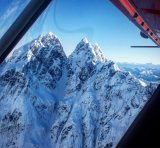
Pike’s Peak would be fun, up here locally we have Waddington (13,000’) to get the big stuff, 10,000 of prominence she’s a good hill as she starts near sea level. Want to take an R66 with a load to the summit to demonstrate what the machine can do but that’s another talk. Indeed BC is a hard place for mountains and airflow, and glad you’ve seen it! I’m learning who everyone is here and had no idea you were also a rotary guy as well, too neat, awful lot of experience around here. Glad you’ve seen our near vertical wall trenches too, and likely been in them in low ceilings, they’re something else.
As for the approaches, at Topflight / Penticton the near flat approach edge of translation is taught to your guys (components of Combat Rescue, SOAR, FCD get sent to Penticton), and we use it at work. The guy who landed the B3 on top of Everest attended the course, after Everest, which I find amusing; he approached the Penticton way on Everest. I went through with German Tiger attack heli pilots working Afghanistan, we all used the 20-30kt shallow approach, with drop off available. We do use the performance check, getting two baseline torques at altitude before approaching, usually it won’t hover OGE however so you take the figure on the edge of translation and one at 50kts to check airflow in the recce, if during your 50kt recce torque is above baseline, you know you have downflow. If we were able to hover OGE, we’d always pick a higher spot in training and keep going til we lost hover OGE, or add weight as required to force it, to keep it real.
They prefer to use the EC120 at Topflight due to the performance limitations, it makes every landing a workout at altitude, worse than the Jet Ranger. I used the B2, so we just had to go higher and turn it into a 120. I’ll have to add some mountain pics to an appropriate thread, but here’s the local fun, taken during a 50kt recce oddly enough.

As for the approaches, at Topflight / Penticton the near flat approach edge of translation is taught to your guys (components of Combat Rescue, SOAR, FCD get sent to Penticton), and we use it at work. The guy who landed the B3 on top of Everest attended the course, after Everest, which I find amusing; he approached the Penticton way on Everest. I went through with German Tiger attack heli pilots working Afghanistan, we all used the 20-30kt shallow approach, with drop off available. We do use the performance check, getting two baseline torques at altitude before approaching, usually it won’t hover OGE however so you take the figure on the edge of translation and one at 50kts to check airflow in the recce, if during your 50kt recce torque is above baseline, you know you have downflow. If we were able to hover OGE, we’d always pick a higher spot in training and keep going til we lost hover OGE, or add weight as required to force it, to keep it real.
They prefer to use the EC120 at Topflight due to the performance limitations, it makes every landing a workout at altitude, worse than the Jet Ranger. I used the B2, so we just had to go higher and turn it into a 120. I’ll have to add some mountain pics to an appropriate thread, but here’s the local fun, taken during a 50kt recce oddly enough.
Sat Nov 21, 2020 1:49 pm
Re: Mountain Pass Crossing
I looked at Waddington on Google Earth. Makes Pikes Peak look like the bunny slope. Nice wide glacier canyon to turn back in, however. Is prevailing wind from that side?
- contactflying offline
- Posts: 4972
- Joined: Wed Apr 03, 2013 7:36 pm
- Location: Aurora, Missouri 2H2
Download my free "https://tinyurl.com/Safe-Maneuvering" e-book.
Sat Nov 21, 2020 2:09 pm
Re: Mountain Pass Crossing
She’s a biggun 
Prevailing is indeed from the west, but on Waddington it’s twisted to a SW, comes up that glacier until about about 2 1/2 hours before sunset, then usually turns to a mean outflow / down draft into the inlet below. This said, there’s enough ice, ocean influence, and prominence you never know for sure til you get there. Here’s a distant shot of Waddington recently flying by in the floatplane to the other job.

Prevailing is indeed from the west, but on Waddington it’s twisted to a SW, comes up that glacier until about about 2 1/2 hours before sunset, then usually turns to a mean outflow / down draft into the inlet below. This said, there’s enough ice, ocean influence, and prominence you never know for sure til you get there. Here’s a distant shot of Waddington recently flying by in the floatplane to the other job.
Sat Nov 21, 2020 4:26 pm
Re: Mountain Pass Crossing
I was a good enough map reader in very flat III Corps in Vietnam that folks trusted me calling artillery from the Cobra. That last shot shows lots of terrain change, which is usually good, but also looks very disorganized. I had to keep a finger on our map location, when a front seater. I would also want to keep a finger on the map there, until very familiar with the area. In marginal weather those big concrete omnis are not going to be visible.
- contactflying offline
- Posts: 4972
- Joined: Wed Apr 03, 2013 7:36 pm
- Location: Aurora, Missouri 2H2
Download my free "https://tinyurl.com/Safe-Maneuvering" e-book.
Sat Nov 21, 2020 5:59 pm
Re: Mountain Pass Crossing
Indeed have done the fall scud runs through there a good deal getting too and from the outfitting area, and it’s not a great time. Looks a lot different on the deck than from 10000’ naturally.
Sat Nov 21, 2020 7:03 pm
Re: Mountain Pass Crossing
And GPS nearest airport will get you killed.
- contactflying offline
- Posts: 4972
- Joined: Wed Apr 03, 2013 7:36 pm
- Location: Aurora, Missouri 2H2
Download my free "https://tinyurl.com/Safe-Maneuvering" e-book.
Fri Nov 27, 2020 10:02 am
Re: Mountain Pass Crossing
Entertaining thread. I can still here Rustad’s ghost whispering “what about another dumbbell turn?”. Wondered about the EC120 thing, didn’t make sense from a performance view, though maybe lots of students there are more familiar with Airbus than Bell. Watched a video of a glider in NZ going IMC at a bad time working a ridge, and a follow up video explaining the ridge lift dynamics - same as being discussed here.
Here’s your loaded disc flat approach with drop offs, above translation until HIGE.
https://youtu.be/nkdqDcMvlcM
Here’s your loaded disc flat approach with drop offs, above translation until HIGE.
https://youtu.be/nkdqDcMvlcM
'74 7GCBC, 26" ABW, Aera 660 feeding G5 and FC-10 FF.
Wed Dec 02, 2020 8:26 pm
Re: Mountain Pass Crossing
Very nice much slower than apparent brisk walk rate of closure approach. There are places where the slow approach is the best approach.
- contactflying offline
- Posts: 4972
- Joined: Wed Apr 03, 2013 7:36 pm
- Location: Aurora, Missouri 2H2
Download my free "https://tinyurl.com/Safe-Maneuvering" e-book.
DISPLAY OPTIONS
Who is online
Users browsing this forum: No registered users and 3 guests
Latest Features
-
-
Featured Bush Planes
As one of the undisputed legends of bush flying, the Cessna 180 hauls a…Read More -
Aircraft Ownership and Maintenance
9 modification mistakes aircraft owners make when trying to "bush out" their birds—why some…Read More -
Live to Tell
A Minnesota pilot is surprised to learn that the sudden asymmetric drag of an…Read More




Latest Knowledge Base
-
Destinations
Canada offers some of the most spectacular backcountry flying on the continent. Here's what you need to know before you go.Read More -
Safety and Survival
Hope that you never have to use your survival vest but knowing you have it and knowing how to use…Read More -
Destinations
A regional guide with ideas for winter camping destinations in California, Nevada, New Mexico, and Arizona.Read More -
Aircraft
Finding an affordable aircraft that can handle the backcountry for $80K or less? A challenge for sure, but with the…Read More



