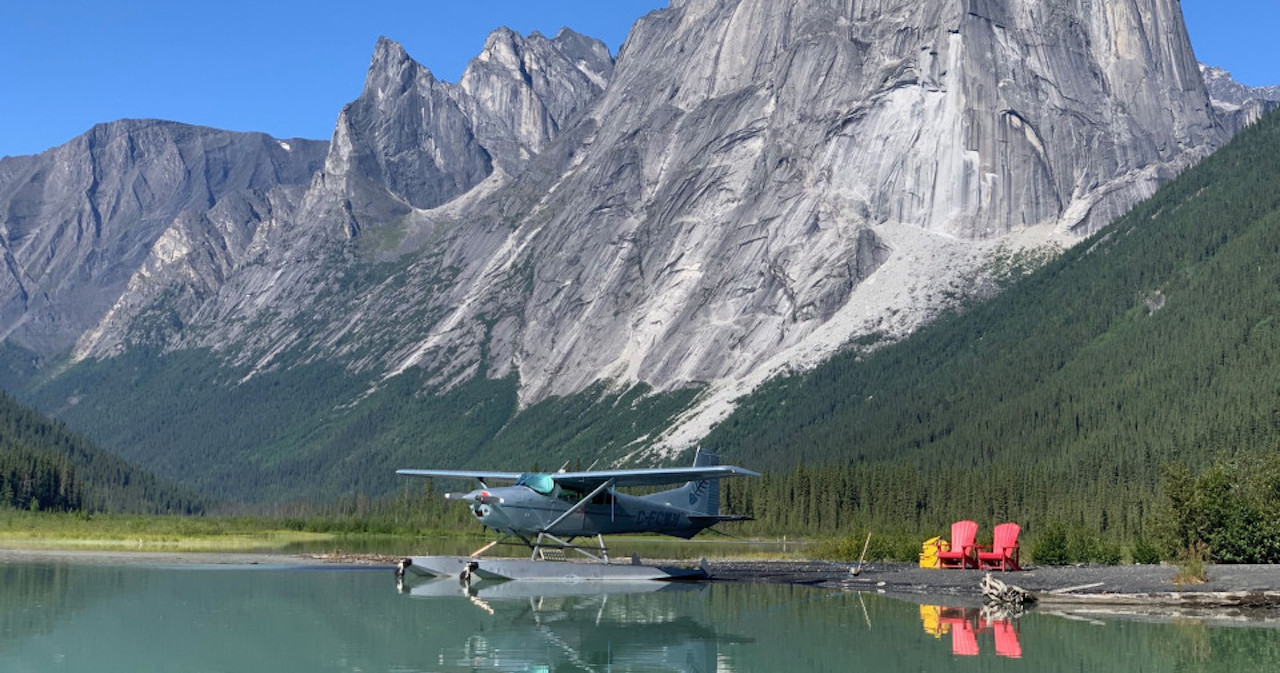
I've seen some cool backcountry videos where someone mounted a gimbal stabilized camera in the back seat so that the horizon stayed level and the airplane moved around, which I thought was cool. I have also seen a bunch of motion stabilized stuff from friends doing videography, so decided to jump in and picked up a Zhiyun Crane M Stabilizer Gimbal.
My plan is to use it with my Sony RX100MV, my Gopro Session 5, and my iPhone 7plus which all can do pretty decent 4k video.
Anybody have cool videos of motion stabilized videos they have taken? I saw one from Zane which I think had an osmo, but I can't find it now.
Hopefully the wind dies down and the sun comes up soon. Not much flying this time of year.
New Gimbal For my Camera
Wed Jan 17, 2018 11:51 am
New Gimbal For my Camera
Last edited by akschu on Wed Jan 17, 2018 1:20 pm, edited 1 time in total.

Wed Jan 17, 2018 12:39 pm
Re: New Gimbal For my Camera
I recall watching this from "the back seat" and it was gyro stabilized.
Wed Jan 17, 2018 3:41 pm
Re: New Gimbal For my Camera
I've decided I don't like the look or feel of gimbal stabilized cockpit footage. It just seems weird to have the horizon fixed with the cockpit moving around. When I fly and bank into a turn, [I think] my neck remains fixed relative to my body and the horizon tilts in my vision. I think?
The movement of the frame by the gimbal makes the viewer oddly aware that the POV is compensating for movement. It feels gimicky.
Anyway, I've gone gimbal and now am back to enjoying fixed mounting for cockpit camera better.
The movement of the frame by the gimbal makes the viewer oddly aware that the POV is compensating for movement. It feels gimicky.
Anyway, I've gone gimbal and now am back to enjoying fixed mounting for cockpit camera better.

Wed Jan 17, 2018 4:26 pm
Re: New Gimbal For my Camera
I'm going to try it. I'll probably post some videos this weekend after a little get together I'm having.
schu
schu
Wed Jan 17, 2018 4:31 pm
Re: New Gimbal For my Camera
Trent palmer does it centered behind his freedom fox. I love the look of it.

Wed Jan 17, 2018 6:40 pm
Re: New Gimbal For my Camera
Well that didn't work worth a shit did it?aftCG wrote:I recall watching this from "the back seat" and it was gyro stabilized.
Wed Jan 17, 2018 7:45 pm
Re: New Gimbal For my Camera
Spdcrazy wrote:Trent palmer does it centered behind his freedom fox. I love the look of it.
Just a few days ago he post a video, introducing his gear:
Thu Jan 18, 2018 1:04 am
Re: New Gimbal For my Camera
Wow, Trent really knows how to make video's!


Thu Jan 18, 2018 7:00 am
Re: New Gimbal For my Camera
Do they make a propeller filter for the Sony Action cam like Trent uses
- qmdv offline

- Posts: 3635
- Joined: Wed Feb 15, 2006 10:22 pm
- Location: Payette
- FindMeSpot URL: http://share.findmespot.com/shared/face ... I5tqEOk0rc
- Aircraft: Cessna 182
Thu Jan 18, 2018 7:08 am
Re: New Gimbal For my Camera
I’ve warched a lot of flying videos, but Trent really takes me to another place. I find myself checking his channel almost every day for something new and adventurous. Great stuff! I haven’t tried to film anything yet, but I have a GoPro at the ready.
- Chris In Marshfield offline

- Posts: 238
- Joined: Mon Apr 04, 2016 6:54 am
- Location: Northern
- Aircraft: Vans RV-6
Quicksilver Sprint II
Warner Spacewalker II
Thu Jan 18, 2018 9:58 am
Re: New Gimbal For my Camera
qmdv wrote:Do they make a propeller filter for the Sony Action cam like Trent uses
Are you talking about an ND filter? From what I understand the prop filter is just an ND filter that forces the camera to slow it's shutter speed.
If that's what you are saying, then yes, I has a built in ND filter, and it also has other mojo to help with rolling shutter issues.
I'll be playing with it more in the next few weeks.
schu
Fri Jan 19, 2018 8:51 am
Re: New Gimbal For my Camera
akschu wrote:qmdv wrote:Do they make a propeller filter for the Sony Action cam like Trent uses
Are you talking about an ND filter? From what I understand the prop filter is just an ND filter that forces the camera to slow it's shutter speed.
If that's what you are saying, then yes, I has a built in ND filter, and it also has other mojo to help with rolling shutter issues.
I'll be playing with it more in the next few weeks.
Yes, you got it right. A prop filter is an ND filter.
I *love* gimbals. I have a handheld one for my iphone. A handheld one for my gopro. A tripod mountable one for my gopro. I'm all in on gimbals. Even if you don't use them statically mounted (like Trent), they are awesome tools in a cockpit.
For example, the shots in the below video, from 1:00 to 2:43 (and many others), all benefited greatly from a handheld gimbal. I won't intentionally fly without one again.
Another great tool, for IOS users, is an app called Movie Pro. Gives one manual controls for focus, ISO and shutter speed. No more will your phone be tricked into focusing on the bug on your windscreen!
- rw2 offline

- Posts: 1799
- Joined: Sat Dec 22, 2012 1:10 pm
- Location: San Miguel de Allende
- FindMeSpot URL: https://share.delorme.com/LaNaranjaDanzante
- Aircraft: Experimental Maule
Follow my Flying, Cooking and Camping adventures at RichWellner.com
Fri Jan 19, 2018 11:32 am
Re: New Gimbal For my Camera
Zzz wrote:I've decided I don't like the look or feel of gimbal stabilized cockpit footage. It just seems weird to have the horizon fixed with the cockpit moving around. When I fly and bank into a turn, [I think] my neck remains fixed relative to my body and the horizon tilts in my vision. I think?
The movement of the frame by the gimbal makes the viewer oddly aware that the POV is compensating for movement. It feels gimicky.
Anyway, I've gone gimbal and now am back to enjoying fixed mounting for cockpit camera better.
I agree, I enjoy the fixed mount footage more but still enjoy watching it all. I was thinking of a gimbal to maybe take some of that shake out of my footage at take off full throttle. Do they help with that at all?
Sorry if its a bit of a thread hijack but I've been having real issues trying to get rid of that vibration. I've don't expect pro footage and only really started having a crack at video this summer so just learning but a lot of the stuff I've shot is barely passable as amateur footage in that high vibration phase of take off or landing. I only seemed to have limited success mounting foam in between the airframe and the mount but still not awesome and it deters me from putting much effort in getting footage. I just have a go pro 3+ and a 4, someone mentioned I'd be better off investing in two newer 5, 6's or some other camera with better stabilization but have been kind of discouraged I guess messing around with what I have. Any suggestions from guys that know about this stuff would be appreciated.

Fri Jan 19, 2018 1:00 pm
Re: New Gimbal For my Camera
Thread hijack is welcome.
Shoot us some video of what you have and a picture of how you mounted your gear. Lots of help in this corner of the Net.
Shoot us some video of what you have and a picture of how you mounted your gear. Lots of help in this corner of the Net.
Fri Jan 19, 2018 2:58 pm
Re: New Gimbal For my Camera
Rogue wrote:Sorry if its a bit of a thread hijack but I've been having real issues trying to get rid of that vibration. I've don't expect pro footage and only really started having a crack at video this summer so just learning but a lot of the stuff I've shot is barely passable as amateur footage in that high vibration phase of take off or landing. I only seemed to have limited success mounting foam in between the airframe and the mount but still not awesome and it deters me from putting much effort in getting footage. I just have a go pro 3+ and a 4, someone mentioned I'd be better off investing in two newer 5, 6's or some other camera with better stabilization but have been kind of discouraged I guess messing around with what I have. Any suggestions from guys that know about this stuff would be appreciated.
Rogue, first off I think your GoPro HERO 3+/4 are perfectly adequate. Don't bother upgrading at this point. I don't think digital image stabilization is going to help much on high frequency vibration like you get through a fuselage tube. That's my guess, anyway. I might be wrong. Physical stabilization is always superior.
If you're going for cockpit footage, I like to mount my using a RAM mount. That doesn't narrow it down much, but they have so many options. Mine was an old yoke mount to mount your PDA ("smartphones/tablets" circa 2002 for the kids) on the actual control column. I separated the portion that held the PDA, and the clamp just works as a general tube clamp for overhead tubes in Cubs, Scouts, etc. It has a ball arm on it that I then connect a socket arm, and finally to a ball mount for the camera. A picture is worth a thousand words, from this article: https://backcountrypilot.org/photo-and- ... hoot-video.

I bought the 1/4-20 gopro mount and swapped out the standard gopro fork-style mount. That makes whatever mounting system you go with more compatible with other small cameras that use the standard 1/4-20 mount.
I shimmed the tube clamp with some viton, but you could use anything that will absorb or dampen vibration.
If you're using an ND filter to blur your prop, make sure it's just enough and not stopping down your exposure too much. As the GoPro sensor scan rate goes down (blurring the prop), its susceptibility to vibration induced effects goes up.
Tue Jan 23, 2018 11:34 am
Re: New Gimbal For my Camera
Hey thanks for the help guys, appreciate it!
Zane, you're bang on, the vibration seems to transfer through the fuselage whichever way I mount the cameras, some areas better than others. I have two different ram suction mounts, a big one and smaller one. They work well for the cockpit but I can never get a good angle from my tight cockpit so I prefer the exterior views. I get the same vibration when suctioned onto the metal belly, but the belly sheet metal does flex a bit so I don't mount there anymore.
I've been meaning to get my ass into gear and start using a ND filter to get rid of the prop wash and make some better angles in the cockpit usable but I think I need to adapt something to the older go pro cases. Is that right? I think a filter would help the exterior footage as well once if I can get the vibration to a minimum, the combination of both is super annoying. I use a RAM u bolt type clamp to the fuse tubes for the wing.
See the quick cut of some footage for what I mean with the vibration. I have since put different memory type foam between the mounts and the fuselage and it is better although it is still quite bad on rougher terrain. On smoother terrain I have it acceptable now but all the good footage to shoot is in rougher terrain here so it doesn't do me much good. I have moved the belly camera to the tail and just cable tied a mount with foam between to the tail wheel spring which seems to work better as well but haven't had much of a chance to test it since I'm on skis now and the cameras don't like the cold much.
Sorry for the long post, just thought I'd give you the whole run down. Have a look and let me know if you have any suggestions.
Zane, you're bang on, the vibration seems to transfer through the fuselage whichever way I mount the cameras, some areas better than others. I have two different ram suction mounts, a big one and smaller one. They work well for the cockpit but I can never get a good angle from my tight cockpit so I prefer the exterior views. I get the same vibration when suctioned onto the metal belly, but the belly sheet metal does flex a bit so I don't mount there anymore.
I've been meaning to get my ass into gear and start using a ND filter to get rid of the prop wash and make some better angles in the cockpit usable but I think I need to adapt something to the older go pro cases. Is that right? I think a filter would help the exterior footage as well once if I can get the vibration to a minimum, the combination of both is super annoying. I use a RAM u bolt type clamp to the fuse tubes for the wing.
See the quick cut of some footage for what I mean with the vibration. I have since put different memory type foam between the mounts and the fuselage and it is better although it is still quite bad on rougher terrain. On smoother terrain I have it acceptable now but all the good footage to shoot is in rougher terrain here so it doesn't do me much good. I have moved the belly camera to the tail and just cable tied a mount with foam between to the tail wheel spring which seems to work better as well but haven't had much of a chance to test it since I'm on skis now and the cameras don't like the cold much.
Sorry for the long post, just thought I'd give you the whole run down. Have a look and let me know if you have any suggestions.
Tue Jan 23, 2018 12:10 pm
Re: New Gimbal For my Camera
I was thinking about that, too. I was looking through Sporty's yesterday afternoon, and I ran across the Rock Steady VibeX mounts:
https://flightflix.net/product/rock-ste ... -w-h-base/
Anyone have experience with those? Actually, their whole mount system looks pretty hell-for-stout. I like the tail handle mount. Pretty solid compared to maybe doing the same with the typical RAM setup. (Image sourced from the vendor, in case it disappears)

https://flightflix.net/product/rock-ste ... -w-h-base/
Anyone have experience with those? Actually, their whole mount system looks pretty hell-for-stout. I like the tail handle mount. Pretty solid compared to maybe doing the same with the typical RAM setup. (Image sourced from the vendor, in case it disappears)
- Chris In Marshfield offline
- Posts: 238
- Joined: Mon Apr 04, 2016 6:54 am
- Location: Northern
- Aircraft: Vans RV-6
Quicksilver Sprint II
Warner Spacewalker II
Tue Jan 23, 2018 5:18 pm
Re: New Gimbal For my Camera
That's a spendy mount. I find that a longer camera arm does a good job dampening vibration. The ram ball style mount like Zane has works well for me. There is software to reduce vibration too.
Tue Jan 23, 2018 5:47 pm
Re: New Gimbal For my Camera
G44 wrote:Wow, Trent really knows how to make video's!
Yes he does
- Sierra Victor offline
- Posts: 338
- Joined: Sat Aug 24, 2013 3:10 pm
- Location: Denton
- Aircraft: Cessna T206H
Tue Jan 23, 2018 9:33 pm
Re: New Gimbal For my Camera
Chris In Marshfield wrote:I was thinking about that, too. I was looking through Sporty's yesterday afternoon, and I ran across the Rock Steady VibeX mounts:
https://flightflix.net/product/rock-ste ... -w-h-base/
Anyone have experience with those? Actually, their whole mount system looks pretty hell-for-stout. I like the tail handle mount. Pretty solid compared to maybe doing the same with the typical RAM setup. (Image sourced from the vendor, in case it disappears)
Yeah I did wonder about these as well, they have a bunch of different set ups. Agreed very expensive for a mount but looks like super quality as well. I think for me if they did the trick I'd spend the money, on one at least, save all the messing around with foam and moving them all over the place. If they were a bit cheaper I wouldn't be as hesitant though. The testimony videos are all that wavy prop wash vibration, no real shaky, fuzzy stuff that sells me on it really doing the job 100% and laying down the dough.
DISPLAY OPTIONS
Who is online
Users browsing this forum: No registered users and 1 guest
Latest Features
-
-
Featured Bush Planes
As one of the undisputed legends of bush flying, the Cessna 180 hauls a…Read More -
Aircraft Ownership and Maintenance
9 modification mistakes aircraft owners make when trying to "bush out" their birds—why some…Read More -
Live to Tell
A Minnesota pilot is surprised to learn that the sudden asymmetric drag of an…Read More


Latest Knowledge Base
-
Destinations
Canada offers some of the most spectacular backcountry flying on the continent. Here's what you need to know before you go.Read More -
Safety and Survival
Hope that you never have to use your survival vest but knowing you have it and knowing how to use…Read More -
Destinations
A regional guide with ideas for winter camping destinations in California, Nevada, New Mexico, and Arizona.Read More -
Aircraft
Finding an affordable aircraft that can handle the backcountry for $80K or less? A challenge for sure, but with the…Read More