Mike B,
What you are describing is what the Army calls, "The apparent brisk walk rate of closure approach." While used to teach the normal helicopter approach, it works with airplanes too. Many pilots use it but don't call it apparent rate. Have you noticed that once off the airspeed indicator and looking at the landing zone, you appear to be approaching it at what looks like a brisk walk? You are actually slowing from short final to touchdown on the numbers, but it appears to be the same brisk walk all the way down. You are right that we use stick position and pressure, relative wind noise, decreasing buoyancy, etc. to feel it down. We need you guys that use this slow approach to explain it for us. I have been unable to convince these guys that I am not senile.
Jim Dulin
417-830-0638
Newbie Backcountry - Bouncing on rough ground
Fri Nov 29, 2013 7:14 am
- contactflying offline
- Posts: 4972
- Joined: Wed Apr 03, 2013 7:36 pm
- Location: Aurora, Missouri 2H2
Download my free "https://tinyurl.com/Safe-Maneuvering" e-book.
Fri Nov 29, 2013 9:29 am
Re: Newbie Backcountry - Bouncing on rough ground
Yeah, that stick at the rear stop thing.....if it isn't there every time something's wrong! Slower, slower, slower, at the stop now.... and TOUCHDOWN! Crap, I haven't flown for over 2 weeks, getting air horny.
- courierguy offline

- Posts: 4197
- Joined: Thu Mar 31, 2005 6:52 pm
- Location: Idaho
"Its easier to apologize then ask permission"
Tex McClatchy
Tex McClatchy
Fri Nov 29, 2013 2:47 pm
Re: Newbie Backcountry - Bouncing on rough ground
Alright definitely great advice and because of it I think I found the winner. Went out, did a little practice and then hit some of my off airport spots. I definitely was bouncing so much before because I was just going fast, wasn't necessarily flying but bouncing off the terrain a lot and eating up ground. There was a little flying still left in the plane too because of my wheel landing idea.
Here's what I tried that worked out fairly consistently. Come in about 40-100 ft up after I've found my spot, get down to 45 kt (12 above my bottom end), keep a little power but use the decent as the primary source of energy. Full out flare into a 3 point landing (minimal power) and as soon as the mains touch (or I have enough energy from the decent), pull the power and immediately dump all the flaps while in the 3 point. Just after I dump the flaps, hit the brakes and lift the tail a little for visibility if I have the distance. I also found that without power I can't really scrap the tail first, due to my 26's, which I think is good news.
I also lowered the tires down to 4 psi, which seems to grab a lot more at touchdown than 6 going into sand, but I was rolling through some 8" deep holes and I couldn't even tell.
This style was quite consistent today and allowed me to land shorter than i could depart. That's definitely a winner for me, thanks for the advice!
Here's what I tried that worked out fairly consistently. Come in about 40-100 ft up after I've found my spot, get down to 45 kt (12 above my bottom end), keep a little power but use the decent as the primary source of energy. Full out flare into a 3 point landing (minimal power) and as soon as the mains touch (or I have enough energy from the decent), pull the power and immediately dump all the flaps while in the 3 point. Just after I dump the flaps, hit the brakes and lift the tail a little for visibility if I have the distance. I also found that without power I can't really scrap the tail first, due to my 26's, which I think is good news.
I also lowered the tires down to 4 psi, which seems to grab a lot more at touchdown than 6 going into sand, but I was rolling through some 8" deep holes and I couldn't even tell.
This style was quite consistent today and allowed me to land shorter than i could depart. That's definitely a winner for me, thanks for the advice!
- TheRebeler offline
- Posts: 37
- Joined: Sun Oct 27, 2013 10:21 am
- Location: Reno
Fri Nov 29, 2013 4:28 pm
Re: Newbie Backcountry - Bouncing on rough ground
Be sure that you get power and pitch managed. Power and full flaps or slip maintains glide angle and vertical speed of descent. Pitch controls speed. You do best when you get rid of all altitude and all excess speed before touchdown on the desired spot. The shallowest angle possible gives you ground effect soonest, but you need to see the spot over any obstructions unless you can rudder turn around them in low ground effect. On steep approaches ground effect will not have much time to arrest the descent without considerable power at the bottom. The less you use power/pitch to control angle and speed, the less control you have. Power off, using gravity thrust, will make you go long and fast unless you have spoilers or roundout and flair and hold off long before the spot.
As others have said, using the airspeed indicator is a great situational awareness limitation on short final. There is just too much you need to see outside, hear relative wind, feel relative buoyancy that may or may not agree with trend instruments.
As others have said, using the airspeed indicator is a great situational awareness limitation on short final. There is just too much you need to see outside, hear relative wind, feel relative buoyancy that may or may not agree with trend instruments.
- contactflying offline
- Posts: 4972
- Joined: Wed Apr 03, 2013 7:36 pm
- Location: Aurora, Missouri 2H2
Download my free "https://tinyurl.com/Safe-Maneuvering" e-book.
Thu Mar 13, 2014 8:06 am
Re: Newbie Backcountry - Bouncing on rough ground

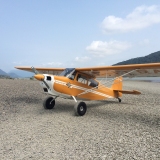
As aktahoe puts it, if it looks rough it is. Not sure if these guys were planning to land or not, they reported smelling gas and doing a precautionary landing but they were only 10 minutes or so from an airport. Looks like they saved the tailwheel though.
'74 7GCBC, 26" ABW, Aera 660 feeding G5 and FC-10 FF.
Thu Mar 13, 2014 9:51 pm
Re: Newbie Backcountry - Bouncing on rough ground
Karmutzen wrote:
As aktahoe puts it, if it looks rough it is. Not sure if these guys were planning to land or not, they reported smelling gas and doing a precautionary landing but they were only 10 minutes or so from an airport. Looks like they saved the tailwheel though.
aktahoe stole that saying from someone else, but it sure doesn't make it any less true!
They must have had some other problem, that doesn't look that bad, for those tires, unless they were some other hazards out of the picture frame. That gear looks like an upward/high descent rate/bounce failure, not ripped backwards like when running into too large a rock. Guess how I know? The picture is not real definitive of unseen hazards in other words, looks like some other issue helped things along.
- courierguy offline
- Posts: 4197
- Joined: Thu Mar 31, 2005 6:52 pm
- Location: Idaho
"Its easier to apologize then ask permission"
Tex McClatchy
Tex McClatchy
DISPLAY OPTIONS
Who is online
Users browsing this forum: No registered users and 0 guests
Latest Features
-
Live to Tell
A Minnesota pilot is surprised to learn that the sudden asymmetric drag of an out-of-rig ski can…Read More -
Creators
Working in some of the Yukon's most beautiful and remote environments, photographer Simon Blakesley captures aircraft in…Read More -
Aircraft Ownership and Maintenance
Upgrading to big tires can make a huge difference in backcountry performance, but with those gains come…Read More -
Tales from Yesteryear
In this tale from bush flying yesteryear, Don Cogger signs up to help Atlee Dodge Jr recovery…Read More


Latest Knowledge Base
-
Destinations
A regional guide with ideas for winter camping destinations in California, Nevada, New Mexico, and Arizona.Read More -
Aircraft
Finding an affordable aircraft that can handle the backcountry for $80K or less? A challenge for sure, but with the…Read More -
Aircraft
01.29.2018 - Zane - Updated tire diameter graphic to add 8.50x10 Guide to tires for use in the backcountry and off-airport landing…Read More -
Pilots
12.22.2013 - Initial article format Operating aircraft on skis and negotiating a snow-covered landscape is an entirely unique skillset and environment.…Read More


