I don't contribute to personal limitations discussions much because I don't believe they apply to techniques, which is what I teach mostly. I do have personal limitations, however, but they apply to organization and orientation and judgement. I think not being willing to try new techniques is bad judgement, but realize I have no place in jets. If there was a fifty fifty chance on a decision, I would choose wrong one hundred percent of the time. I stayed away from complicated airplanes and quit teaching instrument when I have to have the student help me with the computerized instruments that would do everything if you touched in the right place the right number of times and held down when necessary and........ Dave Trujillo had our guard unit schedule him with me so his, "white cloud could cancel out Dulin's black cloud." I expected the engine to quit and several times it did.
So I flew low all day where things happened so quickly little organization was going to have time to affect the outcome. Getting my mind around to the fact there there would be no altitude when things happened changed my orientation from altitude to airspeed. Airspeed was life. Airspeed is life at low altitude. My forced landings were six second deals. Airspeed gave me zoom reserve for the energy management turn and thus guaranteed no stall maneuverability.
Another orientation developed over the years as well. As six seconds gave little time for anything other than changing tanks, I developed a preference for sticking with first choice. They say to stick with first choice on multiple choice test questions. First choice leads to lots of incidents and accidents but fewer fatalities. This is low altitude orientation. With altitude lots of higher level judgement can take place. Altitude is time. Time allows for resource management. IFR provides altitude, airspeed, procedural track, and continuous ATC help. In the pattern and below, there may be little time. In man to man defence, first move is toward the goal. At low altitude, first move is toward the landing zone.
I don't want to go up against most of the pilots on here judgement wise. I would lose. I lived my young years with a gifted brother. I have lived most of the remaining years with a gifted wife. They are never wrong. My wife has never had an accident. That scares the pee out of me. No muscle memory whatsoever.
I suppose what I am talking about is more of a philosophical outlook than judgement, but I really worry about our general aviation training philosophy. The school solution that we are so organized we know everything there is to know about our planned flight scares the pee out of me. I never knew even which way I would go first on my pipeline loop until I checked weather just before I left. Yes aviation weather, but the weather check that most drove my decision was the one I performed in the 172. A sling shot (Navy term) is a takeoff and teardrop course to return and land the other way.
I am an optimist not a pessimist, but I expect the engine to quit. My optimism is that I will be able to land somewhere. When the young nobleman in Great Expectations asked Pip how he was kept Pip answered, "I look about me." The techniques I teach are easy to teach and can be learned easily and quickly, so my students soloed quickly and learned school solutions with the other instructors. The pilots I fly with now learn the techniques easily and quickly and perform them better than I do. I fly with gifted pilots and with Pips. I worry more about the gifted.
Personal limitations and judgement.
Sat Jan 29, 2022 10:47 pm
- contactflying offline
- Posts: 4972
- Joined: Wed Apr 03, 2013 7:36 pm
- Location: Aurora, Missouri 2H2
Download my free "https://tinyurl.com/Safe-Maneuvering" e-book.
Mon Jan 31, 2022 2:47 pm
Re: Personal limitations and judgement.
Another great Sunday sermon Rev Jimmy , thanks .
Wed Feb 02, 2022 11:08 am
Re: Personal limitations and judgement.
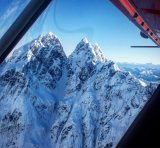
Recently wrote a piece on mountain flying, and on the subject of when to fly in the mountains weather is of course at the top of the list. I left the limitations up to personal comfort levels rather than naming benchmark figures.
The struggle with weather is it’s a different limit for every pilot based on experience. I’ve been at companies that encouraged the “one pilot calls it, all call it” culture and functionally, it doesn’t work.
Certainly safe, but little work gets done and there are pilots at the company perfectly capable of flying a full safe day in the conditions that may deter other pilots.
The problem with that isn’t the guy or gal heading out into the schmoo, long as it’s legal it’s the pilot’s call. It’s the pilot left behind second guessing if they should go. Here in British Columbia on the coast and mountains you couldn’t possibly wait for good days all the time, or you’d seldom fly much of the year.
That’s where the company and aviator culture needs to focus, that there’s no shame in not flying or doing a job you’re not comfortable with. In fact, that’s a call to be commended and is more courageous than going flying in conditions you’re not ready for.
The struggle with weather is it’s a different limit for every pilot based on experience. I’ve been at companies that encouraged the “one pilot calls it, all call it” culture and functionally, it doesn’t work.
Certainly safe, but little work gets done and there are pilots at the company perfectly capable of flying a full safe day in the conditions that may deter other pilots.
The problem with that isn’t the guy or gal heading out into the schmoo, long as it’s legal it’s the pilot’s call. It’s the pilot left behind second guessing if they should go. Here in British Columbia on the coast and mountains you couldn’t possibly wait for good days all the time, or you’d seldom fly much of the year.
That’s where the company and aviator culture needs to focus, that there’s no shame in not flying or doing a job you’re not comfortable with. In fact, that’s a call to be commended and is more courageous than going flying in conditions you’re not ready for.

Wed Feb 02, 2022 12:37 pm
Re: Personal limitations and judgement.
Ardent, many of us have worked for outfits that pushed the mission. I have no problem with those if they are willing to train to the mission. What worries me are the outfits that won't provide the plane if I were to train free and the pilots who don't want to train for the mission. That said, my work as a crop duster and pipeline patrol pilot did not involve carrying passengers.
The work can also change and we can get old a not see as well. I just got the cataract surgery on my good eye and can see well again. That was delayed because of only one eye.
Openness with people is very necessary in our business. We need to listen when pilots aren't comfortable with a situation, but also be available to help them get from where they are to where they want to be. It really irritates me that much of what worries young pilots is that they know that they don't know how to fly safely and were taught to fly unsafely. We train pilots to muscle memory automatically do the wrong thing in an upset or ground rush: pull back on the stick. Thus we have taught them to do the only thing that will cause an airplane to stall.
The work can also change and we can get old a not see as well. I just got the cataract surgery on my good eye and can see well again. That was delayed because of only one eye.
Openness with people is very necessary in our business. We need to listen when pilots aren't comfortable with a situation, but also be available to help them get from where they are to where they want to be. It really irritates me that much of what worries young pilots is that they know that they don't know how to fly safely and were taught to fly unsafely. We train pilots to muscle memory automatically do the wrong thing in an upset or ground rush: pull back on the stick. Thus we have taught them to do the only thing that will cause an airplane to stall.
- contactflying offline
- Posts: 4972
- Joined: Wed Apr 03, 2013 7:36 pm
- Location: Aurora, Missouri 2H2
Download my free "https://tinyurl.com/Safe-Maneuvering" e-book.
Wed Feb 02, 2022 1:14 pm
Re: Personal limitations and judgement.
I quite think pulling back is human nature shying away from a problem, and is overcome as you said through training.
On the heli side in the day job, in autorotations it can take years for a pilot to not start lifting the collective and / or flaring too early. You have to conserve that energy for the very end. Ground shyness makes them pull and burn their reserve too early, same shyness applies in fixed wing.
The instinctual attempt to pull up and out of a problem can be found in many accident reports, especially in stalls exacerbated by icing or airspeed indicator errors. I don’t believe they’re being taught to pull back at all, it’s simply human instinct and it takes training, and lots of repetition and muscle memory as you note, to break it.
On the heli side in the day job, in autorotations it can take years for a pilot to not start lifting the collective and / or flaring too early. You have to conserve that energy for the very end. Ground shyness makes them pull and burn their reserve too early, same shyness applies in fixed wing.
The instinctual attempt to pull up and out of a problem can be found in many accident reports, especially in stalls exacerbated by icing or airspeed indicator errors. I don’t believe they’re being taught to pull back at all, it’s simply human instinct and it takes training, and lots of repetition and muscle memory as you note, to break it.
Wed Feb 02, 2022 1:46 pm
Re: Personal limitations and judgement.
Yes, in airplane Ag training I never once had to grab the stick to keep a student from hitting a tree. Teaching them not to bleed energy too early was the problem. I had the opposite problem with auto-rotation in the Hughes. At Wolters, I kept trying to three point the TH-55 on slowly and would have hit the stinger. On the third try my instructor, knowing I had flown Cubs, yelled, "Wheel landing, dammit." Living low gives us a different view of flying. Unfortunately high flyers have to get low to come home.
- contactflying offline
- Posts: 4972
- Joined: Wed Apr 03, 2013 7:36 pm
- Location: Aurora, Missouri 2H2
Download my free "https://tinyurl.com/Safe-Maneuvering" e-book.
Wed Feb 02, 2022 2:08 pm
Re: Personal limitations and judgement.
For an autorotation flare and touchdown we say,
“Flare, [cyclic flare, smoothly arrest airspeed and trade it for less rate of descent]
Level, [push the machine level with the cyclic, it’s rather aggressive but smooth and usually done under 10’]
Cushion, [all the collective in a smooth but determined pull leaving no rpm unused].
Like you said with all emergencies, only way to learn it is muscle memory, there isn’t time for anything else generally in rotary at low level.
“Flare, [cyclic flare, smoothly arrest airspeed and trade it for less rate of descent]
Level, [push the machine level with the cyclic, it’s rather aggressive but smooth and usually done under 10’]
Cushion, [all the collective in a smooth but determined pull leaving no rpm unused].
Like you said with all emergencies, only way to learn it is muscle memory, there isn’t time for anything else generally in rotary at low level.
Sat Feb 05, 2022 8:01 am
Re: Personal limitations and judgement.
Ardent,
Where is your piece on mountain flying? I would like to read it?
Where is your piece on mountain flying? I would like to read it?
- contactflying offline
- Posts: 4972
- Joined: Wed Apr 03, 2013 7:36 pm
- Location: Aurora, Missouri 2H2
Download my free "https://tinyurl.com/Safe-Maneuvering" e-book.
Sun Feb 06, 2022 3:00 pm
Re: Personal limitations and judgement.
Just recently handed it in to Zane, for use on the site.
DISPLAY OPTIONS
Who is online
Users browsing this forum: No registered users and 0 guests
Latest Features
-
Live to Tell
A Minnesota pilot is surprised to learn that the sudden asymmetric drag of an out-of-rig ski can…Read More -
Creators
Working in some of the Yukon's most beautiful and remote environments, photographer Simon Blakesley captures aircraft in…Read More -
Aircraft Ownership and Maintenance
Upgrading to big tires can make a huge difference in backcountry performance, but with those gains come…Read More -
Tales from Yesteryear
In this tale from bush flying yesteryear, Don Cogger signs up to help Atlee Dodge Jr recovery…Read More


Latest Knowledge Base
-
Destinations
A regional guide with ideas for winter camping destinations in California, Nevada, New Mexico, and Arizona.Read More -
Aircraft
Finding an affordable aircraft that can handle the backcountry for $80K or less? A challenge for sure, but with the…Read More -
Aircraft
01.29.2018 - Zane - Updated tire diameter graphic to add 8.50x10 Guide to tires for use in the backcountry and off-airport landing…Read More -
Pilots
12.22.2013 - Initial article format Operating aircraft on skis and negotiating a snow-covered landscape is an entirely unique skillset and environment.…Read More


