svanarts wrote:Skalywag wrote:I believe that it is still clear as mud Cary. I have been told (right hearsay) that us non commercial guys do not actually have to consent to a ramp check and that part 135 guys can decline if it interferes with their schedule etc. Now it also seems clear, that pending the circumstance, this may or may not cause the inspector to attempt to contact you at a later time to conduct the inspection or verify documents. I had an email from a friend of a friend who is an FAA inspector outlining the law in detail. According to that email, part 91 is not part of the FAR you quoted and only applies to commercial operators/operations etc. I have it on my computer and will drudge it up when I get back home.
Just like so many things tho, depending on the inspector or LEO, some would have you believe you are subject to a full search, including cavities, if they deem necessary.......
This is what confuses me. I was nosing through 8900.1 and found the guidance they use for performing ramp checks:
http://fsims.faa.gov/PICDetail.aspx?doc ... 6,Ch2,Sec4THIS particular section only applies to airlines, air charters, and fractional ownerships.
I agree that the FAR listed above gives them the right to inspect our airman certificate. Maybe we are getting hung up over the term "ramp check". Are we calling something a ramp check that really isn't a ramp check?
Hello,
There
is specific guidance in the FAA Handbook 8900.1 regarding performing a Part 91 Ramp Check see below. The 8900.1 is an FAA Inspectors "how to" or "operations manual". In addition there is Federal Law US CFR 44709 that gives the FAA authorization to inspect, airman, aircraft, and records. This information is in black and white so don't shoot the messenger. After following this link I was amazed by the amount of inaccurate BS/information, particularly from an attorney. I must admit that MTV is right on the mark on this subject and is most of the time.
Merry Christmas
James
Excerpt from FAA Handbook 8900.1 8900.1 CHG 262
Volume 6 SURVEILLANCE
chapter 1 PART 91 INSPECTIONSSection 4 Conduct a Part 91 Ramp Inspection6-88 OBJECTIVE. The objective of this task is to determine that an airman, operator, and/or aircraft is in continuing compliance with Title 14 of the Code of Federal Regulations (14 CFR). Completion of this task results in an indication in district office files and national PTRS of either a satisfactory or an unsatisfactory inspection.
6-89 GENERAL. Part 91 ramp inspections are numerous; however, it is important that the aviation safety inspector (ASI) become familiar with the aircraft he or she is inspecting. Ramp inspections involving other 14 CFR parts are available in the appropriate related task heading. This section covers ramp inspections for part 91 operators only.
Note: Airworthiness and Operations inspectors conduct ramp inspections on airmen and aircraft operating under various 14 CFR parts. The information provided may be applicable to either discipline depending on the conditions observed by the inspector and the 14 CFR part under which the aircraft is operated.
A. Definitions.
1) Operator. For the purposes of this chapter, an operator may be an owner, pilot, executive/corporate operator, etc.
2) Ramp Inspection. A ramp inspection is defined as surveillance of an airman, operator, air agency, or aircraft which may include conducting maintenance record inspections (PTRS code 3694/5694) sufficient to show compliance with 14 CFR during actual operations at an airport or heliport.
B. Inspector Conduct. The inspector must always have their Federal Aviation Administration (FAA) credentials available, since an airman or operator may or may not know an inspector.
Indicates new/changed information.
Note: For special considerations concerning surveillance at fly-ins, airshows, and other gatherings of General Aviation (GA) aircraft and airmen, see Volume 6, Chapter 11, Section 10, Surveillance of an Aviation Event, subparagraphs 6-2373A1) through 5). The inspector during a ramp inspection at a glider race or similar aviation event (where a waiver or authorization is not required) should not interrupt or distract a pilot during their pre-race routine within 1 hour of their race unless there is a safety-related issue. Should the inspector need to address an issue, he or she will do it as professionally as possible.
1) An inspector must not open or board any aircraft without the knowledge and consent of the crew or owner/operator. Some operators may prefer to have a company representative present to answer questions.
Indicates new/changed information.
2) If the surveillance will delay a flight, the inspector should use prudent judgment whether or not to continue an inspection that may affect an operator’s busy schedule.
Indicates new/changed information.
3) The inspector should also bear in mind that he or she may not be able to complete all items on every ramp inspection, but the operator should provide the inspector with enough information that he or she is confident that the aircraft is in compliance with the regulations.
Indicates new/changed information.
C. Common Reasons for a Ramp Inspection. Ramp inspections may result when the inspector:
1) Observes an unsafe operation in the traffic pattern or in the ramp.
2) Receives notification from air traffic control (ATC) of an unsafe operation.
3) Observes obvious discrepancies that may affect the airworthiness of the aircraft.
4) Conducts routine surveillance activities.
5) Receives a task from FAA Order 1800.56, National Flight Standards Work Program Guidelines.
49 USC § 44709 - Amendments, modifications, suspensions, and revocations of certificates
There is 1 Update Pending. Select the tab below to view.
.
Excerpt from US CFR 44709: (a) Reinspection and Reexamination.— The Administrator of the Federal Aviation Administration may reinspect at any time a civil aircraft, aircraft engine, propeller, appliance, design organization, production certificate holder, air navigation facility, or air agency, or
reexamine an airman holding a certificate issued under section 44703 of this title.
Sorry but I got to add a picture too:
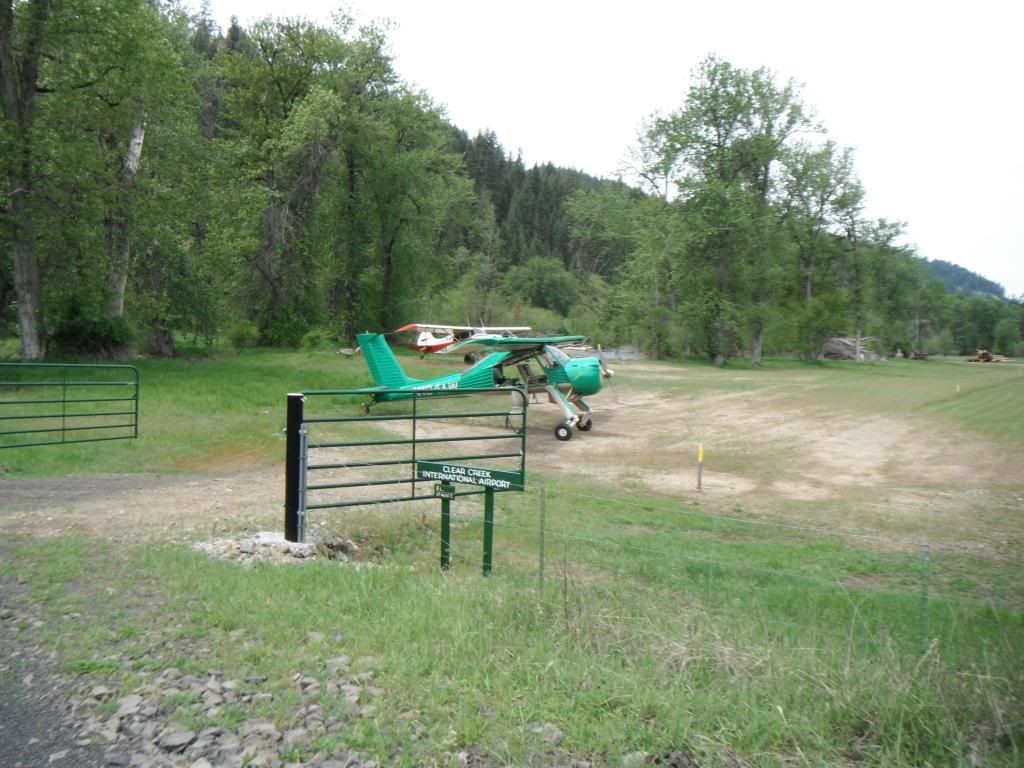




 But even if you go up the ramp and out to the main road, it is to crooked and narrow to use!!
 , Nice surface James did a great job on what he had to work with!!