I see much discussion here about floats vs. wheels and the compromises that go with that. I'm curious about the opinions of the community on the SeaRey amphibian. Now, I'm not talking about the older home-built version that your Dad built in a garage a few decades ago (with all due respect for those airplanes and builders)! I'm talking about the current factory offering with the beefed up airframe, tougher landing gear, bigger tires and LSA certification. Sure, it's no Super Cub, but it is a tail dragger - and will access 80% of the off airport environments non-commercial flyers need or want to visit. It also comes with an added bonus; it's an amazing little flying boat capable of handling big water that keeps other LSA seaplanes in the hangar.
In full disclosure, I don't own a SeaRey but I do fly them often - on the water, at airports and occasionally off airports. I have always been impressed with its capability, but surprised that it's off the radar for those struggling with the "wheels or floats" conundrum. I fly floats and (when I can) bush wheels too, but those airplanes make you choose. The SeaRey allows the pilot to have ALL the fun. I'm happy to share my experiences, but am curious about the thoughts of others...
SeaRey - backcountry / seaplane compromise?
Mon Aug 06, 2018 9:17 pm

Tue Aug 07, 2018 4:13 am
Re: SeaRey - backcountry / seaplane compromise?
I’m a big fan of the Searay. I’ve always loved it. If I was in the market for a 2-seater, it wouldn’t even be a question, really. Such a cool plane! Alas I’m a 4-seater kind of guy.
I certainly would love to hear your Searay stories, though. Throw them in the ring!
I certainly would love to hear your Searay stories, though. Throw them in the ring!
- Chris In Marshfield offline

- Posts: 238
- Joined: Mon Apr 04, 2016 6:54 am
- Location: Northern
- Aircraft: Vans RV-6
Quicksilver Sprint II
Warner Spacewalker II
Tue Aug 07, 2018 5:50 am
Re: SeaRey - backcountry / seaplane compromise?
Chris In Marshfield wrote:
I certainly would love to hear your Searay stories, though. Throw them in the ring!
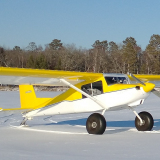
Same here!! Lets here the stories! I looked at several similar types at Oshkosh this year (just because) and always wondered how they would handle grass strips. Most of them look to have what I would call "spindly" wheel gear. I figure they will handle the typical smooth grass strip, but not so sure if they would handle any type of rough strip.

Tue Aug 07, 2018 8:31 am
Re: SeaRey - backcountry / seaplane compromise?
I think the idea of a light amphib flying boat that's a taildragger is super cool. I was actually totally obsessed with Seareys last year; it's never good to be obsessed with another aircraft type when you're building a different type.  But their versatility as a light 2-seat fun airplane seems unrivaled... We just have to fit them with a little bigger tires .

But their versatility as a light 2-seat fun airplane seems unrivaled... We just have to fit them with a little bigger tires . - Zzz offline


- Posts: 2855
- Joined: Fri Oct 08, 2004 11:09 pm
- Location: northern
- Aircraft: Swiveling desk chair
Half a century spent proving “it is better to be thought a fool than to open your mouth and remove all doubt.”
Tue Aug 07, 2018 11:26 am
Re: SeaRey - backcountry / seaplane compromise?
Here's hoping that ours flies soon so I can answer this. Hoping for next summer.
Thu Aug 09, 2018 7:57 pm
Re: SeaRey - backcountry / seaplane compromise?
In full disclosure Kevin, are you not the Salesman/Sales Manager for Searey?
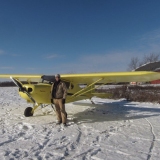
I love the Searey, its capabilities and my friends that own them have a blast. Yes, it needs a gear leg redesign for backcountry and for skis, but it would be pretty cool it could be done. We've threatened to put my 29's or my skis on a Searey, for a photo op if nothing else.
pb
I love the Searey, its capabilities and my friends that own them have a blast. Yes, it needs a gear leg redesign for backcountry and for skis, but it would be pretty cool it could be done. We've threatened to put my 29's or my skis on a Searey, for a photo op if nothing else.
pb
Thu Aug 09, 2018 8:26 pm
Re: SeaRey - backcountry / seaplane compromise?
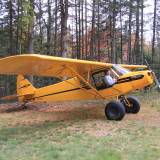
I love that Lund tiller in the background!
Kurt
Kurt

Thu Aug 09, 2018 8:33 pm
Re: SeaRey - backcountry / seaplane compromise?
Having owned a "flying hull" type airplane, I can honestly say, they are a pain around the dock! Float planes are a lot easier around the dock for coming and going as well as tying up. That is one disadvantage, however, hull type amphibs are still awesome airplanes.
Kurt
Kurt
Thu Aug 09, 2018 9:20 pm
Re: SeaRey - backcountry / seaplane compromise?
G44 wrote:Having owned a "flying hull" type airplane, I can honestly say, they are a pain around the dock! Float planes are a lot easier around the dock for coming and going as well as tying up. That is one disadvantage, however, hull type amphibs are still awesome airplanes.
Kurt
Completely agree there Kurt. I did a few service calls (for their boat) to customers on lakes and in one instance the Searey worked great, drop the gear and drive up on the ramp. In the other instances there was nothing but a mooring bouy or a dock, so had to borrow space from someone else down the lake with a beach and have the customer come pick me up.
But if you do a lot of recreational lake flying, I will say the investment into a Searey is easier to swallow than adding amphibs to anything.

pb
Thu Aug 09, 2018 9:42 pm
Re: SeaRey - backcountry / seaplane compromise?
I have seen SeaRey land at some pretty rough / backcountry airstrips. The kind I've posted in my trip report thread.
They are capable on land as well as water. Long term, a lot of rough airports would likely be unwelcome for the moving parts in the landing gear.
They are capable on land as well as water. Long term, a lot of rough airports would likely be unwelcome for the moving parts in the landing gear.


Sun May 12, 2019 10:34 am
Re: SeaRey - backcountry / seaplane compromise?
To satisfy Kevin's SeaRey interest we went out to some Florida backcountry recently. Instead of landing on the river, I landed my SeaRey gear down on the (currently) dry bed. (I'm still traumatized by the gear position with water sooo close!) Kevin followed me in his Husky. As you can see from our tracks, the SeaRey and its standard little tires makes a deeper rut than the big-footed Husky. Both airplanes did just fine, but the Husky is clearly the better soft-sediment machine. On the other hand, if the mud were liquid I'd be happier in my SeaRey.


Mon May 13, 2019 7:41 am
Re: SeaRey - backcountry / seaplane compromise?
Where about in Florida is this? I've been looking for new spots to explore with the 140, but Florida seems very limited for us stuck with wheels. I've found a few spots so far...SeaReyGuy wrote:To satisfy Kevin's SeaRey interest we went out to some Florida backcountry recently. Instead of landing on the river, I landed my SeaRey gear down on the (currently) dry bed. (I'm still traumatized by the gear position with water sooo close!) Kevin followed me in his Husky. As you can see from our tracks, the SeaRey and its standard little tires makes a deeper rut than the big-footed Husky. Both airplanes did just fine, but the Husky is clearly the better soft-sediment machine. On the other hand, if the mud were liquid I'd be happier in my SeaRey.


Sent from my SM-G960U using Tapatalk
- jlacharite offline

- Posts: 271
- Joined: Fri Nov 04, 2016 4:27 pm
- Location: Grand Rapids
- Aircraft: Cessna 140 N89476
Cessna 170B N2693D
Wed May 15, 2019 10:19 pm
Re: SeaRey - backcountry / seaplane compromise?
I would have a hard time classifying the Searey as a sturdy backcountry vehicle. They have a lot of cool features, but robustness of construction is not one. I’m sure an occasional rough dirt strip would be fine, but there is no suspension built into the gear. Maybe the latest models are designed different, who knows. But for the legacy aircraft there is no spring steel, or bungees, or oleo. Just the air in the tires.
And they lack ground clearance. You can sit in the cockpit, open the canopy, and reach out and touch the ground. With your butt firmly planted in the seat.
While sitting with the gear extended, parked on the ground, there is about 2” from the step in the hull down to the ground. That is not a whole lot.
While the airframes are certainly airworthy, they are not the most sturdy aircraft. Even a big proponent in the Searey community recommended rebuilding them every 5 years or 500 hours. Which just sounds weird to me.
I believe most of them are in Florida, which should tell us something.
I do like the split canopy, and the visibility and the performance, but I would not try to pass them off as a rugged aircraft
And they lack ground clearance. You can sit in the cockpit, open the canopy, and reach out and touch the ground. With your butt firmly planted in the seat.
While sitting with the gear extended, parked on the ground, there is about 2” from the step in the hull down to the ground. That is not a whole lot.
While the airframes are certainly airworthy, they are not the most sturdy aircraft. Even a big proponent in the Searey community recommended rebuilding them every 5 years or 500 hours. Which just sounds weird to me.
I believe most of them are in Florida, which should tell us something.
I do like the split canopy, and the visibility and the performance, but I would not try to pass them off as a rugged aircraft

Thu May 16, 2019 6:24 pm
Re: SeaRey - backcountry / seaplane compromise?
The photo was taken in the St. Johns River valley, jlarcharite. Looks like you were there too?
Robustness of construction would seem to be a matter of opinion. I think the SeaRey has been proven to be plenty robust for my use. But the airplane has certainly evolved and improved over its 27 year history, so not all are created equal.
For some perspective, though, the airframe of a light sport aircraft like the factory model now being produced had to successfully survive stresses in excess of those specified for Part 23 designs. The landing gear in particular had to survive a drop test subjected to 6g at design MGW (it bowed at 6.8g and failed at 7.2g by bending). That doesn't mean it will take the same beating as a Husky's gear, but it's not easy to break. And that's not to say Searey gear haven't been broken by some folks, but my SeaRey has 3000 hours on it, has flown all over the U.S., Canada and the Bahamas, and landed in Prudhoe Bay off Deadhorse for good measure. It's been landed on unimproved pastures and backcountry strips. I've never broken a landing gear, but I have upgraded it as the design improved.
As a demanding customer I've also participated in factory testing since the yacht I work for uses a Searey in open ocean environments. I wanted to see what kind of stresses the airframe is subjected to in severe environments. For example, at normal landing speeds at MGW in 14" chop the airframe sees instantaneous loads in excess of 7g. In 10 years of use in oceans around the world, including some pretty rugged water, there has never been any evidence of structural issues. Having owned multiple Part 23 amphibs, there's no way would I want to abuse them like we do the SeaRey (but I'm not a billionaire that can afford to fix them either).
It is true there isn't much clearance for ground operations. Hitting a rock with the hull would make for a bad day. Keel guards help, but it's much better to use it the way it was intended: land in the water and taxi ashore.
One of the benefits to working on an ocean-going yacht is traveling around the world and finding SeaReys almost everywhere there is water. There may be more in Florida than anywhere else, but they can be found most any place (I think they're up to about 800 kits sold and 100 LSAs built now).
There is no way any SeaRey will compete for off-roading with a serious, purpose built machine like the Husky, but sometimes it's fun to run with the big dog. Just got to know your machine's limitations. Didn't Clint say that?

Robustness of construction would seem to be a matter of opinion. I think the SeaRey has been proven to be plenty robust for my use. But the airplane has certainly evolved and improved over its 27 year history, so not all are created equal.
For some perspective, though, the airframe of a light sport aircraft like the factory model now being produced had to successfully survive stresses in excess of those specified for Part 23 designs. The landing gear in particular had to survive a drop test subjected to 6g at design MGW (it bowed at 6.8g and failed at 7.2g by bending). That doesn't mean it will take the same beating as a Husky's gear, but it's not easy to break. And that's not to say Searey gear haven't been broken by some folks, but my SeaRey has 3000 hours on it, has flown all over the U.S., Canada and the Bahamas, and landed in Prudhoe Bay off Deadhorse for good measure. It's been landed on unimproved pastures and backcountry strips. I've never broken a landing gear, but I have upgraded it as the design improved.
As a demanding customer I've also participated in factory testing since the yacht I work for uses a Searey in open ocean environments. I wanted to see what kind of stresses the airframe is subjected to in severe environments. For example, at normal landing speeds at MGW in 14" chop the airframe sees instantaneous loads in excess of 7g. In 10 years of use in oceans around the world, including some pretty rugged water, there has never been any evidence of structural issues. Having owned multiple Part 23 amphibs, there's no way would I want to abuse them like we do the SeaRey (but I'm not a billionaire that can afford to fix them either).
It is true there isn't much clearance for ground operations. Hitting a rock with the hull would make for a bad day. Keel guards help, but it's much better to use it the way it was intended: land in the water and taxi ashore.
One of the benefits to working on an ocean-going yacht is traveling around the world and finding SeaReys almost everywhere there is water. There may be more in Florida than anywhere else, but they can be found most any place (I think they're up to about 800 kits sold and 100 LSAs built now).
There is no way any SeaRey will compete for off-roading with a serious, purpose built machine like the Husky, but sometimes it's fun to run with the big dog. Just got to know your machine's limitations. Didn't Clint say that?
Thu May 16, 2019 7:46 pm
Re: SeaRey - backcountry / seaplane compromise?
Seareyguy,
I think I would like your job!!!
I think I would like your job!!!
Fri May 17, 2019 4:04 am
Re: SeaRey - backcountry / seaplane compromise?
As the Navy recruitment ad once said, "It's not a job. It's an adventure."
DISPLAY OPTIONS
Who is online
Users browsing this forum: No registered users and 1 guest
Latest Features
-
Live to Tell
A Minnesota pilot is surprised to learn that the sudden asymmetric drag of an out-of-rig ski can…Read More -
Creators
Working in some of the Yukon's most beautiful and remote environments, photographer Simon Blakesley captures aircraft in…Read More -
Aircraft Ownership and Maintenance
Upgrading to big tires can make a huge difference in backcountry performance, but with those gains come…Read More -
Tales from Yesteryear
In this tale from bush flying yesteryear, Don Cogger signs up to help Atlee Dodge Jr recovery…Read More


Latest Knowledge Base
-
Destinations
A regional guide with ideas for winter camping destinations in California, Nevada, New Mexico, and Arizona.Read More -
Aircraft
Finding an affordable aircraft that can handle the backcountry for $80K or less? A challenge for sure, but with the…Read More -
Aircraft
01.29.2018 - Zane - Updated tire diameter graphic to add 8.50x10 Guide to tires for use in the backcountry and off-airport landing…Read More -
Pilots
12.22.2013 - Initial article format Operating aircraft on skis and negotiating a snow-covered landscape is an entirely unique skillset and environment.…Read More


