Not clear of the term in English.
What I do is lower one wing and apply opposite rudder , enough amount so the airplane does not start to turn, to loose altitude without gaining speed.
Slips and skidding turns
Mon Feb 24, 2020 3:06 pm
Mon Feb 24, 2020 5:26 pm
Re: Slips and skidding turns
Very good teaching video. The forward slip, while generally not necessary in Cessnas with 40 degrees of flap, is very helpful getting even greater sink rate when necessary. One way strip, limited short final space, and low level forced landing are three must get down faster at slow airspeed situations that benefit from forward slip with full flaps.
The skid is a very useful technique in ground effect on a crooked egress or with the nose still down on a crooked short final. Keeping the wing out of the ground and not hitting trees and not stalling trigger the need, necessity. In low altitude work, training and currency in skidding turns tremendously increase safety.
Again, very good work.
The skid is a very useful technique in ground effect on a crooked egress or with the nose still down on a crooked short final. Keeping the wing out of the ground and not hitting trees and not stalling trigger the need, necessity. In low altitude work, training and currency in skidding turns tremendously increase safety.
Again, very good work.
- contactflying offline
- Posts: 4972
- Joined: Wed Apr 03, 2013 7:36 pm
- Location: Aurora, Missouri 2H2
Download my free "https://tinyurl.com/Safe-Maneuvering" e-book.
Mon Feb 24, 2020 10:44 pm
Re: Slips and skidding turns
Don't agree with skidding turns any time. Watching his vid he was fast enough just to pull a bit more height and turn balanced with plenty of wingtip clearance.
The "Forward" slip is just a side-slip. Your either in balance or not, so it's a side-slip. I suppose if you fell out of a skidding turn you might go in backwards, would that be called a "Backwards" slip?
The "Forward" slip is just a side-slip. Your either in balance or not, so it's a side-slip. I suppose if you fell out of a skidding turn you might go in backwards, would that be called a "Backwards" slip?
Tue Feb 25, 2020 7:09 am
Re: Slips and skidding turns
Terms are what we, both educators and students, make of them. How well we explain or digest them makes a difference in their usefulness.
Cross control (rudder and aileron,) called unbalanced control in some places, causes rapid descent without increase in airspeed because the fuselage is not aligned with the relative wind.
The objective of forward slip is the above, sink rapidly without increase in airspeed.
The objective of the sideslip (would not longitudinal axis alignment by any other name be just as useful) is to align the longitudinal axis with rudder while eliminating drift with bank into the crosswind.
The objective of language is to communicate an idea, oral or written, from person to person. Common terms tend to be more useful unless they get stale. What we do with the controls is more important than the terms used to describe it. Language requires fewer resources than demonstration. Both are better than either alone.
Cross control (rudder and aileron,) called unbalanced control in some places, causes rapid descent without increase in airspeed because the fuselage is not aligned with the relative wind.
The objective of forward slip is the above, sink rapidly without increase in airspeed.
The objective of the sideslip (would not longitudinal axis alignment by any other name be just as useful) is to align the longitudinal axis with rudder while eliminating drift with bank into the crosswind.
The objective of language is to communicate an idea, oral or written, from person to person. Common terms tend to be more useful unless they get stale. What we do with the controls is more important than the terms used to describe it. Language requires fewer resources than demonstration. Both are better than either alone.
- contactflying offline
- Posts: 4972
- Joined: Wed Apr 03, 2013 7:36 pm
- Location: Aurora, Missouri 2H2
Download my free "https://tinyurl.com/Safe-Maneuvering" e-book.
Tue Feb 25, 2020 7:29 am
Re: Slips and skidding turns
Where is that spelling bee winner? Aural not oral communication. Zane could throw me off for porn.
- contactflying offline
- Posts: 4972
- Joined: Wed Apr 03, 2013 7:36 pm
- Location: Aurora, Missouri 2H2
Download my free "https://tinyurl.com/Safe-Maneuvering" e-book.
Tue Feb 25, 2020 4:26 pm
Re: Slips and skidding turns
Contact, outside the US a side-slip is rudder then holding wings level (Crossed controls) or sometimes one wing down to fly uncoordinated flight usually to get greater descent rate.
I could not understand your description of what you call a side-slip (My American to English translation is faulty), do you mean like some people do to keep the aircraft aligned with the runway instead of allowing the aircraft to fly down the centreline at an angle then kicking straight to touchdown?
I could not understand your description of what you call a side-slip (My American to English translation is faulty), do you mean like some people do to keep the aircraft aligned with the runway instead of allowing the aircraft to fly down the centreline at an angle then kicking straight to touchdown?
Tue Feb 25, 2020 5:08 pm
Re: Slips and skidding turns
Yes, what you describe as keeping the aircraft aligned with the centerline and centerline extended. The kickover you mentioned follows what we call a crab approach finished with sideslip to touchdown. Big airplane pilots prefer that while most small airplane pilots, especially those who use very short finals, just sideslip all the way down this short final.
Using rudder to keep the fuselage continuously aligned with the centerline extended is good practice and makes the more difficult to time kick into sideslip at the last minute unnecessary.
Using rudder to keep the fuselage continuously aligned with the centerline extended is good practice and makes the more difficult to time kick into sideslip at the last minute unnecessary.
- contactflying offline
- Posts: 4972
- Joined: Wed Apr 03, 2013 7:36 pm
- Location: Aurora, Missouri 2H2
Download my free "https://tinyurl.com/Safe-Maneuvering" e-book.
Tue Feb 25, 2020 7:04 pm
Re: Slips and skidding turns
OK, all clear now, just different terminology. Most general aviation I've had anything to do with use the crab approach kicking at the last of the flair. For those who have trouble judging or the inexperienced go for the uncoordinated approach of trying to keep the aircraft aligned with the runway.
As I said most English/Australian instructors (Old school) call side-slips the full rudder and holding off aileron to whatever angle of bank you desire. Used to steepen approach or wash off speed. It's only been the last couple of years in this country the term "Forward slips" has been used, I think it came from America.
What's your opinion of the skidding turn mentioned in the Video?
The other mention I've heard of a skidding turns is spraying low level and to maneuver around a power pole or tree. That is usually a lot faster than slow approach or departure turn. Because of the speed spraying it's not dangerous but doesn't do the spray pattern any good. Your better off pulling up and doing cleanup runs.
As I said most English/Australian instructors (Old school) call side-slips the full rudder and holding off aileron to whatever angle of bank you desire. Used to steepen approach or wash off speed. It's only been the last couple of years in this country the term "Forward slips" has been used, I think it came from America.
What's your opinion of the skidding turn mentioned in the Video?
The other mention I've heard of a skidding turns is spraying low level and to maneuver around a power pole or tree. That is usually a lot faster than slow approach or departure turn. Because of the speed spraying it's not dangerous but doesn't do the spray pattern any good. Your better off pulling up and doing cleanup runs.
Tue Feb 25, 2020 8:12 pm
Re: Slips and skidding turns
Yes, wings level rudder turns, skidding turns, are used extensively in spraying. Moving around obstruction in field, under wires, crooked ingress and egress. Yes, disrupts spray pattern a bit, but drift results worse from high spraying. Six inches better than three feet, but three feet better than high enough for any coordinated turn. My Ag instructor was Marshall Eugene Harrison, author of "A Lonely Kind of War." He did the fertilizer season in England in Pawnee several years.
Modern aircraft with engineered wings to mitigate adverse yaw result in lots of slipping turns. A slipping turn, a slow turn, can result in a wing still being down going over wires into a field. Not good. A term I use most often teaching spraying is, "Push the nose around." Near the ground, skidding is much less dangerous than slipping when obstructions abound.
The advantage of directing the nose to the centerline with rudder and cancelling drift with bank on short final is that deceleration/sink to touchdown slowly and softly on the desired touchdown spot can be easily controlled with pitch and power all the way down. Cross control all the way down, deceleration all the way down, descent control all the way down, spot within one meter.
Modern aircraft with engineered wings to mitigate adverse yaw result in lots of slipping turns. A slipping turn, a slow turn, can result in a wing still being down going over wires into a field. Not good. A term I use most often teaching spraying is, "Push the nose around." Near the ground, skidding is much less dangerous than slipping when obstructions abound.
The advantage of directing the nose to the centerline with rudder and cancelling drift with bank on short final is that deceleration/sink to touchdown slowly and softly on the desired touchdown spot can be easily controlled with pitch and power all the way down. Cross control all the way down, deceleration all the way down, descent control all the way down, spot within one meter.
- contactflying offline
- Posts: 4972
- Joined: Wed Apr 03, 2013 7:36 pm
- Location: Aurora, Missouri 2H2
Download my free "https://tinyurl.com/Safe-Maneuvering" e-book.
Tue Feb 25, 2020 10:33 pm
Re: Slips and skidding turns
Trying not to be disrespectful but I disagree with most of that. First off spraying, things used to be like that but now have changed to a more targeted approach due to chem prices and environmental considerations. Spraying has gone more towards heavier total volume of larger droplets sizes rather than the old fine droplets and let it drift to cover with a shotgun approach. Skidding turns low level and slewing around poles is a thing of the past. The same as wheels in the crop stuff, not necessary, keep a good spray height to get a better spray pattern. You are better off shutting off, then pulling up and going back and do some cleanup runs along the tree or powerline.
Crabbing approach kicking straight can get you on the spot, using pitch and power the same as you describe, that's how you go down final. Disadvantage of uncoordinated flight trying to align the fuselage with the runway is if the wind is is gusting or very strong you can run out of rudder fairly quickly then your crabbing anyway. Better off just crabbing to start with.
Crabbing approach kicking straight can get you on the spot, using pitch and power the same as you describe, that's how you go down final. Disadvantage of uncoordinated flight trying to align the fuselage with the runway is if the wind is is gusting or very strong you can run out of rudder fairly quickly then your crabbing anyway. Better off just crabbing to start with.
Wed Feb 26, 2020 4:08 am
Re: Slips and skidding turns
I agree the materials are better (bigger droplets, more specific, pyrethrons, etc) and the airplanes are bigger and more expensive. The definate hull insurance because of bank interest, along with increased airspeed, has moved the height way up as well. I have been out of it since 09, but I was fussing with guys still doing race track in significant wind. Every other turn was a dangerous downwind turn.
Apparent rate of closure to decelerate on short final requires much more throttle as a control usage, in rough air. Full flaps in a Cessna will require standing on the rudder a bit. The slower speed allows angle across to mitigate crosswind component, however. Getting down in severe crosswind possible, less severe very easy and comfortable.
Round out and hold off is a fine skill to develop, as is the kick out. Boss wanted zero timers who came in on Sunday soloed in tailwheel by Wednesday, so I taught the apparent rate deceleration on short final, power pitch to touchdown technique first with sideslip to touchdown in crosswind.
Apparent rate of closure to decelerate on short final requires much more throttle as a control usage, in rough air. Full flaps in a Cessna will require standing on the rudder a bit. The slower speed allows angle across to mitigate crosswind component, however. Getting down in severe crosswind possible, less severe very easy and comfortable.
Round out and hold off is a fine skill to develop, as is the kick out. Boss wanted zero timers who came in on Sunday soloed in tailwheel by Wednesday, so I taught the apparent rate deceleration on short final, power pitch to touchdown technique first with sideslip to touchdown in crosswind.
- contactflying offline
- Posts: 4972
- Joined: Wed Apr 03, 2013 7:36 pm
- Location: Aurora, Missouri 2H2
Download my free "https://tinyurl.com/Safe-Maneuvering" e-book.
Wed Feb 26, 2020 6:44 am
Re: Slips and skidding turns
Nice high quality video, but not sure you need a forward slip in 182 with those good 40 degree flaps. The poster mentions a limitation of forward slip and full flaps - Cessna just warns about pitch oscillations with this combination.
A standard UPRT startle manoeuvre is a departure from a skidding turn - although difficult to replicate in a 182 and the washout on the wing. The student will convert to avoiding skidding turns.
A skidded turn to the left at full power in the climb and partial flaps (negating the protection of the washout) will in the right circumstances (gusts, aggressive skid) even provoke a 182 to attempt an accelerated incipient spin.
A standard UPRT startle manoeuvre is a departure from a skidding turn - although difficult to replicate in a 182 and the washout on the wing. The student will convert to avoiding skidding turns.
A skidded turn to the left at full power in the climb and partial flaps (negating the protection of the washout) will in the right circumstances (gusts, aggressive skid) even provoke a 182 to attempt an accelerated incipient spin.
Wed Feb 26, 2020 12:29 pm
Re: Slips and skidding turns
What gives skidding turns a bad name is holding the nose up while doing them. Safety would be more enhanced if pulling back on the stick was getting a bad name. I have never understood the downwind base to final stall spin. This should be a descending turn with the nose down. Pulling back is what causes the stall spin.
- contactflying offline
- Posts: 4972
- Joined: Wed Apr 03, 2013 7:36 pm
- Location: Aurora, Missouri 2H2
Download my free "https://tinyurl.com/Safe-Maneuvering" e-book.
Wed Feb 26, 2020 10:28 pm
Re: Slips and skidding turns
Skidding turns to allow acceleration in low ground effect can be practiced on field without obstructions or with a crooked egress route. The energy savings, the greater capibility with load, low power, or high density altitude, the safety advantage is tremendous. It makes me crazy that such an efficient and safe techniques is taboo in the aviation community.
I have never landed on a gravel bar. I have carried max gross plus loads out of many short pastures with crooked egress. That meant just getting into six inches ground effect at the departure end but able to make rudder turns, now meybe three feet AGL, to continue acceleration in ground effect.
7
Look at Motoadve's choices. A climbing turn at a dangerously slow airspeed, banking enough to put a wing into the ground, or a rudder turn in ground effect to continue acceleration in ground effect. Because he was light, he could modify it with just a bit of climb with just a bit of bank. Heavy, he could stay at three feet and keep the wing level with cross aileron while pushing the nose around with rudder only.
We don't have to land on gravel bars with crooked ingress and or egress. If we do, however, we need to know this stuff.
Again, good job Larry.
I have never landed on a gravel bar. I have carried max gross plus loads out of many short pastures with crooked egress. That meant just getting into six inches ground effect at the departure end but able to make rudder turns, now meybe three feet AGL, to continue acceleration in ground effect.
7
Look at Motoadve's choices. A climbing turn at a dangerously slow airspeed, banking enough to put a wing into the ground, or a rudder turn in ground effect to continue acceleration in ground effect. Because he was light, he could modify it with just a bit of climb with just a bit of bank. Heavy, he could stay at three feet and keep the wing level with cross aileron while pushing the nose around with rudder only.
We don't have to land on gravel bars with crooked ingress and or egress. If we do, however, we need to know this stuff.
Again, good job Larry.
- contactflying offline
- Posts: 4972
- Joined: Wed Apr 03, 2013 7:36 pm
- Location: Aurora, Missouri 2H2
Download my free "https://tinyurl.com/Safe-Maneuvering" e-book.
Thu Feb 27, 2020 11:17 am
Re: Slips and skidding turns
I cross-posted Contact’s just prior post on the Cessna Pilot Society forum. We have a few skeptics over there although they do fly planes with the wings on top.
Blue skies,
Tommy
Blue skies,
Tommy
Wed Mar 04, 2020 12:19 pm
Re: Slips and skidding turns
Great video ! Thanks for sharing your work .
Wed Mar 04, 2020 5:01 pm
Re: Slips and skidding turns
Always and Never...... pick your poison, living by either of these mindsets will either limit your skill set, or put you in the dirt.
The never fly cross controlled, could very easily be mitigated (challenged semantically) by simply saying never stall the wing.... lol
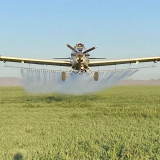
I'm not picking camps here, as a (very) active aggie, I don't fly crossed up as much as some, but certainly can't imagine how you'd get a windmill strewn field done without flat turning an airplane? It is beyond me. Rudder turn? Yes please, and far more so than the average GA runner ever thought a wing would take. Oh yeah.... and that's in a big modern turbine with nice modern chemical... you can not out climb the big fans, and trying to shut off and clean up would require multiple winds, or perhaps a heli.
Learning where and why your wing quits and what it wants to get back on track trumps never and always.
Take care, Rob
Oh, the video.... nice. Can't imagine really needing it in a 182, but nothing we do for fun is really 'needed', so good on you for having fun and learning your wing.
The never fly cross controlled, could very easily be mitigated (challenged semantically) by simply saying never stall the wing.... lol
I'm not picking camps here, as a (very) active aggie, I don't fly crossed up as much as some, but certainly can't imagine how you'd get a windmill strewn field done without flat turning an airplane? It is beyond me. Rudder turn? Yes please, and far more so than the average GA runner ever thought a wing would take. Oh yeah.... and that's in a big modern turbine with nice modern chemical... you can not out climb the big fans, and trying to shut off and clean up would require multiple winds, or perhaps a heli.
Learning where and why your wing quits and what it wants to get back on track trumps never and always.
Take care, Rob
Oh, the video.... nice. Can't imagine really needing it in a 182, but nothing we do for fun is really 'needed', so good on you for having fun and learning your wing.

Wed Mar 04, 2020 7:58 pm
Re: Slips and skidding turns
I agree Rob, don't fly crossed controls (Except side-slip nose wayyyy....down into awkward spot). Also current Aggy, I never have slewed or skidded to spray a block, I also have never sprayed a block with wind power generators. Looks like skidding only choice and accepting missing bits. Even keeping on a GPS line I just dip the wing to keep tracking straight. I have managed to make it through 40 years of AG without skidding turns but still learning.
Wed Mar 04, 2020 8:26 pm
Re: Slips and skidding turns
Adverse yaw would make directing a course down a crop row, with light bar, to runway centerline, or to any target with coordinated turns a real chore. "You're a better man than I am Gunga Din."
- contactflying offline
- Posts: 4972
- Joined: Wed Apr 03, 2013 7:36 pm
- Location: Aurora, Missouri 2H2
Download my free "https://tinyurl.com/Safe-Maneuvering" e-book.
Fri Mar 06, 2020 10:24 pm
Re: Slips and skidding turns
Sometimes we know that we are going to have to be energy efficient, but sometimes we overestimate engine thrust. Either way, default total energy available management is the safer way to go. We don't want to realise after the crash that staying in low ground effect to be able to accelerate, skidding if necessary to miss obstructions, or getting the turn started quickly and completing most of the turn early using plenty of rudder to get the nose down and around, even skid a bit with the nose down, can prevent hooking a wire or terrain with the wing going into the landing zone.
Under the wire is not necessarily the razor edge, but over with insufficient zoom reserve resulting in stall is the razor edge. Manage all energy. Stay (default) away from the razor edge.
Under the wire is not necessarily the razor edge, but over with insufficient zoom reserve resulting in stall is the razor edge. Manage all energy. Stay (default) away from the razor edge.
- contactflying offline
- Posts: 4972
- Joined: Wed Apr 03, 2013 7:36 pm
- Location: Aurora, Missouri 2H2
Download my free "https://tinyurl.com/Safe-Maneuvering" e-book.
DISPLAY OPTIONS
Who is online
Users browsing this forum: No registered users and 0 guests
Latest Features
-
Live to Tell
A Minnesota pilot is surprised to learn that the sudden asymmetric drag of an out-of-rig ski can…Read More -
Creators
Working in some of the Yukon's most beautiful and remote environments, photographer Simon Blakesley captures aircraft in…Read More -
Aircraft Ownership and Maintenance
Upgrading to big tires can make a huge difference in backcountry performance, but with those gains come…Read More -
Tales from Yesteryear
In this tale from bush flying yesteryear, Don Cogger signs up to help Atlee Dodge Jr recovery…Read More


Latest Knowledge Base
-
Destinations
A regional guide with ideas for winter camping destinations in California, Nevada, New Mexico, and Arizona.Read More -
Aircraft
Finding an affordable aircraft that can handle the backcountry for $80K or less? A challenge for sure, but with the…Read More -
Aircraft
01.29.2018 - Zane - Updated tire diameter graphic to add 8.50x10 Guide to tires for use in the backcountry and off-airport landing…Read More -
Pilots
12.22.2013 - Initial article format Operating aircraft on skis and negotiating a snow-covered landscape is an entirely unique skillset and environment.…Read More


