Sold my 150M today, flying it to new owner tomorrow 3 hours away - same City i bought it from!
1958 Cessna 172 purchase will be quick!
Rod Hilton
Kincardine, Ontario, Canada
C-GNBI
Tapatalk Pro
SOLD MY 150 !!!
Mon Dec 19, 2016 6:29 pm
- rodhilton offline

- Posts: 43
- Joined: Sat Oct 15, 2016 11:35 am
- Location: Kincardine
- FindMeSpot URL: https://share.delorme.com/RodneyHilton
- Aircraft: 1958 Cessna 172
C-FKJJ
Mon Dec 19, 2016 8:03 pm
Re: SOLD MY 150 !!!
Congrats: Just be extra careful - Know of one fella sold his 170 and wrecked at a fuel stop on the way to trade it for a check.
Chris C
Chris C
53 C-170-B+
It is better to be late in this world, than early in the next.
It is better to be late in this world, than early in the next.
Mon Dec 19, 2016 9:25 pm
Re: SOLD MY 150 !!!
Congrats Rod!


Mon Dec 19, 2016 11:15 pm
Re: SOLD MY 150 !!!
Congrats! I'm anxious to hear more about the 172!!!
- Jeredp offline

- Posts: 625
- Joined: Fri Apr 20, 2012 10:31 am
- Location: WA
- FindMeSpot URL: http://share.findmespot.com/shared/face ... 7NYN40QT2I
- Aircraft: Cessna 172
Tue Dec 20, 2016 8:41 pm
Re: SOLD MY 150 !!!
Delivered Safe... Awesome 3 hour final flight with my first plane. Expanded my comfort zone a few times .. some great learning. 172 Search in progress.
Rod Hilton
Kincardine, Ontario, Canada
C-GNBI
Tapatalk Pro
Rod Hilton
Kincardine, Ontario, Canada
C-GNBI
Tapatalk Pro
- rodhilton offline
- Posts: 43
- Joined: Sat Oct 15, 2016 11:35 am
- Location: Kincardine
- FindMeSpot URL: https://share.delorme.com/RodneyHilton
- Aircraft: 1958 Cessna 172
C-FKJJ
Thu Jan 05, 2017 11:38 am
Re: SOLD MY 150 !!!
rodhilton wrote:Delivered Safe... Awesome 3 hour final flight with my first plane. Expanded my comfort zone a few times .. some great learning. 172 Search in progress.
Rod Hilton
Kincardine, Ontario, Canada
C-GNBI
Tapatalk Pro

Pre-Purchase Logbook inspection underway.
Rod Hilton
Kincardine, Ontario, Canada
C-GNBI
Tapatalk Pro
- rodhilton offline
- Posts: 43
- Joined: Sat Oct 15, 2016 11:35 am
- Location: Kincardine
- FindMeSpot URL: https://share.delorme.com/RodneyHilton
- Aircraft: 1958 Cessna 172
C-FKJJ
Thu Jan 05, 2017 11:58 am
Re: SOLD MY 150 !!!
Good luck with the pre-buy.
Some nice winter flying out west these days. I hope to have my new bird in the air some time next week.
Some nice winter flying out west these days. I hope to have my new bird in the air some time next week.
Thu Jan 05, 2017 11:58 am
Re: SOLD MY 150 !!!
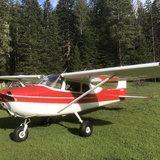
Nice looking airplane. There is something about those straight tail 172s that tickles my fancy.

Thu Jan 05, 2017 12:58 pm
Re: SOLD MY 150 !!!
Congratulations.
Pre-purchase inspection for the older 172 is straightforward, but should also include a VERY thorough check of front and especially rear wing attach fittings and surrounding structure at the wing root. You must remove the (troublesome) metal fairing strip between wing and fuselage. You are looking for any signs (in the areas you can see) that there might be corrosion inside the fittings and spacer blocks and stuff where you cannot see it, A good friend and experienced IA mentioned to me that there have been cases of corrosion in the rear spar fittings inside the fuselage where you cannot see it, in the aluminum blocks or spacers. You cannot actually see the problem with the wings mounted on the airplane, but sometimes you can see small "ends" of corrosion that have migrated out into an area that you can see. It's a pain in the butt, and nobody wants to do it, but this is what holds the wings on the airplane. The problem is that the structure inside the fuselage (the front and rear spar carry-through) are channels that you cannot see inside.
If the airplane was kept in a temp/humidity controlled sealed hangar in Saudi Arabia since it was new, this will likely not be necessary. If it has lived in the environment shown in the photo you provided, that's a different story. Cessnas and most other production airplanes are not very well sealed against water incursion. They just didn't have any concept that that airplane would still be flying actively 60 years after it was built. If they had, there would be three times the number of inspection panels, you'd be able to get to the !(#*$% fuel selector valve, etc.
The wing root "cover" strip on most average 172's out on the ramp seals the gap well enough to keep a Hippopotamus out of your wing root, but water, dirt, etc. gets in there routinely. Over 60 years, the main wing structural attach fittings (and plenty of other stuff) can get corroded. Very few people care enough to think it through and put some sealing tape, or put fresh rubber channel in that actually seals. It's the top of the airplane, and the slight dihederal angle of the wings will cause water to flow toward this gap.
Pre-purchase inspection for the older 172 is straightforward, but should also include a VERY thorough check of front and especially rear wing attach fittings and surrounding structure at the wing root. You must remove the (troublesome) metal fairing strip between wing and fuselage. You are looking for any signs (in the areas you can see) that there might be corrosion inside the fittings and spacer blocks and stuff where you cannot see it, A good friend and experienced IA mentioned to me that there have been cases of corrosion in the rear spar fittings inside the fuselage where you cannot see it, in the aluminum blocks or spacers. You cannot actually see the problem with the wings mounted on the airplane, but sometimes you can see small "ends" of corrosion that have migrated out into an area that you can see. It's a pain in the butt, and nobody wants to do it, but this is what holds the wings on the airplane. The problem is that the structure inside the fuselage (the front and rear spar carry-through) are channels that you cannot see inside.
If the airplane was kept in a temp/humidity controlled sealed hangar in Saudi Arabia since it was new, this will likely not be necessary. If it has lived in the environment shown in the photo you provided, that's a different story. Cessnas and most other production airplanes are not very well sealed against water incursion. They just didn't have any concept that that airplane would still be flying actively 60 years after it was built. If they had, there would be three times the number of inspection panels, you'd be able to get to the !(#*$% fuel selector valve, etc.
The wing root "cover" strip on most average 172's out on the ramp seals the gap well enough to keep a Hippopotamus out of your wing root, but water, dirt, etc. gets in there routinely. Over 60 years, the main wing structural attach fittings (and plenty of other stuff) can get corroded. Very few people care enough to think it through and put some sealing tape, or put fresh rubber channel in that actually seals. It's the top of the airplane, and the slight dihederal angle of the wings will cause water to flow toward this gap.
Last edited by EZFlap on Fri Jan 06, 2017 2:37 pm, edited 1 time in total.

.
Thu Jan 05, 2017 8:51 pm
Re: SOLD MY 150 !!!
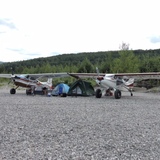
You will love the early 172's. Inexpensive to maintain (if it is solid to begin with) and pretty good capability. I had a 1956.....when I first started to fly it I was surprised by how short it could land....definitely need a little more room to take off with a load. Took it into a lot of dirt strips.
This is in Whitehorse....one of many trips to the Yukon with it.

This is in Whitehorse....one of many trips to the Yukon with it.
Fri Jan 06, 2017 2:52 pm
Re: SOLD MY 150 !!!
Like Lt. Columbo used to say "Oh, just one more thing.... "
If you are ready to move forward with buying it, schedule a test flight with the owner. Before the test flight, have him remove the engine cowlings, and make a full through inspection of the engine. Physically wipe down the bottom of the engine by hand with rags, the sides where the pushrods go into the case, the overboard vent form the crankcase, the front of the crankcase and crank seal, etc. Wipe away all the oil. Make the engine DRY.
Make a very accurate check of the oil quantity. It helps to add or remove oil up to one of the actual hash marks on the dipstick. On the O-300 this will be 7 quarts probably.
Now go fly the airplane to lunch with the owner somewhere. Buy him lunch. Fly around for an hour. Then come back to the home base and look at the bottom of the engine again. If there is significant oil anywhere, you have a leak. The O-200 / O-300 is notorious for seeping oil at the little rubber pushrod seals at the side of the engine. That's NOT a big problem (hose clamps will often fix this, and there is a full STC kit for special spring loaded seals). But oil leaking around the front of the crankcase, at the rear accessory case, or oil coming out the crankcase breather vent indicates a larger problem.
After you land check the oil quantity again. If you fly for an hour and there is 1/3 of a quart gone from the oil sump (after letting the airplane rest for a bit) then you may be blowing oil past the rings. Or out the breather, Or leaking somewhere. FIND where that oil came out from.
Most of the time this is usually not a big deal, all it indicates is that you will be needing some work done sooner instead of later. Still may be a great airplane, it only affects the price negotiations.
Also, on your "independent mechanic" pre-buy, make sure you have a mechanic who knows how to listen inside the exhaust pipe for cracked rings, bad valves, etc. Some of the guys who know how to do this can tell you a whole lot of important information by just listening to the sounds it makes when you turn the engine over by hand.
If you are ready to move forward with buying it, schedule a test flight with the owner. Before the test flight, have him remove the engine cowlings, and make a full through inspection of the engine. Physically wipe down the bottom of the engine by hand with rags, the sides where the pushrods go into the case, the overboard vent form the crankcase, the front of the crankcase and crank seal, etc. Wipe away all the oil. Make the engine DRY.
Make a very accurate check of the oil quantity. It helps to add or remove oil up to one of the actual hash marks on the dipstick. On the O-300 this will be 7 quarts probably.
Now go fly the airplane to lunch with the owner somewhere. Buy him lunch. Fly around for an hour. Then come back to the home base and look at the bottom of the engine again. If there is significant oil anywhere, you have a leak. The O-200 / O-300 is notorious for seeping oil at the little rubber pushrod seals at the side of the engine. That's NOT a big problem (hose clamps will often fix this, and there is a full STC kit for special spring loaded seals). But oil leaking around the front of the crankcase, at the rear accessory case, or oil coming out the crankcase breather vent indicates a larger problem.
After you land check the oil quantity again. If you fly for an hour and there is 1/3 of a quart gone from the oil sump (after letting the airplane rest for a bit) then you may be blowing oil past the rings. Or out the breather, Or leaking somewhere. FIND where that oil came out from.
Most of the time this is usually not a big deal, all it indicates is that you will be needing some work done sooner instead of later. Still may be a great airplane, it only affects the price negotiations.
Also, on your "independent mechanic" pre-buy, make sure you have a mechanic who knows how to listen inside the exhaust pipe for cracked rings, bad valves, etc. Some of the guys who know how to do this can tell you a whole lot of important information by just listening to the sounds it makes when you turn the engine over by hand.
.
Fri Jan 06, 2017 6:05 pm
Re: SOLD MY 150 !!!
Often times those oil leaks are actually seeps and though not clean and tidy are not unairworthy. They can often times be fixed by doing nothing more than re-positioning the wire type clamps or tightening the attaching hardware if oil pan or accessory case, but I know may of you are aware of this. As far as using this as a negotiating point should I also lower my selling price because at some point the tires will be worn out and the brake pads will require replacement. How about the fact that the fuel quantity in the tanks goes down every time you fly the airplane. If it is not an airworthiness issue and you do not like it walk away, but don''t expect me to fix it for you because you don't like it. I know the condition of the airplanes I am selling and will gladly disclose all that I know if asked and have the condition factored t into my price. When a buyer flies away I want him to be happy and remain so. The last thing I want is someone calling me to tell me what just broke on the airplane or for that matter, car, tractor of whatever he bought from me. I want a buyer it do his due diligence, don't expect the minimum standard for airworthiness to be equal to his standards. if he decides that he can not live with things the way they are, decide if it is worth purchase price plus the cost to bring to his standards which exceed the standards for airworthiness or walk away. I don't know how this idea of using a prebuy inspection to negotiate a lower price got started but it seems to have become a common thyme.
All of this said, when I set the "asking" price in an ad I include "wiggle" room so that I can lower the price and make the buyer feel like a winner. I don't know if it is the US fascination with sports or what but some people will not buy unless they can feel like they have won a negotiation with the seller. The last airplane I sold, which I didn't want to sell that quickly, after two hours of telling the buyer it had to be the asking price since I really didn't care if I sold it, I had to agree to buy him lunch to close the sale .
.
Tim
All of this said, when I set the "asking" price in an ad I include "wiggle" room so that I can lower the price and make the buyer feel like a winner. I don't know if it is the US fascination with sports or what but some people will not buy unless they can feel like they have won a negotiation with the seller. The last airplane I sold, which I didn't want to sell that quickly, after two hours of telling the buyer it had to be the asking price since I really didn't care if I sold it, I had to agree to buy him lunch to close the sale
.Tim
Fri Jan 13, 2017 10:14 am
Re: SOLD MY 150 !!!
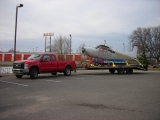
Getting towed in for prepurchase inspection 
Hangar helper..

Run up.
https://vimeo.com/199349713
.... AND I NOW OWN A 1958 Cessna 172!
Rod Hilton
Kincardine, Ontario, Canada
C-FKJJ ??
Tapatalk Pro
Hangar helper..
Run up.
https://vimeo.com/199349713
.... AND I NOW OWN A 1958 Cessna 172!
Rod Hilton
Kincardine, Ontario, Canada
C-FKJJ ??
Tapatalk Pro
- rodhilton offline
- Posts: 43
- Joined: Sat Oct 15, 2016 11:35 am
- Location: Kincardine
- FindMeSpot URL: https://share.delorme.com/RodneyHilton
- Aircraft: 1958 Cessna 172
C-FKJJ
Fri Jan 13, 2017 10:24 am
Re: SOLD MY 150 !!!
Congratulations!
Fri Jan 13, 2017 1:57 pm
Re: SOLD MY 150 !!!
Congrats Rod. Looks pretty!
- Bigrenna offline

- Posts: 2339
- Joined: Sun Sep 25, 2011 4:02 pm
- Location: New England
- Aircraft: C180H / C170B
www.bushwagoneast.com
www.avthreads.com
Fri Jan 13, 2017 2:41 pm
Re: SOLD MY 150 !!!
Sweet looking plane!
Make sure you get right on the Transport Canada stuff. Not sure about the east coast, but they move a blit slower than a glacier out here.
When I bought my plane in mid- Oct the seller put all the CofR stuff in the plane for the ferry flight across Canada. A month delay in Calgary waiting for weather and a couple weeks playing phone tag with Transport Canada meant all the paperwork didn't go in until the end of November.
Yesterday, the mechanic finally got the new engine/prop/avionics/comms all together and when reviewing the paperwork pre-test flight we realized was the last day of the interim CofR. I called Transport Canada and they told me my reg will be processed in a few more weeks, and the plane will have to sit until it is done.
Very frustrating. I spoke to a supervisor and she blamed me for doing it wrong. Apparently, the seller should have left the interim CofR on the plane but couriered me the original CofR so I could get my application going.
Anyway, sorry for the drift. Long story short: don't delay filing the paperwork!
Make sure you get right on the Transport Canada stuff. Not sure about the east coast, but they move a blit slower than a glacier out here.
When I bought my plane in mid- Oct the seller put all the CofR stuff in the plane for the ferry flight across Canada. A month delay in Calgary waiting for weather and a couple weeks playing phone tag with Transport Canada meant all the paperwork didn't go in until the end of November.
Yesterday, the mechanic finally got the new engine/prop/avionics/comms all together and when reviewing the paperwork pre-test flight we realized was the last day of the interim CofR. I called Transport Canada and they told me my reg will be processed in a few more weeks, and the plane will have to sit until it is done.
Very frustrating. I spoke to a supervisor and she blamed me for doing it wrong. Apparently, the seller should have left the interim CofR on the plane but couriered me the original CofR so I could get my application going.
Anyway, sorry for the drift. Long story short: don't delay filing the paperwork!
Fri Jan 13, 2017 7:50 pm
Re: SOLD MY 150 !!!
Congrats! Looks great!
Allan is spot on, don't hesitate to get the paperwork going.
Allan is spot on, don't hesitate to get the paperwork going.
DISPLAY OPTIONS
Who is online
Users browsing this forum: No registered users and 1 guest
Latest Features
-
Live to Tell
A Minnesota pilot is surprised to learn that the sudden asymmetric drag of an out-of-rig ski can…Read More -
Creators
Working in some of the Yukon's most beautiful and remote environments, photographer Simon Blakesley captures aircraft in…Read More -
Aircraft Ownership and Maintenance
Upgrading to big tires can make a huge difference in backcountry performance, but with those gains come…Read More -
Tales from Yesteryear
In this tale from bush flying yesteryear, Don Cogger signs up to help Atlee Dodge Jr recovery…Read More


Latest Knowledge Base
-
Destinations
A regional guide with ideas for winter camping destinations in California, Nevada, New Mexico, and Arizona.Read More -
Aircraft
Finding an affordable aircraft that can handle the backcountry for $80K or less? A challenge for sure, but with the…Read More -
Aircraft
01.29.2018 - Zane - Updated tire diameter graphic to add 8.50x10 Guide to tires for use in the backcountry and off-airport landing…Read More -
Pilots
12.22.2013 - Initial article format Operating aircraft on skis and negotiating a snow-covered landscape is an entirely unique skillset and environment.…Read More


