Help me out here and figure out what is going on... aerodynamically.
I've been experimenting with landings in my Skywagon. In most other airplanes I prefer a power off approach all the way to touchdown. I find it doesn't work really well with the Skywagon (unless you are fast, which poses its own problems)... so I use trailing throttle. Just enough to provide wash over the horizontal and give me authority.
I've been playing with the power off approach lately at 50-60mph... trying to see what works for me in the Skywagon to perfect that short landing and I find that everything is fine until I hit ground effect. Once that happens the nose drops like I've pushed it over... and I haven't changed any flight control. If I have trailing throttle this doesn't happen. My speculation is that the tail stalls when I hit ground effect. The subsequent 3-5 foot drop onto grass is no big deal, but onto pavement puts a lot of energy into the spring gear.
Full disclosure. I've got the Sportsman cuff. This happens light or heavy. It does not happen if my speed is greater than 70-75 mph. I've done stall tests and with flaps 40 and it will stall about 34 mph at altitude. That is the wing stalling.
I haven't tested techniques for actual distance, but my speculation is that with trailing throttle the distance would be greater. But if done on pavement the power-off technique does end up costing distance as you bounce quite a bit;) Common sense says just use the trailing throttle.... But I'd like to understand what is going on.
Again, my speculation is that the horizontal is stalling when I hit ground effect at 50-60 mph. What I think is happening is that ground effect interferes with the airflow over the 'top' of the horizontal (the physical bottom of the horizontal). Then the airfoil stalls. Without the lift of the horizontal to hold the nose up this results in pitching the aircraft nose down. Any thoughts?
gunny
Speaking of Ground Effect- In a Skywagon
Mon Nov 13, 2017 5:23 am
Mon Nov 13, 2017 7:13 am
Re: Speaking of Ground Effect- In a Skywagon
Strange... All I can say is that my technique is the same as yours, but I dont get the tail stall. Only difference I have is the WingX and VGs.
- Bigrenna offline


- Posts: 2339
- Joined: Sun Sep 25, 2011 4:02 pm
- Location: New England
- Aircraft: C180H / C170B
www.bushwagoneast.com
www.avthreads.com
Mon Nov 13, 2017 7:32 am
Re: Speaking of Ground Effect- In a Skywagon
Try putting 50 lbs. as far back in the extended baggage and see if that make any difference. Doing that and vg's on the tail made a totally different plane out of my 172.
- 175 magnum offline
- Posts: 546
- Joined: Sun Mar 28, 2010 2:13 pm
- Location: surrey bc canada
Mon Nov 13, 2017 7:32 am
Re: Speaking of Ground Effect- In a Skywagon
Gunny,
I can’t explain what you are descibing aerodynamically, and I can’t say I’ve ever noticed anything like that on any of the five or six 185s that I have flown fairly extensively. My first question , however, would be where is your C of G?
That said, a tail low touchdown, with some thrust over the tail will pretty much always result in both the nicest and the shortest landings in these airplanes in my experience. To me, pure power off landings are something I’d throw in occasionally to practice for an engine failure.
But as you’ve noted, a bit of power will definitely result in better, shorter landings, especially when empty. When you’re empty, you are very likely close to or forward of the forward CG limit. That’s not a huge problem, but power will be needed for sure there.
I LOVE what the Sporsman cuff does for these Aircraft. Almost as good as RSTOL. One 185 I flew for ~ 3500 hours had both.....and that is a superb combination.
MTV
I can’t explain what you are descibing aerodynamically, and I can’t say I’ve ever noticed anything like that on any of the five or six 185s that I have flown fairly extensively. My first question , however, would be where is your C of G?
That said, a tail low touchdown, with some thrust over the tail will pretty much always result in both the nicest and the shortest landings in these airplanes in my experience. To me, pure power off landings are something I’d throw in occasionally to practice for an engine failure.
But as you’ve noted, a bit of power will definitely result in better, shorter landings, especially when empty. When you’re empty, you are very likely close to or forward of the forward CG limit. That’s not a huge problem, but power will be needed for sure there.
I LOVE what the Sporsman cuff does for these Aircraft. Almost as good as RSTOL. One 185 I flew for ~ 3500 hours had both.....and that is a superb combination.
MTV


Mon Nov 13, 2017 8:06 am
Re: Speaking of Ground Effect- In a Skywagon
I've noticed something similar to what you're describing when I was first figuring out how slow I could bring it in, but it was slower than you are saying and I do not have a sportsman cuff or any other aerodynamic/wing mods. I would hate to have to approach at 75mph. I would also hate to have to throw 50lbs in the plane to compensate. My normal approach has a little power in and is (an attempt at) the classic skywagon approach/landing described by MTV and others. Just seems to make it a nicer landing in general.
Hope you get it all figured out
-asa
Hope you get it all figured out
-asa

Mon Nov 13, 2017 8:37 am
Re: Speaking of Ground Effect- In a Skywagon
Power saves. As MTV says, power and pitch will get you down slowest and softest. Pitch and full flaps will get the slower speed asa is talking about and power will control the greater sink rate of the slower approach and make rudder and elevator more effective. If you don't like slowing down way back on final, the apparent brisk walk rate of closure approach will not slow you way down until short final.
- contactflying offline
- Posts: 4972
- Joined: Wed Apr 03, 2013 7:36 pm
- Location: Aurora, Missouri 2H2
Download my free "https://tinyurl.com/Safe-Maneuvering" e-book.
Mon Nov 13, 2017 10:35 am
Re: Speaking of Ground Effect- In a Skywagon
I am not a big time 180 guy so take anything I say with a grain or shaker of salt as needed. Where is you trim set on final. Some of cub type guys complain of running out of tail authority when landing slow solved the problem with more nose up trim.
DENNY
DENNY
DENNY
Mon Nov 13, 2017 10:37 am
Re: Speaking of Ground Effect- In a Skywagon
Bigrenna wrote:Strange... All I can say is that my technique is the same as yours, but I dont get the tail stall. Only difference I have is the WingX and VGs.
Just curious, VGs on the tail as well or wing only?
- CamTom12 offline

- Posts: 3705
- Joined: Sun Jul 08, 2012 1:08 pm
- Location: Huntsville
- FindMeSpot URL: https://share.delorme.com/camtom12
- Aircraft: Ruppe Racer
Experimental Pacer
home hand jam "wizard"
Mon Nov 13, 2017 10:45 am
Re: Speaking of Ground Effect- In a Skywagon
Long time lurker - don't usually have much to add, but here's my 2 cents:
I originally thought, like you, perhaps the tail is stalling. But on further thought, perhaps that's not the case. A big part of the reduction in drag encountered in ground effect is due to the reduced downwash aft of the wing (due to the ground preventing it). The horizontal stab is in this downwash on approach. As you go into ground effect, the stab could be seeing a big reduction in AOA (because, as you mentioned, the "top" is the lower surface). So perhaps is a large reduction in tail downforce due to the reduction in AOA. Keeping some power in on approach could both reduce the downwash effect and provide more control authority.
It would be interesting to tuft the tail and set up some cameras to see what's really going on back there.
Sent from my SAMSUNG-SM-G890A using Tapatalk
I originally thought, like you, perhaps the tail is stalling. But on further thought, perhaps that's not the case. A big part of the reduction in drag encountered in ground effect is due to the reduced downwash aft of the wing (due to the ground preventing it). The horizontal stab is in this downwash on approach. As you go into ground effect, the stab could be seeing a big reduction in AOA (because, as you mentioned, the "top" is the lower surface). So perhaps is a large reduction in tail downforce due to the reduction in AOA. Keeping some power in on approach could both reduce the downwash effect and provide more control authority.
It would be interesting to tuft the tail and set up some cameras to see what's really going on back there.
Sent from my SAMSUNG-SM-G890A using Tapatalk
- CliffyDeuce offline

- Posts: 2
- Joined: Mon Oct 13, 2014 4:47 pm
- Location: Lincoln
Mon Nov 13, 2017 10:48 am
Re: Speaking of Ground Effect- In a Skywagon
CamTom12 wrote:Just curious, VGs on the tail as well or wing only?
VGs go on the underside of the h-stab also.
- Bigrenna offline
- Posts: 2339
- Joined: Sun Sep 25, 2011 4:02 pm
- Location: New England
- Aircraft: C180H / C170B
www.bushwagoneast.com
www.avthreads.com
Mon Nov 13, 2017 11:43 am
Re: Speaking of Ground Effect- In a Skywagon
Skywagons for me were best flown with trim versus elevator deflection. Gunny try establishing a trim for approach airspeed with minimal elevator and power required for your desired rate of descent. You may already be doing this but not sure.
What I found years ago on wheels, wheel-skis, but particularly floats was a tendency for the opposite of what you describe...the tail would sink just prior to landing with 40* flaps...less so with 20 or 30*...if I was using the elevator more than the tail trim. And yes not a power off landing ever as they like some prop flow over the tail in that slow maneuver. This was in one plane with a third of 5K hrs with stock Camber Lift leading edge and about 2/3 with a Sportsman cuff.
Never thought about it much then but this Fall I rode for fun with a young pilot in a C-185 on 2960's a few times. His technique whatever it was resulted in a minor but detectable tail sink (or upward increase in deck angle) just prior to touchdown. Not sure what the CG was or airspeeds but he had 30" of flaps and the stall warning blipped briefly.
I'll leave the theory to engineers.
Gary
What I found years ago on wheels, wheel-skis, but particularly floats was a tendency for the opposite of what you describe...the tail would sink just prior to landing with 40* flaps...less so with 20 or 30*...if I was using the elevator more than the tail trim. And yes not a power off landing ever as they like some prop flow over the tail in that slow maneuver. This was in one plane with a third of 5K hrs with stock Camber Lift leading edge and about 2/3 with a Sportsman cuff.
Never thought about it much then but this Fall I rode for fun with a young pilot in a C-185 on 2960's a few times. His technique whatever it was resulted in a minor but detectable tail sink (or upward increase in deck angle) just prior to touchdown. Not sure what the CG was or airspeeds but he had 30" of flaps and the stall warning blipped briefly.
I'll leave the theory to engineers.
Gary
Mon Nov 13, 2017 1:46 pm
Re: Speaking of Ground Effect- In a Skywagon
CliffyDeuce wrote:Long time lurker - don't usually have much to add, but here's my 2 cents:
I originally thought, like you, perhaps the tail is stalling. But on further thought, perhaps that's not the case. A big part of the reduction in drag encountered in ground effect is due to the reduced downwash aft of the wing (due to the ground preventing it). The horizontal stab is in this downwash on approach. As you go into ground effect, the stab could be seeing a big reduction in AOA (because, as you mentioned, the "top" is the lower surface). So perhaps is a large reduction in tail downforce due to the reduction in AOA. Keeping some power in on approach could both reduce the downwash effect and provide more control authority.
It would be interesting to tuft the tail and set up some cameras to see what's really going on back there.
Sent from my SAMSUNG-SM-G890A using Tapatalk
That sounds quite plausible. Interesting comment. Thanks.
MTV
Mon Nov 13, 2017 2:34 pm
Re: Speaking of Ground Effect- In a Skywagon
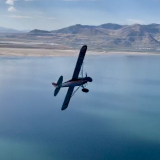
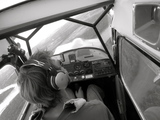
This is what 38mph indicated looks like with the WingX / Sportsmen combo and of course the MT prop that rids the nose of a lot of excess weight allowing you more elevator authority. The Cub is doing right at 21mph indicated. Both would be impossible without power added given the angle of attack to create the needed tail down force to hold the high AOA.
I️ teach the power on approach for the spot landing but stress it’s not the technique you should get used to. When the engine fails you won’t have the extra power needed to land hence the energy needed in order to not bounce. I️ love pulling the power when the student is to low in the pattern. They either don’t make it or they are way to slow and everything goes hay wire.
Unless your landing in a real short confined area I️ feel there’s really no point in utilizing the power needed to landed when the energy you have when done correctly will allow you to still land in under 500’ and be smooth and it’s safe.
Just my own 2c
AKT

Sent from my iPhone using Tapatalk
I️ teach the power on approach for the spot landing but stress it’s not the technique you should get used to. When the engine fails you won’t have the extra power needed to land hence the energy needed in order to not bounce. I️ love pulling the power when the student is to low in the pattern. They either don’t make it or they are way to slow and everything goes hay wire.
Unless your landing in a real short confined area I️ feel there’s really no point in utilizing the power needed to landed when the energy you have when done correctly will allow you to still land in under 500’ and be smooth and it’s safe.
Just my own 2c
AKT
Sent from my iPhone using Tapatalk
- aktahoe1 offline
- Posts: 2052
- Joined: Sun Jul 13, 2008 8:22 am
- Location: Alaska and Lake Tahoe = aktahoe
If it looks smooth, it might be. If it looks rough, it is...www.bigtirepilot.com ...www.alaskaheliski.com
Mon Nov 13, 2017 2:40 pm
Re: Speaking of Ground Effect- In a Skywagon
Thanks guys.
BigRenna- I'm putting on WingX right now. Vg's after some fight tests. So, I should have some numbers to compare.
Cliffy- Interesting comment.... It seems to me that a sudden reduction in AOA would be the equivalent of a stall... regarding loss of lift.
Gary- I do trim it for nearly hands off. When this nose drop happens it is not receded by any elevator movement.
AKTahoe- Great shots!
I guess what I need to do is tuft the tail and film the event to see what happens! More flight testing!
gunny
BigRenna- I'm putting on WingX right now. Vg's after some fight tests. So, I should have some numbers to compare.
Cliffy- Interesting comment.... It seems to me that a sudden reduction in AOA would be the equivalent of a stall... regarding loss of lift.
Gary- I do trim it for nearly hands off. When this nose drop happens it is not receded by any elevator movement.
AKTahoe- Great shots!
I guess what I need to do is tuft the tail and film the event to see what happens! More flight testing!
gunny
Mon Nov 13, 2017 3:35 pm
Re: Speaking of Ground Effect- In a Skywagon
What I described above about the tail settling just prior to touchdown results in a two stage Ker-Plop (well maybe not quite, but.). The tail on conventional gear can first sink some or drop (Ker) then the main (Plop). On floats the heels hit prematurely than planned or expected followed by the step. That's a low airspeed (1.2 or even 1.1 Vso) and not at high power/high AOA, just enough power to arrive without scaring the souls onboard or loosening teeth.
To see how it feels in that very transient condition before landing fly the strip or water lane in a landing configuration but not land. Get as close to the surface as possible without touching and maintain that attitude and vary power to maintain minimum altitude AGL. We normally spend mere seconds transitioning to flight or landing and some may never have the opportunity to practice control and get a feel for what's going on then.
Gary
To see how it feels in that very transient condition before landing fly the strip or water lane in a landing configuration but not land. Get as close to the surface as possible without touching and maintain that attitude and vary power to maintain minimum altitude AGL. We normally spend mere seconds transitioning to flight or landing and some may never have the opportunity to practice control and get a feel for what's going on then.
Gary
Tue Nov 14, 2017 9:09 pm
Re: Speaking of Ground Effect- In a Skywagon
aktahoe1 wrote:This is what 38mph indicated looks like with the WingX / Sportsmen combo and of course the MT prop that rids the nose of a lot of excess weight allowing you more elevator authority. The Cub is doing right at 21mph indicated. Both would be impossible without power added given the angle of attack to create the needed tail down force to hold the high AOA.
I️ teach the power on approach for the spot landing but stress it’s not the technique you should get used to. When the engine fails you won’t have the extra power needed to land hence the energy needed in order to not bounce. I️ love pulling the power when the student is to low in the pattern. They either don’t make it or they are way to slow and everything goes hay wire.
Unless your landing in a real short confined area I️ feel there’s really no point in utilizing the power needed to landed when the energy you have when done correctly will allow you to still land in under 500’ and be smooth and it’s safe.
Just my own 2c
AKT
Sent from my iPhone using Tapatalk
When I️ felt the tailwheel hit I️ almost gave up, and I️ looked and saw the mains weren’t rolling so I️ kept going. Truly impressive airplane you have kevin.
Sent from my iPhone using Tapatalk
Tue Nov 14, 2017 9:15 pm
Re: Speaking of Ground Effect- In a Skywagon
Gunny, this is a very interesting problem. I'm afraid I can't think of anything right now that would cause it. My experiences with 180s have been more like the others, usually tail dropping, if anything just before touchdown. This was with a 3 blade Hartzell, Horton, and usually right on the forward edge of my CG...
David
Sent from my SM-G870W using Tapatalk
David
Sent from my SM-G870W using Tapatalk
Tue Nov 14, 2017 9:44 pm
Re: Speaking of Ground Effect- In a Skywagon
I think CliffyDeuce has a very viable theory.
- CamTom12 offline
- Posts: 3705
- Joined: Sun Jul 08, 2012 1:08 pm
- Location: Huntsville
- FindMeSpot URL: https://share.delorme.com/camtom12
- Aircraft: Ruppe Racer
Experimental Pacer
home hand jam "wizard"
Wed Nov 15, 2017 1:15 am
Re: Speaking of Ground Effect- In a Skywagon
Evaluate what's happening...is the nose or tail dropping during the landing event? As I suggested fly the plane in pre-landing condition during a close ground effect and observe without trying to land. The NACA 2412 wings's center of differential pressure moves forward as the rear portion stalls and the leading edge and nearby wing surface downstream carry the load. Where the CG is in relation to that CL configuration is ?
Gary
Gary
Wed Nov 15, 2017 4:25 am
Re: Speaking of Ground Effect- In a Skywagon
PA1195 wrote:Evaluate what's happening...is the nose or tail dropping during the landing event? As I suggested fly the plane in pre-landing condition during a close ground effect and observe without trying to land. The NACA 2412 wings's center of differential pressure moves forward as the rear portion stalls and the leading edge and nearby wing surface downstream carry the load. Where the CG is in relation to that CL configuration is ?
Gary
Gary-
As I said before. The wing is not stalling in this event, the nose is pitching down. I know what a stall feels like, I've done a bunch of them. This is not a wing stall. Believe me or not, this is not a wing event. I've observed this any number of times, practicing it without trying to land seems pointless. It happens power off, just as I hit ground effect. Kinda hard to do that without trying to land.
The CG in my airplane is very far forward light. But I've had this happen light and relatively heavy.
gunny
DISPLAY OPTIONS
Who is online
Users browsing this forum: No registered users and 5 guests
Latest Features
-
Live to Tell
A Minnesota pilot is surprised to learn that the sudden asymmetric drag of an out-of-rig ski can…Read More -
Creators
Working in some of the Yukon's most beautiful and remote environments, photographer Simon Blakesley captures aircraft in…Read More -
Aircraft Ownership and Maintenance
Upgrading to big tires can make a huge difference in backcountry performance, but with those gains come…Read More -
Tales from Yesteryear
In this tale from bush flying yesteryear, Don Cogger signs up to help Atlee Dodge Jr recovery…Read More


Latest Knowledge Base
-
Destinations
A regional guide with ideas for winter camping destinations in California, Nevada, New Mexico, and Arizona.Read More -
Aircraft
Finding an affordable aircraft that can handle the backcountry for $80K or less? A challenge for sure, but with the…Read More -
Aircraft
01.29.2018 - Zane - Updated tire diameter graphic to add 8.50x10 Guide to tires for use in the backcountry and off-airport landing…Read More -
Pilots
12.22.2013 - Initial article format Operating aircraft on skis and negotiating a snow-covered landscape is an entirely unique skillset and environment.…Read More


