So I'm a recently signed off private pilot (8-16-17) and I took a few flights right after my check ride with no issues but with owning a business time is sparse. I took another flight after about a month and the whole time I was thinking to myself "am I forgetting to do something?" (as far as I can tell I wasn't) flight went smooth as well as the landings. I thought this might be a case of being a new and low time pilot. But I have found from asking around that everyone has to "brush the rust off" after not flying for a while.
This brings me to my question. What, if anything, do you do to stay sharp and up to date on flying, and information regarding flying. Obviously actual flying will do that but I don't always have the time available especially with the winter approaching in the PNW.
Some thoughts:
-Books
-Simulator
-Hanger flying
-Videos
Staying Sharp
Wed Oct 18, 2017 6:58 am
Wed Oct 18, 2017 8:02 am
Re: Staying Sharp
As a brand new pilot, and congratulations by the way, you need seat time. Fly, fly, fly. And winter is no excuse not to fly, I learned to fly in the winter in Boise Idaho with everything covered in snow, and before Loran or GPS. Runups were interesting as the 172 would just slid across the tarmac.
The only thing I find simulators useful for are practicing instrument procedures, and one time flying in the Idaho mountains- turning up the wrong canyon, and thinking no problem my 185 can out climb terrain. Of course there was that whole diminishing power thing as my altitude increased. I crashed right before I cleared the ridge. Luckily I didn't spill my coffee. That was an interesting wakeup call.
Books and videos can be excellent to pick up thoughts and tips on the NEXT set of skills you'll learn, but won't do anything to knock the rust off. Fly, fly, fly. Even if it's only for a half hour at a time. What you've learned is a perishable skill, especially in the early stages.
Again congrats, now go have fun!
The only thing I find simulators useful for are practicing instrument procedures, and one time flying in the Idaho mountains- turning up the wrong canyon, and thinking no problem my 185 can out climb terrain. Of course there was that whole diminishing power thing as my altitude increased. I crashed right before I cleared the ridge. Luckily I didn't spill my coffee.
That was an interesting wakeup call.Books and videos can be excellent to pick up thoughts and tips on the NEXT set of skills you'll learn, but won't do anything to knock the rust off. Fly, fly, fly. Even if it's only for a half hour at a time. What you've learned is a perishable skill, especially in the early stages.
Again congrats, now go have fun!
- Barnstormer offline
- Posts: 2700
- Joined: Sun Oct 14, 2012 7:42 am
- Location: Alaska
- Aircraft: C185
Wed Oct 18, 2017 8:51 am
Re: Staying Sharp
What he said. I quickly noticed when I got my PP cert that after a month with less than 5 hrs, I was sort of nervous and unfamiliar. After a month of more than 20 hrs I was feeling fairly tuned up. Two things for those times when you are rusty/apprehensive/etc.
1. Checklists are your friend. Use them well. It is a good habit that helps structure your flying, and it can be comforting when the cockpit feels foreign.
2. Grab an hour with an instructor.
1. Checklists are your friend. Use them well. It is a good habit that helps structure your flying, and it can be comforting when the cockpit feels foreign.
2. Grab an hour with an instructor.
- Troy Hamon offline
- Posts: 915
- Joined: Tue Apr 06, 2010 8:27 am
- Location: King Salmon
- FindMeSpot URL: http://share.findmespot.com/shared/face ... 04iX0FXjV2
- Aircraft: Piper PA-22
Wed Oct 18, 2017 8:55 am
Re: Staying Sharp
One other thing...there is a big difference between the legal currency to fly passengers and being proficient in the aircraft. Don't stick your family in the plane when you don't feel proficient even if you are legally current...go get proficient first.
- Troy Hamon offline
- Posts: 915
- Joined: Tue Apr 06, 2010 8:27 am
- Location: King Salmon
- FindMeSpot URL: http://share.findmespot.com/shared/face ... 04iX0FXjV2
- Aircraft: Piper PA-22
Wed Oct 18, 2017 9:31 am
Re: Staying Sharp
Troy Hamon wrote:One other thing...there is a big difference between the legal currency to fly passengers and being proficient in the aircraft. Don't stick your family in the plane when you don't feel proficient even if you are legally current...go get proficient first.
This. Legal currency just means the FAA is reasonably sure you might be able to use the airplane again. That is not the same as being good enough to suggest someone else takes that risk with you. Trust your gut on this.
As for things to do in off time... Books and magazines are good. EAA and AOPA make good reading material monthly. You can also sign up for aviation news blasts like AvWeb, or register on the FAA Wings/FAAST page so they tell you when seminars are in your area. I just did an ARTCC tour through that which was highly enlightening.
I also like to do flight plans on my iPad using Foreflight. Usually it's somewhere I think I'd like to go some day, so I start with the begin/end points, and figure out my route and stops, etc. It's good for keeping up on the mental planning aspects, especially if you throw in some mountain flight considerations (which is almost always for me going anywhere but east). In your case being in PNW, you can also play what-if's with solid IFR and what you'd do if it happened to you.
But like the others have said, go fly. Boring holes in the pattern gets old pretty quickly, but it'll boost confidence. Go do some more night flight. Practice crosswinds. Bring a friend, get a burger somewhere. You don't need to plan a major cross country to fly, though I do respect the time constraints with running a business, and even a short flight can involve hours of your day. Even if you can just hitch a ride with someone else and let them deal with the preflight/planning hassles, it's keeping your mind engaged. The muscle memory will come back quickly, it's the mental game which requires regular use in my experience.
Wed Oct 18, 2017 9:39 am
Re: Staying Sharp
Those of us who have been around for a long time, with X thousand hours under our belts, can often take off several months, maybe even years, and get back in the saddle again fairly easily. I've had at least a couple of times in my flying "career" in which I went from one BFR to the next one without any flying in between, and in each case, the BFR went fine. I was safe enough that I wasn't going to kill me or my passengers. Of course, it would have been better had I been flying all along.
But a newbie really can't do that, because as you've seen, the skills you've accumulated atrophy very quickly unless you regularly use them.
By all means, read all you can, participate in aviation forums, etc., but you must fly to remain proficient and safe. Winter is absolutely no excuse to lay low. I started my lessons on November 29, 1972, and took my checkride the first week of February 1973. From then until I got out of the USAF mid-May, I flew another 20+ hours. All of this was in the Anchorage area!
Yeah, there are days which are unflyable everywhere, winter and summer, but if getting into the air is a priority, you'll find ways to do it. You say, "But I'm just a VFR pilot, and this is the PNW." Well, we have participants on this board who are VFR-only pilots who live where you do. They fly all year long--maybe not ever day, but every time they can.
After I got out of the Air Force, I moved back to Laramie--different kind of winter weather than the PNW, but the kind of weather that is pretty discouraging for flying. But over the next 15 months, including the winter, of course, I accumulated enough training, skills, and hours to meet the requirements for the Commercial. I flew in high winds, on extremely cold days, just about any day that the FBO would allow (they, as most FBOs do, had restrictions based on the renter pilot's hours, skills, etc.).
To do that, I spent many hours getting dual instruction in addition to going up on my own without an instructor, but I also was able to do something that I think was very valuable. The FBO was an active charter outfit, much in single engine (I later flew SE charter for them). Often enough, the seats weren't full of paying passengers, so I went along. Although I wasn't allowed to fly while the passengers were aboard, I often did the flying on the deadhead legs. By doing that, I became pretty proficient in higher performance airplanes at no cost to me.
So get out there and fly! It's the only real way to stay "sharp" (to use your word).
Cary
But a newbie really can't do that, because as you've seen, the skills you've accumulated atrophy very quickly unless you regularly use them.
By all means, read all you can, participate in aviation forums, etc., but you must fly to remain proficient and safe. Winter is absolutely no excuse to lay low. I started my lessons on November 29, 1972, and took my checkride the first week of February 1973. From then until I got out of the USAF mid-May, I flew another 20+ hours. All of this was in the Anchorage area!
Yeah, there are days which are unflyable everywhere, winter and summer, but if getting into the air is a priority, you'll find ways to do it. You say, "But I'm just a VFR pilot, and this is the PNW." Well, we have participants on this board who are VFR-only pilots who live where you do. They fly all year long--maybe not ever day, but every time they can.
After I got out of the Air Force, I moved back to Laramie--different kind of winter weather than the PNW, but the kind of weather that is pretty discouraging for flying. But over the next 15 months, including the winter, of course, I accumulated enough training, skills, and hours to meet the requirements for the Commercial. I flew in high winds, on extremely cold days, just about any day that the FBO would allow (they, as most FBOs do, had restrictions based on the renter pilot's hours, skills, etc.).
To do that, I spent many hours getting dual instruction in addition to going up on my own without an instructor, but I also was able to do something that I think was very valuable. The FBO was an active charter outfit, much in single engine (I later flew SE charter for them). Often enough, the seats weren't full of paying passengers, so I went along. Although I wasn't allowed to fly while the passengers were aboard, I often did the flying on the deadhead legs. By doing that, I became pretty proficient in higher performance airplanes at no cost to me.
So get out there and fly! It's the only real way to stay "sharp" (to use your word).
Cary
"I have slipped the surly bonds of earth..., put out my hand and touched the face of God." J.G. Magee
Wed Oct 18, 2017 10:46 am
Re: Staying Sharp
This time of year the days get short, the storms roll through, and holidays and other things start demanding a share of your free time. I tend to make lots of short flights this time of year, even if its just a 20 minute flight around the patch, and I start to feel like I am being an irresponsible pilot if I don't get out at least once a week, and preferably 3 or 4 times. Early on, people put a lot of emphasis on how many hours you have, but I think its just as important to make as many flights as you can, no matter how short they are. This keeps you sharp on the whole process from planning and pre-flight to tie down. A twenty minute flight once or twice a week goes a lot further toward keeping you sharp and staying familiar with the airplane than a single two hour flight once a month. 50 or 60 flights in a year vs. 10 or 12...
And if you cant fly because of weather or whatever, just go spend some time with the airplane. The time spent wiping grease off the belly, or detailing the cockpit or just fooling with the GPS goes a long way toward building you familiarity with the airplane. It also gives you a chance to interact with other pilots, and may even open up some opportunities you didn't know existed.
I would say if you have a spare hour to spend surfing aviation forums and magazines, or fooling around with the flight simulator, that your time would be better spent at the airport...there's always a way!
And if you cant fly because of weather or whatever, just go spend some time with the airplane. The time spent wiping grease off the belly, or detailing the cockpit or just fooling with the GPS goes a long way toward building you familiarity with the airplane. It also gives you a chance to interact with other pilots, and may even open up some opportunities you didn't know existed.
I would say if you have a spare hour to spend surfing aviation forums and magazines, or fooling around with the flight simulator, that your time would be better spent at the airport...there's always a way!
Wed Oct 18, 2017 11:28 am
Re: Staying Sharp
colopilot wrote:The muscle memory will come back quickly, it's the mental game which requires regular use in my experience.
This ^^.
Keeping your mind in the game is most of the battle. We all know what those hero days feel like when you feel like you're ahead of the airplane and everything else is going in slow motion while you're in fast mode. It feels great. But then there are days where the opposite is true, and I personally just don't bother flying or even using power tools. Good sleep, good food, coffee, happy and healthy home life so you're not preoccupied...all these things make a recipe for safe flying.
On the other end of the spectrum is complacency, when you gain a false sense of control because it all starts to seem mundane and your confidence is high.
I do think flight simulator is a good exercise, if you use it correctly. It's not about controlling the aircraft. The power of your imagination to put yourself in the cockpit and navigate and make decisions is significant; just like visualizing some athletic feat before you actually try it.

Wed Oct 18, 2017 11:35 am
Re: Staying Sharp
There is some good info here. But to clarify I would prefer to be flying. But being that I currently rent (fighting for time slots) combined with limited appropriate weather (it doesnt have to be nice but I prefer to stay legal and safe) and running a business sometimes the stars just dont align. Its not a lack of wanting to fly but a desire to do what I can outside of actually flying to help stay somewhat on point. I am planning on continuing my training to achieve Commercial and IFR ratings so that will be occupying my mind as well.
Thanks for the info so far.
Mike
Thanks for the info so far.
Mike
Wed Oct 18, 2017 11:37 am
Re: Staying Sharp
As far as spending time with the airplane... I will be doing a lot of that as I am scratch building one.
Wed Oct 18, 2017 12:16 pm
Re: Staying Sharp
Districtfab wrote:As far as spending time with the airplane... I will be doing a lot of that as I am scratch building one.
Awesome!
Wed Oct 18, 2017 12:21 pm
Re: Staying Sharp
Just by asking these questions, you're on the right track.
I always found "chair flying," or visualization techniques, to be helpful. Just sit in a chair, close your eyes and visualize the airplane around you. Run through your checklists/flows, practice engine-outs, you name it. You can reach for the appropriate knobs and controls, and "feel" the feedback from the plane. Then when you're physically flying again, I promise you'll feel a lot less rusty.
I always found "chair flying," or visualization techniques, to be helpful. Just sit in a chair, close your eyes and visualize the airplane around you. Run through your checklists/flows, practice engine-outs, you name it. You can reach for the appropriate knobs and controls, and "feel" the feedback from the plane. Then when you're physically flying again, I promise you'll feel a lot less rusty.

Wed Oct 18, 2017 2:16 pm
Re: Staying Sharp
Barnstormer wrote: As a brand new pilot, and congratulations by the way, you need seat time. Fly, fly, fly. And winter is no excuse not to fly.....
x2.I'm north of you in the Ouget Sound area, and while there's less of it than in the summer,
we have plenty of good flying weather in the winter.
Clear calm days make for good visuals, and the colder temps make for good performance.
Short flights (for breakfast lunch or pie) offer the most bang for the buck IMHO,
with maneuvering & pattern work on each end without too much plain old straight and level in between.
Or just go shoot some landings, and / or blast around the neighborhood.

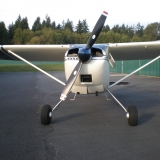
Cessna Skywagon -- accept no substitute!
Wed Oct 18, 2017 3:26 pm
Re: Staying Sharp
You ask a great question, and you've got some great responses to it.
FWIW, a lot of my 'recreational' reading is aviation related. I read stuff online (AvWeb, GANews, AOPA, EAA), various 'zines (AOPA Pilot, Flying Magazine, EAA's Sport Pilot, Aviation Safety, FAA Safety Briefing), books like Sparky Imerson's Mountain Flying Bible and Mick Wilson's How to CRASH and Airplane (and survive!) and news letters.
NASA's Aviation Reporting System CALBACK - here's the latest [url]C:\Users\John\AppData\Local\Microsoft\Windows\INetCache\Content.Outlook\GGX7I5UA\email.mht[/url] is always a good read, regardless of what you fly. If you haven't run across the FAA's safety program for GA check out http://www.faasafety.gov. Look at the Wings program and see if any seminars are in your area, or if any webinars look interesting. For that matter, both EAA and AOPA do webinars. EAA does 'em weekly, and AOPA kinda intermittently.
I don't fly much in the winter because we get a lot of low stratus on the eastside of the Crashcade Mountains. That stuff is filled with ice around here. I don't do ice. So reading, attending seminars, and doing webinars is my cold season answer to poor flying weather. You might have some ok weather in the Beaverton area, just pick your days (and avoid winter/spring night flights until you are IFR rated and comfortable).
FWIW, a lot of my 'recreational' reading is aviation related. I read stuff online (AvWeb, GANews, AOPA, EAA), various 'zines (AOPA Pilot, Flying Magazine, EAA's Sport Pilot, Aviation Safety, FAA Safety Briefing), books like Sparky Imerson's Mountain Flying Bible and Mick Wilson's How to CRASH and Airplane (and survive!) and news letters.
NASA's Aviation Reporting System CALBACK - here's the latest [url]C:\Users\John\AppData\Local\Microsoft\Windows\INetCache\Content.Outlook\GGX7I5UA\email.mht[/url] is always a good read, regardless of what you fly. If you haven't run across the FAA's safety program for GA check out http://www.faasafety.gov. Look at the Wings program and see if any seminars are in your area, or if any webinars look interesting. For that matter, both EAA and AOPA do webinars. EAA does 'em weekly, and AOPA kinda intermittently.
I don't fly much in the winter because we get a lot of low stratus on the eastside of the Crashcade Mountains. That stuff is filled with ice around here. I don't do ice. So reading, attending seminars, and doing webinars is my cold season answer to poor flying weather. You might have some ok weather in the Beaverton area, just pick your days (and avoid winter/spring night flights until you are IFR rated and comfortable).
- PapernScissors offline
- Posts: 419
- Joined: Sun Mar 06, 2016 8:49 pm
- Location: Spokane
- Aircraft: Cessna 172
Wed Oct 18, 2017 3:58 pm
Re: Staying Sharp
Congrats on the PPL. One of my biggest regrets is not getting mine sooner. Waited till the kids were grown. In life I think it is easy to make excuses not to do things but that tends to deprive one of some fantastic experiences. Unfortunately I have seen way to many pilots obtain their ticket and then fall out of flying. This has always puzzled me as they have expended lots of time, effort and money getting there. One thing I think that works on new pilots is fear and I sense you may be affected by this because of your concern about remaining sharp. After I got my PPL I wanted to be able to get into my plane and not think much more of it than getting in my car and turning the key. That took a lot of hours. I understand the time commitment and how it can interfere. Worked 24 hours straight as a physician, got off work and went directly to the airport to take my check ride for my PPL. Fortunately the examiner was more hung over than me. The other day I got off work late and only had a little light to fly in so I had to work hard to convinced myself to get in the plane. Well let me tell you that turned into a magical flight. Sun went down, full harvest moon came up ( I had forgot about that), and I just flew around enjoying the moon, mountains and city lights. By the way I had a VFR into IMC with icing at night once that almost cured me of every flying at night ever again. If you only have 30 minutes to fly do it as 90 percent of the work and knowledge is in the preflight, takeoff and landing. The cruise from point A to B is what I let my passengers do. Don't lose what you have worked so hard to obtain I am sure you will be rewarded by the experience.
Wed Oct 18, 2017 6:56 pm
Re: Staying Sharp
Like CFOT said, it's iterations not hours. When was the last time you did X? How many Xes have you done.
We err as instructors when we avoid legal X with our students to mentor "judgement." Do we expect them to learn marginal on their own. VFR pilots should embrace the wind. IFR pilots should follow the clouds. Every day in every way we should get better and better.
We err as instructors when we avoid legal X with our students to mentor "judgement." Do we expect them to learn marginal on their own. VFR pilots should embrace the wind. IFR pilots should follow the clouds. Every day in every way we should get better and better.
- contactflying offline
- Posts: 4972
- Joined: Wed Apr 03, 2013 7:36 pm
- Location: Aurora, Missouri 2H2
Download my free "https://tinyurl.com/Safe-Maneuvering" e-book.
Wed Oct 18, 2017 8:59 pm
Re: Staying Sharp
Congrats on your PPL!!
And I second all the other opinions here. They’re all good points and come from good places.
And I second all the other opinions here. They’re all good points and come from good places.
- CamTom12 offline

- Posts: 3705
- Joined: Sun Jul 08, 2012 1:08 pm
- Location: Huntsville
- FindMeSpot URL: https://share.delorme.com/camtom12
- Aircraft: Ruppe Racer
Experimental Pacer
home hand jam "wizard"
Thu Oct 19, 2017 8:34 am
Re: Staying Sharp
Congrats on the PPL!
I have to agree with the flight sim advice. I had to wait for over a year to get my medical in the beginning of my student pilot training, therefore I had no reason to be flying because I couldn't solo. I wrapped up all the hours I could until I got my medical, and would stay fresh every few months with the instructor while I waited. But all I could think about was flying. I shopped for airplanes and saved my money for the entire year and that kept me motivated.
I also purchased a kickass simming computer and bought quite a few add-ons like airplanes and scenery packages. I did cross country flights I wanted to fly in real life and bought all the backcountry scenery packages I could find. I bought all the controls such as rudder pedals, yoke, throttle quadrant, and joystick. I practiced landing slow and tough spots with the super cub and Cessna 185 add on.
I can say that being able to "fly" on the sim kept me going when I couldn't actually fly, and made me a better pilot when the time came to do it for real.
I have to agree with the flight sim advice. I had to wait for over a year to get my medical in the beginning of my student pilot training, therefore I had no reason to be flying because I couldn't solo. I wrapped up all the hours I could until I got my medical, and would stay fresh every few months with the instructor while I waited. But all I could think about was flying. I shopped for airplanes and saved my money for the entire year and that kept me motivated.
I also purchased a kickass simming computer and bought quite a few add-ons like airplanes and scenery packages. I did cross country flights I wanted to fly in real life and bought all the backcountry scenery packages I could find. I bought all the controls such as rudder pedals, yoke, throttle quadrant, and joystick. I practiced landing slow and tough spots with the super cub and Cessna 185 add on.
I can say that being able to "fly" on the sim kept me going when I couldn't actually fly, and made me a better pilot when the time came to do it for real.
- Crzyivan13 offline
- Posts: 1811
- Joined: Sat Nov 24, 2012 9:50 pm
- Location: Ohio- OI27 Checkpoint Charlie
- FindMeSpot URL: https://share.delorme.com/EvanDavis
- Aircraft: 1957 Cessna 182A
Thu Oct 19, 2017 11:49 am
Re: Staying Sharp
Cary wrote: Although I wasn't allowed to fly while the passengers were aboard, I often did the flying on the deadhead legs. By doing that, I became pretty proficient in higher performance airplanes at no cost to me.
Cary
And, you can log those legs....

Thu Oct 19, 2017 12:30 pm
Re: Staying Sharp
Mister701 wrote:Cary wrote: Although I wasn't allowed to fly while the passengers were aboard, I often did the flying on the deadhead legs. By doing that, I became pretty proficient in higher performance airplanes at no cost to me.
Cary
And, you can log those legs....
Yup, as PIC.
Cary
"I have slipped the surly bonds of earth..., put out my hand and touched the face of God." J.G. Magee
DISPLAY OPTIONS
Who is online
Users browsing this forum: No registered users and 5 guests
Latest Features
-
-
Featured Bush Planes
As one of the undisputed legends of bush flying, the Cessna 180 hauls a…Read More -
Aircraft Ownership and Maintenance
9 modification mistakes aircraft owners make when trying to "bush out" their birds—why some…Read More -
Live to Tell
A Minnesota pilot is surprised to learn that the sudden asymmetric drag of an…Read More


Latest Knowledge Base
-
Destinations
Canada offers some of the most spectacular backcountry flying on the continent. Here's what you need to know before you go.Read More -
Safety and Survival
Hope that you never have to use your survival vest but knowing you have it and knowing how to use…Read More -
Destinations
A regional guide with ideas for winter camping destinations in California, Nevada, New Mexico, and Arizona.Read More -
Aircraft
Finding an affordable aircraft that can handle the backcountry for $80K or less? A challenge for sure, but with the…Read More