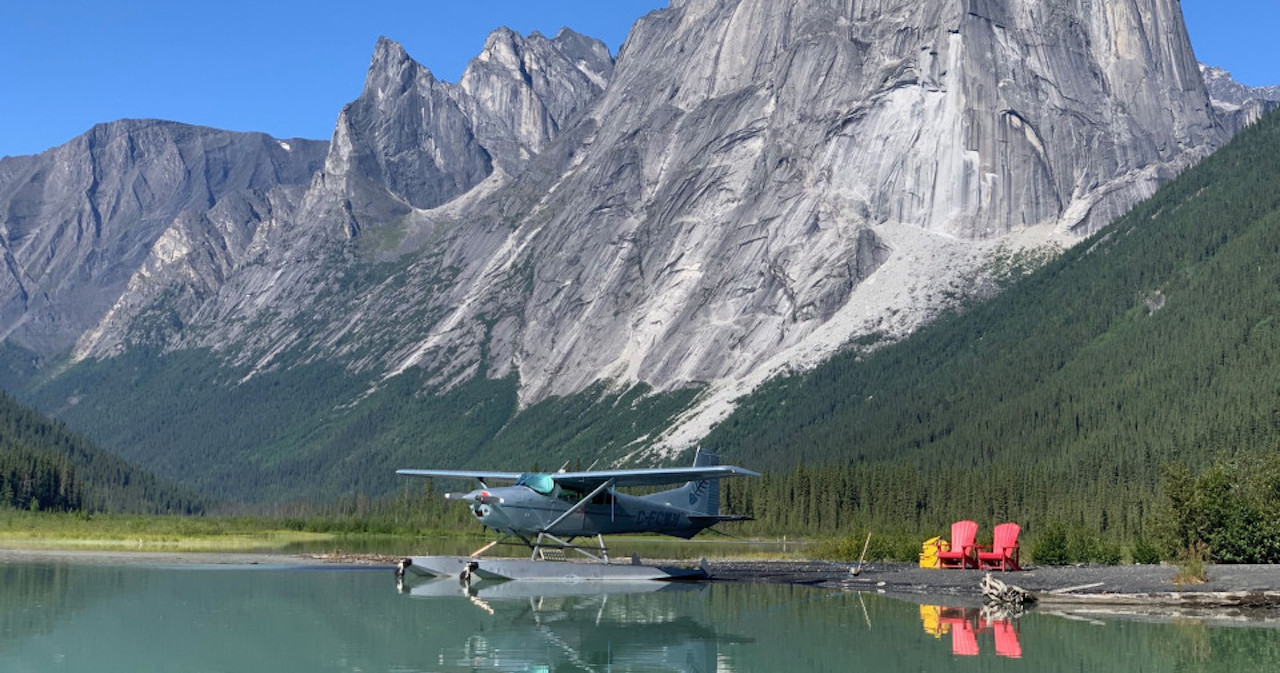
Pretty new to tail draggers, getting close to 30 hrs now, lots to learn.
Few questions.
Taxi and ground roll on gravel bars, land tail low keep the tail light, pushing yoke down, that gets elevator closer to the rocks, so when tail wheel touches down, pull back on the yoke? or keep the tailwheel light on ground roll and taxi?
Braking, Landing tail low, push yoke a bit , touch down, I am on the mains, lower the tail for braking? Apply light braking when on the mains? (tried that and was a bit scary).
Any tips advice or critique is welcomed.
Tail dragger techniques 170
Thu May 06, 2021 8:01 am
Thu May 06, 2021 9:15 am
Re: Tail dragger techniques 170
I'd get some flying in with Jon, he knows his stuff- esp in 170's.
Cessna Skywagon -- accept no substitute!
Thu May 06, 2021 9:49 am
Re: Tail dragger techniques 170
Larry, what you are doing using AOA or apparent rate of closure to decelerate ala three point and then level the fuselage just before touchdown works quite well on all surfaces.
- contactflying offline
- Posts: 4972
- Joined: Wed Apr 03, 2013 7:36 pm
- Location: Aurora, Missouri 2H2
Download my free "https://tinyurl.com/Safe-Maneuvering" e-book.
Thu May 06, 2021 11:24 am
Re: Tail dragger techniques 170
In the video, the first landing was three point. On that surface, probably not a big deal. On a surface you don't know....NOT a good deal.
I like to get the tail high, airplane almost level on potentially rough or narrow surfaces, so I can see where I'm going, and if there are things I need to dodge. Nice thing about the 170 is that it has arguably the best forward visibility of almost any tailwheel airplane out there.
So, I touch tail low (hopefully a few inches off the surface), transition to tail up, often with braking, so I can see where I'm going. When the tail starts to come down, I reverse the yoke to full aft to keep the tail planted, particularly if there's any wind.
Braking can get twitchy, so be careful. By using symmetrical, careful braking, you can bring the tail up and modulate attitude without using much elevator authority. But, that's a dance that has to be done very carefully and with lots of practice.
Generally, if I don't NEED aggressive braking, I don't use same.....too many ways to get an oops there. But, good to practice in controlled environment.
MTV
I like to get the tail high, airplane almost level on potentially rough or narrow surfaces, so I can see where I'm going, and if there are things I need to dodge. Nice thing about the 170 is that it has arguably the best forward visibility of almost any tailwheel airplane out there.
So, I touch tail low (hopefully a few inches off the surface), transition to tail up, often with braking, so I can see where I'm going. When the tail starts to come down, I reverse the yoke to full aft to keep the tail planted, particularly if there's any wind.
Braking can get twitchy, so be careful. By using symmetrical, careful braking, you can bring the tail up and modulate attitude without using much elevator authority. But, that's a dance that has to be done very carefully and with lots of practice.
Generally, if I don't NEED aggressive braking, I don't use same.....too many ways to get an oops there. But, good to practice in controlled environment.
MTV


Fri May 07, 2021 10:13 pm
Re: Tail dragger techniques 170
I see no flaws in your technique. Very smooth!
- skyward II offline

- Posts: 483
- Joined: Sun Jul 05, 2020 9:42 pm
- Location: Upland, CA/Etna, Wy
Sat May 08, 2021 5:22 am
Re: Tail dragger techniques 170
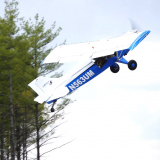
Love the paint scheme on that 170. Flying looks perfect.
Sat May 08, 2021 8:09 pm
Re: Tail dragger techniques 170
Excellent video (as always)!
I'd second what Mike Vivion said, and add a comment on takeoffs:
What I've found works well in the 170's I've owned (an A model in the past and currently a '48) when taking off on rough-ish stuff is to keep the tailwheel a few inches off the ground, and then hold that attitude till it flies off (in the '48 and the A model, control pressures evolve in a weird way since there's no mass balancing of the elevator - IIRC they fixed that for the B). In rough (and/or draggy) stuff the airplane will break ground a little earlier and will be lighter (and therefore gentler) on the mains during the roll. Then I accelerate in ground effect, dumping excess flaps as appropriate. Maybe the best way to think of it is the reverse of your second landing shown -- that attitude that you had before you got the tailwheel down is near ideal for the takeoff roll in junk.
The 170 has about the best visibility of any TW I know of. That said, I'm assuming you've walked the takeoff area and cleared it of hazards, so you can concentrate on getting the airplane flying with minimum thrash/bang/bounce rather than having to dodge stuff during the takeoff roll (as you might on landing.)
You've only got the one takeoff in the video, but it looks like the TW was pretty high.
YMMV, and please keep posting these.
--Tony
I'd second what Mike Vivion said, and add a comment on takeoffs:
What I've found works well in the 170's I've owned (an A model in the past and currently a '48) when taking off on rough-ish stuff is to keep the tailwheel a few inches off the ground, and then hold that attitude till it flies off (in the '48 and the A model, control pressures evolve in a weird way since there's no mass balancing of the elevator - IIRC they fixed that for the B). In rough (and/or draggy) stuff the airplane will break ground a little earlier and will be lighter (and therefore gentler) on the mains during the roll. Then I accelerate in ground effect, dumping excess flaps as appropriate. Maybe the best way to think of it is the reverse of your second landing shown -- that attitude that you had before you got the tailwheel down is near ideal for the takeoff roll in junk.
The 170 has about the best visibility of any TW I know of. That said, I'm assuming you've walked the takeoff area and cleared it of hazards, so you can concentrate on getting the airplane flying with minimum thrash/bang/bounce rather than having to dodge stuff during the takeoff roll (as you might on landing.)
You've only got the one takeoff in the video, but it looks like the TW was pretty high.
YMMV, and please keep posting these.
--Tony
Besides, always know which way your aeroplane is pointed.
DISPLAY OPTIONS
Who is online
Users browsing this forum: No registered users and 3 guests
Latest Features
-
-
Featured Bush Planes
As one of the undisputed legends of bush flying, the Cessna 180 hauls a…Read More -
Aircraft Ownership and Maintenance
9 modification mistakes aircraft owners make when trying to "bush out" their birds—why some…Read More -
Live to Tell
A Minnesota pilot is surprised to learn that the sudden asymmetric drag of an…Read More


Latest Knowledge Base
-
Destinations
Canada offers some of the most spectacular backcountry flying on the continent. Here's what you need to know before you go.Read More -
Safety and Survival
Hope that you never have to use your survival vest but knowing you have it and knowing how to use…Read More -
Destinations
A regional guide with ideas for winter camping destinations in California, Nevada, New Mexico, and Arizona.Read More -
Aircraft
Finding an affordable aircraft that can handle the backcountry for $80K or less? A challenge for sure, but with the…Read More