Getting the airplane down without breaking things has always been a big deal. While more fatalities result from takeoff and departure, most incidents and accidents happen after touchdown faster than stall airspeed in low ground effect. Vso has to do with out of ground effect stall and is of more concern on takeoff and departure. Landing accidents, therefore, are generally not fatal unless a delayed go around results in out of ground effect stall, Vso. Some minimum safe maneuvering airspeed should be more seriously advocated on takeoff rather than landing. Before PTS and instrument integration came about, Wolfgang's stall down approach was very simple: From 1/4 mile abeam on 600' AGL downwind reduce power, decelerate enough to add half flaps, turn base allowing the nose to go down naturally, turn final allowing the nose to go down naturally, hold the centerline extended with dynamic proactive rudder, mitigate any drift with bank into any crosswind, add full flaps, watch the numbers for the apparent brisk walk rate of closure to appear to speed up, when this apparent motion increases use elevator to decelerate and power to manage desired rate of descent, as the airplane begins to mush coming into ground effect increase power to manage desired rate of descent, touching down slowly and softly on the numbers close throttle. If bank has been required into wind continue aileron into crosswind and dynamic proactive rudder until tied down. Braking should not be necessary.
We use creeping control pressure when we have enough airspeed to cause pitch and bank to change too rapidly. Also during stall practice at altitude to slowly find the exact airspeed, control feel, and sounds of various out of ground effect stall iterations. If we don't surmise or are uncomfortable with the natural mushing prior to stall, we tend to hurry the stall. While rapid breaks may be satisfying for practice at altitude, learning to work with the mush is more useful. Wolfgang's stall down short final approach, idling or power pitch, involves mushing. So what are we learning in the out of ground effect mush down prior to stall at altitude? We are learning that the ailerons are very ineffective and get in the way of effective wing leveling. We find that we can lock the wing level with dynamic proactive rudder movement. We find that holding a target with rudder only keeps the wing level. This is not the razor's edge, the break, for recovery technique. This is creeping elevator control and dynamic proactive rudder movement that will make a world of difference during deceleration either on short final or after round out and hold off. Not only have we avoided the out of ground effect stall at altitude, but on short final we have the added safety of either decelerating into ground effect or floating in ground effect. Avoiding deceleration and even mush on short final delays mush and stall in low ground effect until well down the runway after a long float.
Dynamic proactive rudder movement to bracket the centerline extended and keep the wing level also brackets the centerline on the surface. While fine dynamic proactive control movement works well at fast airspeed, slower airspeed and mush will require grosser movement to be as effective.
We extend the time of mush before stall at altitude by creeping elevator control. We can extend the time before stall in low ground effect, well below Vso, by hover taxi practice down long runways. Hover taxi at less than Vso airspeed requires dynamic proactive rudder movement and dynamic proactive elevator movement. Throttle, the out of ground effect descent rate control, becomes somewhat fixed in low ground effect because there is no descent. Once the necessary pitch attitude to maintain low ground effect is bracketed, dynamic proactive elevator movement can become finer.
Creeping elevator control pressure to decelerate to the mush can be science, V speed, or art. Staying there to decelerate on short final as we are coming into ground effect is all art. There are too many variables to stalling in low ground effect to assign a V speed. According to Wolfgang Langewiesche (top of page 304 in Stick and Rudder), "the process of stalling the airplane down can be gauged entirely by watching the spot and perspective in which it appears and its apparent motion." Both the Army and I call this optical phenomenon The Apparent Brisk Walk Rate of Closure Approach. Done properly, coming to a stop sign with a car or landing an airplane, this is what actually appears to happen.
Hotrod 180, forty years giving flight reviews convinced me that Stick and Rudder was a bookshelf display book. Maybe we need to use more of Wolfgang's terminology in flight instruction. Your steep and slow full flaps approach will have what appears, watching Wolfgang's spot and perspective and apparent motion, to be a brisk walk. The round out technique, on the other hand, will cause the spot to appear to close with us faster on short final. If we have the mush down technique under power pitch control, as you and Motoadve and many others do, it is confusing to use flight school terminology like 1.3 Vso stabilized approach to round out and hold off. With the very distant pattern and long, long final today, 1.3 stabilized approach is fine to get up to short final where Wolfgang's stall down can begin. Vso is confusing because it implies we are landing at that airspeed. Either high and mushing all the way down or deceleration on short final work just fine when landing at the actual airspeed at which the airplane will stall in low ground effect.
The mush down approach.
Sun Jul 19, 2020 12:10 am
- contactflying offline
- Posts: 4972
- Joined: Wed Apr 03, 2013 7:36 pm
- Location: Aurora, Missouri 2H2
Download my free "https://tinyurl.com/Safe-Maneuvering" e-book.
Wed Jul 22, 2020 11:57 pm
Re: The mush down approach.
Or to put it simply, accelerate to as fast as possible on takeoff and decelerate to as slow as possible on landing. V KISS.
- contactflying offline
- Posts: 4972
- Joined: Wed Apr 03, 2013 7:36 pm
- Location: Aurora, Missouri 2H2
Download my free "https://tinyurl.com/Safe-Maneuvering" e-book.
Sat Jul 25, 2020 6:16 am
Re: The mush down approach.
I like the 'simply put" post. Some folks stumble on your selected descriptors. I tend to struggle with the verbiage... But that's all me. I tend to struggle reading anything that has more words than pictures.
I could never instruct, because from my perspective, learning how to control speed transitions, has always been far more important than how to control a targeted airspeed. I know several people who by virtue of the fact that they hold Commercial Pilot Certificates, can obviously stick an airspeed reasonably well, but by virtue of how they land an airplane, obviously have no control over how fast (or slow) they are slowing things down.
Simply put, I guess all that is a bunch of verbiage to describe energy management.
Take care, Rob
I could never instruct, because from my perspective, learning how to control speed transitions, has always been far more important than how to control a targeted airspeed. I know several people who by virtue of the fact that they hold Commercial Pilot Certificates, can obviously stick an airspeed reasonably well, but by virtue of how they land an airplane, obviously have no control over how fast (or slow) they are slowing things down.
Simply put, I guess all that is a bunch of verbiage to describe energy management.
Take care, Rob

Sat Jul 25, 2020 7:11 am
Re: The mush down approach.
John Boyd agreed with you on transition management, but mostly to get inside the other guy. Inside his radius of vertical and horizontal space. You do the same, but you are chasing bugs.
I agree that Wolfgang's art of energy management, including airspeed, zoom reserve, gravity, and groundspeed (wind) management, lost out to stabilized approach airspeed without any deceleration until flying over the target.
I agree that Wolfgang's art of energy management, including airspeed, zoom reserve, gravity, and groundspeed (wind) management, lost out to stabilized approach airspeed without any deceleration until flying over the target.
- contactflying offline
- Posts: 4972
- Joined: Wed Apr 03, 2013 7:36 pm
- Location: Aurora, Missouri 2H2
Download my free "https://tinyurl.com/Safe-Maneuvering" e-book.
Sun Jul 26, 2020 9:22 pm
Re: The mush down approach.
As Rob pointed out in another post, power management is a part of energy management I don't emphasize as much as natural energy. Size of engine and engine percentage of total energy has warped me a bit.
Concerning the mush down approach and all who use some power pitch technique for short field landing, most agree that elevator is basically the airspeed control and throttle is basically the rate of descent control. That is confusing for those trained in instrument integration and the stabilized airspeed approach. At any zoom reserve potential (I know it is kinetic but it can be traded if enough kinetic is there), say 1.3 Vso, elevator can control rate of descent. At least enough to stay on a 500 fpm glideslope, which is where this unfortunate idea came from. And naturally, when the throttle is full open like on takeoff, our only control is elevator short of less throttle. If we close the throttle on approach our only control is elevator unless we add throttle.
Herein lies the danger of elevator=altitude and power=airspeed: Going behind the power curve an increase in elevator will cause descent, not assent. It will cause mush at full power on takeoff, dangerously. It will cause mush on short final which is the whole point of the mush down approach. We just properly think in terms of the mush being caused by angle of attack and decrease in airspeed.
Unlike Rob, I could instruct. Like him I could not teach as done in most flight schools. I taught the spot landing as taught in Stick and Rudder, the stall down landing without power. I taught all other landings, normal, soft, and short as the apparent brisk walk rate of closure approach to touch down slowly and softly on the numbers. The idea, when it became popular in the 70s, that elevator controlled rate of descent and power controlled airspeed just didn't compute for me. I like to keep things simple and use the technique that remains valid in all conditions and situations. If there is a both position for the fuel selector, I leave the damn thing in both.
Concerning the mush down approach and all who use some power pitch technique for short field landing, most agree that elevator is basically the airspeed control and throttle is basically the rate of descent control. That is confusing for those trained in instrument integration and the stabilized airspeed approach. At any zoom reserve potential (I know it is kinetic but it can be traded if enough kinetic is there), say 1.3 Vso, elevator can control rate of descent. At least enough to stay on a 500 fpm glideslope, which is where this unfortunate idea came from. And naturally, when the throttle is full open like on takeoff, our only control is elevator short of less throttle. If we close the throttle on approach our only control is elevator unless we add throttle.
Herein lies the danger of elevator=altitude and power=airspeed: Going behind the power curve an increase in elevator will cause descent, not assent. It will cause mush at full power on takeoff, dangerously. It will cause mush on short final which is the whole point of the mush down approach. We just properly think in terms of the mush being caused by angle of attack and decrease in airspeed.
Unlike Rob, I could instruct. Like him I could not teach as done in most flight schools. I taught the spot landing as taught in Stick and Rudder, the stall down landing without power. I taught all other landings, normal, soft, and short as the apparent brisk walk rate of closure approach to touch down slowly and softly on the numbers. The idea, when it became popular in the 70s, that elevator controlled rate of descent and power controlled airspeed just didn't compute for me. I like to keep things simple and use the technique that remains valid in all conditions and situations. If there is a both position for the fuel selector, I leave the damn thing in both.
- contactflying offline
- Posts: 4972
- Joined: Wed Apr 03, 2013 7:36 pm
- Location: Aurora, Missouri 2H2
Download my free "https://tinyurl.com/Safe-Maneuvering" e-book.
Mon Jul 27, 2020 5:04 pm
Re: The mush down approach.
Thanks Again Contact for sharing that hard earned wisdom .
I try to practice what you preach . I hope to get there someday .
I try to practice what you preach . I hope to get there someday .
Mon Jul 27, 2020 5:27 pm
Re: The mush down approach.
I like Hotrod 180's term mush down approach because of how we use the term mush now, descent as a result of too high angle of attack. Wolfgang, however, described all flight as a mush because the nose is higher than where we are going. The relative wind is slightly from below even in cruise, especially at cruise at high density altitude with normal engines.
So he uses the term "stall down landing" to indicate what we now call mush down approach or power pitch approach. Language, like much in life, is fluid. Angle of attack is angle of incidence in the King's English. We actually speak American, I'm sorry, United States of American.
My wife says I talk too much. I really want to describe in enough detail that the picture in your mind is similar to the picture in my mind. From that point it is fair to nail me.
Hang in there uwmminer, life is fluid.
So he uses the term "stall down landing" to indicate what we now call mush down approach or power pitch approach. Language, like much in life, is fluid. Angle of attack is angle of incidence in the King's English. We actually speak American, I'm sorry, United States of American.
My wife says I talk too much. I really want to describe in enough detail that the picture in your mind is similar to the picture in my mind. From that point it is fair to nail me.
Hang in there uwmminer, life is fluid.
- contactflying offline
- Posts: 4972
- Joined: Wed Apr 03, 2013 7:36 pm
- Location: Aurora, Missouri 2H2
Download my free "https://tinyurl.com/Safe-Maneuvering" e-book.
Tue Jul 28, 2020 6:14 am
Re: The mush down approach.
umwminer wrote:Thanks Again Contact for sharing that hard earned wisdom .
I try to practice what you preach . I hope to get there someday .
Me too!
FWIW, I am not suggesting a stabilized approach is a bad thing to master, I just feel like at some point that approach needs to actually turn in to a landing. So yeah... it's a start, but for my world, what happens further on down the line deserves more attention.
IMHO, Being able to convert any moment into a successful landing doesn't come from a mastered airspeed...
contactflying wrote:Science will take responsibility only for what is strictly stated. Art, on the other hand, might take the pilots point of view (see evil), audio (hear evil), and even speak evil. We need to pay attention to what the airplane wants to do and the relative feel and sound and sight of things. Perspective, apparent motion, relative wind noise, environs of the spot, and such need be a part of the school solution. Instructors need to speak evil as well as school solution.
I like this as well...
Because it frustrates me that there is a direct correlation (at least in my experience) with poor piloting skills, and highly intelligent people. I think they find themselves in a position in life where things come to them easy, and simply learn what control manipulations will result in what effect... Consequently, knowing that they are brighter than the average Joe, they 'study', and learn

At the same time, most of the most brilliant 'naturals' I know, are painfully aware, that they are not the sharpest tools in the shed. Do they work harder for it and as a result develop better fine motor skills or feel for control harmonies? Shoot I don't know.. But it doesn't take a rocket scientist to figure out that not everyone that reads about a hoop and a ball can be Micheal Jordan
So yeah... when talks come up about 'feeling' a landing or maneuver, or feeling a downwind vs upwind vs crosswind condition and someone scoffs about the idea I find it a little odd.Take care, Rob
Tue Jul 28, 2020 7:02 am
Re: The mush down approach.
We instructors are supposed to talk to prospective students and find out about background, aptitude, and interest. In Rob's world it is a bit different, but we both appreciate that any kind of cycle riding, bull riding, athletic skills, or equipment operating skills trump brain surgery operation skills. In my day Rob's world was a bit overdone by some operators. After I tore a wing off my first Pawnee and needed to lease one, the operator asked how many I had crashed. "One," I replied. "You don't have enough experience to lease my planes," he said. I did lease his old tired Pawnees and CallAirs and ended up training two of his pilots who had no paper whatsoever. They were naturals as were most farm boys.
- contactflying offline
- Posts: 4972
- Joined: Wed Apr 03, 2013 7:36 pm
- Location: Aurora, Missouri 2H2
Download my free "https://tinyurl.com/Safe-Maneuvering" e-book.
Tue Jul 28, 2020 9:53 am
Re: The mush down approach.
Rob,
I'm not sure it's an "intelligence" thing, but more of a "self-awareness" thing. I may have told this story before, but I was on vacation in E Tennessee, and pulled into an old country store gas station. There were two old codgers sitting on the porch, eating pickles from a barrel (true story). They were talking about a car crash "up the road a ways" where "some damn tourist" had taken a corner too fast, run across the median, and hit oncoming traffic. Nothing unusual so far, right? But here's the line that got to me: "Yeah, everybody on the road today thinks they are one of the 'best' drivers out there, and they're just NOT. But they drive like they are anyway, and that leads to crashes."
As I walked away, I was thinking to myself "Yeah, that's so true. All those idiots out there think they're better drivers than they really are... Oh, wait. What if I am one of those guys?" I spent the rest of the day thinking about it... It literally changed the way I drove, not just on that trip, but for the rest of my life.
When I got back to my Army aviation unit, where I was the Instructor Pilot, I called all the pilots together for a "safety meeting"... This was an Air Cavalry "Scout Platoon", where every one of the pilots had graduated in the top 10 of their flight school class (a prerequisite for selection for the Aeroscout track back in the day...). Like fighter pilots in the Air Force, none of these Scout pilots lacked for confidence. And in truth, they were, for the most part, pretty darn good sticks. (Just not always as good as they thought they were...) So we all sat in a big circle in the briefing room, where everyone could see everyone else. I passed out sheets of paper and pens, then asked them to number from 1-10 down one side of the paper. Once that was done, I told them that what came next was confidential, and that they should not share their answers with anyone else, but should be as honest as they possibly could be.
With everyone nodding their heads in agreement, I asked them to write down next to number one the name of the pilot in our unit (sitting in that circle with them) that they considered to be the very best pilot in the group. Then next to number two, the second-best pilot, and so forth all the way down to #10. It took nearly a 1/2 hour for everyone to finish their list. I then had them fold up the paper and put it in their pocket, to be discarded at home (not in the office trash can...). They all sat around looking at me, wondering what came next.
I told them that what they had just done was pretty hard, but that I could guarantee them one thing: On every one of those pieces of paper, their own name appeared in the "top 3" in their list, and that it is a statistical impossibility for ALL of us to be among the top 25% of the pilots in the unit. In fact, it was quite possible that your name appeared in the "bottom three" of someone else's list... What conclusion should we draw from this exercise? Conclusion #1 is that we are very poor judges of our own abilities. Conclusion #2 that I proposed was that we need to accept the truth that we just MIGHT not be as great of a pilot as we think we are. We might, in fact, be in that bottom tier. Statistically speaking, there's a 50% probability that we ARE in the bottom half... Conclusion #3 is that we might take risks that "the other guys" should not take, because "they can't handle it like I can." But what if we ARE the "other guys?" How would that change the way we fly? That set off a lengthy discussion.
I'm not sure it's an "intelligence" thing, but more of a "self-awareness" thing. I may have told this story before, but I was on vacation in E Tennessee, and pulled into an old country store gas station. There were two old codgers sitting on the porch, eating pickles from a barrel (true story). They were talking about a car crash "up the road a ways" where "some damn tourist" had taken a corner too fast, run across the median, and hit oncoming traffic. Nothing unusual so far, right? But here's the line that got to me: "Yeah, everybody on the road today thinks they are one of the 'best' drivers out there, and they're just NOT. But they drive like they are anyway, and that leads to crashes."
As I walked away, I was thinking to myself "Yeah, that's so true. All those idiots out there think they're better drivers than they really are... Oh, wait. What if I am one of those guys?" I spent the rest of the day thinking about it... It literally changed the way I drove, not just on that trip, but for the rest of my life.
When I got back to my Army aviation unit, where I was the Instructor Pilot, I called all the pilots together for a "safety meeting"... This was an Air Cavalry "Scout Platoon", where every one of the pilots had graduated in the top 10 of their flight school class (a prerequisite for selection for the Aeroscout track back in the day...). Like fighter pilots in the Air Force, none of these Scout pilots lacked for confidence. And in truth, they were, for the most part, pretty darn good sticks. (Just not always as good as they thought they were...) So we all sat in a big circle in the briefing room, where everyone could see everyone else. I passed out sheets of paper and pens, then asked them to number from 1-10 down one side of the paper. Once that was done, I told them that what came next was confidential, and that they should not share their answers with anyone else, but should be as honest as they possibly could be.
With everyone nodding their heads in agreement, I asked them to write down next to number one the name of the pilot in our unit (sitting in that circle with them) that they considered to be the very best pilot in the group. Then next to number two, the second-best pilot, and so forth all the way down to #10. It took nearly a 1/2 hour for everyone to finish their list. I then had them fold up the paper and put it in their pocket, to be discarded at home (not in the office trash can...). They all sat around looking at me, wondering what came next.
I told them that what they had just done was pretty hard, but that I could guarantee them one thing: On every one of those pieces of paper, their own name appeared in the "top 3" in their list, and that it is a statistical impossibility for ALL of us to be among the top 25% of the pilots in the unit. In fact, it was quite possible that your name appeared in the "bottom three" of someone else's list... What conclusion should we draw from this exercise? Conclusion #1 is that we are very poor judges of our own abilities. Conclusion #2 that I proposed was that we need to accept the truth that we just MIGHT not be as great of a pilot as we think we are. We might, in fact, be in that bottom tier. Statistically speaking, there's a 50% probability that we ARE in the bottom half... Conclusion #3 is that we might take risks that "the other guys" should not take, because "they can't handle it like I can." But what if we ARE the "other guys?" How would that change the way we fly? That set off a lengthy discussion.

Tue Jul 28, 2020 12:41 pm
Re: The mush down approach.
That was a very good exercise, Jim. Another consideration, as teachers, is that the true achievement is to train sticks to be better than ourselves. Both Army and civilian, I trained pilots I considered to be and expected to be better than me.
At Ft Wolters I had the best pilot and best instructor ever. He was not the safest. He was a civilian ex crop duster who wouldn't have lasted ten minutes in the Army. Ex Southern Airways as well. His stick (three students) were first to solo each class because he was fast and innovative. His Vietnamese stick, who spoke little English, were first to solo. All three, as was my Anglo stick. Marines, Iranians, Black pilots...it really didn't matter. Judgement? No, but that's not fair. We're talking skills. And we were going to war.
At Ft Wolters I had the best pilot and best instructor ever. He was not the safest. He was a civilian ex crop duster who wouldn't have lasted ten minutes in the Army. Ex Southern Airways as well. His stick (three students) were first to solo each class because he was fast and innovative. His Vietnamese stick, who spoke little English, were first to solo. All three, as was my Anglo stick. Marines, Iranians, Black pilots...it really didn't matter. Judgement? No, but that's not fair. We're talking skills. And we were going to war.
- contactflying offline
- Posts: 4972
- Joined: Wed Apr 03, 2013 7:36 pm
- Location: Aurora, Missouri 2H2
Download my free "https://tinyurl.com/Safe-Maneuvering" e-book.
Tue Jul 28, 2020 9:31 pm
Re: The mush down approach.
Hi JP,
Good story. Lot's of food for thought there, thank you. You know, right after I sent the last post, I thought... hey but what about Dr. G or Dusty.
One has a Doctorate in some kind of agronomy, I guess that makes him a pretty smart bug man, the other has some sort of aeronautical engineering masters, which I guess makes him the next best thing to a rocket scientist and both can fly like I hope to some day.
I like your test as well, but I probably would have failed . I don't often find myself in the company of that many pilots all at once (by design), and when I find myself flying (specially for fun) I tend to fly with guys I hope to be like when I grow up (also by design). I strive to learn from everyone I fly with, but it's a lot easier when I know I am in the company of talent. I am very much OK with not being the alpha dog pilot in the group, in fact I prefer it. Fortunately, I've been blessed with having some really great pilots as friends.
I believe (at least with respect to most GA type flying) that there are 'naturals', guys who just need pointing in the right direction and then do it like they were born with wings, and then the rest of us... we have to actually go through the motions of learning why things work, and then develop the skills to make those things happen. I am not a natural, yet really expect a lot out of myself, so I work hard at being the best that I can, but have no grand illusions about being able fly like the ones I enjoy watching.
Take care, Rob
Good story. Lot's of food for thought there, thank you. You know, right after I sent the last post, I thought... hey but what about Dr. G or Dusty.
One has a Doctorate in some kind of agronomy, I guess that makes him a pretty smart bug man, the other has some sort of aeronautical engineering masters, which I guess makes him the next best thing to a rocket scientist
and both can fly like I hope to some day.I like your test as well, but I probably would have failed
. I don't often find myself in the company of that many pilots all at once (by design), and when I find myself flying (specially for fun) I tend to fly with guys I hope to be like when I grow up (also by design). I strive to learn from everyone I fly with, but it's a lot easier when I know I am in the company of talent. I am very much OK with not being the alpha dog pilot in the group, in fact I prefer it. Fortunately, I've been blessed with having some really great pilots as friends.I believe (at least with respect to most GA type flying) that there are 'naturals', guys who just need pointing in the right direction and then do it like they were born with wings, and then the rest of us... we have to actually go through the motions of learning why things work, and then develop the skills to make those things happen. I am not a natural, yet really expect a lot out of myself, so I work hard at being the best that I can, but have no grand illusions about being able fly like the ones I enjoy watching.
Take care, Rob
Sat Aug 01, 2020 5:09 am
Re: The mush down approach.
Fred Weick had the average pilot in mind when he designed the Ercoupe. Anybody can perform Wolfgang's stall down in the Ercoupe. Pull the stick all the way back and manage rate of descent with throttle until slow and soft touchdown on the numbers. A big problem in 1939, when what Wolfgang called the "safety airplane" was born, was that most approaches were with the throttle closed. Spread a lot of Ercoupe main gears.
Two things were proven, however: Yes it was true, stall was caused in all other airplanes by the pilot pulling too far back on the stick. And yes, the mush down precedes the stall if the stick is paused there a bit.
The Ercoupe was unpopular. Like the virus, it taught us how incredibly hard headed we were.
Two things were proven, however: Yes it was true, stall was caused in all other airplanes by the pilot pulling too far back on the stick. And yes, the mush down precedes the stall if the stick is paused there a bit.
The Ercoupe was unpopular. Like the virus, it taught us how incredibly hard headed we were.
- contactflying offline
- Posts: 4972
- Joined: Wed Apr 03, 2013 7:36 pm
- Location: Aurora, Missouri 2H2
Download my free "https://tinyurl.com/Safe-Maneuvering" e-book.
Tue Aug 04, 2020 7:20 am
Re: The mush down approach.
Concerning seeing no evil, hearing no evil, and speaking no evil, the physics of the difference in stall airspeed in low ground effect verses the higher stall airspeed out of ground effect doesn't seem to get much attention. Is this knowledge evil?
- contactflying offline
- Posts: 4972
- Joined: Wed Apr 03, 2013 7:36 pm
- Location: Aurora, Missouri 2H2
Download my free "https://tinyurl.com/Safe-Maneuvering" e-book.
Fri Aug 21, 2020 5:33 am
Re: The mush down approach.
I just watched the Flight Chops guy make the 45 MPH and around 1400 RPM in Carbon Cub stabilized mush down approach. I see now why the big tire guys are doing the Navy hold attitude until the catch (no flair) landing. The concept is to fly OGE stabilized but mushy airspeed from way back and way high until touchdown. Patrick's use of wing angle with horizon sort of AOA mush down is similar. As I've said to him and Hotrod 180 has mentioned, we who fly regular airplanes don't really want to arrive so Navy. So the Chops instructor and Hotrod 180 and others say add a bit of power at the bottom.
The advantage of the apparent brisk walk rate of closure approach is that we don't have to be slow way out and way up. We decelerate on short final to get to the 45 or whatever coming into ground effect. We make continual power adjustments as we decelerate. Slower requires more power to maintain the same comfortable sink rate. The comfortable sink rate does not become a mush until very short final, however. This makes strong crosswind with large gust spread far less dicy.
Simply watch the intended touchdown area, the environs as Wolfgang calls it for the "apparent motion." Yes, he understood that it was apparent, not stabilized. Stabilized 45 is OGE thinking to keep from stalling way out and way back. Apparent is in ground effect thinking, the airspeed we will actually be going when the wing stops flying on touchdown.
The rate of closure with a distant target, say a stop sign or the numbers, appears to be a brisk walk from any distance until we get fairly close. When we get fairly close, the rate of closure appears to speed up. This speed up is way to fast to fix down at the bottom, we have to anticipate it and be ready to add pitch to slow down and add power to deal with the extra sink caused by slowing down.
So done well, deceleration begins on short final and continues through touchdown slowly and softly on the numbers. By decelerating sufficient to maintain what appears to be the brisk walk rate of closure, by not allowing the apparent rate of closure to speed up as with the stabilized (even at 45) approach airspeed, we fly faster OGE and slow down coming into ground effect.
Both type approaches are very good short field approaches. The advantage of the apparent brisk walk rate of closure approach is that it is all weather all conditions. It can be a default approach that allows for many iterations, and thereby every iteration in every way we get better and better. Also fewer surprise arrivals.
The advantage of the apparent brisk walk rate of closure approach is that we don't have to be slow way out and way up. We decelerate on short final to get to the 45 or whatever coming into ground effect. We make continual power adjustments as we decelerate. Slower requires more power to maintain the same comfortable sink rate. The comfortable sink rate does not become a mush until very short final, however. This makes strong crosswind with large gust spread far less dicy.
Simply watch the intended touchdown area, the environs as Wolfgang calls it for the "apparent motion." Yes, he understood that it was apparent, not stabilized. Stabilized 45 is OGE thinking to keep from stalling way out and way back. Apparent is in ground effect thinking, the airspeed we will actually be going when the wing stops flying on touchdown.
The rate of closure with a distant target, say a stop sign or the numbers, appears to be a brisk walk from any distance until we get fairly close. When we get fairly close, the rate of closure appears to speed up. This speed up is way to fast to fix down at the bottom, we have to anticipate it and be ready to add pitch to slow down and add power to deal with the extra sink caused by slowing down.
So done well, deceleration begins on short final and continues through touchdown slowly and softly on the numbers. By decelerating sufficient to maintain what appears to be the brisk walk rate of closure, by not allowing the apparent rate of closure to speed up as with the stabilized (even at 45) approach airspeed, we fly faster OGE and slow down coming into ground effect.
Both type approaches are very good short field approaches. The advantage of the apparent brisk walk rate of closure approach is that it is all weather all conditions. It can be a default approach that allows for many iterations, and thereby every iteration in every way we get better and better. Also fewer surprise arrivals.
- contactflying offline
- Posts: 4972
- Joined: Wed Apr 03, 2013 7:36 pm
- Location: Aurora, Missouri 2H2
Download my free "https://tinyurl.com/Safe-Maneuvering" e-book.
Sat Aug 22, 2020 9:39 pm
Re: The mush down approach.
Contact, reading about the apparent brisk walk approach really helped me smooth out my landings in a new-to-me 182e. Thank you. Thinking about the mush down approach (I’ve never tried it), it seems like it might be better to get over obstacles than the apparent brisk walk approach.
- Starrboard offline
- Posts: 14
- Joined: Sun Apr 12, 2020 2:49 pm
- Location: Placerville
- Aircraft: Cessna 182E
Sun Aug 23, 2020 12:48 am
Re: The mush down approach.
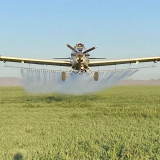
Crop dusters have been the group of pilots who have used the apparent brisk walk rate of closure approach, whether or not they knew the term, as their default approach. Never getting more than a couple hundred feet up, they make it seem to be only useful as a low approach, similar to the drag it in technique.
Try it both from a 1,000 AGL pattern and a lower pattern. Regardless of altitude, getting close to the target is what causes the rate of closure to appear to speed up. It happens much faster making anticipation much more important with the low approach. From up high, it looks similar to Patrick and other big guys stabilized mush down. It is not. We don't just hold 45 or any stabilized airspeed all the way to touchdown. We still decelerate on very short final. From a very steep glide angle, to get in close to the beginning of the landing zone over high trees, the rate of closure doesn't begin to speed up as far out on short final. It happens nearer to touchdown and must be dealt with quickly to prevent the Navy type arrival, bang and bounce. It appears more to be just adding quite a lot of power to touchdown slowly and softly on the numbers. Anticipation still helps and the deceleration can begin almost as early as with the low apparent rate of closure approach, but more power is required. We are not getting into ground effect as early as the low approach.
The technique is the same however. Fly 1.3 or whatever airspeed until short final, anticipate the increase in apparent rate of closure, when the numbers or stop sign appear to speed up, pitch up to decelerate and add power to retain the same rate of descent. Continue deceleration and power as necessary to both stay at what appears to be a brisk walk and not sink faster than desirable. Rate of descent at one foot AGL should be near zero. Rather than bounce down ala Navy catch, we use throttle as aggressively as necessary to touch down softly. Because we have pitched up more to decelerate, this power will not carry us down the runway significantly.
As with everything iterations make perfect. On first try, either high or low, we will be too fast requiring throttle to be closed and we will float a bit. As we creep up on the pitch a little on the next one, as we anticipate the undesired speed up in rate of closure sooner, as we get less worried about using the throttle as the fourth control, we will get closer and closer to the numbers. I really hate bouncing so I allow the extra speed and just ask for less the next time. It will still be a lot shorter than the round out and hold off technique. Given some gas and a handfull of iterations, putting it on the numbers from either steep or shallow glide angle will become default. Once we trust ourselves to keep the airplane from stalling OGE but become comfortable with deceleration coming into ground effect, we get better at it.
Two things I have found to be true about pilots: we are not going to get them to hit the obstruction when teaching just over on takeoff and we are not going to get them to stall out of ground effect on approach. Just the opposite scares me. Too often they are willing to almost stall well over the obstruction and too often they are expecting to land at Vso. We can't land in ground effect at Vso.
Try it both from a 1,000 AGL pattern and a lower pattern. Regardless of altitude, getting close to the target is what causes the rate of closure to appear to speed up. It happens much faster making anticipation much more important with the low approach. From up high, it looks similar to Patrick and other big guys stabilized mush down. It is not. We don't just hold 45 or any stabilized airspeed all the way to touchdown. We still decelerate on very short final. From a very steep glide angle, to get in close to the beginning of the landing zone over high trees, the rate of closure doesn't begin to speed up as far out on short final. It happens nearer to touchdown and must be dealt with quickly to prevent the Navy type arrival, bang and bounce. It appears more to be just adding quite a lot of power to touchdown slowly and softly on the numbers. Anticipation still helps and the deceleration can begin almost as early as with the low apparent rate of closure approach, but more power is required. We are not getting into ground effect as early as the low approach.
The technique is the same however. Fly 1.3 or whatever airspeed until short final, anticipate the increase in apparent rate of closure, when the numbers or stop sign appear to speed up, pitch up to decelerate and add power to retain the same rate of descent. Continue deceleration and power as necessary to both stay at what appears to be a brisk walk and not sink faster than desirable. Rate of descent at one foot AGL should be near zero. Rather than bounce down ala Navy catch, we use throttle as aggressively as necessary to touch down softly. Because we have pitched up more to decelerate, this power will not carry us down the runway significantly.
As with everything iterations make perfect. On first try, either high or low, we will be too fast requiring throttle to be closed and we will float a bit. As we creep up on the pitch a little on the next one, as we anticipate the undesired speed up in rate of closure sooner, as we get less worried about using the throttle as the fourth control, we will get closer and closer to the numbers. I really hate bouncing so I allow the extra speed and just ask for less the next time. It will still be a lot shorter than the round out and hold off technique. Given some gas and a handfull of iterations, putting it on the numbers from either steep or shallow glide angle will become default. Once we trust ourselves to keep the airplane from stalling OGE but become comfortable with deceleration coming into ground effect, we get better at it.
Two things I have found to be true about pilots: we are not going to get them to hit the obstruction when teaching just over on takeoff and we are not going to get them to stall out of ground effect on approach. Just the opposite scares me. Too often they are willing to almost stall well over the obstruction and too often they are expecting to land at Vso. We can't land in ground effect at Vso.
- contactflying offline
- Posts: 4972
- Joined: Wed Apr 03, 2013 7:36 pm
- Location: Aurora, Missouri 2H2
Download my free "https://tinyurl.com/Safe-Maneuvering" e-book.
DISPLAY OPTIONS
Who is online
Users browsing this forum: No registered users and 8 guests
Latest Features
-
-
Featured Bush Planes
As one of the undisputed legends of bush flying, the Cessna 180 hauls a…Read More -
Aircraft Ownership and Maintenance
9 modification mistakes aircraft owners make when trying to "bush out" their birds—why some…Read More -
Live to Tell
A Minnesota pilot is surprised to learn that the sudden asymmetric drag of an…Read More




Latest Knowledge Base
-
Destinations
Canada offers some of the most spectacular backcountry flying on the continent. Here's what you need to know before you go.Read More -
Safety and Survival
Hope that you never have to use your survival vest but knowing you have it and knowing how to use…Read More -
Destinations
A regional guide with ideas for winter camping destinations in California, Nevada, New Mexico, and Arizona.Read More -
Aircraft
Finding an affordable aircraft that can handle the backcountry for $80K or less? A challenge for sure, but with the…Read More



