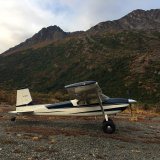
This information just released publicly, the Bearhawk Bravo is introduced. I'm super excited to have one of the first QB kits coming this fall.
Here is the info as distributed by Mark Goldberg.
Bearhawk Model B announcement
Yesterday, 02:28 PM
Guys, we have made some changes to my 4 place BH, N303AP. The purpose was to see if some of the design changes Bob made in later models might also benefit the 4 place. After it has flown 30hours or so - we can say that it does. Not much time to go into details because of getting ready to depart early for OSH.
Refined Bearhawk 4-Place Aircraft Offers Enhanced Performance
AUSTIN, TEXAS, JULY 25, 2016 – Bearhawk Aircraft announced today the unveiling of its Bearhawk Bravo. The Bravo is a refinement of 4-Place Bearhawk design that established the family of Bearhawk aircraft. The Bearhawk Bravo, referred to internally as the “Model B,” will be available as both a plans-built design and a Quick Build kit. The aircraft features best-in-class speed, STOL capability, and large payload carrying capacity. The original design and modifications are by renowned aviator, mechanic and engineer Bob Barrows.
“For some time Bob has wanted to incorporate into the 4-Place Bearhawk certain design features of his more recent aircraft, namely the Bearhawk Patrol and Bearhawk LSA,” stated Mark Goldberg, president of Bearhawk Aircraft and manufacturer of Bearhawk Quick Build kits. Originally designed in 1994, the Bearhawk was due for improvements following a successful 22-year tenure.
Most prominent among the design changes to the 4-Place Bearhawk “Model B” is the use of a Riblett 30-413.5 airfoil, as incorporated into the 2-Place follow-on Patrol. Following his study of the airfoil, Barrows felt the Riblett would offer some advantages over the Bearhawk’s original NACA 4412 airfoil. Flight tests have proved this correct with the new wing producing gains in the range of five to eight MPH faster. This speed increase is coupled with similar if not better stall speeds, yet definitively greater stability in induced stall.
Test pilot Wayne Massey explained, “Having flown the Bearhawk many hours prior, I was at first apprehensive when I heard that modifications were to be made. I liked the way the ‘model A’ airplane flew and I didn’t want the feel of the airplane changing. Now having flown the ‘model B’ for several hours I feel that the changes were worthwhile. The increase in cruise speeds makes it an even greater cross-country airplane.
“The original 4-place Bearhawk already had excellent stall characteristics and the ‘model B’ with its Riblett airfoil enhances the stall characteristics even more. Performing full aft stick wings level power off stalls in the ‘model A’ leads to a stable ‘leaf stall.’ Continuing to hold full aft stick in the stall, the nose drops just enough to recover some airspeed then goes back into a leaf stall again remaining very stable. On the new ‘model B,’ performing full aft stick power off stalls leads to a wings level stable full stall and a sink rate of around 1,200 fpm. While holding full aft stick in the stall, the wings remain level and the nose does not drop, the aircraft does not leaf stall.
“In a moose stall the Bearhawk, ‘model B,’ now performs similarly to the Patrol. In a turn with some power on and speed diminishing, there’s a very slight buffet at around 35–40 IAS, yet the aircraft remains very stable with no noticeable tendency to drop a wing in the opposite direction. Gentle forward pressure on the stick leads to an instant, stable airspeed recovery.”
Additional changes incorporated into the Bearhawk Bravo are:
Use of aluminum fuselage formers, window sills and door sills in place of steel formers and sills offering weight savings and corrosion resistance.
Use of airfoil shaped ribs on the horizontal and vertical stabilizers as opposed to flat ribs giving enhanced stability, more control authority, and a speed increase of three MPH due to the change from four to three degrees of down deflection of the horizontal stabilizers.
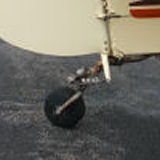
Use of shock struts made from heavy wall round tubing in place of streamlined tubing providing more resistance to side load failure while on the runway. The round tube is faired with streamlined PVC to neutralize drag.
Use of a round tail spring fabricated from 6150 heat treated alloy steel bar in place of the leaf-type spring set providing a small weight savings and better flex/spring effect from any direction. The round profile has the potential to save the rear fuselage from damage at unpaved strips.
Use of the aforementioned Riblett airfoil wing with one-foot longer wingspan and an additional five square feet of wing area.
See the new Bearhawk Bravo at AirVenture Oshkosh 2016 in booth #630 in the North Aircraft Display. Bearhawk Aircraft manufactures high-quality Quick Build aircraft kits for the Bearhawk Bravo, two-place tandem Bearhawk Patrol, and Bearhawk LSA. Designed by engineer Bob Barrows, the Bearhawks have in common excellent performance and superb flying characteristics. Bearhawks are known for their short field capability, higher than expected cruise speeds, and very gentle slow speed manners. For utility and recreational use, customers around the world fly Bearhawk aircraft.
For more information on Bearhawk Aircraft, visit www.bearhawkaircraft.com, or contact Bearhawk at [email protected] or 1-877-528-4776.
The New Bearhawk Bravo
Sat Jul 23, 2016 8:54 am
Sat Jul 23, 2016 2:15 pm
Re: The New Bearhawk Bravo
Thanks akaviator for the nice update on the Bearhawk Model Bravo. As you said, the original design of the Bearhawk harks back to 1994.
I was a lot thinner back in 1994. I imagine a lot of us were.
An increase in cabin width from the current 42 to say 44 or 46 inches would have been really welcomed.
The latest Vans RV14 went to a wider 46 inch cabin. Vans recognized that most of us are not getting any thinner.
Likewise Rans with their new S21 is 46 inches wide as well.
The very popular Cirrus SR20/22 is 49 inches.
Just saying.
Vans RV 14 Cabin Layout


I was a lot thinner back in 1994. I imagine a lot of us were.
An increase in cabin width from the current 42 to say 44 or 46 inches would have been really welcomed.
The latest Vans RV14 went to a wider 46 inch cabin. Vans recognized that most of us are not getting any thinner.
Likewise Rans with their new S21 is 46 inches wide as well.
The very popular Cirrus SR20/22 is 49 inches.
Just saying.
Vans RV 14 Cabin Layout
Sat Jul 23, 2016 7:33 pm
Re: The New Bearhawk Bravo
I didn't say it, I just posted the press release. I think the Sportsman is wider as well. It's really not even a comparison to the RV or Cirrus, those are "city" airplanes one might say.
Mine will have a 1200 lb or so useful load, 6 hrs range, 4 seats, big doors, and a tube and fabric fuselage which I really like. I'll be installing an IO-540 so the all around performance should be pretty great...just look at what Battson, Blackrock and others are doing with theirs.
Thanks for your opinion! Maybe a 206 wide body six seater is next.
Mine will have a 1200 lb or so useful load, 6 hrs range, 4 seats, big doors, and a tube and fabric fuselage which I really like. I'll be installing an IO-540 so the all around performance should be pretty great...just look at what Battson, Blackrock and others are doing with theirs.
Thanks for your opinion! Maybe a 206 wide body six seater is next.
Sun Jul 24, 2016 8:58 pm
Re: The New Bearhawk Bravo
So, Battson or others with Bearhawk or Cessna taildragger experience, in your view is the stinger style tailwheel spring a step in the right direction for back country use?
It's interesting to see the results of testing done by the guys at Bearhawk Tailwheels:
http://bhtailwheels.com/photo6.html
In this test they deflected both the stinger style spring from the Patrol and a traditional 1.5 inch leaf spring 4 to 5 inches to prove the durability of their product. The interesting thing is that the tapered rod spring ended up permanently deformed (they say 4 inches, but I'm sure there was some spring back). It would appear that the tapered rod stinger is stiffer and reaches its elastic limit sooner than traditional leaf springs.
It's interesting to see the results of testing done by the guys at Bearhawk Tailwheels:
http://bhtailwheels.com/photo6.html
In this test they deflected both the stinger style spring from the Patrol and a traditional 1.5 inch leaf spring 4 to 5 inches to prove the durability of their product. The interesting thing is that the tapered rod spring ended up permanently deformed (they say 4 inches, but I'm sure there was some spring back). It would appear that the tapered rod stinger is stiffer and reaches its elastic limit sooner than traditional leaf springs.

Sun Jul 24, 2016 9:16 pm
Re: The New Bearhawk Bravo
Denali wrote:I was a lot thinner back in 1994. I imagine a lot of us were.
An increase in cabin width from the current 42 to say 44 or 46 inches would have been really welcomed.
The latest Vans RV14 went to a wider 46 inch cabin. Vans recognized that most of us are not getting any thinner.
Likewise Rans with their new S21 is 46 inches wide as well.
The very popular Cirrus SR20/22 is 49 inches.
Just saying.
The only time I notice the width of the Bearhawk is when we've got two very broad-shouldered men sitting side by side (I am not one of them). When this happens they only *just* touch, it's not what you'd call a squeeze. But that seldom happens, most men's shoulders aren't so wide.
But if you aren't talking about shoulders wide, more the belly, then I have to say:
Change the vehicles and clothes sizing, or change diets and lifestyles?
 Just saying.
 NoCOpilot wrote:So, Battson or others with Bearhawk or Cessna taildragger experience, in your view is the stinger style tailwheel spring a step in the right direction for back country use?
Yes - it's definitely a step in the right direction.
The stinger and leaf spring both attach to the same fuselage attach points, as does the T3. So now that they are offering a stinger, Bearhawk owners get the choice of all three - leaf spring, stinger, or T3 - what could be better?!

Personally, I would like to try a stinger.
I think the movement in two directions is important for taxiing on rough surfaces. This is where my tailwheel gets the most abuse, not from really hard hits. Even if you do have unbelievably hard hit and bend the stinger, at least it's still serviceable. Moreover, stingers are lighter, more streamlined, the tail sits lower (more AoA), and I think their simple looks hold a certain charm.

Of course, all three kinds of tail spring system have their downsides too.
To your point about the stinger deforming more readily - that stinger tested in the hyperlink is for a Bearhawk Patrol, a two-seater with a light tail. Whereas the leaf spring is the 4-place Bearhawk, and is heavier duty. So I assume that is the reason for the difference.


DISPLAY OPTIONS
Who is online
Users browsing this forum: No registered users and 0 guests
Latest Features
-
Live to Tell
A Minnesota pilot is surprised to learn that the sudden asymmetric drag of an out-of-rig ski can…Read More -
Creators
Working in some of the Yukon's most beautiful and remote environments, photographer Simon Blakesley captures aircraft in…Read More -
Aircraft Ownership and Maintenance
Upgrading to big tires can make a huge difference in backcountry performance, but with those gains come…Read More -
Tales from Yesteryear
In this tale from bush flying yesteryear, Don Cogger signs up to help Atlee Dodge Jr recovery…Read More


Latest Knowledge Base
-
Destinations
A regional guide with ideas for winter camping destinations in California, Nevada, New Mexico, and Arizona.Read More -
Aircraft
Finding an affordable aircraft that can handle the backcountry for $80K or less? A challenge for sure, but with the…Read More -
Aircraft
01.29.2018 - Zane - Updated tire diameter graphic to add 8.50x10 Guide to tires for use in the backcountry and off-airport landing…Read More -
Pilots
12.22.2013 - Initial article format Operating aircraft on skis and negotiating a snow-covered landscape is an entirely unique skillset and environment.…Read More


