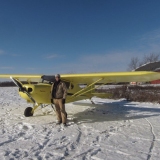
Wisconsin has a tradition of going bar hopping in snowmobiles during the winter. We decided to try it in planes instead.
#iphoneonly
They let us land on a frozen lake
Fri Jan 26, 2018 5:28 pm
- rw2 offline
- Posts: 1799
- Joined: Sat Dec 22, 2012 1:10 pm
- Location: San Miguel de Allende
- FindMeSpot URL: https://share.delorme.com/LaNaranjaDanzante
- Aircraft: Experimental Maule
Follow my Flying, Cooking and Camping adventures at RichWellner.com
Fri Jan 26, 2018 11:54 pm
Re: They let us land on a frozen lake
Pretty cool Rich.
- Zzz offline


- Posts: 2855
- Joined: Fri Oct 08, 2004 11:09 pm
- Location: northern
- Aircraft: Swiveling desk chair
Half a century spent proving “it is better to be thought a fool than to open your mouth and remove all doubt.”
Mon Jan 29, 2018 7:34 am
Re: They let us land on a frozen lake
Zzz wrote:Pretty cool Rich.
Pretty much the only upside to winter in the midwest...
- rw2 offline
- Posts: 1799
- Joined: Sat Dec 22, 2012 1:10 pm
- Location: San Miguel de Allende
- FindMeSpot URL: https://share.delorme.com/LaNaranjaDanzante
- Aircraft: Experimental Maule
Follow my Flying, Cooking and Camping adventures at RichWellner.com
Mon Jan 29, 2018 10:21 am
Re: They let us land on a frozen lake
I'd love to do that.
As long as there is nothing to hit and plenty of room for rollout without braking looks like it would be safe enough.
As long as there is nothing to hit and plenty of room for rollout without braking looks like it would be safe enough.
- Mountain Doctor offline
- Posts: 641
- Joined: Fri May 01, 2015 3:33 pm
- Location: Richland
- Aircraft: Maule MXT-7 180A
Tue Jan 30, 2018 2:32 pm
Re: They let us land on a frozen lake
I've never landed on a frozen lake, although that was the most common "emergency strip of choice" when I was learning to fly in Alaska. But one time a dozen years ago I made the mistake of landing at Fort Morgan, CO, and learned on touchdown that there was zero braking action. The crosswind, which wouldn't have been an issue at all on a dry strip, made it pretty thrilling to try to stay between the lights. Between the wind and the slick pavement, I couldn't get the airplane turned around, so I just pointed it generally into the wind and managed to take off again. Pretty dumb, because I was just on one of those "let's go flying" days with no reason to land there at all.
Cary
Cary
"I have slipped the surly bonds of earth..., put out my hand and touched the face of God." J.G. Magee
Tue Jan 30, 2018 2:53 pm
Re: They let us land on a frozen lake
Cary,
Sounds like a good experience with a happy ending, although you didnt know that at the time!
I've never landed on ice, but I have landed (nosedraggers) in light snow, 2" or so. It was fun and easy but as driving a car will tell you, snow and ice are very different.
I'd imagine a frozen lake a pilot could land right into the wind and if they spin around a bit, should be scary fun and harmless.
Sounds like a good experience with a happy ending, although you didnt know that at the time!
I've never landed on ice, but I have landed (nosedraggers) in light snow, 2" or so. It was fun and easy but as driving a car will tell you, snow and ice are very different.
I'd imagine a frozen lake a pilot could land right into the wind and if they spin around a bit, should be scary fun and harmless.
- Mountain Doctor offline
- Posts: 641
- Joined: Fri May 01, 2015 3:33 pm
- Location: Richland
- Aircraft: Maule MXT-7 180A
Tue Jan 30, 2018 5:06 pm
Re: They let us land on a frozen lake
On a frozen lake, if it is round, you could certainly land right into the wind. But you have to have a way to tell which way the wind is blowing. Sometimes, the only real information other than the seat of your pants is your GPS. I like to fly a lap and see which direction is slowest, then see if there is a landing option that aligns somewhat with that.
If you are actually straight into the wind, there is little to no risk of any loss of directional control. Much less likely to ground loop.
A problem with frozen lake operations is the potential for loss of ground reference, it can be pretty hard to judge height above the surface if you are out in the middle of a big lake. Especially if there is a bit of snow on the surface and cloudy conditions. That is a true glassy water operation. If you can avoid it by landing somewhere with better ground reference, do so.
Finally, tolerance for snow on the ice is a personal decision. If I can see the color of ice through the snow, I am good to go, the snow is less than a couple inches. If I can't see the color of ice through the snow, I didn't need to land there anyway.
If you have big tires, you can handle a lot more than my little plane in terms of snow depth, but the trick becomes knowing how much snow there is in relation to what your plane can handle. Bare ice is the safe alternative if you can find it.
In reference to Cary's experience, we land with a sheet of ice on the runway every winter. You taxi in a crab. Slowly.
If you are actually straight into the wind, there is little to no risk of any loss of directional control. Much less likely to ground loop.
A problem with frozen lake operations is the potential for loss of ground reference, it can be pretty hard to judge height above the surface if you are out in the middle of a big lake. Especially if there is a bit of snow on the surface and cloudy conditions. That is a true glassy water operation. If you can avoid it by landing somewhere with better ground reference, do so.
Finally, tolerance for snow on the ice is a personal decision. If I can see the color of ice through the snow, I am good to go, the snow is less than a couple inches. If I can't see the color of ice through the snow, I didn't need to land there anyway.
If you have big tires, you can handle a lot more than my little plane in terms of snow depth, but the trick becomes knowing how much snow there is in relation to what your plane can handle. Bare ice is the safe alternative if you can find it.
In reference to Cary's experience, we land with a sheet of ice on the runway every winter. You taxi in a crab. Slowly.
- Troy Hamon offline
- Posts: 913
- Joined: Tue Apr 06, 2010 8:27 am
- Location: King Salmon
- FindMeSpot URL: http://share.findmespot.com/shared/face ... 04iX0FXjV2
- Aircraft: Piper PA-22
Tue Jan 30, 2018 9:27 pm
Re: They let us land on a frozen lake
The big thing is...ice fisherman. More to the point, the mounds of ice chips they leave behind after they drill a hole. Think the inverse of a badger hole during the summer.
I've never tried it on the Airstreaks, or the 6:00's I use when on my wheel skis, just on the skis, and it can be a pretty harsh ride. Next time I'll suck the skis up/put the wheels down.
I've never tried it on the Airstreaks, or the 6:00's I use when on my wheel skis, just on the skis, and it can be a pretty harsh ride. Next time I'll suck the skis up/put the wheels down.
- courierguy offline

- Posts: 4197
- Joined: Thu Mar 31, 2005 6:52 pm
- Location: Idaho
"Its easier to apologize then ask permission"
Tex McClatchy
Tex McClatchy
Tue Jan 30, 2018 10:21 pm
Re: They let us land on a frozen lake
Troy Hamon wrote:On a frozen lake, if it is round, you could certainly land right into the wind. But you have to have a way to tell which way the wind is blowing. Sometimes, the only real information other than the seat of your pants is your GPS. I like to fly a lap and see which direction is slowest, then see if there is a landing option that aligns somewhat with that.
.
I have been wanting to go ice fishing on the lakes towards king salmon. Maybe iliamna or lake Clark if they freeze up better. Do you see much ice fishing out that way?

Wed Jan 31, 2018 2:13 pm
Re: They let us land on a frozen lake
PAMR MX wrote:Troy Hamon wrote:On a frozen lake, if it is round, you could certainly land right into the wind. But you have to have a way to tell which way the wind is blowing. Sometimes, the only real information other than the seat of your pants is your GPS. I like to fly a lap and see which direction is slowest, then see if there is a landing option that aligns somewhat with that.
.
I have been wanting to go ice fishing on the lakes towards king salmon. Maybe iliamna or lake Clark if they freeze up better. Do you see much ice fishing out that way?
I have not seen much ice fishing, so no idea. You can check it out and report back. Get an ice report for the lake you are headed for. The thermal dynamics of those big lakes are very different from the smaller lakes we usually play on, they freeze a lot later and sometimes don’t freeze well or fully, so real world reports are helpful.
Sent from my iPad using Tapatalk
- Troy Hamon offline
- Posts: 913
- Joined: Tue Apr 06, 2010 8:27 am
- Location: King Salmon
- FindMeSpot URL: http://share.findmespot.com/shared/face ... 04iX0FXjV2
- Aircraft: Piper PA-22
Fri Feb 02, 2018 1:14 pm
Re: They let us land on a frozen lake
Excellent video! Somehow you manage to capture the majesty of flying in a way that I'm never able to.
I've come close to putting the skis on a half dozen times this winter, but ever time I'm glad that I didn't, because the snow has rarely gotten too deep for wheel-flying, and every time I would've had to take them off a few days later once all the snow melted at my home base.
Roll-out on landing can vary from pretty much the same as on pavement (a few hundred feet), with good brake effectiveness (to the point both differential braking and tailwheel steering work fine), to 1000 feet or more with only aerodynamic steering, sometimes varying dramatically from day to day.
Some people choose to land into the wind, but I'm so paranoid about running into shore that I'll often land at least partially cross-wind to give myself more room for error. Just a few weeks ago I was landing on a course that he been set up for snowmobile races and was using the end-markers as references. On Saturday I landed westbound and only used 1/3 of the marked track - on Sunday I went back and landed to the east, and rolled right past the end because I couldn't slow down at all. The difference? Maybe 5 knots less wind, and the last inch or so of crusty snow had melted, leaving bare ice.
Cross-wind landings on ice or thin snow are way easier than on pavement - you can fly a crab all the way through touchdown, and then hold the crab in place all through your rollout. Years ago, I did my first solo in a 152 on a completely ice-covered runway at the not-very-well-maintained airport where I learned to fly - even then I was amazed at how much easier it is to land on ice than pavement. Yes, you still have to worry about running off the end of the runway (easy enough to manage when the runway is long), but most of the concerns about alignment go away. I won't say the chance of ground-looping is zero because that seem like inviting fate, but, well, for me it feels like all of the challenge in tailwheel flying has been eliminated, to the point where I find myself landing like crap when I get back on pavement, with lots of chirps and squawks and darting around because I get sloppy about keeping my heading and ground track lined up perfectly at touchdown, and don't have a good feel for the crossover between tailwheel and rudder steering.
I've been experimenting with using a blast of power and full rudder to spin the plane around so I'm facing backwards, then using power as "reverse-thrust" to decelerate (the aviation equivalent of a Rockford?), but it's not a technique I'd recommend trying at speed yet - I've only done it at taxi speeds. If you think a tailwheel aircraft is unstable when rolling forwards, imagine what it is like in reverse!
The "glassy water" hazards are real, and I've been bitten by them before, touching down unexpectedly a few seconds before I planned on, or having to really focus on off-to-the-side landmarks for my height references (that was on snow, at my home airstrip, on an overcast day with really flat light). Fortunately I haven't broken anything that way, but the momentary loss of height awareness is terrifying and definitely keeps me from going out to play sometimes. Lighting conditions matter a ton, as bad light can make it impossible to see hazards on the ground. As the sun is typically low in the sky this time of year, lighting can vary a ton from direction to direction, and sometimes I'll choose to land slightly downwind so I can better see the hazards, rather than into-the-wind if it means very flat lighting.
Hazards include the aforementioned ice fishing holes, plus snow drifts (which are sometimes saw-tooth shaped and very abrupt when hit in the wrong direction, even if only an inch or two high, especially if you are crabbed or sliding sideways when you hit them (DON'T DO THIS!)), cracks in the ice, pressure ridges, frozen ruts from ATV and snowmobile tracks, tree stumps, and pretty much anything else you can imagine, plus many things you can't. The point features like ice fishing holes are usually fairly easy to steer around, assuming there aren't too many of them clustered together, but the linear features take a lot of planning. Also keep an eye out for power lines - there are two in the area that this video was filmed that you could easily hit if you were to make a wrong turn and not realize it.
I'll usually do a pass at ~200 feet to scope out the area, then another pass at ~10 feet, offset ~20 feet to the side from my intended landing zone. Depending on the lighting and the direction of the snow drifting, I'll often do one pass in each direction, to make sure there isn't anything that is only visible in one direction. Even on fairly featureless lakes, I try to pick the exact point I'm going to touch down, because it's much easier to avoid obstacles that you have noticed ahead of time and are anticipating rather than discovering them as you roll towards them. It's easiest if I can pick out a landmark like an ice fishing hole or a barrel or piece of debris on the ice, or even a feature in a snowmobile track, or something like "just after I cross that long diagonal crack, 20 feet to the right of that shiny bump". Features like that also make for nice height references over completely a barren surface. If I have any doubts about the snow depth I'll probably just stay away, though even when I'm confident I'll often still make a power-on gentle-wheel-drag landing to feel it out, mostly just to learn how it feels like in case I actually need to use that technique to assess the depth some day. It's not something I'd feel confident in at this point. The wheel-drags are also useful for assessing how smooth it is - especially after there has been some drifting or vehicle activity, it can get really rough - probably safe to land on in necessary but hard on the airplane - so a pass to feel out how smooth it is can be useful in deciding to skip a place entirely (that's what some of the really low flying in the video was showing - just creeping lower an inch at a time to see how it smooth it feels - "patchy snow over ice" like that can range from "imperceptible bumps" to "feels like you're landing on a row of speedbumps"). My "comfortable depth limit" seems to be around 2-3 inches of snow, and it depends a lot on the character of the snow (soft powder is good hard crusty is bad), so it's really tough to assess from the air, even when you can see bare patches.
Anyway, I'm by no means an expert on lake operations (~30 hours and ~100 landings on skis, maybe half that many on wheels; all in one area of Wisconsin), but I've been doing it a lot lately and thought people might appreciate my comments.
I've come close to putting the skis on a half dozen times this winter, but ever time I'm glad that I didn't, because the snow has rarely gotten too deep for wheel-flying, and every time I would've had to take them off a few days later once all the snow melted at my home base.
Roll-out on landing can vary from pretty much the same as on pavement (a few hundred feet), with good brake effectiveness (to the point both differential braking and tailwheel steering work fine), to 1000 feet or more with only aerodynamic steering, sometimes varying dramatically from day to day.
Some people choose to land into the wind, but I'm so paranoid about running into shore that I'll often land at least partially cross-wind to give myself more room for error. Just a few weeks ago I was landing on a course that he been set up for snowmobile races and was using the end-markers as references. On Saturday I landed westbound and only used 1/3 of the marked track - on Sunday I went back and landed to the east, and rolled right past the end because I couldn't slow down at all. The difference? Maybe 5 knots less wind, and the last inch or so of crusty snow had melted, leaving bare ice.
Cross-wind landings on ice or thin snow are way easier than on pavement - you can fly a crab all the way through touchdown, and then hold the crab in place all through your rollout. Years ago, I did my first solo in a 152 on a completely ice-covered runway at the not-very-well-maintained airport where I learned to fly - even then I was amazed at how much easier it is to land on ice than pavement. Yes, you still have to worry about running off the end of the runway (easy enough to manage when the runway is long), but most of the concerns about alignment go away. I won't say the chance of ground-looping is zero because that seem like inviting fate, but, well, for me it feels like all of the challenge in tailwheel flying has been eliminated, to the point where I find myself landing like crap when I get back on pavement, with lots of chirps and squawks and darting around because I get sloppy about keeping my heading and ground track lined up perfectly at touchdown, and don't have a good feel for the crossover between tailwheel and rudder steering.
I've been experimenting with using a blast of power and full rudder to spin the plane around so I'm facing backwards, then using power as "reverse-thrust" to decelerate (the aviation equivalent of a Rockford?), but it's not a technique I'd recommend trying at speed yet - I've only done it at taxi speeds. If you think a tailwheel aircraft is unstable when rolling forwards, imagine what it is like in reverse!
The "glassy water" hazards are real, and I've been bitten by them before, touching down unexpectedly a few seconds before I planned on, or having to really focus on off-to-the-side landmarks for my height references (that was on snow, at my home airstrip, on an overcast day with really flat light). Fortunately I haven't broken anything that way, but the momentary loss of height awareness is terrifying and definitely keeps me from going out to play sometimes. Lighting conditions matter a ton, as bad light can make it impossible to see hazards on the ground. As the sun is typically low in the sky this time of year, lighting can vary a ton from direction to direction, and sometimes I'll choose to land slightly downwind so I can better see the hazards, rather than into-the-wind if it means very flat lighting.
Hazards include the aforementioned ice fishing holes, plus snow drifts (which are sometimes saw-tooth shaped and very abrupt when hit in the wrong direction, even if only an inch or two high, especially if you are crabbed or sliding sideways when you hit them (DON'T DO THIS!)), cracks in the ice, pressure ridges, frozen ruts from ATV and snowmobile tracks, tree stumps, and pretty much anything else you can imagine, plus many things you can't. The point features like ice fishing holes are usually fairly easy to steer around, assuming there aren't too many of them clustered together, but the linear features take a lot of planning. Also keep an eye out for power lines - there are two in the area that this video was filmed that you could easily hit if you were to make a wrong turn and not realize it.
I'll usually do a pass at ~200 feet to scope out the area, then another pass at ~10 feet, offset ~20 feet to the side from my intended landing zone. Depending on the lighting and the direction of the snow drifting, I'll often do one pass in each direction, to make sure there isn't anything that is only visible in one direction. Even on fairly featureless lakes, I try to pick the exact point I'm going to touch down, because it's much easier to avoid obstacles that you have noticed ahead of time and are anticipating rather than discovering them as you roll towards them. It's easiest if I can pick out a landmark like an ice fishing hole or a barrel or piece of debris on the ice, or even a feature in a snowmobile track, or something like "just after I cross that long diagonal crack, 20 feet to the right of that shiny bump". Features like that also make for nice height references over completely a barren surface. If I have any doubts about the snow depth I'll probably just stay away, though even when I'm confident I'll often still make a power-on gentle-wheel-drag landing to feel it out, mostly just to learn how it feels like in case I actually need to use that technique to assess the depth some day. It's not something I'd feel confident in at this point. The wheel-drags are also useful for assessing how smooth it is - especially after there has been some drifting or vehicle activity, it can get really rough - probably safe to land on in necessary but hard on the airplane - so a pass to feel out how smooth it is can be useful in deciding to skip a place entirely (that's what some of the really low flying in the video was showing - just creeping lower an inch at a time to see how it smooth it feels - "patchy snow over ice" like that can range from "imperceptible bumps" to "feels like you're landing on a row of speedbumps"). My "comfortable depth limit" seems to be around 2-3 inches of snow, and it depends a lot on the character of the snow (soft powder is good hard crusty is bad), so it's really tough to assess from the air, even when you can see bare patches.
Anyway, I'm by no means an expert on lake operations (~30 hours and ~100 landings on skis, maybe half that many on wheels; all in one area of Wisconsin), but I've been doing it a lot lately and thought people might appreciate my comments.
Fri Feb 02, 2018 6:59 pm
Re: They let us land on a frozen lake
I don't know if anyone has mentioned "ice bolts" for straight skis, but they are a cheap, effective solution for landing on ice. Drill a hole on each side of the pedestal, put in the bolt with the head on the bottom of the ski. When I first started ski flying, my Landes 2000s already had the bolts in, and the local runways were all ice covered from rain. I just went flying and they worked great. Ice, snow, taxi, takeoff, landing, no problems. I took them off when I built my hangar because I couldn't roll the plane in on the conduit with the bolts in.

Keep it light.
DISPLAY OPTIONS
Who is online
Users browsing this forum: No registered users and 7 guests
Latest Features
-
Live to Tell
A Minnesota pilot is surprised to learn that the sudden asymmetric drag of an out-of-rig ski can…Read More -
Creators
Working in some of the Yukon's most beautiful and remote environments, photographer Simon Blakesley captures aircraft in…Read More -
Aircraft Ownership and Maintenance
Upgrading to big tires can make a huge difference in backcountry performance, but with those gains come…Read More -
Tales from Yesteryear
In this tale from bush flying yesteryear, Don Cogger signs up to help Atlee Dodge Jr recovery…Read More


Latest Knowledge Base
-
Destinations
A regional guide with ideas for winter camping destinations in California, Nevada, New Mexico, and Arizona.Read More -
Aircraft
Finding an affordable aircraft that can handle the backcountry for $80K or less? A challenge for sure, but with the…Read More -
Aircraft
01.29.2018 - Zane - Updated tire diameter graphic to add 8.50x10 Guide to tires for use in the backcountry and off-airport landing…Read More -
Pilots
12.22.2013 - Initial article format Operating aircraft on skis and negotiating a snow-covered landscape is an entirely unique skillset and environment.…Read More


