We do a great disservice to students if we require flight test standards before solo, especially when flight test standards trigger dangerously slow takeoff speed and dangerously fast landing speed. Early solo is a morale booster and taking too long to solo may cause capable students to quit. Delaying solo to cram in techniques unrelated to takeoff and landing, increasing school/insurance confidence, and increasing profits are poor educational strategies.
Extensive stall recovery practice has little practical application in the pattern where few recover from inadvertent stall. Teaching students to only pull on the yoke with wings level and zoom reserve airspeed would be much safer. Vx or Vy as appropriate is seldom appropriate and is too slow for safe takeoff and climb out. The three seconds average it takes to recognize the engine has failed is not going to work at Vx or Vy pitch attitude and no engine. Extensive stall practice gets the student comfortable with an out of ground effect airspeed that is way too slow below a couple thousand feet and is way to fast to land in ground effect. Loss loss, not win win. All turns in the pattern should be 1g energy management turns to target to prevent stalls.
Airspace away from the airport of solo has no bearing on the supervised solo.
Ground reference maneuvers requiring altitude maintenance reject the law of the roller coaster and demonstrate how not to fly at low altitude. Ground reference maneuvers do not teach wind management, but rather wind mismanagement. With the orientation away from the target we have mission drift. Energy management turns to target , rather than moose turns around the target should be taught. Rather than stupid S turns upwind of the road, we should teach upwind turns to align with the road or centerline extended. With bank limitations because of the erroneous need to maintain altitude, we teach how dangerous maneuvering flight poorly done can be. The safe energy management turn would allow ground reference turns to target in strong winds. Limiting bank angle and going home in moderate winds rejects learning to fly. It sends the absolute worst message about flying. Wind can be managed in a way that is safer than a no wind condition. Students should learn that the wind is our friend, not our enemy. It provides free lift on takeoff, next to ridges, and in uneven heating of the earth when managed.
The turns to target necessary for safe pattern work can be taught. High altitude orientation requiring altitude maintenance in turns at all costs too often costs all. This rejection of the safe dynamic neutral stability of the airplane has no place below 2,000.' All turns in the pattern should be 1g energy management turns.
Following the short and simple FAA regulations without ACS technique degradation would allow ninety percent of students to be safely soloed in less than ten hours. This is exactly what happened with those same regulations prior to PTS/ACS. I fear some students who would make really good crop dusters or airline pilots look critically at the system and say, "I don't need this." It is a stupid game we didn't play before PTS. It is a stupid game the military does not play. It violates good educational principals.
This is just a rant and will not change much...unless you, young instructor, learn to fly and teach the same. It is easy and can be done in ten hours. ACS can follow in record time. The student, and you, will only have to hold your noses a bit during test prep. Remember to take the +5 knots on takeoff and the -5 knots on approach. And a bit of deceleration on short final can be snuck in. Just have the student say, "got a bit slow on the bottom there but seemed to work out."
Training
Sat Mar 26, 2022 11:18 pm
- contactflying offline
- Posts: 4972
- Joined: Wed Apr 03, 2013 7:36 pm
- Location: Aurora, Missouri 2H2
Download my free "https://tinyurl.com/Safe-Maneuvering" e-book.
Tue Mar 29, 2022 1:49 am
Re: Training
According to ACS we start the turn about a point and we start the S turn across a road on a downwind heading. This makes the first turn a downwind turn problem. Wait! The downwind turn problem is a myth, right? Now we go home because we can't hold altitude and make the first downwind turn without excessive load factor from the required bank angle and quit so we don't stall.
The proper safe maneuvering flight technique is completely different. The downwind turn is a problem and the way it is managed is to work crosswind to the target and pitch up to reduce airspeed so that we have a bit more altitude and we now can unload the wing in the bank of any angle necessary to turn to target. We manage the wind same as we manage the pattern in a crosswind condition. We fly the downwind leg downwind of the runway (the road in ground reference maneuvers). We pitch up a bit in anticipation of a 180 degree upwind teardrop turn to the runway (the road going the other way in ground reference maneuvers.) Now we are performing the same 180 degree return to target (an identifiable one now) using proper wind management.
Making downwind turns near the ground would be the same tactic as landing downwind all the time. Really, really poor wind management.
Going home is not wind management. What is the poor student going to do when she/he actually needs to get into an airport with a strong crosswind? Also the angle across the runway is a wind management technique and the natural conclusion to the downwind leg followed by a teardrop into an imagined centerline from the downwind corner to the upwind big airplane touchdown zone marking.
Again, lets teach students to fly first. I taught all this stuff in tw airplanes easily in less than ten hours before safely soloing my students. It is a lot easier to teach this stuff first and not have to eliminate really poor technique in order to teach this stuff. In destruction and creation theory we don't even have to destroy the really poor technique if we just teach flying first.
The proper safe maneuvering flight technique is completely different. The downwind turn is a problem and the way it is managed is to work crosswind to the target and pitch up to reduce airspeed so that we have a bit more altitude and we now can unload the wing in the bank of any angle necessary to turn to target. We manage the wind same as we manage the pattern in a crosswind condition. We fly the downwind leg downwind of the runway (the road in ground reference maneuvers). We pitch up a bit in anticipation of a 180 degree upwind teardrop turn to the runway (the road going the other way in ground reference maneuvers.) Now we are performing the same 180 degree return to target (an identifiable one now) using proper wind management.
Making downwind turns near the ground would be the same tactic as landing downwind all the time. Really, really poor wind management.
Going home is not wind management. What is the poor student going to do when she/he actually needs to get into an airport with a strong crosswind? Also the angle across the runway is a wind management technique and the natural conclusion to the downwind leg followed by a teardrop into an imagined centerline from the downwind corner to the upwind big airplane touchdown zone marking.
Again, lets teach students to fly first. I taught all this stuff in tw airplanes easily in less than ten hours before safely soloing my students. It is a lot easier to teach this stuff first and not have to eliminate really poor technique in order to teach this stuff. In destruction and creation theory we don't even have to destroy the really poor technique if we just teach flying first.
- contactflying offline
- Posts: 4972
- Joined: Wed Apr 03, 2013 7:36 pm
- Location: Aurora, Missouri 2H2
Download my free "https://tinyurl.com/Safe-Maneuvering" e-book.
Mon Apr 04, 2022 9:57 am
Re: Training
Well it has been a while since I've had a primary student but my signature in their logbook isn't based on the ACS or PTS, it is governed by FAR part 61.87, with a specific list of boxes that need to be checked
The downwind turn is a myth as far as the airplane is concerned. It's when the person moving the flippers tries to follow a prescribed path over the ground in strong winds where it becomes very real.
For a pilot candidate with reasonable aptitude items 1-9, 11, 13 and 15 can be taught in a few hours/lessons. Item 10 (stalls) will be white knuckle rote learning for most people. It's just as well because the compulsory stall maneuvers have zero resemblance to the ones that kill people, which in my opinion is the only thing that makes them hard to teach. Don't even get me started on flight at minimum controllable airspeed.
Item 14 will get lip service because your typical 260 hour CFI is just as scared of slips as the student is.
Anyone not scared of item 12 never read accident statistics or their textbook. I'll get right down in the trees now but as a fledgling I always had at least half the seat cushion clenched in my butt cheeks for ground reference maneuvers. I never understood the logic in stressing that altitude was our friend and bank angle was our enemy - and then have them down at 200' in a stiff breeze trying to keep a tree at the end of a row of rivets.
Using 61.87 as a syllabus, consulting it prior to each lesson and not wasting any time it is quite possible to sign a student for solo in less than 10 hours. I did it and so did several of my own students.
(d) Maneuvers and procedures for pre-solo flight training in a single-engine airplane. A student pilot who is receiving training for a single-engine airplane rating or privileges must receive and log flight training for the following maneuvers and procedures:
(1) Proper flight preparation procedures, including preflight planning and preparation, powerplant operation, and aircraft systems;
(2) Taxiing or surface operations, including runups;
(3) Takeoffs and landings, including normal and crosswind;
(4) Straight and level flight, and turns in both directions;
(5) Climbs and climbing turns;
(6) Airport traffic patterns, including entry and departure procedures;
(7) Collision avoidance, windshear avoidance, and wake turbulence avoidance;
(8) Descents, with and without turns, using high and low drag configurations;
(9) Flight at various airspeeds from cruise to slow flight;
(10) Stall entries from various flight attitudes and power combinations with recovery initiated at the first indication of a stall, and recovery from a full stall;
(11) Emergency procedures and equipment malfunctions;
(12) Ground reference maneuvers;
(13) Approaches to a landing area with simulated engine malfunctions;
(14) Slips to a landing; and
(15) Go-arounds.
The downwind turn is a myth as far as the airplane is concerned. It's when the person moving the flippers tries to follow a prescribed path over the ground in strong winds where it becomes very real.
For a pilot candidate with reasonable aptitude items 1-9, 11, 13 and 15 can be taught in a few hours/lessons. Item 10 (stalls) will be white knuckle rote learning for most people. It's just as well because the compulsory stall maneuvers have zero resemblance to the ones that kill people, which in my opinion is the only thing that makes them hard to teach. Don't even get me started on flight at minimum controllable airspeed.
Item 14 will get lip service because your typical 260 hour CFI is just as scared of slips as the student is.
Anyone not scared of item 12 never read accident statistics or their textbook. I'll get right down in the trees now but as a fledgling I always had at least half the seat cushion clenched in my butt cheeks for ground reference maneuvers. I never understood the logic in stressing that altitude was our friend and bank angle was our enemy - and then have them down at 200' in a stiff breeze trying to keep a tree at the end of a row of rivets.
Using 61.87 as a syllabus, consulting it prior to each lesson and not wasting any time it is quite possible to sign a student for solo in less than 10 hours. I did it and so did several of my own students.
Mon Apr 04, 2022 6:56 pm
Re: Training
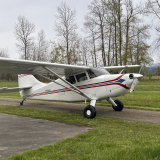
I suppose I have an issue with wheel landings in my Stinson 108-3. Tailwheel endorsement requires wheel landings, if applicable. On pre-solo, that would mean demonstrating competency as well. Except my Stinson lands like butter on 3-point landings and is mushing to borderline unsafe at wheel landings. The landing gear expands 1.5 feet on landing, absorbs everything. If trying to do wheel landings, your not even sure you're on the runway until she settles a little bit.
Plus, on pre-solo, its a very controlled environment where wheel landings are even called for with limited wind direction and speed.
I've determined, it's not applicable to required wheel landings but rather a demonstration. Please prove me I'm wrong.
Cheers,
Plus, on pre-solo, its a very controlled environment where wheel landings are even called for with limited wind direction and speed.
I've determined, it's not applicable to required wheel landings but rather a demonstration. Please prove me I'm wrong.
Cheers,
- 48Stinson1083 offline
- Posts: 88
- Joined: Wed Feb 09, 2022 4:19 pm
- Location: Maple Valley
- Aircraft: Stinson 108-3
Mon Apr 04, 2022 8:11 pm
Re: Training
48Stinson1083 wrote:I suppose I have an issue with wheel landings in my Stinson 108-3. Tailwheel endorsement requires wheel landings, if applicable. On pre-solo, that would mean demonstrating competency as well. Except my Stinson lands like butter on 3-point landings and is mushing to borderline unsafe at wheel landings. The landing gear expands 1.5 feet on landing, absorbs everything. If trying to do wheel landings, your not even sure you're on the runway until she settles a little bit.
Plus, on pre-solo, its a very controlled environment where wheel landings are even called for with limited wind direction and speed.
I've determined, it's not applicable to required wheel landings but rather a demonstration. Please prove me I'm wrong.
Cheers,
Stinson wheel land just fine. And there are many applications for wheel landings besides crosswinds. And, frankly, I don’t consider wheel landings NECESSARILY that great in “crosswinds.
Hopefully your instructor understands tail low wheel landings, though it sounds not.
Wheel landings are my go to landing in the vast majority of tailwheel types, including a couple which the manufacturer recommends against.
MTV


Mon Apr 04, 2022 9:05 pm
Re: Training
Agreed, Stinson and others. The same obviously occurred to the manufacturers. They put the nose gear on to level the fuselage and greatly mitigate ground loop tendency.
- contactflying offline
- Posts: 4972
- Joined: Wed Apr 03, 2013 7:36 pm
- Location: Aurora, Missouri 2H2
Download my free "https://tinyurl.com/Safe-Maneuvering" e-book.
Thu Jan 05, 2023 12:11 pm
Re: Training
I brought this thread back up because in it I have already covered my preference for upwind turns to target rather than downwind turns to target, especially down low like the base to final turn. I was recently asked about my experiences with various wind direction changes from ground effect in the field spraying to about 200' AGL in the turn back to the field after a pull up. Those who teach from a high altitude orientation call downwind turns a myth and generally don't admit to variable wind directions within what they call the air mass we are flying within. I agree with the pilot who asked about this that the air mass we are flying within is a myth. What do you'all think?
- contactflying offline
- Posts: 4972
- Joined: Wed Apr 03, 2013 7:36 pm
- Location: Aurora, Missouri 2H2
Download my free "https://tinyurl.com/Safe-Maneuvering" e-book.
Thu Jan 05, 2023 12:50 pm
Re: Training
I don't want to be right, I just want to help. When getting into math, science, air mass, and downwind turn myth or not myth we must consider our orientation. Are we looking at the ground (contact flying) or are we looking at the directional gyro (instrument flying)? Are we pitching or turning to a target or are we pitching or turning to a number or picture on a gauge?
- contactflying offline
- Posts: 4972
- Joined: Wed Apr 03, 2013 7:36 pm
- Location: Aurora, Missouri 2H2
Download my free "https://tinyurl.com/Safe-Maneuvering" e-book.
Fri Jan 06, 2023 8:36 am
Re: Training
aftCG wrote:The downwind turn is a myth as far as the airplane is concerned. It's when the person moving the flippers tries to follow a prescribed path over the ground in strong winds where it becomes very real.
This is a reasonable approach to uw/dw thinking. The whole DW conversation gets heated and convoluted because each camp wants the other to adhere to semantics that aren't real world, wants to adhere to physical principals that pertain to their flying missions, and ignore other principals because they don't pertain to their flying missions (or they just fail to realize they do). Wind is simply groundspeed we didn't pay for, there's really not much rocket science there, the problem is you can't see it, so it's really easy to ignore, until it becomes enough that it's effects are greater than your numb rear could ignore, and that goes neither direction plus or minus.
What blows my mind is that people will get visibly heated when they say it doesn't matter a lick which way the wind is blowing in a turn, but then shit a purple Twinkie sideways if you line up for take off downwind
 and here I thought the airplane didn't care about the wind
Last edited by Rob on Fri Jan 06, 2023 11:50 am, edited 3 times in total.

Fri Jan 06, 2023 8:36 am
Re: Training
contactflying wrote: Those who teach from a high altitude orientation call downwind turns a myth and generally don't admit to variable wind directions within what they call the air mass we are flying within.
The proverbial 'air mass' is a good example of those semantics we don't want to bend... Who flies in an air mass? and can anyone define 'air mass' as it pertains to their world of flying? How big is the air mass your airplane flies in? I mean I know we all love to get up at sunrise and find the air dead calm (vertically and horizontally), and some are patient and not operating on schedules and may hold out for just those flying conditions. For the rest of us mere mortals, and all working pilots, the reality is far different. You're likely to be flying in an ever changing series of streams, and rivers or air that ripple from side to side and flow up and down. Why do you think you're 'never flown before passenger' is so anxious? it's because they can not anticipate the airplanes reactions as it flies through these invisible 'micro masses'. I just made that one up, but 'micro masses' is a far more accurate description of the conditions I tend to fly in most. And by definition, since my aircraft flies through these masses faster than they are moving, each directional or velocity change will effect my flight.
OH sh!t. What did he just say? The airplane reacted to the wind changes? well that just shot the sh!t out of 'airplane doesn't care about wind'...
Purists will cry 'Wind Shear' I call BS
First of all the term alone denotes an anomaly, where as these conditions are simply the norm of flying an aircraft in this fluid we call 'air' or 'wind'
Secondly, 'Wind Shear' seems pretty easy to understand. Wind was blowing and then it sheared (stopped).
How and where the wind that is ever changing moves, and why, is not something that comes natural for us... It takes a learnin'
Teaching the Jr. Birdman that wind direction doesn't matter, just plants a seed that set's them up for either ultimate failure, or set's them up for a limit in their flying capability. I don't generally engage in wind conversations, or landing ones for that matter. Must be a new day

Take care, Rob
Fri Jan 06, 2023 8:45 am
Re: Training
What you said was....
What you meant was....
Time for an instructor who is... and obviously I made that quote up.
This would describe some of my favorite landings;
48Stinson1083 wrote:I suppose I have an issue with wheel landings in my Stinson 108-3. Tailwheel endorsement requires wheel landings, if applicable. On pre-solo, that would mean demonstrating competency as well. Except my Stinson lands like butter on 3-point landings and is mushing to borderline unsafe at wheel landings. The landing gear expands 1.5 feet on landing, absorbs everything. If trying to do wheel landings, your not even sure you're on the runway until she settles a little bit.
Plus, on pre-solo, its a very controlled environment where wheel landings are even called for with limited wind direction and speed.
I've determined, it's not applicable to required wheel landings but rather a demonstration. Please prove me I'm wrong.
Cheers,
What you meant was....
48Stinson1083 wrote: I'm not comfortable or proficient in wheel landings, so I'm going to throw a trump card at the playbook
Time for an instructor who is... and obviously I made that quote up.
This would describe some of my favorite landings;
48Stinson1083 wrote:If trying to do wheel landings, your not even sure you're on the runway until she settles a little bit.
Fri Jan 06, 2023 11:02 am
Re: Training
For the record, I am well aware of the phact (new word for law of physics) that when and if you are in that magical mass of air, your wing most certainly will not know which way the wind blows. I think it is also safe to assume that we all know that it will either affect your ground track, or you will affect your speed, altitude, energy, or a combination there of by trying to maintain a ground track. If you do not agree, flight is not for you.
This is the first fly in the ointment. Purists will now blame their eyes for playing tricks on them and adhere to downwind doesn't matter a lick, well except for that time when my eyes lied to me...
The next rub is the fact that if you fly a pattern, spray, fly a heli, fly mountains, and so so much more, you are going to climb or descend in a turn regularly. Who hasn't walked the block in a light breeze, only to see the tree tops bending. This is the normal real world turn scenario. Not turning an airplane in the air masses. What that means is Johnny 20hr student has now induced his own shear (well according to dw doesn't matter purists). The poor young guy has had it pounded into his head that the wind doesn't affect his turn performance so much, that he will not recognize the performance degradation as he mushes right along, either climbing in to that ascending tailwind, or descending into that receding headwind. And when he does finally connect the dots, he'll blame his eyes...
Which way would you want to invoke your own wind shear? That's a no Brainerd for me...
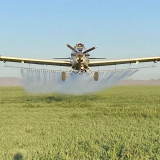
It is my understanding, that you shouldn't be able to feel this performance difference, because your wing doesn't, but my line of work has me in what amounts to IMC every night there is no moon. And I will bet dollars to doughnuts, I can put even a non pilot in the back seat of a two hole thrush (where there are no instruments) hand them the controls, and within a few turns (set with up / down wind components) they will be able to accurately and repeatedly discern the up wind turn from the down. No instruments, no horizon, and most certainly no ground references. Your butt, your ears, your hands and your feet will tell you everything you need to know with this low level energy management flying stuff.
Of course the above ag scenario infers a Racetrack pattern which by definition positions one end of the field with a dw turn. Back to back, as Jim would fly, and as I do when wind velocities dictate, makes the dw portion of the turn, your field exit / zoom climb (just for bigrenna) portion of every turn.
Take care, Rob
This is the first fly in the ointment. Purists will now blame their eyes for playing tricks on them and adhere to downwind doesn't matter a lick, well except for that time when my eyes lied to me...
The next rub is the fact that if you fly a pattern, spray, fly a heli, fly mountains, and so so much more, you are going to climb or descend in a turn regularly. Who hasn't walked the block in a light breeze, only to see the tree tops bending. This is the normal real world turn scenario. Not turning an airplane in the air masses. What that means is Johnny 20hr student has now induced his own shear (well according to dw doesn't matter purists). The poor young guy has had it pounded into his head that the wind doesn't affect his turn performance so much, that he will not recognize the performance degradation as he mushes right along, either climbing in to that ascending tailwind, or descending into that receding headwind. And when he does finally connect the dots, he'll blame his eyes...
Which way would you want to invoke your own wind shear? That's a no Brainerd for me...
It is my understanding, that you shouldn't be able to feel this performance difference, because your wing doesn't,
but my line of work has me in what amounts to IMC every night there is no moon. And I will bet dollars to doughnuts, I can put even a non pilot in the back seat of a two hole thrush (where there are no instruments) hand them the controls, and within a few turns (set with up / down wind components) they will be able to accurately and repeatedly discern the up wind turn from the down. No instruments, no horizon, and most certainly no ground references. Your butt, your ears, your hands and your feet will tell you everything you need to know with this low level energy management flying stuff. Of course the above ag scenario infers a Racetrack pattern which by definition positions one end of the field with a dw turn. Back to back, as Jim would fly, and as I do when wind velocities dictate, makes the dw portion of the turn, your field exit / zoom climb (just for bigrenna) portion of every turn.
Take care, Rob
Fri Jan 06, 2023 12:35 pm
Re: Training
The human brain is a magnificent computer. We enter the downwind border of the field and fly in a wings level crab in low ground effect. While walking the rudder to maintain a straight line of flight, we calculate how much downwind angle of offset will be needed to make the return to the next target, fifty feet upwind, work out. So we are first making the dangerous downwind turn...with zoom reserve airspeed (absolute max) from low ground effect at full throttle...and pitch up only enough to just clear the obstruction (least airspeed bleed). This also is energy management. Once up a bit and offset a bit we now have both real energy of altitude for anti-stall, nose down pitch angle that allows any bank angle, and a free radius of turn reducing headwind. Sounds like a lot of physics and math. No...just flying...just intelligent technique...just working with the environment and the airplane rather than against both.
We see and adjust to everything in this daylight back to back. As Rob points out in his dark and nearly IMC racetrack pattern encountering both upwind and downwind turns, even the non-rated brain in the back seat can feel the currents of irregular upwind and irregular downwind conditions. The tactical situation, both day and night, is fluid. The air mass is fluid and natural. We don't fly in the lab. Vy is not pure and the airspeed indicator lags behind the human brain anyway. Instrument flying is pure and a good scan makes it happen on the gauges or computer screens. Contact flying, stick and rudder stuff, is just as pure only with the dynamic and fluid human brain. It takes a lot of if/then 0s and 1s to duplicate the human brain.
We see and adjust to everything in this daylight back to back. As Rob points out in his dark and nearly IMC racetrack pattern encountering both upwind and downwind turns, even the non-rated brain in the back seat can feel the currents of irregular upwind and irregular downwind conditions. The tactical situation, both day and night, is fluid. The air mass is fluid and natural. We don't fly in the lab. Vy is not pure and the airspeed indicator lags behind the human brain anyway. Instrument flying is pure and a good scan makes it happen on the gauges or computer screens. Contact flying, stick and rudder stuff, is just as pure only with the dynamic and fluid human brain. It takes a lot of if/then 0s and 1s to duplicate the human brain.
- contactflying offline
- Posts: 4972
- Joined: Wed Apr 03, 2013 7:36 pm
- Location: Aurora, Missouri 2H2
Download my free "https://tinyurl.com/Safe-Maneuvering" e-book.
DISPLAY OPTIONS
Who is online
Users browsing this forum: No registered users and 6 guests
Latest Features
-
-
Featured Bush Planes
As one of the undisputed legends of bush flying, the Cessna 180 hauls a…Read More -
Aircraft Ownership and Maintenance
9 modification mistakes aircraft owners make when trying to "bush out" their birds—why some…Read More -
Live to Tell
A Minnesota pilot is surprised to learn that the sudden asymmetric drag of an…Read More




Latest Knowledge Base
-
Destinations
Canada offers some of the most spectacular backcountry flying on the continent. Here's what you need to know before you go.Read More -
Safety and Survival
Hope that you never have to use your survival vest but knowing you have it and knowing how to use…Read More -
Destinations
A regional guide with ideas for winter camping destinations in California, Nevada, New Mexico, and Arizona.Read More -
Aircraft
Finding an affordable aircraft that can handle the backcountry for $80K or less? A challenge for sure, but with the…Read More



