Uphill strips techniques?
Sat Mar 25, 2017 8:15 am
Sat Mar 25, 2017 9:10 am
Re: Uphill strips techniques?
On that one if you can get down between the pines without whacking the deciduous limbs and then rudder turn right a bit to line up, that would get you down on less slope.
Lots of power at the bottom of an apparent rate of closure approach rather than a round out and hold off will get you down on a slope. As with any steep approach, use power as needed to cushion it on.
Lots of power at the bottom of an apparent rate of closure approach rather than a round out and hold off will get you down on a slope. As with any steep approach, use power as needed to cushion it on.
- contactflying offline
- Posts: 4972
- Joined: Wed Apr 03, 2013 7:36 pm
- Location: Aurora, Missouri 2H2
Download my free "https://tinyurl.com/Safe-Maneuvering" e-book.
Sat Mar 25, 2017 10:13 am
Re: Uphill strips techniques?
Very similar to Raven Field on Vancouver Island. I found that the slope slows you down so fast I no longer plan on dodging the trees on final but rather plan on touching down at mid runway and still have to apply lots of power to get to the parking area. I usually set the plane up for minimum slow flight condition and let the ground come up and smite me. I use the throttle to limit how hard it hit. I use this same technique at a number of steep strips in our local area. The one I find tricky is landing a strip like that going down hill. We have one (Bear Creek) on Harrison Lake and quite often there is a pretty strong breeze off the water making landing downhill the preferred method. Because of the terrain and trees on the approach it definitely teaches you how to get your plane down in a hurry.
- 175 magnum offline
- Posts: 546
- Joined: Sun Mar 28, 2010 2:13 pm
- Location: surrey bc canada
Sat Mar 25, 2017 2:00 pm
Uphill strips techniques?
Kind of fly it on. I always get a real good bounce if I try to flare much going uphill and end up using more real estate than a drive - on landing.
Sat Mar 25, 2017 3:15 pm
Re: Uphill strips techniques?
If I know what the elevation of the base of the strip is, I set up at that altitude in the landing configuration and close approach speed. Fly it in to the base of the strip and as you get into ground effect, pitch nose up to match the slope, and add power as needed to run it on.
This can be very intimidating on a steep strip, because the view out the windshield is NOT what you're used to seeing, and the temptation is to push up a bunch of power well before touchdown.
Flaring (pitch to the slope) will bleed off lots of speed, as will the uphill runout, so assuming you touch low on the strip, the strip can actually be pretty short.
Beware the takeoff, particularly in the afternoon, however. In afternoons, cool air from above starts pouring down some valleys. This is particularly true of glaciers. Takeoffs in this downslope breeze may make a safe takeoff impossible.
Mind the wind.
MTV
This can be very intimidating on a steep strip, because the view out the windshield is NOT what you're used to seeing, and the temptation is to push up a bunch of power well before touchdown.
Flaring (pitch to the slope) will bleed off lots of speed, as will the uphill runout, so assuming you touch low on the strip, the strip can actually be pretty short.
Beware the takeoff, particularly in the afternoon, however. In afternoons, cool air from above starts pouring down some valleys. This is particularly true of glaciers. Takeoffs in this downslope breeze may make a safe takeoff impossible.
Mind the wind.
MTV


Sat Mar 25, 2017 5:26 pm
Re: Uphill strips techniques?
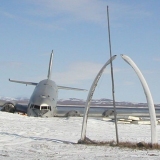
I remember the airport description for Speravon in Alaska. Successful go around unlikely 

Keep the shiney side up and the dirty side down...
Sat Mar 25, 2017 5:43 pm
Re: Uphill strips techniques?
DonC wrote:I remember the airport description for Speravon in Alaska. Successful go around unlikely
Yep, that ones a beaut......went in there once with a 185. I don't think taking a C-130 in there would be much fun on a nice day....
Along the same lines, Tom Wardleigh told me once that if you look at the approach plate, and it says Cape anything.....don't go. Tom had been into all those sites, checking the approaches......
MTV
Sat Mar 25, 2017 6:10 pm
Re: Uphill strips techniques?
if you look at the approach plate, and it says Cape anything.....don't go.
++++++1

Gump
Sat Mar 25, 2017 7:24 pm
Re: Uphill strips techniques?
mtv wrote:DonC wrote:I remember the airport description for Speravon in Alaska. Successful go around unlikely
Yep, that ones a beaut......went in there once with a 185. I don't think taking a C-130 in there would be much fun on a nice day....
MTV
They had a C130 crash there in the 70's Killed 7. Think it was between 30 and 45 deg up slope.
Keep the shiney side up and the dirty side down...
Sat Mar 25, 2017 7:39 pm
Re: Uphill strips techniques?
DonC wrote:mtv wrote:DonC wrote:I remember the airport description for Speravon in Alaska. Successful go around unlikely
Yep, that ones a beaut......went in there once with a 185. I don't think taking a C-130 in there would be much fun on a nice day....
MTV
They had a C130 crash there in the 70's Killed 7. Think it was between 30 and 45 deg up slope.
I know a guy who did it. Read his story here on bcp. He is a hell of a pilot and flying beavers now.
https://backcountrypilot.org/features/c ... -go-around
Sun Mar 26, 2017 3:17 pm
Re: Uphill strips techniques?
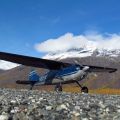
I just looked up Sparrevohn--that's a 4.8% slope, pretty steep for a runway. For comparison, a "normal" maximum Interstate slope is 6%, although there are a few which are a little steeper. A standard 3 degree ILS approach angle is a 5.24% slope.
So when you're accustomed to a relatively level slope, any significant slope at all will be a bit disorienting. I don't have any experience on really steep slopes, but I've never had any difficulty landing on a few lesser ones:
The old Schloredt ranch strip at Sundance, WY was sloped "considerably" and was the steepest I had landed on for years, definitely a one way strip for most airplanes, although not difficult to go around if that was started soon enough, because there wasn't anything to hit past the upper end (as a newbie pilot, I had to go around the first time I flew there, in a 172). But I don't know where I'd find what its slope was. It was 2100' long at 5000' elevation on the upper end. It was steep enough that it would slow any airplane using any reasonable approach speed without having to use brakes--I recall the first time I landed the Mooney 231 with its higher than Cessna landing speed (70 knots vs. 60 knots on final), I still had to add power about midfield to taxi to the tie-down area about 3/4 of the length toward the upper end. It was closed after the owner, Lee Schloredt, was struck by lightning standing beside his car in August 1994.
Incidentally, Lee had the most original 1953 180 I've ever seen, complete with a Narco coffee-grinder radio and those cute little partial fenders over the mains--always looked fresh out of the factory, because he kept it hangared. He never went anywhere, just putted around the area in the evenings and once a year flew it to Spearfish for the annual.
The Marble, CO, airstrip is relatively steep rising to the east, and with the terrain at that end, the 7800' elevation, and summer DA's around 10,000', is problematic for a go around uphill with a heavily loaded airplane. The La Garita airstrip (5CO6) on the west side of the San Luis Valley of Colorado is steeper, but how steep isn't published--similarly difficult to go around uphill with a heavily loaded airplane in the summer, with its the terrain past the upper end, and its 8050' elevation and 10,000+ DA's in the summer.
Since none of these or any other that I've landed on was anything as steep appearing as Sparrevohn's appears in this YouTube video, I can't say that I've used any particularly unusual technique, just landed. I suspect that there's little braking needed, even with a pretty big airplane, with 4300' and that gradient, but the terrain appears to make it a pretty problematic strip.
Cary
So when you're accustomed to a relatively level slope, any significant slope at all will be a bit disorienting. I don't have any experience on really steep slopes, but I've never had any difficulty landing on a few lesser ones:
The old Schloredt ranch strip at Sundance, WY was sloped "considerably" and was the steepest I had landed on for years, definitely a one way strip for most airplanes, although not difficult to go around if that was started soon enough, because there wasn't anything to hit past the upper end (as a newbie pilot, I had to go around the first time I flew there, in a 172). But I don't know where I'd find what its slope was. It was 2100' long at 5000' elevation on the upper end. It was steep enough that it would slow any airplane using any reasonable approach speed without having to use brakes--I recall the first time I landed the Mooney 231 with its higher than Cessna landing speed (70 knots vs. 60 knots on final), I still had to add power about midfield to taxi to the tie-down area about 3/4 of the length toward the upper end. It was closed after the owner, Lee Schloredt, was struck by lightning standing beside his car in August 1994.
Incidentally, Lee had the most original 1953 180 I've ever seen, complete with a Narco coffee-grinder radio and those cute little partial fenders over the mains--always looked fresh out of the factory, because he kept it hangared. He never went anywhere, just putted around the area in the evenings and once a year flew it to Spearfish for the annual.
The Marble, CO, airstrip is relatively steep rising to the east, and with the terrain at that end, the 7800' elevation, and summer DA's around 10,000', is problematic for a go around uphill with a heavily loaded airplane. The La Garita airstrip (5CO6) on the west side of the San Luis Valley of Colorado is steeper, but how steep isn't published--similarly difficult to go around uphill with a heavily loaded airplane in the summer, with its the terrain past the upper end, and its 8050' elevation and 10,000+ DA's in the summer.
Since none of these or any other that I've landed on was anything as steep appearing as Sparrevohn's appears in this YouTube video, I can't say that I've used any particularly unusual technique, just landed. I suspect that there's little braking needed, even with a pretty big airplane, with 4300' and that gradient, but the terrain appears to make it a pretty problematic strip.
Cary
"I have slipped the surly bonds of earth..., put out my hand and touched the face of God." J.G. Magee
Sun Mar 26, 2017 8:50 pm
Re: Uphill strips techniques?
Landing uphill every time I come home for the last 25 years, one thing I've learned is if I even get the tiniest inkling that just maybe I should add a little power, I ADD A LOT, RIGHT NOW! That seems to work more often then not.
Anyone else notice the ridiculous angles of attack possible when landing a steep slope? Up slope ground effect seems to make this possible is my guess. Or is it an optical illusion? All I know is I consistently have the very slowest landings while still having positive control, when landing steep. Yeah I know a wing will stall at the same AOA all the time, or at least seem to remember hearing that, but when the pushback from ground effect is on a steep slope, that changes things, sure seems like it anyway. Steep is good.
Anyone else notice the ridiculous angles of attack possible when landing a steep slope? Up slope ground effect seems to make this possible is my guess. Or is it an optical illusion? All I know is I consistently have the very slowest landings while still having positive control, when landing steep. Yeah I know a wing will stall at the same AOA all the time, or at least seem to remember hearing that, but when the pushback from ground effect is on a steep slope, that changes things, sure seems like it anyway. Steep is good.
- courierguy offline

- Posts: 4197
- Joined: Thu Mar 31, 2005 6:52 pm
- Location: Idaho
"Its easier to apologize then ask permission"
Tex McClatchy
Tex McClatchy
Mon Mar 27, 2017 6:02 am
Re: Uphill strips techniques?
Lot’s of times uphill landings are one-ways, so the landing is happening no matter what. Good news is the landing is up hill so speed will bleed off quickly. Don’t try and turn a one-way into a go-around, land the plane.
If it’s uphill on the side of a mountain there will be no horizon to visualize the glide slope so “visual cues” that some might use on a flat strip won’t work here.
Forget about trying to flare the landing, do that and at best a very hard landing will occur. It only gets worse from there.
Thinking anything “ground effect” uphill shouldn’t even be a consideration. Uphill trumps ground effect in landing.
High density altitude takes away horsepower AND increases landing speed so everything will feel different and the horsepower probably won’t be there to climb away from the strip, even if it's not a one-way.
Think flying onto the uphill strip so power is added where we’d usually flare. Done correctly the plane intersects the slope, and no I don’t do it correctly every time although I certainly attempt to. Don’t think three-point or wheel landing, just think flying onto the strip, everything else will take care of itself.
In the video below Bob is already at the top of the ridge we decided to land, it’s a one-way so I’m a little overly cautious and my first landing is at the very bottom of the “strip” on an even steeper slope. I get a little too slow and bounce the landing a bit but as you can see I had tons of room left. Watch the propellor and you can see how I’m constantly adjusting the throttle on the approach. Note: this also had a side slope to it plus a little cross wind.
My second landing is on the snow. Much better then my first you’ll hear me fly the plane onto the slope.
https://vimeo.com/175661086
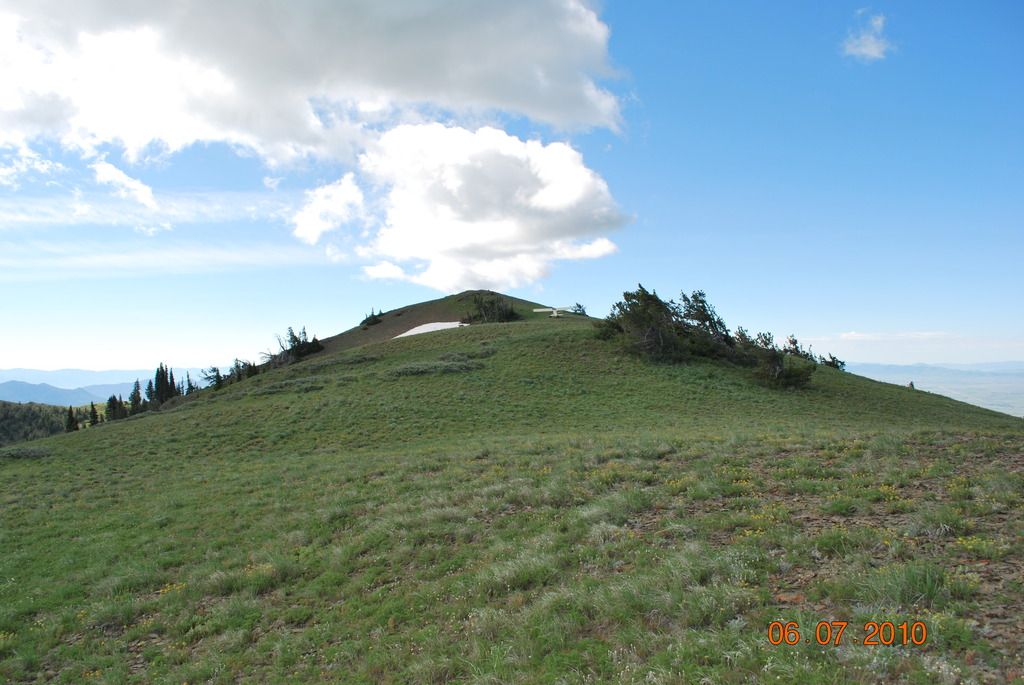
It’s possible to land on slopes that are not possible to stop on, for instance to get to the crown of a mountain that otherwise can’t be landed (like the picture below), but don’t attempt this until you’ve mastered flying onto uphill strips, and only after gradually landing steeper and steeper strips. Baby steps, always baby steps.
Oh, I shouldn’t need to say this but don’t carry passengers when practicing unless it’s an experienced pilot.
Be safe but have fun.

If it’s uphill on the side of a mountain there will be no horizon to visualize the glide slope so “visual cues” that some might use on a flat strip won’t work here.
Forget about trying to flare the landing, do that and at best a very hard landing will occur. It only gets worse from there.
Thinking anything “ground effect” uphill shouldn’t even be a consideration. Uphill trumps ground effect in landing.
High density altitude takes away horsepower AND increases landing speed so everything will feel different and the horsepower probably won’t be there to climb away from the strip, even if it's not a one-way.
Think flying onto the uphill strip so power is added where we’d usually flare. Done correctly the plane intersects the slope, and no I don’t do it correctly every time although I certainly attempt to. Don’t think three-point or wheel landing, just think flying onto the strip, everything else will take care of itself.
In the video below Bob is already at the top of the ridge we decided to land, it’s a one-way so I’m a little overly cautious and my first landing is at the very bottom of the “strip” on an even steeper slope. I get a little too slow and bounce the landing a bit but as you can see I had tons of room left. Watch the propellor and you can see how I’m constantly adjusting the throttle on the approach. Note: this also had a side slope to it plus a little cross wind.
My second landing is on the snow. Much better then my first you’ll hear me fly the plane onto the slope.
https://vimeo.com/175661086
It’s possible to land on slopes that are not possible to stop on, for instance to get to the crown of a mountain that otherwise can’t be landed (like the picture below), but don’t attempt this until you’ve mastered flying onto uphill strips, and only after gradually landing steeper and steeper strips. Baby steps, always baby steps.
Oh, I shouldn’t need to say this but don’t carry passengers when practicing unless it’s an experienced pilot.
Be safe but have fun.
- Barnstormer offline
- Posts: 2700
- Joined: Sun Oct 14, 2012 7:42 am
- Location: Alaska
- Aircraft: C185
Mon Mar 27, 2017 7:36 am
Re: Uphill strips techniques?
[quote="Barnstormer"]Lot’s of times uphill landings are one-ways, so the landing is happening no matter what. Good news is the landing is up hill so speed will bleed off quickly. Don’t try and turn a one-way into a go-around, land the plane.
If it’s uphill on the side of a mountain there will be no horizon to visualize the glide slope so “visual cues” that some might use on a flat strip won’t work here.
Forget about trying to flare the landing, do that and at best a very hard landing will occur. It only gets worse from there.
Thinking anything “ground effect” uphill shouldn’t even be a consideration. Uphill trumps ground effect in landing.
Phil,
Mostly good advice, but.....Just to be argumentative watch your own videos, and note carefully that indeed you flare quite noticeably on both landings.
Also, in a slatted airplane, you're already at a very high AOA on short final, compared to more "normal" airplanes, which means your plane is already close to matching the slope. Try that short final attitude in something without slats and you'll have a much more interesting landing, and that increased AOA puts your plane (at ~ 28 degrees vs ~17 degrees for a conventional wing) much closer to matching the slope while on approach.
But with a "conventional" (non slatted) wing, you fly into a slope, flare rather dramatically to match the slope, add power and land. Without the flare, it would be called a "crash", perhaps severe. You must get the airplane into a landing attitude with reference to the surface you're landing on, or a nose over or worse will occur.
And, as you rotate to match the slope, power helps to arrest the "descent" or rather the forward momentum, as you touch. And the ground effect that was mentioned earlier also helps, though as you say, it's not something you really control. But it's there, helping to soften the "arrival".
Good videos in any case, these things may be more noticeable than they are from the cockpit, as ones sphincter tightens.......
MTV
If it’s uphill on the side of a mountain there will be no horizon to visualize the glide slope so “visual cues” that some might use on a flat strip won’t work here.
Forget about trying to flare the landing, do that and at best a very hard landing will occur. It only gets worse from there.
Thinking anything “ground effect” uphill shouldn’t even be a consideration. Uphill trumps ground effect in landing.
Phil,
Mostly good advice, but.....Just to be argumentative
watch your own videos, and note carefully that indeed you flare quite noticeably on both landings. Also, in a slatted airplane, you're already at a very high AOA on short final, compared to more "normal" airplanes, which means your plane is already close to matching the slope. Try that short final attitude in something without slats and you'll have a much more interesting landing, and that increased AOA puts your plane (at ~ 28 degrees vs ~17 degrees for a conventional wing) much closer to matching the slope while on approach.
But with a "conventional" (non slatted) wing, you fly into a slope, flare rather dramatically to match the slope, add power and land. Without the flare, it would be called a "crash", perhaps severe. You must get the airplane into a landing attitude with reference to the surface you're landing on, or a nose over or worse will occur.
And, as you rotate to match the slope, power helps to arrest the "descent" or rather the forward momentum, as you touch. And the ground effect that was mentioned earlier also helps, though as you say, it's not something you really control. But it's there, helping to soften the "arrival".
Good videos in any case, these things may be more noticeable than they are from the cockpit, as ones sphincter tightens.......
MTV
Mon Mar 27, 2017 8:42 am
Re: Uphill strips techniques?
*2 What MTV said. We sometimes mix up round out and flair. Round out hard to judge,in this situation especially, but flair always necessary.
Slow steep approach is difficult and dangerous using gravity thrust exclusively. The advantage of Phil's airplane is that a high pitch with lots of power can be used comfortably all the way down.
As MTV pointed out, we need lots of power at least until ground effect to both manage descent speed and align with the slope. With Dave's 182 not banging the nose gear is also a consideration.
The big difference with Phil's second, snow LZ approach was that lots of power was carried all the way to touchdown. I know (actually I don't ) the big tires save all. Not so. As MTV says, a crash is a crash.
Slow steep approach is difficult and dangerous using gravity thrust exclusively. The advantage of Phil's airplane is that a high pitch with lots of power can be used comfortably all the way down.
As MTV pointed out, we need lots of power at least until ground effect to both manage descent speed and align with the slope. With Dave's 182 not banging the nose gear is also a consideration.
The big difference with Phil's second, snow LZ approach was that lots of power was carried all the way to touchdown. I know (actually I don't ) the big tires save all. Not so. As MTV says, a crash is a crash.
- contactflying offline
- Posts: 4972
- Joined: Wed Apr 03, 2013 7:36 pm
- Location: Aurora, Missouri 2H2
Download my free "https://tinyurl.com/Safe-Maneuvering" e-book.
Mon Mar 27, 2017 9:33 am
- courierguy offline
- Posts: 4197
- Joined: Thu Mar 31, 2005 6:52 pm
- Location: Idaho
"Its easier to apologize then ask permission"
Tex McClatchy
Tex McClatchy
Mon Mar 27, 2017 11:07 am
Re: Uphill strips techniques?
Willey Creek Ranch in Idaho. I want to land here someday. Such a cool strip. Its private so permission must be given, but I would like to get permission!
The approach starts around minute 7:47 Looks like this chap has it dialed in.
https://youtu.be/DFLOrTC8fi0?t=7m47s
Here is the departure. Sumbitch is pretty steep.
https://youtu.be/CMoAfylXFm0
The approach starts around minute 7:47 Looks like this chap has it dialed in.
https://youtu.be/DFLOrTC8fi0?t=7m47s
Here is the departure. Sumbitch is pretty steep.
https://youtu.be/CMoAfylXFm0
- Crzyivan13 offline
- Posts: 1811
- Joined: Sat Nov 24, 2012 9:50 pm
- Location: Ohio- OI27 Checkpoint Charlie
- FindMeSpot URL: https://share.delorme.com/EvanDavis
- Aircraft: 1957 Cessna 182A
Mon Mar 27, 2017 11:19 am
Re: Uphill strips techniques?
Thought I was being clear but I guess I'm not really surprised I'm wasn't. My meaning behind no flare was that you won't catch the descent on an uphill landing with a flare, it will require power to fly it on, essentially flying the airplane up hill which I guess could be called a flare with power - it was in my head just didn't come out clear enough I guess. Thanks for clarifying.
And yep, the SQ-2 is unlike most any other airplane out there due to the slats, big wings, big tail feathers and lots of horsepower - certainly allows for bending of the normal profile - or if you prefer making its own.
And yep, the SQ-2 is unlike most any other airplane out there due to the slats, big wings, big tail feathers and lots of horsepower - certainly allows for bending of the normal profile - or if you prefer making its own.
mtv wrote:Barnstormer wrote:Lot’s of times uphill landings are one-ways, so the landing is happening no matter what. Good news is the landing is up hill so speed will bleed off quickly. Don’t try and turn a one-way into a go-around, land the plane.
If it’s uphill on the side of a mountain there will be no horizon to visualize the glide slope so “visual cues” that some might use on a flat strip won’t work here.
Forget about trying to flare the landing, do that and at best a very hard landing will occur. It only gets worse from there.
Thinking anything “ground effect” uphill shouldn’t even be a consideration. Uphill trumps ground effect in landing.
Phil,
Mostly good advice, but.....Just to be argumentative
Also, in a slatted airplane, you're already at a very high AOA on short final, compared to more "normal" airplanes, which means your plane is already close to matching the slope. Try that short final attitude in something without slats and you'll have a much more interesting landing, and that increased AOA puts your plane (at ~ 28 degrees vs ~17 degrees for a conventional wing) much closer to matching the slope while on approach.
But with a "conventional" (non slatted) wing, you fly into a slope, flare rather dramatically to match the slope, add power and land. Without the flare, it would be called a "crash", perhaps severe. You must get the airplane into a landing attitude with reference to the surface you're landing on, or a nose over or worse will occur.
And, as you rotate to match the slope, power helps to arrest the "descent" or rather the forward momentum, as you touch. And the ground effect that was mentioned earlier also helps, though as you say, it's not something you really control. But it's there, helping to soften the "arrival".
Good videos in any case, these things may be more noticeable than they are from the cockpit, as ones sphincter tightens.......
MTV
- Barnstormer offline
- Posts: 2700
- Joined: Sun Oct 14, 2012 7:42 am
- Location: Alaska
- Aircraft: C185
Mon Mar 27, 2017 12:58 pm
Re: Uphill strips techniques?
It depends on the approach, but for most uphill landings I descend below the touch down point and carry a couple knots more airspeed that I consume in the round out of the descent. During the round out I level off and get stabilized in straight and level flight (however brief) before beginning to climb. If it is tight I round out directly into the climb (this is where the extra airspeed helps) and start adding power. I climb into the slope at a higher pitch attitude than a three point and usually land one point. The power application needs so be smooth and progressive to avoid upsetting things at a relatively low airspeed. The P factor can be significant and rudder correction is necessary due to the high angle of attack and lower airspeed with high power setting. Additional rudder may be necessary for roll control in the flair-stick is neutral except for cross winds. In theory I can do a nice landing on any slope that doesn't exceed my angle of climb. I wouldn't want to fly as steep as my best angle of climb at full power in ground effect, but the commonly known uphill landing slopes like Mile High are not too radical given the climb angle of most SEL aircraft combined with a little extra speed into the flair. Start gradually and build up on small slopes. There is timing and confidence necessary. I believe this "climb into the landing" is easier than trying to time the flair if you just fly level into the touch down point. Practice. Finally, if you screw this up on a steep slope there is not much you can do to save yourself so be patient and feel confident before progressing to steeper slopes. Mike
Tue Mar 28, 2017 9:32 pm
Re: Uphill strips techniques?
I haven't had to many of these since spraying out of short hilly pastures and I don't regularly teach it. A good practice,on normal runway, would be the hover taxi. It would give us lots of seconds in low ground effect at high pitch attitude with lots of power.
At the flair point just before touchdown, add sufficient extra power (you already have quite a bit of power at the bottom of the apparent brisk walk rate of closure approach ) to maintain low ground effect. Just before the last turnoff, reduce power to touch down softly and slowly. As Mike just pointed out, we leave the ailerons alone and both keep wings level and tail wagging a bit with rudder only. Dynamic proactive for/aft elevator movement will be necessary to bracket low ground effect. Don't sweat the four left turning tendencies; dynamic proactive rudder takes care of that. KISS, if we are keeping a straight line and wings level (rudder only to keep wings level in a crab as well,) we are getting the job done.
No fair with Phil's and Aktahoe's airplanes. They can hover out of ground effect.
At the flair point just before touchdown, add sufficient extra power (you already have quite a bit of power at the bottom of the apparent brisk walk rate of closure approach ) to maintain low ground effect. Just before the last turnoff, reduce power to touch down softly and slowly. As Mike just pointed out, we leave the ailerons alone and both keep wings level and tail wagging a bit with rudder only. Dynamic proactive for/aft elevator movement will be necessary to bracket low ground effect. Don't sweat the four left turning tendencies; dynamic proactive rudder takes care of that. KISS, if we are keeping a straight line and wings level (rudder only to keep wings level in a crab as well,) we are getting the job done.
No fair with Phil's and Aktahoe's airplanes. They can hover out of ground effect.
- contactflying offline
- Posts: 4972
- Joined: Wed Apr 03, 2013 7:36 pm
- Location: Aurora, Missouri 2H2
Download my free "https://tinyurl.com/Safe-Maneuvering" e-book.
DISPLAY OPTIONS
Who is online
Users browsing this forum: No registered users and 0 guests
Latest Features
-
-
Featured Bush Planes
As one of the undisputed legends of bush flying, the Cessna 180 hauls a…Read More -
Aircraft Ownership and Maintenance
9 modification mistakes aircraft owners make when trying to "bush out" their birds—why some…Read More -
Live to Tell
A Minnesota pilot is surprised to learn that the sudden asymmetric drag of an…Read More


Latest Knowledge Base
-
Destinations
Canada offers some of the most spectacular backcountry flying on the continent. Here's what you need to know before you go.Read More -
Safety and Survival
Hope that you never have to use your survival vest but knowing you have it and knowing how to use…Read More -
Destinations
A regional guide with ideas for winter camping destinations in California, Nevada, New Mexico, and Arizona.Read More -
Aircraft
Finding an affordable aircraft that can handle the backcountry for $80K or less? A challenge for sure, but with the…Read More