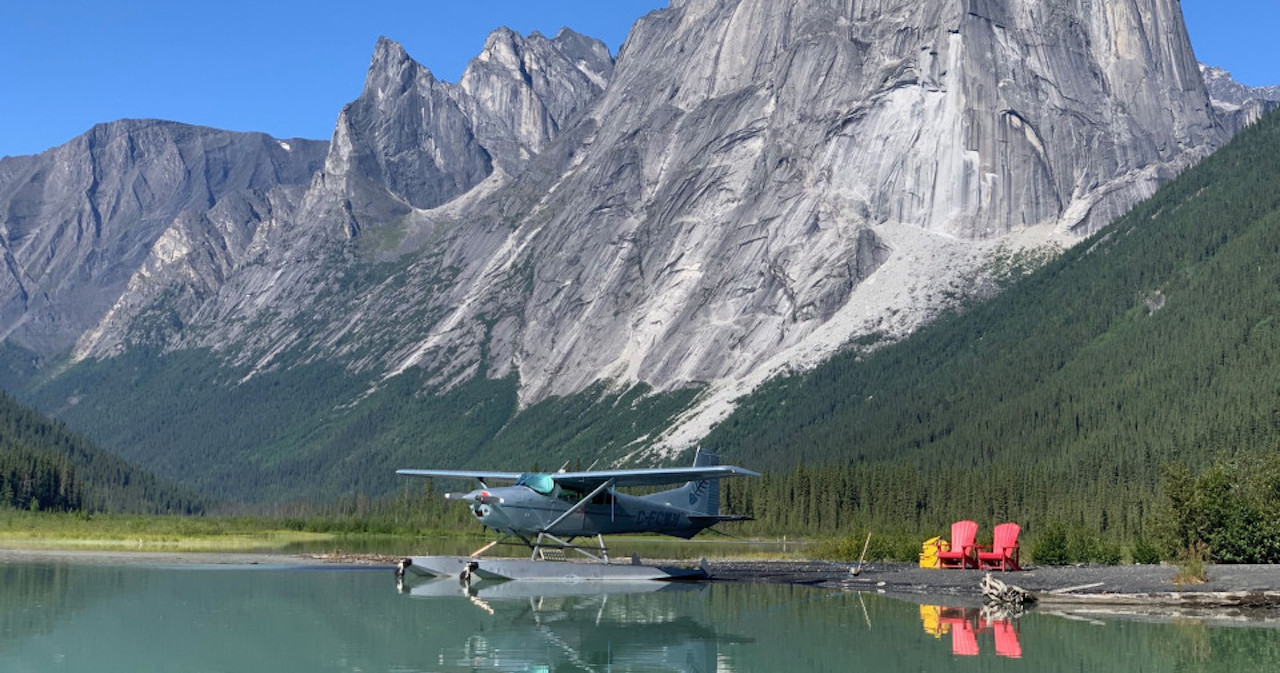
I found, over the years, not exceeding the critical angle of attack a little vague and confusing. There are numbers, V speeds and such, but I was usually busy not hitting anything and I didn't try to find instrument indications unless I was high enough that it didn't matter (IMC excluded.)
Mainly I found that it was not necessary to live on the razor's edge. Even spraying or heavy feeling because of high density altitude, there was generally some vertical space available. Most of the time we don't need Vx, we just need to clear an obstacle by a foot or two. This can save valuable kinetic energy for further on down the way. If we pay attention to the terrain, at high density altitude, we can continuously position ourselves so that lower terrain is just off the wing. This can be utilized in a 1g turn to lower terrain. No need to pitch up to near the critical angle of attack with load factor in the turn.
When we always maneuver in such a way that vertical space is available, load factor need not be feared. We can give up pitch up in the turn by using critical vertical space available.
Using critical vertical space available.
Wed Apr 04, 2018 5:05 pm
- contactflying offline
- Posts: 4972
- Joined: Wed Apr 03, 2013 7:36 pm
- Location: Aurora, Missouri 2H2
Download my free "https://tinyurl.com/Safe-Maneuvering" e-book.
Wed Apr 04, 2018 9:09 pm
Re: Using critical vertical space available.
I was learning to fly skis with Don Lee, one day I did a touch and go on a lake with lots of room. I climbed hard on the go part and Don mentioned I only had to clear the trees by inches and I could have a lot more airspeed in the bank. The lake had a bit of curve in it and on the second time around I got close to the trees in the middle. He did a quick adjustment and noted that just because I only needed a few inches it did not mean I should aim for that  . I was flying/turning/landing in a tight valley this last weekend, I made sure I used all of the vertical and horizontal that I could the tight turn was a nonevent. I was thanking Contacts and Dons advice at that point!! Lots of ways to put money in the bank!!
DENNY
. I was flying/turning/landing in a tight valley this last weekend, I made sure I used all of the vertical and horizontal that I could the tight turn was a nonevent. I was thanking Contacts and Dons advice at that point!! Lots of ways to put money in the bank!! DENNY
DENNY
Thu Apr 05, 2018 7:06 am
Re: Using critical vertical space available.
I used to fly OH-58A Kiowa helicopters in Korea, and Contact's advice was absolutely critical there. In the winter, when the radar site's jeep trail of a road iced up, I used to take food and supplies up to them. There was a helipad right on the ridge line that was built to accommodate a UH-1 Huey – barely. It was only large enough to accommodate the landing gear (skids), and you had to get in/out from one side. Even in the Kiowa, the tail hung out over a sheer cliff, and you could (barely) walk around the nose to get to the other side. The path over to the radar facility was right on the peak of the ridge, and was maybe 3-4 feet wide, paved with concrete and lined with waist-high "chains" between posts. The slope of the ridge line was probably more than 60º, but it looked absolutely vertical when you peeked over the edge... a totally freak-out for guys with a bit of acrophobia.
Of course, that high up, there was always a lot of wind as well. Steep approaches at about a 45º angle to the ridge were the only safe way to do it, and then only when the winds were relatively calm (meaning <25 knots, since "calm" has a different definition on a ridge like that!). Leaving yourself the "out" of banking away downwind allowed a significant safety margin that was otherwise non-existent on that approach. But as Contact says, by approaching at the 45º angle, you could "peel away" and make a 1-g descending turn and clear all the terrain easily.
Takeoffs were another matter entirely. At that altitude (at least in summer) the OH-58 would barely hover in ground effect, so once you cleared the pad, you had to establish forward airspeed quickly, lest the helicopter sink to where the tail rotor might hit the pad. So you started forward with at much pitch as you could pull, and dumped the nose as soon as you felt the loss of ground effect. Airspeed went from 0 to 60+ knots in the blink of an eye as you basically paralleled the down-slope, then pulled aft cyclic to level out (really - just descend less rapidly, since we were always headed back to the "basement" where helicopters live...). It was always an "adrenaline rush", and incredibly so for the new guys doing it for the first time.
Of course, that high up, there was always a lot of wind as well. Steep approaches at about a 45º angle to the ridge were the only safe way to do it, and then only when the winds were relatively calm (meaning <25 knots, since "calm" has a different definition on a ridge like that!). Leaving yourself the "out" of banking away downwind allowed a significant safety margin that was otherwise non-existent on that approach. But as Contact says, by approaching at the 45º angle, you could "peel away" and make a 1-g descending turn and clear all the terrain easily.
Takeoffs were another matter entirely. At that altitude (at least in summer) the OH-58 would barely hover in ground effect, so once you cleared the pad, you had to establish forward airspeed quickly, lest the helicopter sink to where the tail rotor might hit the pad. So you started forward with at much pitch as you could pull, and dumped the nose as soon as you felt the loss of ground effect. Airspeed went from 0 to 60+ knots in the blink of an eye as you basically paralleled the down-slope, then pulled aft cyclic to level out (really - just descend less rapidly, since we were always headed back to the "basement" where helicopters live...). It was always an "adrenaline rush", and incredibly so for the new guys doing it for the first time.


Thu Apr 05, 2018 7:06 pm
Re: Using critical vertical space available.
This topic brings this to mind.
https://www.youtube.com/watch?v=r-EHwYOfY94
I wonder how close they came to the water. Good example of trading altitude for airspeed.
https://www.youtube.com/watch?v=r-EHwYOfY94
I wonder how close they came to the water. Good example of trading altitude for airspeed.
- ShadowAviator offline
- Posts: 191
- Joined: Thu Feb 20, 2014 3:30 pm
- Location: Waldo
- Aircraft: 1969 C-172K "Valor"
SERVICE CEILING -noun - The altitude at which the pilot starts smacking the dash, exclaiming, "CLIMB OL' GIRL CLIMB!"
Fri Apr 06, 2018 2:37 pm
Re: Using critical vertical space available.
ShadowAviator wrote:This topic brings this to mind.
https://www.youtube.com/watch?v=r-EHwYOfY94
I wonder how close they came to the water. Good example of trading altitude for airspeed.
Yikes!
And ground (water) effect.
Gump
Fri Apr 06, 2018 4:00 pm
Re: Using critical vertical space available.
Good point, Gump. Probably didn't try to hover taxi though. How fast is an aircraft carrier?
- contactflying offline
- Posts: 4972
- Joined: Wed Apr 03, 2013 7:36 pm
- Location: Aurora, Missouri 2H2
Download my free "https://tinyurl.com/Safe-Maneuvering" e-book.
Fri Apr 06, 2018 5:54 pm
Re: Using critical vertical space available.
Carrier speed varies. The number in the top right under C 69 is the wind speed over the deck for reference. I was on the boat when this happened and watched the whole thing. Great pilots and great LSOs.
Sun Apr 08, 2018 9:39 pm
Re: Using critical vertical space available.
Drifting my own thread, paddles, but how many wire ropes are there and did they have to re-rig for him when he came back around? Heavy airplane. Was he a bit fast on short final? The few Navy guys I flew with set up a slow, power pitch, low rate of descent, approach and didn't change anything but keep the wing level with rudder and managed the descent with power until touchdown.
- contactflying offline
- Posts: 4972
- Joined: Wed Apr 03, 2013 7:36 pm
- Location: Aurora, Missouri 2H2
Download my free "https://tinyurl.com/Safe-Maneuvering" e-book.
Mon Apr 09, 2018 7:56 am
Re: Using critical vertical space available.
Must be something to land with full power. Damn, those guys are good!
Mon Apr 09, 2018 9:29 am
Re: Using critical vertical space available.
contactflying wrote:Good point, Gump. Probably didn't try to hover taxi though. How fast is an aircraft carrier?
While Unrepping the Big "E" with the USS Sacramento. E capt said he was in a hurry but we could come along side if we maintain 35 KTS. We did and about 30 minutes later. Big E had to leave so had an emergency breakaway. The carrier disappeared over the horizon in about 30 minutes. Sacs crew said we were doing 40kts
 Not a clue how fast carrier was going.

Keep the shiney side up and the dirty side down...
Mon Apr 09, 2018 5:06 pm
Re: Using critical vertical space available.
I always thought there was a future for steam power.
- contactflying offline
- Posts: 4972
- Joined: Wed Apr 03, 2013 7:36 pm
- Location: Aurora, Missouri 2H2
Download my free "https://tinyurl.com/Safe-Maneuvering" e-book.
Tue Apr 10, 2018 10:03 am
Re: Using critical vertical space available.
ShadowAviator wrote: https://www.youtube.com/watch?v=r-EHwYOfY94 .
Holy shit!!!!!
I bet they had to hazmat everyone's shorts after that one.
Cessna Skywagon -- accept no substitute!
Thu Apr 12, 2018 3:08 am
Re: Using critical vertical space available.
Back to either critical angle of attack or critical vertical space available, I think the angle of attack instrument makes much better sense than the airspeed indicator. But again should we have our head inside during maneuvering flight.
Flying with Joe the other day, I admitted I had never stalled a Pawnee nor taught stalls in an Ag program. It was about using vertical space available and not going to the number on the gauge.
Thinking about that, I don't remember ever being high enough to safely stall a Pawnee except when catching a wave on a ferry across the continental divide in Idaho. I have pitched up far more than I was comfortable with in a later than planned pull up out of the field, but immediately shoved the nose down over the wire and mushed into the vertical space available in the next field. I have no idea of either angle of attack or airspeed. The airplane shook and made a sort of vibrating noise.
I have watched, painfully, stunt pilots exceed the critical angle of attack and change pitch attitude prior to stall. Did they defy physics or just use the inertia of the zoom up. I don't know physics that well. I just know some attitudes are not such a big deal if we just stay ahead of the airplane and use the vertical space available. Certainly level to pitched well down is more comfortable than trying to maintain a pitched up attitude for very long.
While doing energy management turns with Slowmover, I mentioned "the slower we go, the faster we turn." He came back on the power quite a bit. "No!," I said. "We need to maintain kinetic energy while low. It is all the potential altitude we have."
Doing energy management turns, we simply zoom up to slow down to make the tighter energy management turn . This sets us up for a descending turn. A descending turn is safer and more efficient than a level turn. If we are already slow it can be very tight. Managing energy means using extra speed to zoom up prior to the turn trading airspeed for altitude and to slow down to reduce the radius of the turn. Managing energy means using lots of rudder beyond 45 degrees of bank bank to help get the nose down. Managing energy means not pulling back on the stick in the turn. Managing energy means using the dive, after the pitch up, to regain kinetic energy of airspeed down low. Managing energy means trading that extra airspeed of the dive back for altitude after engaging the target.
The energy management turn is not comfortable right away to those who have made level turns for many iterations. It requires being well out in front of the airplane. To take advantage of the pitch up to both gain altitude and to slow down, we have to anticipate the need to turn. More in faster airplanes than in slower airplanes. We have to evaluate the amount of turn necessary to engage the target or new heading desired. If a small heading change or a far target, very little pitch up is needed for the shallow turn. If a large heading change or near target, much pitch up will be required to slow enough to reduce the radius of turn enough to engage the target prior to impacting terrain or putting a down wing through a wire. These considerations also make it prudent to overbank early so that more time is saved to get out of the bank on target. The is why ol contact is yelling, "push that nose around! Don't let that nose push you around!" Of course our nose is well down at this time, so a skid (not likely going to happen) is not the problem here. Getting students to use enough rudder in steep turns is more the problem.
Flying with Joe the other day, I admitted I had never stalled a Pawnee nor taught stalls in an Ag program. It was about using vertical space available and not going to the number on the gauge.
Thinking about that, I don't remember ever being high enough to safely stall a Pawnee except when catching a wave on a ferry across the continental divide in Idaho. I have pitched up far more than I was comfortable with in a later than planned pull up out of the field, but immediately shoved the nose down over the wire and mushed into the vertical space available in the next field. I have no idea of either angle of attack or airspeed. The airplane shook and made a sort of vibrating noise.
I have watched, painfully, stunt pilots exceed the critical angle of attack and change pitch attitude prior to stall. Did they defy physics or just use the inertia of the zoom up. I don't know physics that well. I just know some attitudes are not such a big deal if we just stay ahead of the airplane and use the vertical space available. Certainly level to pitched well down is more comfortable than trying to maintain a pitched up attitude for very long.
While doing energy management turns with Slowmover, I mentioned "the slower we go, the faster we turn." He came back on the power quite a bit. "No!," I said. "We need to maintain kinetic energy while low. It is all the potential altitude we have."
Doing energy management turns, we simply zoom up to slow down to make the tighter energy management turn . This sets us up for a descending turn. A descending turn is safer and more efficient than a level turn. If we are already slow it can be very tight. Managing energy means using extra speed to zoom up prior to the turn trading airspeed for altitude and to slow down to reduce the radius of the turn. Managing energy means using lots of rudder beyond 45 degrees of bank bank to help get the nose down. Managing energy means not pulling back on the stick in the turn. Managing energy means using the dive, after the pitch up, to regain kinetic energy of airspeed down low. Managing energy means trading that extra airspeed of the dive back for altitude after engaging the target.
The energy management turn is not comfortable right away to those who have made level turns for many iterations. It requires being well out in front of the airplane. To take advantage of the pitch up to both gain altitude and to slow down, we have to anticipate the need to turn. More in faster airplanes than in slower airplanes. We have to evaluate the amount of turn necessary to engage the target or new heading desired. If a small heading change or a far target, very little pitch up is needed for the shallow turn. If a large heading change or near target, much pitch up will be required to slow enough to reduce the radius of turn enough to engage the target prior to impacting terrain or putting a down wing through a wire. These considerations also make it prudent to overbank early so that more time is saved to get out of the bank on target. The is why ol contact is yelling, "push that nose around! Don't let that nose push you around!" Of course our nose is well down at this time, so a skid (not likely going to happen) is not the problem here. Getting students to use enough rudder in steep turns is more the problem.
- contactflying offline
- Posts: 4972
- Joined: Wed Apr 03, 2013 7:36 pm
- Location: Aurora, Missouri 2H2
Download my free "https://tinyurl.com/Safe-Maneuvering" e-book.
Fri Jun 01, 2018 9:06 pm
Re: Using critical vertical space available.
The last email from Tailwheel Journal is good and supports the 1g turn concept by encouraging the student to turn as steep as necessary and not pull back on the stick when the engine quits on takeoff. Also keeping airspeed to maneuver away from centerline extended to make a p energy management turn possible.
- contactflying offline
- Posts: 4972
- Joined: Wed Apr 03, 2013 7:36 pm
- Location: Aurora, Missouri 2H2
Download my free "https://tinyurl.com/Safe-Maneuvering" e-book.
Sat Jun 30, 2018 3:10 pm
Re: Using critical vertical space available.
Contact states: "Back to either critical angle of attack or critical vertical space available, I think the angle of attack instrument makes much better sense than the airspeed indicator. But again should we have our head inside during maneuvering flight."
And I agree fully with this. Nonetheless I am considering an Angle of Attack for my 182 and would have the AoA display in my vision field on an iPhone when landing. But I am wondering just how I would use the AoA to fly more safely?
For landing, when I am in a pattern or on approach I am flying 60 knots. My Vso is 35 kts. (Peterson Canard Mod); I plan things to be at short final (1/4 mi. 300 ft.) at 1.3 x Vso = 45 knots. As I am always descending to short final this seems pretty safe. And I feel comfortable flying at these speeds. At short final or just before I deploy full flaps and I no longer look at airspeed and use Contact's Brisk Walk Apparent Rate of Closure to land. And I usually land well below 35 kts. I suppose if I had to do some unexpected maneuvering turns, possibly climbing, that the AoA could be useful.
For takeoff, I also use Contact's stay in ground effect technique. I suppose that the AoA would be useful if I had to zoom up over or turn hard around an obstacle? Maybe if I was at an altitude out of ground effect but where I could not climb due to a low ceiling and fly a windy course as in a tight canyon/river?
I have flown with Larry and he seems to use his AoA to keep the plane nice and slow on approach. But maybe he could comment or film what his AoA does in his great backcountry videos.And when he would really rely on it...
Any and all comments appreciated.
Blue skies,
Tommy
KCMA
And I agree fully with this. Nonetheless I am considering an Angle of Attack for my 182 and would have the AoA display in my vision field on an iPhone when landing. But I am wondering just how I would use the AoA to fly more safely?
For landing, when I am in a pattern or on approach I am flying 60 knots. My Vso is 35 kts. (Peterson Canard Mod); I plan things to be at short final (1/4 mi. 300 ft.) at 1.3 x Vso = 45 knots. As I am always descending to short final this seems pretty safe. And I feel comfortable flying at these speeds. At short final or just before I deploy full flaps and I no longer look at airspeed and use Contact's Brisk Walk Apparent Rate of Closure to land. And I usually land well below 35 kts. I suppose if I had to do some unexpected maneuvering turns, possibly climbing, that the AoA could be useful.
For takeoff, I also use Contact's stay in ground effect technique. I suppose that the AoA would be useful if I had to zoom up over or turn hard around an obstacle? Maybe if I was at an altitude out of ground effect but where I could not climb due to a low ceiling and fly a windy course as in a tight canyon/river?
I have flown with Larry and he seems to use his AoA to keep the plane nice and slow on approach. But maybe he could comment or film what his AoA does in his great backcountry videos.And when he would really rely on it...
Any and all comments appreciated.
Blue skies,
Tommy
KCMA
Sat Jun 30, 2018 9:17 pm
Re: Using critical vertical space available.
Check your angle of attack gauge when as slow as possible in slow flight with full flaps. Using the apparent brisk walk rate of closure approach on short final, again see where the angle of attack indicator is. I expect it could back up apparent rate and allow slower, safely, at the bottom.
Remember, we are going into ground effect and when really slow will carry power to touchdown. Really slow causes sink, which we mitigate with power. Ground effect causes extra lift, which is bad if we are going too fast but good using apparent rate.
Remember, we are going into ground effect and when really slow will carry power to touchdown. Really slow causes sink, which we mitigate with power. Ground effect causes extra lift, which is bad if we are going too fast but good using apparent rate.
- contactflying offline
- Posts: 4972
- Joined: Wed Apr 03, 2013 7:36 pm
- Location: Aurora, Missouri 2H2
Download my free "https://tinyurl.com/Safe-Maneuvering" e-book.
Sat Mar 16, 2019 9:25 am
Re: Using critical vertical space available.
Using MTV's and Butch Washtock's slow with flaps in near vertical walls, like B.C., we still have to consider load factor and lateral space available. When terrain gets really wide in the windscreen, it would have been better to have banked more sooner. Getting slow early, getting a lot of rudder in to help get the nose down, and getting more turn than we think we need early, prevents late lateral space available problems.
What I'm saying is even with a careful low speed penetration of valley ridge systems, we should get course reversal in early and be prepared to lower the nose when necessary to prevent stall. Don't wait until both lateral and vertical space has gone away.
What I'm saying is even with a careful low speed penetration of valley ridge systems, we should get course reversal in early and be prepared to lower the nose when necessary to prevent stall. Don't wait until both lateral and vertical space has gone away.
- contactflying offline
- Posts: 4972
- Joined: Wed Apr 03, 2013 7:36 pm
- Location: Aurora, Missouri 2H2
Download my free "https://tinyurl.com/Safe-Maneuvering" e-book.
DISPLAY OPTIONS
Who is online
Users browsing this forum: No registered users and 2 guests
Latest Features
-
-
Featured Bush Planes
As one of the undisputed legends of bush flying, the Cessna 180 hauls a…Read More -
Aircraft Ownership and Maintenance
9 modification mistakes aircraft owners make when trying to "bush out" their birds—why some…Read More -
Live to Tell
A Minnesota pilot is surprised to learn that the sudden asymmetric drag of an…Read More


Latest Knowledge Base
-
Destinations
Canada offers some of the most spectacular backcountry flying on the continent. Here's what you need to know before you go.Read More -
Safety and Survival
Hope that you never have to use your survival vest but knowing you have it and knowing how to use…Read More -
Destinations
A regional guide with ideas for winter camping destinations in California, Nevada, New Mexico, and Arizona.Read More -
Aircraft
Finding an affordable aircraft that can handle the backcountry for $80K or less? A challenge for sure, but with the…Read More