Split from this thread, as it's a good topic on its own. -Z
------------------------------------------------------------------------------
jr,
The extensions that Del Air does and a few others have done is essentially to convert the 37 gallon tanks to the 172 or 175 long range tanks. I priced that option when I did the Flints 12 or so years ago, and it looked like that option would cost as much as the Flints. I opted for more gas. In retrospect, I wish I'd had the tanks enlarged.
Leaving your tanks half empty causing water in the fuel is one of those old myths that's really hard to bust. I've left the fuel tanks half empty or mostly empty when parked on dozens of airplanes for MANY years, and never got a drop of water I couldn't blame on bad fuel or a leak in the fuel filler.
Don't sweat leaving your tanks partially empty, even for long periods of time.
Remember, fuel has some water actually in solution, anyway. And, you can never get that out of solution till you freeze it really cold.
MTV
Water in the tanks
Mon Jul 02, 2007 12:31 pm


Mon Jul 02, 2007 12:43 pm
mtv wrote:Leaving your tanks half empty causing water in the fuel is one of those old myths that's really hard to bust.
This seems like it's actually quite plausible to me. If you leave a large volume of air in your tanks and experience a significant temperature drop, condensation of water vapor in that volume of air will occur.
But then, it's never happened to me either.
- Zzz offline


- Posts: 2855
- Joined: Fri Oct 08, 2004 11:09 pm
- Location: northern
- Aircraft: Swiveling desk chair
Half a century spent proving “it is better to be thought a fool than to open your mouth and remove all doubt.”
Mon Jul 02, 2007 12:52 pm
MTV, sounds like you never to Maryland. "The humidity state" if I leave my tanks any breathing room over night in the summer here I can come up w/ more than a sample cup full of water. If i keep them full no water. Guess it could be the gremlins though, ......little bastards
Let's see if I remember how to land this thing.
Tue Jul 03, 2007 4:57 am
zane wrote:I'm looking forward to more "What plane is right for me" threads.
I'm still interested to see what Wes comes back with. It sounded like he already has a 172 and wanted suggestions for improving it. But now we've got him in a C175, a Maule, and a Taylorcraft. Hahaha.
You forgot about the Stinson!
Re: Water in the tanks. At Leadville, we almost never have full tanks and I have yet to see even a drop of water from the sumps. Kinda dry (and high!) there. This habit of running at less than full tanks, sometimes way less, keeps us lighter and honest about our fuel calculations. Whoever said that "The only time you can have too much fuel is when you are on fire" has never flown up here. This touches on some of the previous posters that talked about running with less than full fuel to get lighter, better climb, etc. All good stuff! Thanks again, Wes
Tue Jul 03, 2007 6:38 am
Zane,
I agree that the THEORY of condensation causing problems in aircraft fuel tanks is sound.
My point was simply that I've never seen it happen simply due to partially filled tanks.
Dusty, I've operated in Kodiak, where there's just a tad of humidity most days. In fact, while there, I operated an airplane with five fuel tanks, two of which were rarely filled, and the other three were NEVER filled after a day's flying, cause we weren't absolutely sure what the next launch would require, fuel wise. Oh, yeah--this was a seaplane, by the way.
Here in MN, I've seen some days in the spring where walking into my unheated hangar, water was dripping off everything literally. Sumped the tanks, which were 85 % empty, no water. Filled with fuel, sumped again-no water.
If you are getting that much water out of your fuel drains, I'd start looking around at other sources. You've got something going on other than condensation, I'd bet.
My 170 always had water in the tanks after sitting for a while, which I assumed was cause it sat on floats for days at a time with nearly empty tanks. Many times I flew it, I'd get a good bit of water from the sumps. Then I got to paying attention, and realized that this only happened if there had been rain since I flew last. And, I wasn't seeing this on the two airplanes I flew at work, one of which had 92 gallon capacity in large very flat tanks. Now it seems to me that VERY large, but very flat tanks would be the MOST likely to be the worst for the condensation thing.
My 170 has the fuel fillers set down in indentations in the top of the tanks. Those indentations (little "moats" around the fuel filler necks) would fill with water in rain. That water would then, via capillary action, siphon itself up between the fuel cap and the filler neck, and siphon into the tanks.
Monarch came out with a modification, which basically bonds a flat collar around the filler neck to prevent this accumulation of water around the neck. Voila!! I haven't had a drop of water out of those tanks since. It wasn't condensation at all in that case.
Your mileage may vary. I almost never fill an airplane's tanks overnight or for weeks at a time, and if the tanks are tight, I just never get water out of the sumps.
Come to muggy Minnesota if you want humidity, by the way.
Again, the theory sounds fine. I just have actually never seen it in real life. I've seen some airplanes that you always got some water from the fuel tanks, but those always were caused by some maintenance issue, not by condensation.
MTV
I agree that the THEORY of condensation causing problems in aircraft fuel tanks is sound.
My point was simply that I've never seen it happen simply due to partially filled tanks.
Dusty, I've operated in Kodiak, where there's just a tad of humidity most days. In fact, while there, I operated an airplane with five fuel tanks, two of which were rarely filled, and the other three were NEVER filled after a day's flying, cause we weren't absolutely sure what the next launch would require, fuel wise. Oh, yeah--this was a seaplane, by the way.
Here in MN, I've seen some days in the spring where walking into my unheated hangar, water was dripping off everything literally. Sumped the tanks, which were 85 % empty, no water. Filled with fuel, sumped again-no water.
If you are getting that much water out of your fuel drains, I'd start looking around at other sources. You've got something going on other than condensation, I'd bet.
My 170 always had water in the tanks after sitting for a while, which I assumed was cause it sat on floats for days at a time with nearly empty tanks. Many times I flew it, I'd get a good bit of water from the sumps. Then I got to paying attention, and realized that this only happened if there had been rain since I flew last. And, I wasn't seeing this on the two airplanes I flew at work, one of which had 92 gallon capacity in large very flat tanks. Now it seems to me that VERY large, but very flat tanks would be the MOST likely to be the worst for the condensation thing.
My 170 has the fuel fillers set down in indentations in the top of the tanks. Those indentations (little "moats" around the fuel filler necks) would fill with water in rain. That water would then, via capillary action, siphon itself up between the fuel cap and the filler neck, and siphon into the tanks.
Monarch came out with a modification, which basically bonds a flat collar around the filler neck to prevent this accumulation of water around the neck. Voila!! I haven't had a drop of water out of those tanks since. It wasn't condensation at all in that case.
Your mileage may vary. I almost never fill an airplane's tanks overnight or for weeks at a time, and if the tanks are tight, I just never get water out of the sumps.
Come to muggy Minnesota if you want humidity, by the way.
Again, the theory sounds fine. I just have actually never seen it in real life. I've seen some airplanes that you always got some water from the fuel tanks, but those always were caused by some maintenance issue, not by condensation.
MTV
Tue Jul 03, 2007 9:51 am
MTV- I thought rain was the issue for a long time as well but there was never a link between rain and the water in the tanks. It did however seem to be linked to warm days followed by cool nights . I tried just about everything to make the the tanks leak but no amount of hosing down got water in the tanks. Just recently i let the plane sit for almost 2 months w/ no sumping and full tanks, no water to be found. I can't leave it two days here with air space in the tanks before stuff starts showing up. I ain't sayin yer wrong but when the tanks stay full the water stays out. Maybe it's a voodoo curse because it sure seems like a plane on the water ought to get water in empty tanks if any would.
P.S. got a little more info on that filler neck mod?
P.S. got a little more info on that filler neck mod?
Let's see if I remember how to land this thing.
Tue Jul 03, 2007 12:38 pm
The neck seal mod was made by Monarch. Monarch went out of business, but their stuff all got picked by someone, not sure who.
There may have been different designs of fillers in different model years as well. Mine is a 52. My gaskets were good. I was on floats a lot, so the plane sat pretty level, which allowed those wells to fill right to the brim. That permitted capillary action.
The Monarch mod comes with not only the covers, but also new gas caps, which are a much better design.
MTV
There may have been different designs of fillers in different model years as well. Mine is a 52. My gaskets were good. I was on floats a lot, so the plane sat pretty level, which allowed those wells to fill right to the brim. That permitted capillary action.
The Monarch mod comes with not only the covers, but also new gas caps, which are a much better design.
MTV
Tue Jul 03, 2007 1:46 pm
I did my IR with a crusty instructor named Tom who had 10's of thousands of hours. I was diligently sumping my tanks after a fillup when he asked me if I had EVER in the hundreds of times I had done this on my plane, seen a drop of water in the gas. I had to say no. He then asked me if I had ever had a leaky fuel drain. Well, yes, I had. After that, Tom said nothing, so I had to ask him what was the point. He said he wasn't about to tell me to not sump my tanks, but that it stood to reason that one day, in search of water that wasn't there, I was going to generate a leaky drain by sticking that probe up there. And it was probably going to happen in the worst possible place at the worst possible time and not just a drip, but a stream. Then Tom went back to saying nothing.
It was certainly food for thought. Kinda why we stopped giving smallpox vacinations when we lost more people to the protection than to the disease. Did I stop sumping my tanks? No, I still do it, but less frequently in the southwest with fuel from a heavy traffic FBO, more frequently if out of my local area and ALWAYS when out of the country.
Oh yeah - and I carry a spare fuel drain in my tool kit.
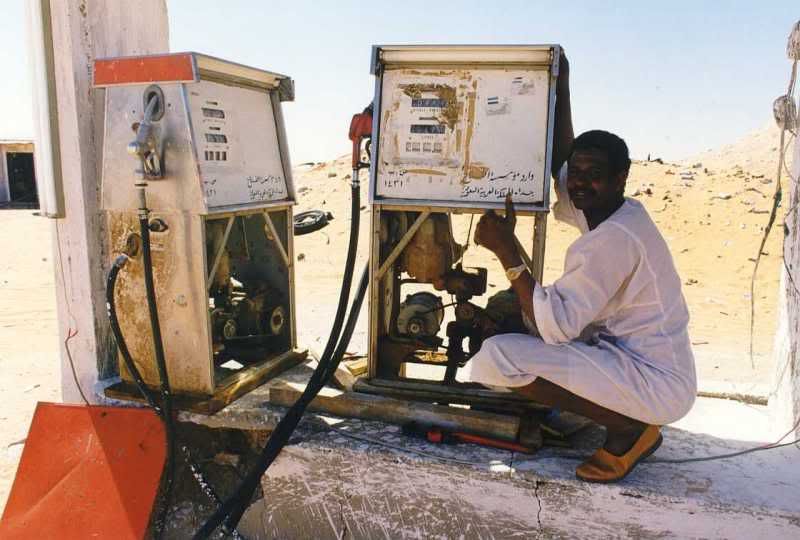
So if your plane doesn't generate water in the tanks and you can trust your fuel source.... should you or shouldn't you? I only bought gas for my truck at this place. Not sure I would want to fly on the stuff.
It was certainly food for thought. Kinda why we stopped giving smallpox vacinations when we lost more people to the protection than to the disease. Did I stop sumping my tanks? No, I still do it, but less frequently in the southwest with fuel from a heavy traffic FBO, more frequently if out of my local area and ALWAYS when out of the country.
Oh yeah - and I carry a spare fuel drain in my tool kit.
So if your plane doesn't generate water in the tanks and you can trust your fuel source.... should you or shouldn't you? I only bought gas for my truck at this place. Not sure I would want to fly on the stuff.
- Yellowbelly offline

- Posts: 355
- Joined: Wed Apr 27, 2005 9:03 pm
- Location: Beautiful southern Utah
Maule M-7-235C
I'm lost
but I'm not afraid
I'm lost
but I'm not afraid
Tue Jul 03, 2007 2:36 pm
FYI
With bladder type fuel tanks (C180-182, etc) you want them full whenever possible. The fuel keeps the rubber compound from drying out and cracking and in fact, most leaks happen at the top.
BTW, bladders were actually the "bullet proof" gas tanks of WWII fame. A bullet will go thru, but the hole closes and just weeps a little so you can RTB. Pull them out and slap a few patches on and the plane was mission ready.
In a lifeime of flying, I have gotten a total of about a couple of teaspoons of water from airplanes in rainy Oregon.
BTW, bladders were actually the "bullet proof" gas tanks of WWII fame. A bullet will go thru, but the hole closes and just weeps a little so you can RTB. Pull them out and slap a few patches on and the plane was mission ready.
In a lifeime of flying, I have gotten a total of about a couple of teaspoons of water from airplanes in rainy Oregon.
The truth will set you on the path to being free
Tue Jul 03, 2007 5:33 pm
I've never found two thimbles of water in a gas tank, regardless of how I filled it. I have had a purge valve fail after I checked drained the sump...but it was due to a piece of contamination from inside the tank...a good indication that it's time to empty the tank and have a look.
But there's more to it than just water. Making sure what's in your tanks is something your engine will run on is a pretty worthy endeavor. I don't know the stats, but jet fuel in the avgas isn't so uncommon.
I always sort of thought that sniffing the avgas was compensation for not being able to drink before flying .
.
But there's more to it than just water. Making sure what's in your tanks is something your engine will run on is a pretty worthy endeavor. I don't know the stats, but jet fuel in the avgas isn't so uncommon.
I always sort of thought that sniffing the avgas was compensation for not being able to drink before flying
.

Tue Jul 03, 2007 6:03 pm
Water in tanks
This spring I was seeing water only in the right tank of my 170. Of course it was the vented cap side. I too noticed that it only occurred after a good rain. Replaced the seals and no more water.
Yellowbelly has a great point to carry a spare sump. During the occasional water in the tank/sump area it seized one day into a stream during a preflight, I had gas running down my arms as I tried to tap it free with no luck.
Got my tools out, spun it out and used the gas to clean up the corrosion that caused it to seize on the inner oring. I probably only lost 1-2 gals until I could get it screwed back in.
I now carry a spare sump in my tool kit!!!
Yellowbelly has a great point to carry a spare sump. During the occasional water in the tank/sump area it seized one day into a stream during a preflight, I had gas running down my arms as I tried to tap it free with no luck.
Got my tools out, spun it out and used the gas to clean up the corrosion that caused it to seize on the inner oring. I probably only lost 1-2 gals until I could get it screwed back in.
I now carry a spare sump in my tool kit!!!
Scott '52 170B 8NinerDelta
Tue Jul 03, 2007 7:02 pm
Tue Jul 03, 2007 8:33 pm
But there's more to it than just water. Making sure what's in your tanks is something your engine will run on is a pretty worthy endeavor.
That's why you'll find THIS cheapskate at the self service pump every time. I'd much rather find out while it's going in than come back to find 85 gal of the wrong crap in my fuel system. I also like to be there even if the truck fills me up. I once flew across some lonely territory from Whitehorse to Anchorage. A week later, when I again needed to use the outboard aux tanks, I found the cap on one of them half on and half off. It's hard to see from the ground and even from a few feet away, looks OK. Now I check 'em all, every time I'm not the one who closed them.
- Yellowbelly offline
- Posts: 355
- Joined: Wed Apr 27, 2005 9:03 pm
- Location: Beautiful southern Utah
Maule M-7-235C
I'm lost
but I'm not afraid
I'm lost
but I'm not afraid
DISPLAY OPTIONS
Who is online
Users browsing this forum: No registered users and 0 guests
Latest Features
-
Live to Tell
A Minnesota pilot is surprised to learn that the sudden asymmetric drag of an out-of-rig ski can…Read More -
Creators
Working in some of the Yukon's most beautiful and remote environments, photographer Simon Blakesley captures aircraft in…Read More -
Aircraft Ownership and Maintenance
Upgrading to big tires can make a huge difference in backcountry performance, but with those gains come…Read More -
Tales from Yesteryear
In this tale from bush flying yesteryear, Don Cogger signs up to help Atlee Dodge Jr recovery…Read More


Latest Knowledge Base
-
Destinations
A regional guide with ideas for winter camping destinations in California, Nevada, New Mexico, and Arizona.Read More -
Aircraft
Finding an affordable aircraft that can handle the backcountry for $80K or less? A challenge for sure, but with the…Read More -
Aircraft
01.29.2018 - Zane - Updated tire diameter graphic to add 8.50x10 Guide to tires for use in the backcountry and off-airport landing…Read More -
Pilots
12.22.2013 - Initial article format Operating aircraft on skis and negotiating a snow-covered landscape is an entirely unique skillset and environment.…Read More


