Cam Tom 12, in his Alaska to Alabama posts, mentioned that his experimental Pacer had a stiff aluminum gear. He also mentioned sorting out 3pt and wheel landings.
I liked the J-5 for an Ag dual trainer because it required the same wheel landing technique as the Pawnee. When slowed to the mush down point and just before touchdown in a 3pt attitude, we push the stick forward to level the pitch attitude. If we allow the upwind main or mains (no wind), to touch down with any angle of attack, the airplane will not necessarily bounce but it will jump up and down on the stiff bungees.
Is this a stiff gear thing? What are your experiences with stiff as opposed to springy geared airplanes. I'm talking slow power/pitch approach. Any airplane will bounce if landed fast with some angle of attack.
Wheel landings with stiff gear.
Mon Aug 31, 2015 9:25 pm
- contactflying offline
- Posts: 4972
- Joined: Wed Apr 03, 2013 7:36 pm
- Location: Aurora, Missouri 2H2
Download my free "https://tinyurl.com/Safe-Maneuvering" e-book.
Mon Aug 31, 2015 10:32 pm
Re: Wheel landings with stiff gear.
I bounced a few times tonight getting used to the light weight without passengers or survival gear. Low AOA made for small bounces about 6 inches high at most. Mostly the gear, I think, coupled with me not reducing rate of descent enough before the mains touched down. I tried one 3-point tonight and bounced it too, but I was having too much fun with wheel landings and carrying the tail up on roll out to get a smooth 3-point this time.
- CamTom12 offline

- Posts: 3705
- Joined: Sun Jul 08, 2012 1:08 pm
- Location: Huntsville
- FindMeSpot URL: https://share.delorme.com/camtom12
- Aircraft: Ruppe Racer
Experimental Pacer
home hand jam "wizard"
Mon Aug 31, 2015 10:37 pm
Re: Wheel landings with stiff gear.
My experience has been that if you always strive to put the upwind wheel down first you will cut the bounce tendency down considerably. So much so that even in a no wind situation I strive to set one wheel down first. There just isn't enough dampening in oleo geared airplanes to keep a two wheeled touch down from springing you back into the air as the opposing forces on the gear legs try and catapult you upwards (in addition to the sudden increase in aoa) Spring gear? shoot.... they have no dampening... Stiff or soft, they will benefit from a one wheeled touch down.
YMMV.... Rob
YMMV.... Rob

Tue Sep 01, 2015 3:00 pm
Re: Wheel landings with stiff gear.
I agree with Rob. Also, this is one of the good arguments for using a tail low wheel landing. By doing so, you've reduced the forward speed, and hopefully minimized the downward vector as well.
But, the point of tail low wheel landings is that a bounce is often a ricochet (wheels bouncing off the ground) exacerbated by an increase in AOA of the wing, caused by the bounce, which creates more lift, and worsens the "bounce", which is actually a bounce followed by a balloon.
So, the tail low wheel landing, like the three point, ensures that the airplane's forward speed is minimized upon touchdown. Bounce a bit, and the wing is still pretty much done flying....you increase the AOA, but the AOA is now beyond the stalling AOA. Voila! No balloon added to the bounce.
Then work on the vertical vector. Nevertheless, a tail low wheel landing will significantly reduce bouncing tendency.
MTV
But, the point of tail low wheel landings is that a bounce is often a ricochet (wheels bouncing off the ground) exacerbated by an increase in AOA of the wing, caused by the bounce, which creates more lift, and worsens the "bounce", which is actually a bounce followed by a balloon.
So, the tail low wheel landing, like the three point, ensures that the airplane's forward speed is minimized upon touchdown. Bounce a bit, and the wing is still pretty much done flying....you increase the AOA, but the AOA is now beyond the stalling AOA. Voila! No balloon added to the bounce.
Then work on the vertical vector. Nevertheless, a tail low wheel landing will significantly reduce bouncing tendency.
MTV


Tue Sep 01, 2015 3:31 pm
Re: Wheel landings with stiff gear.
Speed! Our best friend during takeoff, but such an enemy when landing.
- contactflying offline
- Posts: 4972
- Joined: Wed Apr 03, 2013 7:36 pm
- Location: Aurora, Missouri 2H2
Download my free "https://tinyurl.com/Safe-Maneuvering" e-book.
Tue Sep 01, 2015 3:33 pm
Re: Wheel landings with stiff gear.
More so when younger than today.
Wed Sep 02, 2015 11:47 am
Re: Wheel landings with stiff gear.
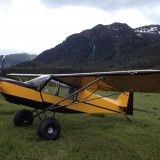
I don’t think stiff gear makes an airplane “bounce”. I think stiff gear makes the transition from flying to rolling more critical because the wings’ AOA changes quicker and with more latitude when the gear isn’t soaking up some of the landing impact, and it’s the wing that’s lifting the airplane off the ground much more so than the gear. No doubt the gear has some input, but I don't think it's that much. Land tail-low in a three point, where the tailwheel touches before the mains, and there isn’t much of a bounce…even with a real smack-down landing. I believe that’s because all the bounce is coming from the gear, not an increase in AOA.
The the best anti-bounce procedure I've found (assuming proper airspeed) is to dump the Johnson bar at touchdown. In any but the strongest cross winds I land with full flaps, and never less that 20 degrees. My wing will fly MUCH slower with flaps down than up.
Any airspeed that will allow me to wheel land in cross winds or gusty winds will also make the wing fly again if I go to 3-point without retracting the flaps. No "bounce" involved necessarily…just back to flying when the angle of attack increases. Big tires and a STOL kit are no doubt contributing factors. Flap gap seals (I know…tools of the devil) may also influence it…never flown without them so I don’t know. But I run out of rudder before I run out of lift in the three point attitude.
If I want to land tail-low without dealing with the flaps I have to really stick the yoke forward as soon as I touch to keep the tail from going any lower. While this works fine, it also results in a lot of rock damage to the bottom of my elevator. My go-to cross-wind landing procedure is to wheel land as slow as my rudder will allow, then dump the flaps without moving the yoke. As the flaps come up the center of lift moves forward and the tail comes down, and the flight part of the landing is over. I can also roll along on the mains with the tail high while speed bleeds off, but assuming cross or gusty winds, that’s hardly the most stable configuration.
Slight subject drift, but another great way to save your landings is to stay off the pavement. Grass and dirt are so much more forgiving, especially in strong cross winds. I’ve scouted out appropriate off-pavement landing sites adjacent to my hometown paved runway, and that has allowed me to land several times in conditions I when couldn’t have landed on the pavement. It gives the airport busybodies conniption fits, but then again so does everything else…
The the best anti-bounce procedure I've found (assuming proper airspeed) is to dump the Johnson bar at touchdown. In any but the strongest cross winds I land with full flaps, and never less that 20 degrees. My wing will fly MUCH slower with flaps down than up.
Any airspeed that will allow me to wheel land in cross winds or gusty winds will also make the wing fly again if I go to 3-point without retracting the flaps. No "bounce" involved necessarily…just back to flying when the angle of attack increases. Big tires and a STOL kit are no doubt contributing factors. Flap gap seals (I know…tools of the devil) may also influence it…never flown without them so I don’t know. But I run out of rudder before I run out of lift in the three point attitude.
If I want to land tail-low without dealing with the flaps I have to really stick the yoke forward as soon as I touch to keep the tail from going any lower. While this works fine, it also results in a lot of rock damage to the bottom of my elevator. My go-to cross-wind landing procedure is to wheel land as slow as my rudder will allow, then dump the flaps without moving the yoke. As the flaps come up the center of lift moves forward and the tail comes down, and the flight part of the landing is over. I can also roll along on the mains with the tail high while speed bleeds off, but assuming cross or gusty winds, that’s hardly the most stable configuration.
Slight subject drift, but another great way to save your landings is to stay off the pavement. Grass and dirt are so much more forgiving, especially in strong cross winds. I’ve scouted out appropriate off-pavement landing sites adjacent to my hometown paved runway, and that has allowed me to land several times in conditions I when couldn’t have landed on the pavement. It gives the airport busybodies conniption fits, but then again so does everything else…


Wed Sep 02, 2015 12:21 pm
Re: Wheel landings with stiff gear.
Because I use the apparent brisk walk rate of closure approach, I don't get really slow until very short final. However, the slower we get the greater the power necessary to mitigate the sink rate. The greater the power, the better the rudder works and the softer the touchdown.
Too much speed requires a round out and power reduction that messes up the whole power/pitch fine tune control. Once we pull the power we have only one control for both airspeed and descent rate, the elevator. We have also given up on any control of gust spread.
Full flaps greatly help this fine tune descent rate control at very slow speed. Also, ground effect will help if we have both speed and descent rate under control by the time we get into ground effect and don't just come bombing down through it (not enough power) or ride it out toward the far end of the runway with the throttle closed (too much speed). The beauty of apparent rate rather than stabilized speed, is that when we really need the power on very short final, we are going behind the power curve so that the extra power application does not speed us up.
Too much speed requires a round out and power reduction that messes up the whole power/pitch fine tune control. Once we pull the power we have only one control for both airspeed and descent rate, the elevator. We have also given up on any control of gust spread.
Full flaps greatly help this fine tune descent rate control at very slow speed. Also, ground effect will help if we have both speed and descent rate under control by the time we get into ground effect and don't just come bombing down through it (not enough power) or ride it out toward the far end of the runway with the throttle closed (too much speed). The beauty of apparent rate rather than stabilized speed, is that when we really need the power on very short final, we are going behind the power curve so that the extra power application does not speed us up.
- contactflying offline
- Posts: 4972
- Joined: Wed Apr 03, 2013 7:36 pm
- Location: Aurora, Missouri 2H2
Download my free "https://tinyurl.com/Safe-Maneuvering" e-book.
Wed Sep 02, 2015 4:49 pm
Re: Wheel landings with stiff gear.
Hammer wrote:I don’t think stiff gear makes an airplane “bounce”. I think stiff gear makes the transition from flying to rolling more critical because the wings’ AOA changes quicker and with more latitude when the gear isn’t soaking up some of the landing impact, and it’s the wing that’s lifting the airplane off the ground much more so than the gear. No doubt the gear has some input, but I don't think it's that much. Land tail-low in a three point, where the tailwheel touches before the mains, and there isn’t much of a bounce…even with a real smack-down landing. I believe that’s because all the bounce is coming from the gear, not an increase in AOA.
The the best anti-bounce procedure I've found (assuming proper airspeed) is to dump the Johnson bar at touchdown. In any but the strongest cross winds I land with full flaps, and never less that 20 degrees. My wing will fly MUCH slower with flaps down than up.
Any airspeed that will allow me to wheel land in cross winds or gusty winds will also make the wing fly again if I go to 3-point without retracting the flaps. No "bounce" involved necessarily…just back to flying when the angle of attack increases. Big tires and a STOL kit are no doubt contributing factors. Flap gap seals (I know…tools of the devil) may also influence it…never flown without them so I don’t know. But I run out of rudder before I run out of lift in the three point attitude.
If I want to land tail-low without dealing with the flaps I have to really stick the yoke forward as soon as I touch to keep the tail from going any lower. While this works fine, it also results in a lot of rock damage to the bottom of my elevator. My go-to cross-wind landing procedure is to wheel land as slow as my rudder will allow, then dump the flaps without moving the yoke. As the flaps come up the center of lift moves forward and the tail comes down, and the flight part of the landing is over. I can also roll along on the mains with the tail high while speed bleeds off, but assuming cross or gusty winds, that’s hardly the most stable configuration.
Slight subject drift, but another great way to save your landings is to stay off the pavement. Grass and dirt are so much more forgiving, especially in strong cross winds. I’ve scouted out appropriate off-pavement landing sites adjacent to my hometown paved runway, and that has allowed me to land several times in conditions I when couldn’t have landed on the pavement. It gives the airport busybodies conniption fits, but then again so does everything else…
This is probably more accurate for my night landings I talked about than my initial observation of landing with too high a sink rate. Thinking back, I was tail-low wheeling it on. A vertical descent when the mains hit would cause a rotation about the mains, increasing the AoA. Good call. My one night 3-point I did was at a higher speed than usual and looking back at my video it looks like I might have hit the mains a RCH before the tail, giving a small AoA increase at a flying speed. I'm ok with my performance right now, as it was the first time I'd done any night TW landings. But I'll get better
 .
.I have noticed that dropping it in with a tail-first landing there isn't any real bounce to speak of.
I'll try dumping flaps on my next daylight low weight patterns and see how that works. On my last landing back at HSV the other night, I dumped flaps on the roll-out, after I was stabilized on the mains. I was surprised to notice the tail did want to drop and required more forward yoke to keep it up. Looking back that shouldn't have been a surprise, I just hadn't thought about the CoP moving as I decreased wing camber. It was the first time I'd dumped flaps in a TD with the tail up. Owning this plane has been such an education!
I like your idea about saying away from ass-falt. I'd love to find a hangar on a grass strip around here!
- CamTom12 offline
- Posts: 3705
- Joined: Sun Jul 08, 2012 1:08 pm
- Location: Huntsville
- FindMeSpot URL: https://share.delorme.com/camtom12
- Aircraft: Ruppe Racer
Experimental Pacer
home hand jam "wizard"
Wed Sep 02, 2015 5:42 pm
Re: Wheel landings with stiff gear.
Cam,
The short wing gives a greater descent rate with the same power as a longer wing Cub or Cessna. It also gives a higher percentage of prop effect on the fatter, shorter wing. I assume you are using the same apparent rate of closure approach as we use in the helicopters. Don't worry about using a lot of throttle to control the sink rate. At the high pitch attitude late in the apparent brisk walk rate of closure approach, that power is not going to increase speed much. Starting out, we are going to have to pull the power just before touchdown because we are too fast. That is what is causing some problems with smooth touchdown. We know we have it down when we can retain quite a bit of power to touchdown.
All the above is in a no wind condition. When we have a significant headwind component, we will stay flatter and airspeed will be higher all the way down. Apparent rate of closure may be even slower than a brisk walk, even zero at the bottom. This does not affect the descent rate because the headwind component is compensating for less pitch attitude and less throttle. The only way we can mess up this tremendous advantage is to increase the apparent rate of closure,and airspeed, because we have a headwind. Use the throttle, in gusts, just as actively as you would use the collective in gusts. Use full flaps. They are little enough on the Pacer anyway.
Garyowen,
Contact
The short wing gives a greater descent rate with the same power as a longer wing Cub or Cessna. It also gives a higher percentage of prop effect on the fatter, shorter wing. I assume you are using the same apparent rate of closure approach as we use in the helicopters. Don't worry about using a lot of throttle to control the sink rate. At the high pitch attitude late in the apparent brisk walk rate of closure approach, that power is not going to increase speed much. Starting out, we are going to have to pull the power just before touchdown because we are too fast. That is what is causing some problems with smooth touchdown. We know we have it down when we can retain quite a bit of power to touchdown.
All the above is in a no wind condition. When we have a significant headwind component, we will stay flatter and airspeed will be higher all the way down. Apparent rate of closure may be even slower than a brisk walk, even zero at the bottom. This does not affect the descent rate because the headwind component is compensating for less pitch attitude and less throttle. The only way we can mess up this tremendous advantage is to increase the apparent rate of closure,and airspeed, because we have a headwind. Use the throttle, in gusts, just as actively as you would use the collective in gusts. Use full flaps. They are little enough on the Pacer anyway.
Garyowen,
Contact
- contactflying offline
- Posts: 4972
- Joined: Wed Apr 03, 2013 7:36 pm
- Location: Aurora, Missouri 2H2
Download my free "https://tinyurl.com/Safe-Maneuvering" e-book.
Thu Sep 03, 2015 9:04 am
Re: Wheel landings with stiff gear.
No wheel landing discussion would be complete without referencing Bill White's essay on this subject. It can be found in the blogs on the Bill White Insurance website, here's an excerpt:
Here's the technique: Get established on final. At 1 mile out you should beat 60 knots IAS (depending on wind conditions), 500 feet above the runway and descending at 500 FPM carrying about 13"-14" MP with full flaps. Trimmed to hands off. The aircraft should come over the threshold almost level. When the aircraft is on short final and about 20 feet AGL, you should apply slight back pressure on the yoke (don't touch the power), but only for 3 to 4 seconds and then release back to neutral until wheel contact. This will slow the descent down to around 200 fpm until contact. The aircraft will contact the runway in a perfect descent rate eliminating bounce. Remember, do not flair and do not pull your power until you 'feel' the wheels touch (resist the temptation). This has to be learned because your natural instinct is always to pull power. Almost simultaneously when you pull power at wheel contact, come on with as much brakes as you need and hold neutral yoke. The torque from braking will help keep the tail up. Then as the speed is reduced and the tail settles come back with the yoke.
Here's the technique: Get established on final. At 1 mile out you should beat 60 knots IAS (depending on wind conditions), 500 feet above the runway and descending at 500 FPM carrying about 13"-14" MP with full flaps. Trimmed to hands off. The aircraft should come over the threshold almost level. When the aircraft is on short final and about 20 feet AGL, you should apply slight back pressure on the yoke (don't touch the power), but only for 3 to 4 seconds and then release back to neutral until wheel contact. This will slow the descent down to around 200 fpm until contact. The aircraft will contact the runway in a perfect descent rate eliminating bounce. Remember, do not flair and do not pull your power until you 'feel' the wheels touch (resist the temptation). This has to be learned because your natural instinct is always to pull power. Almost simultaneously when you pull power at wheel contact, come on with as much brakes as you need and hold neutral yoke. The torque from braking will help keep the tail up. Then as the speed is reduced and the tail settles come back with the yoke.
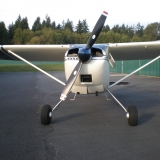
Cessna Skywagon -- accept no substitute!
Thu Sep 03, 2015 2:16 pm
Re: Wheel landings with stiff gear.
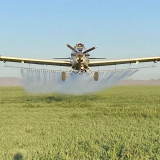
A wheel landing can be just as good a short field landing as a three point landing. We should be near the three point attitude just before touchdown, regardless. If the tail wheel touches down first, we go full aft on the stick to keep it down. If the mains touch first, we push the stick forward to keep the mains on the surface. If we need to have better visibility, we push the stick forward just before touchdown. With J-5 and Pawnee this last technique works best on all landings. I don't know if it is due to stiff gear or just the nature of the beast. Spray planes, which generally take off loaded and land empty, have stiff gears because the well forward hopper load will really depress old, weak bungees or flimsy spring leaf gears. They are commonly wheel landed every time.
- contactflying offline
- Posts: 4972
- Joined: Wed Apr 03, 2013 7:36 pm
- Location: Aurora, Missouri 2H2
Download my free "https://tinyurl.com/Safe-Maneuvering" e-book.
DISPLAY OPTIONS
Who is online
Users browsing this forum: No registered users and 6 guests
Latest Features
-
-
Featured Bush Planes
As one of the undisputed legends of bush flying, the Cessna 180 hauls a…Read More -
Aircraft Ownership and Maintenance
9 modification mistakes aircraft owners make when trying to "bush out" their birds—why some…Read More -
Live to Tell
A Minnesota pilot is surprised to learn that the sudden asymmetric drag of an…Read More




Latest Knowledge Base
-
Destinations
Canada offers some of the most spectacular backcountry flying on the continent. Here's what you need to know before you go.Read More -
Safety and Survival
Hope that you never have to use your survival vest but knowing you have it and knowing how to use…Read More -
Destinations
A regional guide with ideas for winter camping destinations in California, Nevada, New Mexico, and Arizona.Read More -
Aircraft
Finding an affordable aircraft that can handle the backcountry for $80K or less? A challenge for sure, but with the…Read More



