Backcountry Pilot • Where's your trim

Where's your trim

Share tips, techniques, or anything else related to flying.
15 postsPage 1 of 1

Where's your trim

I posted a suggestion on Zzz's thread about the use of nose down trim on landing. Denny asked a few questions there, but I didn't want to convolute Zzz's thread anymore on something that may have no bearing to what he is after, so I thought I'd answer him here. Denny, I hope you read this ...


DENNY wrote:ROB
When you talking about running out of elevator authority, are you talking about in the landing flair? When you say you are rolling in nose down trip are you moving the front of the stabilizer up or down?
DENNY


Yes, in that case I was referring to running out of elevator authority, but there are actually a few things that come with trimming nose down on landing, and the increased elevator authority is one of them.

And yes, you read that right, I did say nose DOWN, as in front of the stab up.

Before I get too far in to this, I have to just put it out there, if it's not obvious, you have to be slow to use this technique... no really... you have to be stupid slow. Otherwise you will be fighting your airplane. If you are holding an inordinate amount of stick pressure, you are going too fast and need to revisit after getting accustomed to flying it a tad slower.

Next I will add, that this is not for every airplane, you first need a trim system that warrants, needs, or at least benefits from it...

Nor is it for every situation, and of course lastly is it for everybody....

The average cub ( I say average because I can't honestly say that I have ever been around two cubs that were alike), anyways the average cub, will benefit on the very ragged bottom edge of the envelope using this technique because the piper trim system moves the stab. By doing so, it gives you a mechanical advantage of a few extra degrees of throw in your elevator for the flair. As a side benefit, because of where the CL is when you add flaps on a cub, you will enjoy a flatter attitude for the same speed as opposed to trimmed all the way aft, which is where you would be trying to fly it hands off. But the interesting things is as you continue to get slowed up, and roll win the fwd trim, you frequently find yourself right back to a hand off condition.

As Gb noted, the small tailed 205/6 do the same, but being almost twice the weight, will need back pressure.

Anyways, I want to make it a point that I am not trying to advocate or instruct. It's homeschool kinda stuff, and I'm sure proper taught folks are going to find all kinds of ways to suggest it illegal, improper, or immoral. If you care to try it, and like it, good... if you wreck, shame on you, I didn't tell you to do that. If you try it and can't make it work... good, I told you I wasn't in the instruction business... If you don't try it at all and cast stones... Im ok with that too...I'm just answering a guys questions...

Where do you trim?

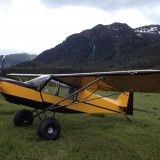
Image
An unkown cubber whose tail feathers suggest just landed trimmed nose down

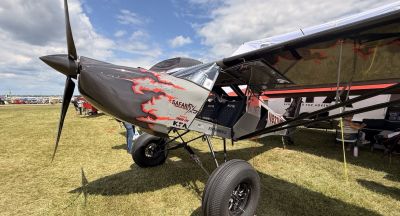
Image
an incredibly talented photographer (RIP) and a once world renowned instructor / cub pilot who obviously just landed nose down


Image
apparently this world famous gunsmith likes it on his carbon cub even on skis....


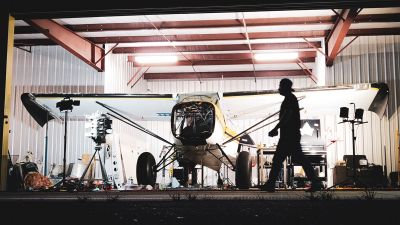
Image
on the other hand, here a world famous guide is full nose up and so is our photographer friend :?


Where do you trim it?
Rob offline
Supporter
User avatar
Posts: 1569
Joined: Sat Mar 11, 2006 10:34 am

Re: Where's your trim

I really like your trim forward technique, Rob, and wish I could legally try it by myself. When I flew most Piper models with the jack trim, I wasn't aerodynamically swift enough to think of that one.
contactflying offline
Posts: 4972
Joined: Wed Apr 03, 2013 7:36 pm
Location: Aurora, Missouri 2H2
Download my free "https://tinyurl.com/Safe-Maneuvering" e-book.

Re: Where's your trim

Trimming nose down is a very useful tool on any airplane with a trimmable stabilizer, for the reasons Rob points out, and a few others.

Fly a C-185 sometime (or a 180, though not so much) and fly an approach to land with full flaps, and a fairly steep approach, like over trees, etc. If you fly that profile on trim, and you try a full power go around (is there any other kind?), you are about to have a deeply moving religious experience......when you push up that power, all that nose UP trim is going to require you to apply massive amounts of forward pressure on the yoke to keep the nose from a hard pitch up.

Now, if you’d rolled in some nose DOWN trim on the approach, you’ll not only benefit from the effects Rob described, but if you need to go around, that nose down trim will significantly reduce the yoke forces you’ll need to apply.

Finally, I like to run a bit of nose down trim when doing tail low wheel landings. Hold a little back pressure to the touch, at the touch, relax that back pressure, and the plane will roll up on the mains.....voila!

No down sides, and lots of benefits. What’s not to like?

MTV
mtv offline
Knowledge Base Author
User avatar
Posts: 10515
Joined: Sat Feb 25, 2006 1:47 am
Location: Bozeman

Re: Where's your trim

I was taught to use full nose up trim and to three point it with the elevator at the stop. I can see why using a bit of nosedown trim can come in handy. I'll have to try something new next week!
pilotryan offline
User avatar
Posts: 343
Joined: Fri Apr 29, 2016 9:58 pm
Location: Great Lakes
Aircraft: C185 / C310R
Falcon 900B

Re: Where's your trim

mtv wrote:Trimming nose down is a very useful tool on any airplane with a trimmable stabilizer, for the reasons Rob points out, and a few others.

Fly a C-185 sometime (or a 180, though not so much) and fly an approach to land with full flaps, and a fairly steep approach, like over trees, etc. If you fly that profile on trim, and you try a full power go around (is there any other kind?), you are about to have a deeply moving religious experience......when you push up that power, all that nose UP trim is going to require you to apply massive amounts of forward pressure on the yoke to keep the nose from a hard pitch up.


MTV


Roger that. My first experience there I wanted to get my knees on the yoke to help push[emoji1]
gbflyer offline
User avatar
Posts: 2317
Joined: Sun Oct 14, 2007 5:35 pm
Location: SE Alaska

Re: Where's your trim

I, too, prefer a touch of nose down, for the reasons MTV stated. There's probably a lot more of his knowledge in my flying than I even know given all the reading here over 14 years.

Rob, I'm reading that you're suggesting a LOT of nose down trim. Haven't tried that because it seems unintuitive to be honest, but I will give it a go and report back. 8) Your photo evidence is very convincing.
Zzz offline
Janitorial Staff
User avatar
Posts: 2855
Joined: Fri Oct 08, 2004 11:09 pm
Location: northern
Aircraft: Swiveling desk chair
Half a century spent proving “it is better to be thought a fool than to open your mouth and remove all doubt.”

Re: Where's your trim

My thoughts on trim are all dependent on the particular aircraft being flown. My supercub trim was essentially set once for each flight during cruise. I never touched the trim after that until the next day when the weight and balance would change dramatically. It seemed balanced such that a reduction in power blended with a notch of flaps kept the plane trimmed without turning the crank. The stick forces are also light and I never needed to use the trim to help keep the plane balanced on approach or into the landing transition. I could always easily overpower an out of balance trim position and it never bothered me.

The Husky has much higher stick forces than the cub. However, it is also much more sensitive to movement of the trim wheel. Depending on the landing and the balance of the plane, I may need to run the trim a tad more aft to help me with the aft pull of the stick, especially if I want to get the tail really low on touchdown.

The 185 is a much bigger and more trim dependent plane than either the cub or Husky. Furthermore, the 185 trim is not sensitive to movement of the wheel. To run the trim from full aft to neutral for me is around 20 rolls of trim, and this with my head down so my hand can reach the trim wheel. That said, I don't like to push or pull against the yoke during normal operations, even on approach. I generally trim to hands free operation and just practice-practice-practice the go around procedure when I need to: Power, trim, trim, trim, flaps, trim, flaps, trim, flaps.......
Last edited by Squash on Mon Jul 02, 2018 10:14 pm, edited 1 time in total.
Squash offline
Supporter
Posts: 605
Joined: Sat Nov 24, 2012 12:46 pm
Location: Alaska

Re: Where's your trim

ROB
I see the post, Looking forward to this post. I will be along to pontificate later have to take wife out to supper.

DENNY
DENNY offline
Posts: 773
Joined: Tue Aug 27, 2013 7:16 pm
Location: CHUGIAK
DENNY

Re: Where's your trim

OK, back at computer and wine in hand.

I will post disclaimer as did Rob. I am not a CFI and would not recommend the trim settings we will talk about for a low time pilot. For everyday flying your grandma I would recommend to trim for airspeed and let the elevator do the rest.

Looking forward to everyones input I have learned a lot by being proven wrong in the past. So don't worry about hurting my feelings. This is a great place to hash out stuff so we don't have to bend a plane to learn it.


To keep this simple we will keep this referred to a properly rigged 160 hp cub with adjustable stabilizer. Any other aircraft have to be noted in remarks.


Rob
If we want max downforce on the tail for landing flair or too hold the tail down I contend that full nose up trim and full back stick (up elevator) will give the most downforce on the tail. Even greater with power on. Do you agree?

I will agree that full nose down trim makes picking/holding the tail up for wheel landing/maneuvering especially when heavy, much easier. Makes it a breeze to pin the mains when wheel landing. A go around should be about as painless as it could be. For the most part will work on firm stuff especially with a load in the back. Why would anyone want a heavy tail and hard forward stick to control the tail? There is a very good reason for full nose up trim.

Downside of full nose down is real and happens fast especially if you have nothing behind the pilot. If you get into mud, sand, tundra, or brake hard it is very easy to go on the nose!!!! BY DOING FULL NOSE DOWN TRIM YOU ARE MAKING THE STABILIZER A UP FORCE FIGHTING THE ELEVATOR!! Once the tail is 4ft off the ground the weight has shifted to the mains and it will nose over very easy and you have given away part of you downforce. #-o Just something to think about if you want to come to Valdez and beat that guy in the picture with nose up trim. (side note: I tried, trim same as him, and I just suck)
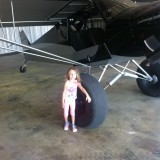
Now the question of can you fly slower with nose down trim.
So for a given weight and wing configuration (full flaps, properly rigged, ect) and prop/rpm. My thinking is this. If we can add more drag we can run a higher RPM that lets the plane fly slower. The question is how much drag will full nose up with stick forward give you compared to full nose down with stick back. The downforce on the tail to reach the stall AOA will be the same but I would think the nose down trim may give more drag/increase RPM/lower airspeed but I don't think it will be that great (less then 1mph)I will have to try it back to back one day. If you really do need to land that slow than you should be braking hard and now we are back to the downside of nose down trim.

So for me, if I am just trying to give the wife a smooth landing on a hard strip I will usually just trim for speed, do a tail low wheel landing. we do some long/heavy camping trips and I am almost full forward trim until we get the beer/wine drank. With that much weight I don't worry so much because the tail is heavy. But if I am going off field into rough/soft stuff or need to stop real short it is full up trim for me.

If anyone wants to try full nose up trim, full flaps and power on approach I would recommend you look at Mia Hamm or Tiger Woods in the morning. Anyone want to guess why?

DENNY
DENNY offline
Posts: 773
Joined: Tue Aug 27, 2013 7:16 pm
Location: CHUGIAK
DENNY

Re: Where's your trim

I will use forward trim anytime there's an LZ that requires some finesse.. Just another tool to have in your bag of tricks.

Mike
RoughAir offline
User avatar
Posts: 74
Joined: Tue Sep 03, 2013 6:52 pm
Location: close to the Sutter Buttes

Re: Where's your trim

Denny,

You’re missing a couple points.

1. Nobody was talking about FULL nose down trim.

2. The stabilizer is a lifting surface. It lifts in a downward direction to provide stability. With a trimmable stabilizer, nose down trim REDUCES AOA of the horizontal.

MTV
mtv offline
Knowledge Base Author
User avatar
Posts: 10515
Joined: Sat Feb 25, 2006 1:47 am
Location: Bozeman

Re: Where's your trim

Hi Denny,

You will get not argument from me on many if not all of your points. When I am wandering around the sky on my magic carpet ride 99% of the time I am on the surface a lazy pilot. I want a hands free airplane. I want an airplane that I can give it's head to and not have to worry about back pressure, side pressure , speed etc... I can, and have flown approach in my 180, clear to touchdown hands, but then there's that 1%....

I am glad you chose a 160hp run of the mill bush beater cub for your examples. for me that airplane needs special techniques the least, but shines the most as a result of their proper use.

Just to address your thoughts in particular, I will leave go-arounds, out of the picture. Also, I personally do not get in to the thought process that differentiates between wheelies and three points. For me a three point is a good way to leave your tailwheel behind, and landing with enough energy to have your tailwheel five feet off the ground means you are too hot. Differentiating between these two landing techniques is primary instruction 101, landing with a trim setting other than hands free is not.
I prefer the slowest possible touchdown, without slapping the tailwheel in to the ground.This doesn't give you a choice of what attitude your airplane hits the ground, after touchdown your brakes can put your tailwheel anywhere you want, but again IMHO if you arrived with the energy to get it very high (without adding power) you arrived with too much energy.

So in a nut shell, in the application you and I are discussing here, a short, spot on landing is the only thing we are concerned with.

I will say this, I have it on the very best authority, that the top tier Valdez pilots do not use this technique landing on the blacktop :wink: and arguably one of the very best Valdez contestant never uses it. Different strokes for different folks
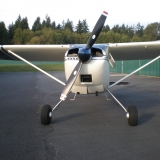

I will say that the physics don't add up. But it's not all that uncommon for me to select a tool that is counter intuitive if it works for the application. Having said that, take a smart level out to your cub. Measure the difference in deflection, stab to elevator, both max nose down and max nose up, as they would be in the flair and report back to me. I already know the numbers :wink: You will get more throw in trimmed one way.


I will say that pretty much any tail deflection is a piss poor way to make drag in a slab sided, long winged cub... there are better tools for that.


And lastly I will add, that in an aircraft as you describe, when I need to make a landing that dictates that my "X" main gear hit a postage stamp sized spot, as slow as it can (RoughAir said it much nicer) this is the configuration I will be in.

To reiterate, this isn't a something for everyone, or every plane or every place.

In this technique, If in a cub you are holding back pressure against the fwd trim, you do not have too much trim in, you are too hot. When you roll it 'over the top' from aft trim to fwd trim it should feel as if you are rolling a ball over a point. Your airspeed will not be registering (which is not very slow in a cub as it signs off at 40 on a stock speedo). Your cub will almost be back on 'the step', which won't feel right at that speed.
In this technique, if you have the energy to the tail high when you land, you are too hot. Mud, sand, and a myriad of other soft surfaces are the only thing I know in the desert, and yes vigilance for nose overs is a good thing, but best handled by good ground handling techniques. it is not uncommon to find ourselves in a place that safe taxiing is a workout, but ground handling is not the discussion. Hitting 'X" spot as slow and accurate in a safe real world manner is.

This technique is not a WOW moment... it is one of those last little tidbits to add when you need every bit you can get.

It's probably more comparable to setting minimal flaps on take off roll and adding the rest when the wing can take it without penalizing you. And that's really a great analogy, because we've all seen or been the guy who started with minimal flaps, and rolled the rest in too early or too late and ended up actually extending his run compared to if we had just practiced the 'set and forget' take off. On the other hand, some of us find ourselves in predicaments that absolutely benefit from a flap jump. A few of us live in that zone.

For this use and this use only, this technique is not applicable to many other airplanes, cub like or not. It WIL NOT work in a Husky for example. Ask a really good cub stick how fast he flew an approach, and you will always get a 'deer in the headlights' look, because a cub stab/elevator is a much better tool for airspeed assessment. Ask a good Husky driver how fast he flew an approach, and he will know to the knot what it was, as the Huskys trim system removes a good portion of that tactile feel the elevator is trying to send to the pilot. Neither better than the other (barring very specific missions) just different in how they are getting it done.

In parting, If you ever found yourself around this part of the country, we can go give it a whirl. When the lightbulb clicks it still won't make sense, but it just may be something you add to your bag of tricks....

Take care, Rob
Rob offline
Supporter
User avatar
Posts: 1569
Joined: Sat Mar 11, 2006 10:34 am

Re: Where's your trim

Guys
Looks like we are getting close. I need to move Cessna to lake hood and going to a friends cabin tonight so it may be a day or two before I can pontificate more on the angles involved in the tail.
DENNY
DENNY offline
Posts: 773
Joined: Tue Aug 27, 2013 7:16 pm
Location: CHUGIAK
DENNY

Re: Where's your trim

OK back from the cabin.

Mike
I know you were not talking about full nose down trim but I believe Rob was. The stabilizer will provide up or down lifting force depending on how it is set. If the plane is stoped in three point position and you lock the brakes and add full power you will have to hold the tail down with full back elevator with full nose down trim, or it will go right up on the nose. So it can lift or provide downforce to the tail that is the beauty of the system.

Both of us have said the stuff we are talking about is not your daily flying. It is for pushing the edge and once again I would say this is not for a beginner pilot.

Rob
I went back and found you previous post.

"When I fly a cub (same trim system) that runs out of elevator sooner than I care for, I get it as slow and stable as I care to, and then start rolling in nose down trim. How much depends on the particular aircraft and w&b, but full nose down is certainly not out of the question.
Study your stab to elevator relationship and you will find that this gives you the greatest deflection.
As for control pressures, remeber, you were already at the point of not having much, so you're really not going to be carrying much. This is for a power on approach, and adds 2-3 degrees, so it's only going to help the last ragged edge, and only a minimal, but tangible amount."

What I take from this is you are using the elevator to create the downforce for the flair overpowering and lifting action from the stabilizer. This can be done due to the 25 degrees of up elevator available to you. By doing a power on approach you are able to add more nose down trim, controlled by the elevator allowing the plane to fly slower.

We are basically both doing the same thing. Creating a down force on the tail. Yours is from the elevator mine from the stabilator. We are using stick pressure, mine forward, yours back, to control our pitch angle. We are both creating drag which will help slow us and use more power on approach. I am letting my stick come back to neutral in as I flair so I loose some drag. Which is why earlier I had said you may be getting a bit slower than me. (on a side note my cub will tolerate 1600 rpm, full nose up, no stick pressure without stalling, if I apply back pressure to the stick it will stall.)

When the moon is right and I have a good night sleep I arrive with tailwheel about foot or so below the mains, 38-36 MPH in ground effect (helicopter airspeed/gps). I can hold this down the runway at about 1800 rpm. The main problem is getting from the stupid nose high angle to the mains without hurting the tail and hitting your spot at the same time. Once I have the mains planted (flaps down, tail up)I can still lift the tail without too much trouble but it will start to drop as I slow, if I do not add brakes or power.

My previous comments on Tiger Woods and Mia Hamm refer to them appearing on the Wheaties box. As Rob mentioned the forces can be very heavy, you had better had a bowl for breakfast if you put in full nose up trim and full flaps at 60mph!! Crank it in slow as you slow down.

In closing for most of the flying we do Mikes advice golden!! If you want to go get stupid slow just pick the one you want for the mission you are doing. Rob, I hope to get the cub down in the lower 48 some fall and will look you up. Let me know if you make it up here we have a extra room and lots of places to fly.

DENNY
DENNY offline
Posts: 773
Joined: Tue Aug 27, 2013 7:16 pm
Location: CHUGIAK
DENNY

Re: Where's your trim

I've never landed using this counter-intuitive "trim nose down to get the tail down" method.
But it seems that while the extra elevator travel may give you more tail-down authority,
with a trimmable stabilizer the nose-down trim setting gives you more tail-up input--
to some extent negating whatever you gain from the added elevator travel.
hotrod180 offline
Supporter
User avatar
Posts: 10534
Joined: Wed Jan 26, 2005 11:47 pm
Location: Port Townsend, WA
Cessna Skywagon -- accept no substitute!

DISPLAY OPTIONS

15 postsPage 1 of 1

Who is online

Users browsing this forum: No registered users and 1 guest

Latest Features

Latest Knowledge Base