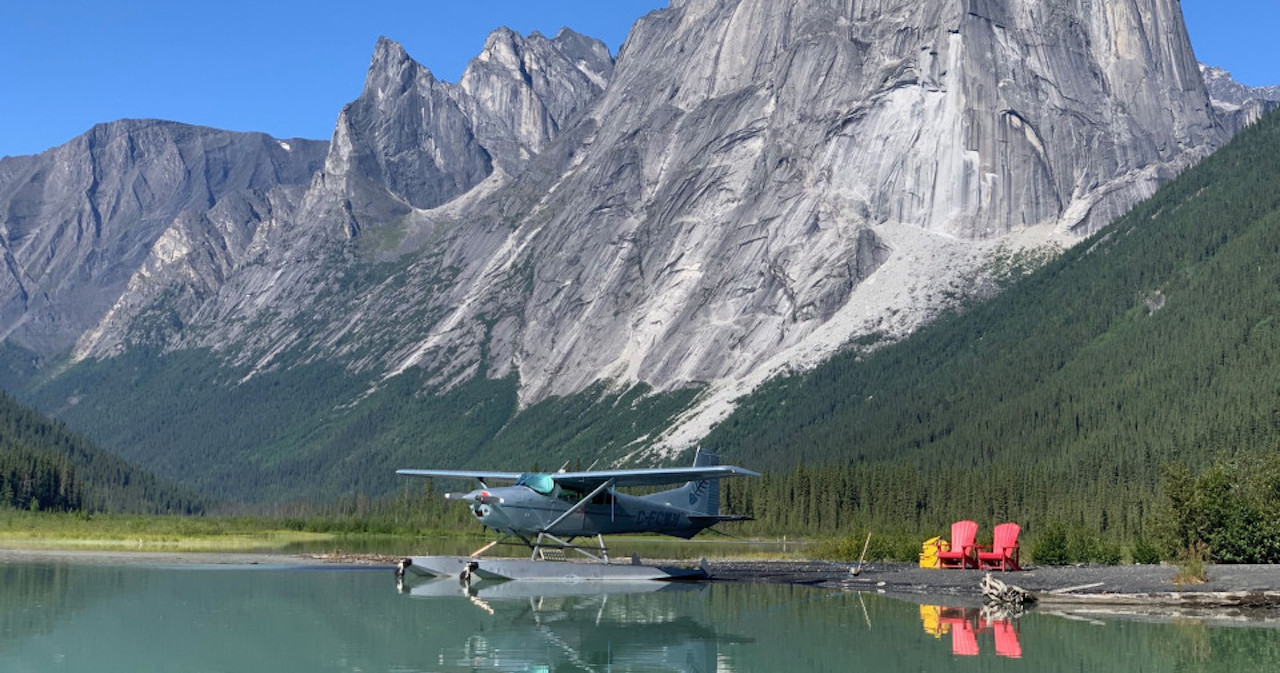
In various threads concerning downdrafts, I have argued that the air doesn't go into the ground. To be fair, I have to admit that a downwind shear usually causes descent similar to downdrafts. My experience with shear is warped, however, by low altitude experience. Every whirlwind encounter I encountered in the field crop dusting sent me sideways a row or two. I assume ground effect mostly mitigated sink. When out of ground effect, I mitigated all sink with forward stick to fly through it quickly. That included the rapid loss of zoom reserve when zooming over obstructions at the end of the field.
So I have taken unfair advantage of the downdraft and shear problem by flying low all day. In 17,000 hours, mostly at 200' AGL and lower, I have never been thrown uncontrolled to the ground. I have always been able to pitch down to quickly get through the descending shaft or downwind shear in the vertical space available. I have always been able to take advantage of the updraft or headwind shear by pitching up to stay in zoom longer.
I did experience the descending air side of mountain wave once in a Tri-Pacer from 13,500 MSL to 7,500 MSL just hanging onto somewhat level. I hit a very hard bump at 200' AGL and quit descending. I was young and inexperienced at that time. I expect it would have been less exciting had I just pitched down to fly through it more quickly. I know it would have been more exciting had I pitched up and stalled.
Turbulent air will cause unwanted banking. It will cause unwanted RPM fluctuation of fixed pitch prop engines. Attempting mitigation of this unwanted bank with aileron will cause further roll instability. Rudder only mitigation to nail heading or target will stabilize roll instability. Attempting mitigation of unwanted RPM fluctuation with throttle is tedious. Pitching up to reduce increased RPM and pitching down to bring RPM back up to desired RPM is more efficient in both altitude and ground speed.
And yes, God is bigger than our capabilities. Don't fly in thunderstorms or on the lee side of ridges. Avoid visible whirlwind. Avoid the interior of airmass thunderstorm's visible rain shafts. The outer rim, however, provides windscreen wash and updrafts. Avoid visible roll clouds and areas where invisible roll clouds might be. In really rough stuff, hanging onto level is fine, pitching down might be better, pitching up is deadly. Defer to God, but don't stop acting as pilot in command. God's plan for mitigation of some natural conditions was to create man with the most flexible brain in creation.
Whirlwind.
Sun Dec 20, 2020 1:07 am
- contactflying offline
- Posts: 4972
- Joined: Wed Apr 03, 2013 7:36 pm
- Location: Aurora, Missouri 2H2
Download my free "https://tinyurl.com/Safe-Maneuvering" e-book.
Sun Dec 20, 2020 7:08 am
Re: Whirlwind.
A couple weeks ago I planned a trip to head south of home to check out some bison it was plus 46 that day and ground was snow covered with no wind. I took off to the sw and climbed to 4200 feet which is 1000 agl there was enough wind from the west that I had a decent crab going to remain on course. There was also a temperature inversion that day it was 57 degrees at 1000 feet agl. Real smooth air until I decided to check out a grass runway that was located in a valley along the route I was taking. This is where I made the mistake I turned to the east to enter the valley and immediately I was losing 750 fpm bad turbulence and down to 50 mph I put the nose down to pick up some airspeed and fought to keep it level still losing altitude so I thought the only way out was to fly east of valley over some farm land while I still had enough altitude once over the eastern side of valley I was at about 150 feet agl it was turbulent for about another mile then finally things returned to normal. I thought about many things contactflying wrote on here and used them as best I could in what felt like a long time. Now I know what the don’t fly along the leeward ridge is all about. So many things to learn.
Wed Dec 23, 2020 9:05 pm
Re: Whirlwind.
We can't always know where the good air is and where the bad air is. Yes, lee side is always bad air unless a wave has started back up. Thermals usually follow a up, down, up, down pattern, but sometimes go up, up or down, down. The important safety consideration is which way is downhill and what terrain intervenes between us and the drainage going the way we want to go. Using the downwind ridge to go up to the pass in the direction we want to go is the way into the wind and hydraulic lift straight over the range will work with tailwind. However, still using the valley ridge drainage system up drainage is the safer way.
If we use the orographic lifting ridge, on the downwind side of the valley, up to higher terrain we will not need to cross ridges. Crossing a ridge from which we are getting hydraulic lift means we will be flying into descending air on the lee side of that ridge.
So you did the wrong thing flying into the down air on the lee side of the ridge. You did the right thing, however, pitching down to fly through it as quickly as possible.
Most pilots are indoctrinated with stay up orientation. I flew helicopters and junk airplanes which could do bad things quickly. My orientation was same as the infantryman: in a crisis go to ground. The only difference in flying is that we want to go to ground down drainage.
If we use the orographic lifting ridge, on the downwind side of the valley, up to higher terrain we will not need to cross ridges. Crossing a ridge from which we are getting hydraulic lift means we will be flying into descending air on the lee side of that ridge.
So you did the wrong thing flying into the down air on the lee side of the ridge. You did the right thing, however, pitching down to fly through it as quickly as possible.
Most pilots are indoctrinated with stay up orientation. I flew helicopters and junk airplanes which could do bad things quickly. My orientation was same as the infantryman: in a crisis go to ground. The only difference in flying is that we want to go to ground down drainage.
- contactflying offline
- Posts: 4972
- Joined: Wed Apr 03, 2013 7:36 pm
- Location: Aurora, Missouri 2H2
Download my free "https://tinyurl.com/Safe-Maneuvering" e-book.
Thu Dec 24, 2020 9:38 am
Re: Whirlwind.
Jim,
“The important safety consideration is which way is downhill and what terrain intervenes between us and the drainage going the way we want to go. Using the downwind ridge to go up to the pass in the direction we want to go is the way into the wind and hydraulic lift straight over the range will work with tailwind. However, still using the valley ridge drainage system up drainage is the safer way.”
Huh! You lost me here. Can you explain this a bit more, please. Thanks
Happy holidays,
Tommy
“The important safety consideration is which way is downhill and what terrain intervenes between us and the drainage going the way we want to go. Using the downwind ridge to go up to the pass in the direction we want to go is the way into the wind and hydraulic lift straight over the range will work with tailwind. However, still using the valley ridge drainage system up drainage is the safer way.”
Huh! You lost me here. Can you explain this a bit more, please. Thanks
Happy holidays,
Tommy
Thu Dec 24, 2020 5:46 pm
Re: Whirlwind.
Tommy,
Most pilots with powerful airplanes like yours just engine climb or on course thermal up high enough to overfly the generally north south orientated ranges in the Rockys either going west or going east. That is not always the most efficient way and seldom the safest way either west or east.
When we plan a cross country in the mountains wind direction is critical. In no wind we hope DA is low because we are like the becalmed sailor. No free lift out there except thermal and probably not thermal. If it were hot enough for thermals, there would probably be wind for orographic lift as well.
Once we have laid a straight true course across the mountains, we need to consider drainages right and left of course both up to passes across ranges and down from those passes. Going into a headwind component, we want enough crosswind component to have lift on the ridge downwind of a workable valley going up to the pass. We also want that valley ridge drainage system to be somewhat straight. We might go further from the true course line to find a workable drainage system. While using the free orographic lift on that downwind ridge going up the the pass, we want be close to the ridge and to have adequate horizontal space available between this ridge and the upwind ridge that forms the valley ridge drainage system. We do not want to cross this downwind of valley ridge because lee side downdraft will be on the other slope of our ridge.
Going east in a Champ with prevailing westerly wind we can just ridge lift straight up the western slope of a volcano like Mt. Taylor. This is because the champ airspeed is very slow. Don't try this in your 182. You will have to slalom up making each energy management turn away from the slop but returning close to the slope for best lift. Going east over any part of a north south range could be done the same, but we always want to have planned a down drainage egress beyond the pass.
Going east the safest way is the same and going west. Find a relatively straight valley ridge drainage system up to the pass and fly as near as possible to the downwind of the valley ridge. Again, beyond the pass follow the east side drainage system down drainage now.
As most mountain courses teach, climbing up prior to getting near the pass is safest. With low powered airplanes and sometimes even 182, this doesn't always happen as planned. Catching the down side of a wave or just lee ridge turbulent downdrafts in crooked drainages can disrupt things. Going over ridges at 45 degree angle doesn't preclude flying into the down air on the other side. 2,000' clearance may be great safety and may, on the other hand, trick the pilot into pulling back on the elevator in a downdraft causing airspeed loss perhaps at the very instant the the pilot decides he needs to turn around. The pilot at 2'000 AGL is not likely to think "go to ground" in a serious downdraft, but exactly that is what would save him. Hopefully he will go to ground in a downhill drainage.
Keep at it, you will become an efficient mountain pilot. A bit harder in 182 than 150, but the principles are the same.
Most pilots with powerful airplanes like yours just engine climb or on course thermal up high enough to overfly the generally north south orientated ranges in the Rockys either going west or going east. That is not always the most efficient way and seldom the safest way either west or east.
When we plan a cross country in the mountains wind direction is critical. In no wind we hope DA is low because we are like the becalmed sailor. No free lift out there except thermal and probably not thermal. If it were hot enough for thermals, there would probably be wind for orographic lift as well.
Once we have laid a straight true course across the mountains, we need to consider drainages right and left of course both up to passes across ranges and down from those passes. Going into a headwind component, we want enough crosswind component to have lift on the ridge downwind of a workable valley going up to the pass. We also want that valley ridge drainage system to be somewhat straight. We might go further from the true course line to find a workable drainage system. While using the free orographic lift on that downwind ridge going up the the pass, we want be close to the ridge and to have adequate horizontal space available between this ridge and the upwind ridge that forms the valley ridge drainage system. We do not want to cross this downwind of valley ridge because lee side downdraft will be on the other slope of our ridge.
Going east in a Champ with prevailing westerly wind we can just ridge lift straight up the western slope of a volcano like Mt. Taylor. This is because the champ airspeed is very slow. Don't try this in your 182. You will have to slalom up making each energy management turn away from the slop but returning close to the slope for best lift. Going east over any part of a north south range could be done the same, but we always want to have planned a down drainage egress beyond the pass.
Going east the safest way is the same and going west. Find a relatively straight valley ridge drainage system up to the pass and fly as near as possible to the downwind of the valley ridge. Again, beyond the pass follow the east side drainage system down drainage now.
As most mountain courses teach, climbing up prior to getting near the pass is safest. With low powered airplanes and sometimes even 182, this doesn't always happen as planned. Catching the down side of a wave or just lee ridge turbulent downdrafts in crooked drainages can disrupt things. Going over ridges at 45 degree angle doesn't preclude flying into the down air on the other side. 2,000' clearance may be great safety and may, on the other hand, trick the pilot into pulling back on the elevator in a downdraft causing airspeed loss perhaps at the very instant the the pilot decides he needs to turn around. The pilot at 2'000 AGL is not likely to think "go to ground" in a serious downdraft, but exactly that is what would save him. Hopefully he will go to ground in a downhill drainage.
Keep at it, you will become an efficient mountain pilot. A bit harder in 182 than 150, but the principles are the same.
- contactflying offline
- Posts: 4972
- Joined: Wed Apr 03, 2013 7:36 pm
- Location: Aurora, Missouri 2H2
Download my free "https://tinyurl.com/Safe-Maneuvering" e-book.
Sat Dec 26, 2020 7:41 am
Re: Whirlwind.
Once we have drawn a true course from departure to destination and decided on a near to that course workable valley ridge system up to the pass, we need to draw a true course from departure to the beginning of that valley ridge drainage. Compass course or even GPS is not good enough here without strict pilotage. We don't want to enter the wrong drainage and things get unfamiliar on up. At the beginning of the drainage system, quadrangle is much better and might even have, in planning, shown problems that nix this route.
Fine points are necessary for pilotage in plains, parks, and desert, but memorizing the irregular shape of terrain features in the higher mountains is easier. Just don't put yourself in a track that will take you across major ridges up high to get to that feature. We still want to start at the beginning of the rapid climb of the desired drainage.
What I call drainages are streams from snow melt in wetter mountains and parks, but are usually dry in the high desert and high plains. They show as ...blue line...on the sectional rather than just a blue line. The dry stream bed is clearly visible on the ground and they are reliable pilotage features. The wine glass method is much more critical in high plains and desert to determine up drainage and down drainage. This kind of pilotage is not casual. It is close checkpoints and intense.
Fine points are necessary for pilotage in plains, parks, and desert, but memorizing the irregular shape of terrain features in the higher mountains is easier. Just don't put yourself in a track that will take you across major ridges up high to get to that feature. We still want to start at the beginning of the rapid climb of the desired drainage.
What I call drainages are streams from snow melt in wetter mountains and parks, but are usually dry in the high desert and high plains. They show as ...blue line...on the sectional rather than just a blue line. The dry stream bed is clearly visible on the ground and they are reliable pilotage features. The wine glass method is much more critical in high plains and desert to determine up drainage and down drainage. This kind of pilotage is not casual. It is close checkpoints and intense.
- contactflying offline
- Posts: 4972
- Joined: Wed Apr 03, 2013 7:36 pm
- Location: Aurora, Missouri 2H2
Download my free "https://tinyurl.com/Safe-Maneuvering" e-book.
Sat Dec 26, 2020 10:11 pm
Re: Whirlwind.
Tommy,
Using your big engine for altitude over the valley between the two ridges of a drainage system is fine and quite safe. Altitude, however, is not guaranteed. The fact that that drainage will go downhill all the way to the Gulf of Mexico or Pacific is guaranteed. And when not actually going somewhere, we still need to know an egress down drainage. It is irritating, when mountain texts mention always having an out, that they seldom mention down drainage. It goes back to high altitude orientation and no consideration of going to ground. When things don't work out and we are turning, safety is in allowing the nose to go down and directing the nose to the nearest drainage going downhill.
Using your big engine for altitude over the valley between the two ridges of a drainage system is fine and quite safe. Altitude, however, is not guaranteed. The fact that that drainage will go downhill all the way to the Gulf of Mexico or Pacific is guaranteed. And when not actually going somewhere, we still need to know an egress down drainage. It is irritating, when mountain texts mention always having an out, that they seldom mention down drainage. It goes back to high altitude orientation and no consideration of going to ground. When things don't work out and we are turning, safety is in allowing the nose to go down and directing the nose to the nearest drainage going downhill.
- contactflying offline
- Posts: 4972
- Joined: Wed Apr 03, 2013 7:36 pm
- Location: Aurora, Missouri 2H2
Download my free "https://tinyurl.com/Safe-Maneuvering" e-book.
Sun Dec 27, 2020 9:18 pm
Re: Whirlwind.
Contact,
Another way to say it I think is this. God's G is always available to use to decrease our turn radius. We must plan to have the turning room available in the vertical to be able to utilize. This is where hugging the updraft side of the drainage as high as feasible to gain or maintain energy and altitude is important. Not flying down the middle of the drainage comes into play as it allows for some turning room in the horizontal. Following the drainage allows an out if you we use both of the above. If you follow a very narrow drainage upstream you may end up at the source which may be a spring. Ask me how I know.. It's a great tool to use in the canyons. The canyon turn is a great tool that must be practiced.
I like your planning perspective. Better to plan and utilize terrain than to have to exercise superior skill i.e. the canyon turn due to poor planning.
Great stuff!
MW
Another way to say it I think is this. God's G is always available to use to decrease our turn radius. We must plan to have the turning room available in the vertical to be able to utilize. This is where hugging the updraft side of the drainage as high as feasible to gain or maintain energy and altitude is important. Not flying down the middle of the drainage comes into play as it allows for some turning room in the horizontal. Following the drainage allows an out if you we use both of the above. If you follow a very narrow drainage upstream you may end up at the source which may be a spring. Ask me how I know.. It's a great tool to use in the canyons. The canyon turn is a great tool that must be practiced.
I like your planning perspective. Better to plan and utilize terrain than to have to exercise superior skill i.e. the canyon turn due to poor planning.
Great stuff!
MW
- 185Midwest offline

- Posts: 439
- Joined: Sun Sep 30, 2018 11:58 am
- Location: Fort Wayne
- Aircraft: C-185
Sun Dec 27, 2020 9:52 pm
Re: Whirlwind.
Good points MW. I sometimes say fifty feet off the up air ridge, but often assume pilots know that is where they should be. The safety rule of 2,000' vertical space is palatable, but 2,000' horizontal space is irritating and unsafe. Not much lift 2,000' above and I never had the engine to get there anyway, but flying up the middle, as you mention, is very unsafe.
I have little experience flying over the mountains, but the videos and pictures I see are a bit scary. The drainages are much harder to sort out. Catch the down side of a wave at minus 10,000 feet per minute and it would be hard to pick the right one, I think.
I have little experience flying over the mountains, but the videos and pictures I see are a bit scary. The drainages are much harder to sort out. Catch the down side of a wave at minus 10,000 feet per minute and it would be hard to pick the right one, I think.
- contactflying offline
- Posts: 4972
- Joined: Wed Apr 03, 2013 7:36 pm
- Location: Aurora, Missouri 2H2
Download my free "https://tinyurl.com/Safe-Maneuvering" e-book.
Mon Jan 11, 2021 3:59 pm
Re: Whirlwind.
There is a very good article on page 22 of the February issue of Plane and Pilot called "Mountains Demand Respect" by Reggie Paulk. He is an experienced mountain pilot and instructor at Granby Colorado KGNB. This was in a Rans S-7LS with 100 hp Rotax. I hope Reggie is on BCP and can comment further and I really appreciate that he did everything our altitude oriented instructional program teaches but admits that that was insufficient to deal with a strong downdraft. He flew at 1,000' AGL over his family farm in the Fraser Valley downwind from higher terrain and headed up drainage when the downdraft took him, at Vy, to about 10' over the stream before entering stable or updraft air (800 fpm climb) at 10' AGL.
Again, he did what is taught as the school solution and found it wanting. He didn't say how low he was by the time he realized he was in the downdraft, and he allowed the nose to go down a bit but he did not try to turn downstream until after he was again climbing at 800 fpm. What he did very well was that he kept the wing flying by allowing the nose to go down a bit in turns and he didn't come unglued. He expected to have to land in the meadow going uphill.
Two things are pretty evident here. First the airplane will stay in the downdraft longer and go down faster at Vy than at cruise. Second we will be able to maintain maneuvering airspeed much better flying down drainage. I hope I can get Reggie converted to maneuvering flight orientation both for his own flying and for his teaching. I understand instruction has to be by the book. Teaching doesn't.
Again, he did what is taught as the school solution and found it wanting. He didn't say how low he was by the time he realized he was in the downdraft, and he allowed the nose to go down a bit but he did not try to turn downstream until after he was again climbing at 800 fpm. What he did very well was that he kept the wing flying by allowing the nose to go down a bit in turns and he didn't come unglued. He expected to have to land in the meadow going uphill.
Two things are pretty evident here. First the airplane will stay in the downdraft longer and go down faster at Vy than at cruise. Second we will be able to maintain maneuvering airspeed much better flying down drainage. I hope I can get Reggie converted to maneuvering flight orientation both for his own flying and for his teaching. I understand instruction has to be by the book. Teaching doesn't.
- contactflying offline
- Posts: 4972
- Joined: Wed Apr 03, 2013 7:36 pm
- Location: Aurora, Missouri 2H2
Download my free "https://tinyurl.com/Safe-Maneuvering" e-book.
DISPLAY OPTIONS
Who is online
Users browsing this forum: No registered users and 3 guests
Latest Features
-
-
Featured Bush Planes
As one of the undisputed legends of bush flying, the Cessna 180 hauls a…Read More -
Aircraft Ownership and Maintenance
9 modification mistakes aircraft owners make when trying to "bush out" their birds—why some…Read More -
Live to Tell
A Minnesota pilot is surprised to learn that the sudden asymmetric drag of an…Read More


Latest Knowledge Base
-
Destinations
Canada offers some of the most spectacular backcountry flying on the continent. Here's what you need to know before you go.Read More -
Safety and Survival
Hope that you never have to use your survival vest but knowing you have it and knowing how to use…Read More -
Destinations
A regional guide with ideas for winter camping destinations in California, Nevada, New Mexico, and Arizona.Read More -
Aircraft
Finding an affordable aircraft that can handle the backcountry for $80K or less? A challenge for sure, but with the…Read More