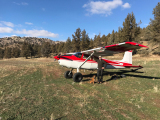
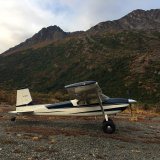
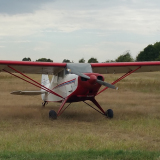
It is hard to beat a Cessna for versatility, practicality, ease of ownership and safety. They are reasonably slow, reasonably fast, carry a decent load, every mechanic knows how to maintain them, and they will bark way before they bite when operating low and slow. Airframe parts are expensive, but unlike fabric and wood, aluminum that has not been abused does not significantly deteriorate over time when properly cared for.
Insurance companies will insure them for palatable premiums.
In 20+ years and couple thousand hours of owning and operating different Cessnas, My maintenance expenses were mostly: oil, mags, plugs, cylinders, alternators, starters, tires and brakes (in about that order). I've spent far more money on upgrades than repairs over the years. Actual airframe parts usually hold up for a long time if they aren't abused, and even through some abusive behavior.
Lower-powered Cessnas, such as: 150s, 152s, 170s, 172s, 175s... aren't much fun when heavy, and can be dangerous when you need the performance that they simply cannot muster to climb over obstacles with a load on board.
The higher performance Cessnas like: 180s, 182s, 185s, 205s, 206s, 210s... are not much more fun to fly heavy than the lower powered planes, but will usually climb reasonably well if you can manage airspeed, power and engine cooling properly.
Every airplane is a LOT more fun, and delivers higher safety margins when flown light than heavy. This contrast is so significant that your decision depends on how heavily you plan to operate most of the time. You can load up a 170 or 172 to max gross weight and take off on a cool day and joy ride about at low to mid elevations as long as what you ask of it is reasonable. A 170 or 172 can be a real hoot with just the pilot and a couple hours of fuel on board. You can load up a 182 and fly around in the mountains on a cool day, and fly it light on a warm day, though high density altitude flying is seldom a fun time to be in the air.
Cessnas with more cabin volume (205s, 206s, 210s and newer 182s), which seems highly desirable given the information that you have provided, typically demand higher values on the market. You are highly unlikely to see an airworthy 206 for 40k...
The one model that seems to be an exception to this is the early 210s. The cabins are very roomy, and they have big bore continentals, which pull pretty hard to get a load moving. The lower acquisition costs of these planes are probably due to having a reputation as a maintenance hog of an airplane. 470s, 520s and 550 Continentals are good dependable engines, but will typically cost quite a bit more to feed and maintain than a Lycoming 320 or 360. The landing gear may also be expensive to maintain, and big tires are forbidden because they will not fit in the gear wells. They have decent short field performance, but no practical rough surface capability.
If I were in your situation, and I wanted to bring the family along often, I would probably be looking at late model 182s or early 210s. If a tight budget is mandatory, I would get a 170 or 172 and accept that it is never going to be a family station wagon.